
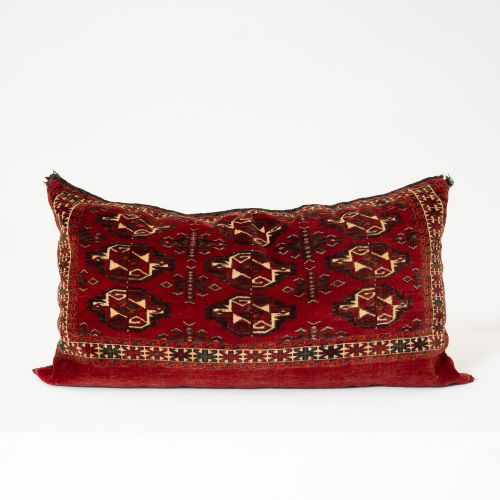

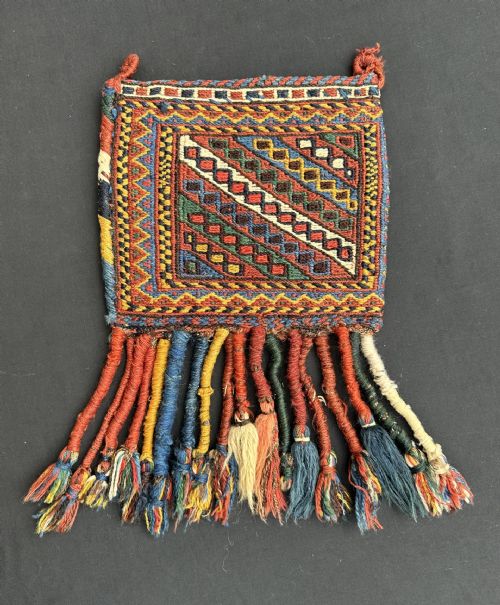


Geometric Oriental Bag
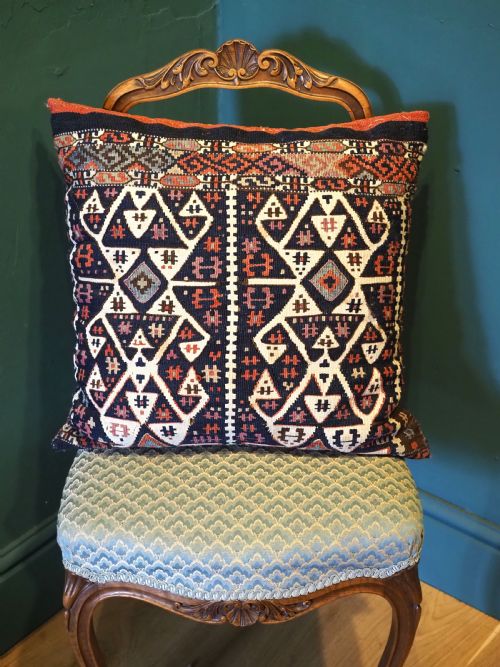
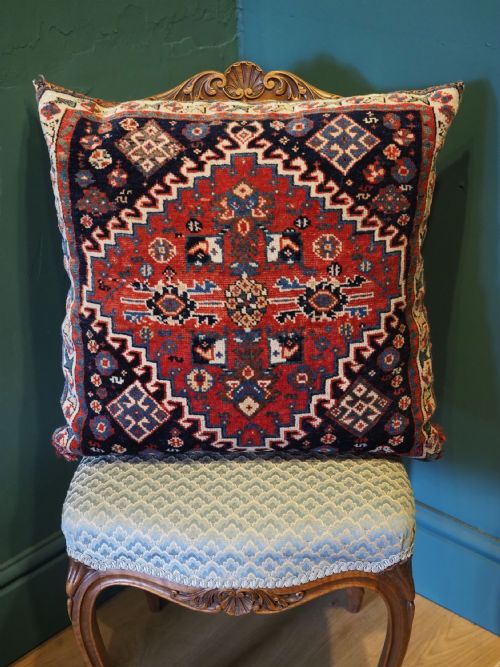
These geometric oriental bag pieces are woven nomadic textiles carrying centuries of tribal history straight into modern interiors as decorative cushions and wall hangings.
Geometric Oriental Bag
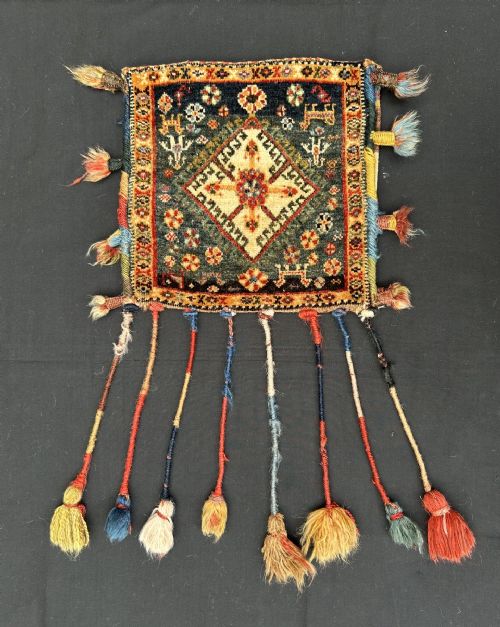
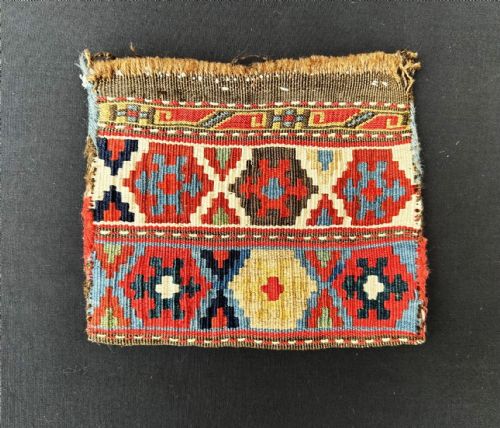
A geometric oriental bag represents the practical weaving of nomadic groups from Persia, Anatolia, the Caucasus and Turkmenistan, created to store household goods during migration. These items survive primarily as bag faces, saddlebags, and storage pouches adapted into cushions or displayed as flat textiles.
The pieces on this page span the nineteenth and early twentieth centuries, originating from tribal confederacies such as the Qashqai, Shahsevan, Baluch, and Yomut. Buyers frequently encounter these textiles converted into square cushion covers or preserved as complete flatweave and knotted pile panels.
Tribal weavers utilised geometric layouts, repeating guls, and central medallions to denote specific clan lineages and regional aesthetics. Each item functions as a portable archive of tribal design, balancing strict structural grids with expressive irregularities.
How They Were Made
These textiles rely on hand-spun wool for both foundation warps and surface wefts, ensuring a dense structure capable of withstanding nomadic travel. Artisans employed hand-knotted pile alongside flatweave techniques such as kilim and sumac work to build complex patterns.
Dyers drew upon natural dye sources to achieve deep madder reds, indigos, and ivories that mellow gracefully over decades of light exposure. The integration of banded weft work and supplementary weft wrapping added structural rigidity to functional storage compartments.
Nomads wove these portable bags while moving across rugged terrain, packing their entire worldly possessions into animated geometric wool.
What Varies in Quality
Quality rests upon the tightness of the weave and the clarity of the geometric drawing, distinguishing master tribal workshops from hurried output. Finer knots and precise symmetry allow intricate motifs like curled leaves and guls to hold their visual impact.
The depth and saturation of natural dye palettes dictate visual richness, where complex colour modulation across a wool field elevates a piece. Preservation of original finishes, such as intact borders and complete backings, separates standard fragments from superior survivals.
Shahsevan Nomads·Baluch Salar Khani Tribe·Tekke Turkmen·Ersary Tribes
The Geometric Oriental Bag Glossary
- Chuval
- A large Turkmen storage bag used domestically inside a yurt for bedding and clothing. These pieces often feature rows of large guls.
- Torba
- A smaller Turkmen bag traditionally hung on tent walls for smaller possessions. They display horizontal formats with rich border designs.
- Sumac
- A flatweave technique where supplementary weft threads are wrapped around vertical warps. This method creates a textured, ribbed surface resembling embroidery.
- Guls
- Repeated octagonal medallion motifs used by Turkmen and other tribal weavers. Each pattern variation typically identifies a specific tribe or clan.
- Khorjin
- The Persian term for a double saddlebag designed for transport on pack animals. Surviving examples are frequently separated into individual bag faces.
Geometric Oriental Bag: Frequently Asked Questions
What is a geometric oriental bag used for today?
These items serve primarily as decorative cushions, floor pillows, or mounted textile art within contemporary interiors. Their robust wool construction handles light domestic use while bringing rich tribal pattern into a room.
Collectors also preserve complete bag faces flat on walls to protect the historical weave from friction. Each piece introduces tactile warmth and historic depth to modern living spaces.
How do I distinguish between different tribal designs?
Tribal attribution relies on specific motif structures, palette choices, and weaving techniques unique to each regional group. Turkmen weaving is characterised by repeating guls on ivory or deep red grounds, while Persian groups like the Qashqai favour complex medallions and animal figures.
Examining the edge finishes and wool preparation provides further clues to geographic origin. Local materials and dyeing traditions create distinct signatures that persist across generations of makers.
Are these items authentic antiques from the nineteenth century?
The listings encompass verified nineteenth and early twentieth-century pieces produced by nomadic and village weavers across Central Asia and the Middle East. Hand-spun wool and natural dye variations confirm their age and traditional manufacture.
Wear patterns and structural construction reflect decades of functional use before entering the collector market. Documentation of specific tribes and regions roots each object firmly in its historical era.
How should I care for an antique wool cushion?
Maintenance requires gentle vacuuming with suction only, avoiding rotating brush heads that can pull at aged wool fibres. Professional textile conservators should handle any necessary wet cleaning to protect natural dyes from bleeding.
Keeping the textile out of direct, harsh sunlight prevents the natural colours from fading prematurely. Rotating the position periodically ensures even wear across the surface of the cushion.