
Antique Glass Centrepiece Bowl
An antique glass centrepiece bowl anchors a dining table or sideboard with mass, colour, and reflected light.
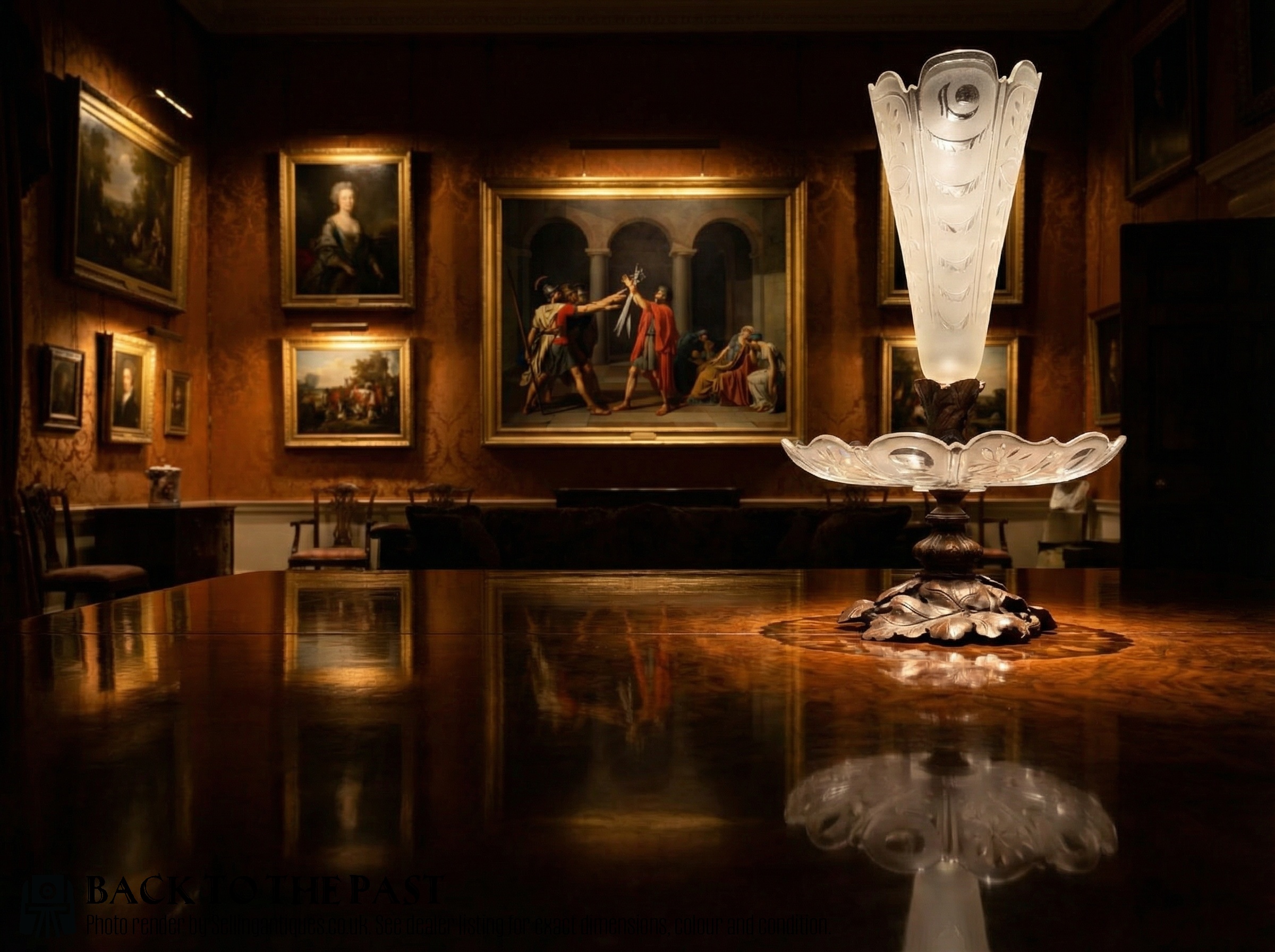
Antique Glass Centrepiece Bowl
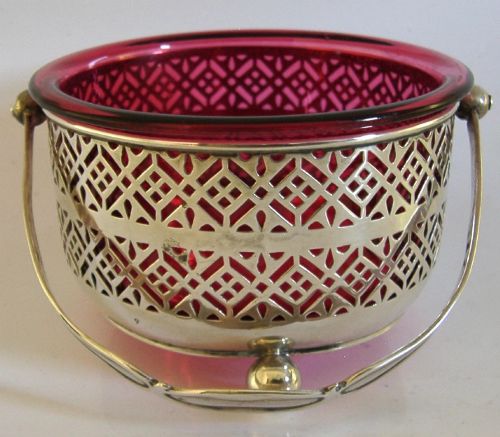
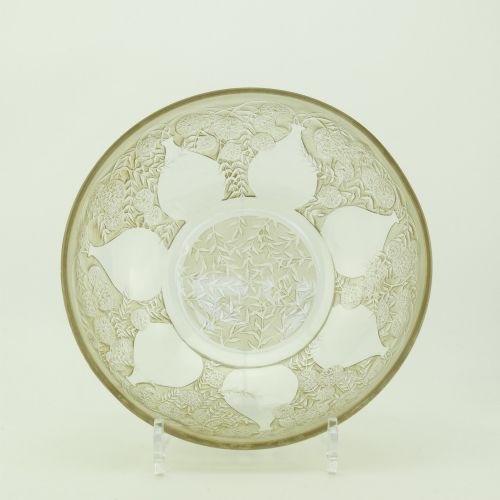
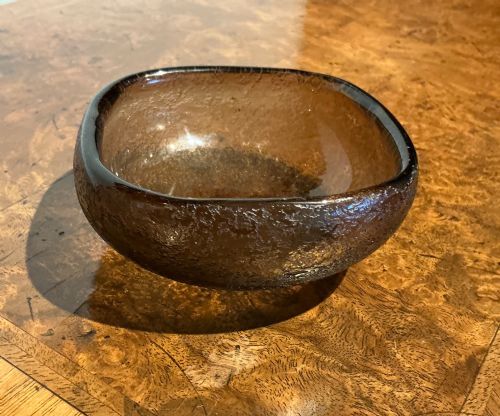
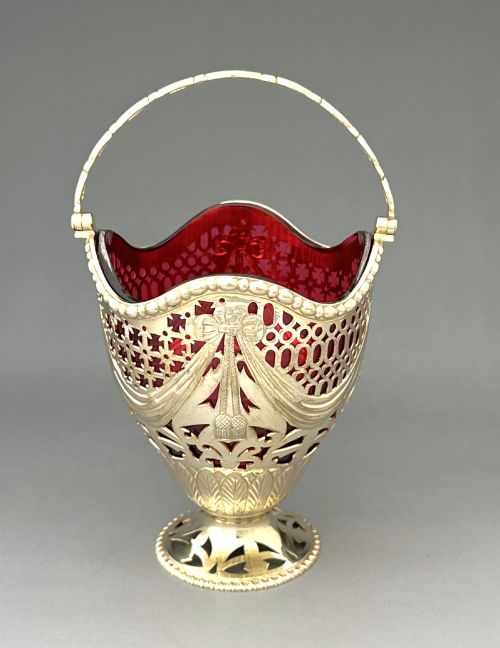
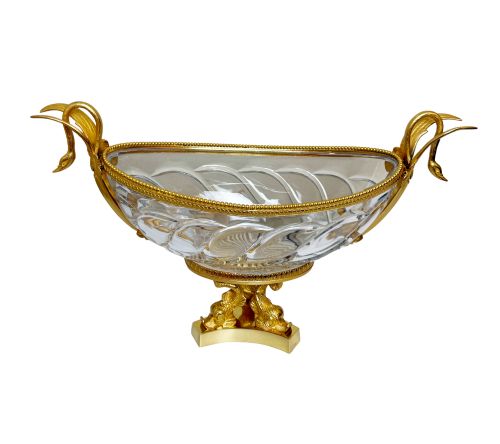
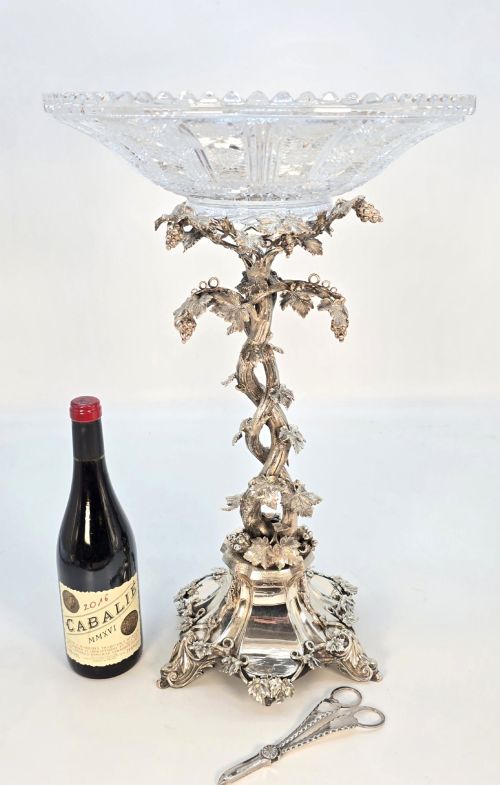
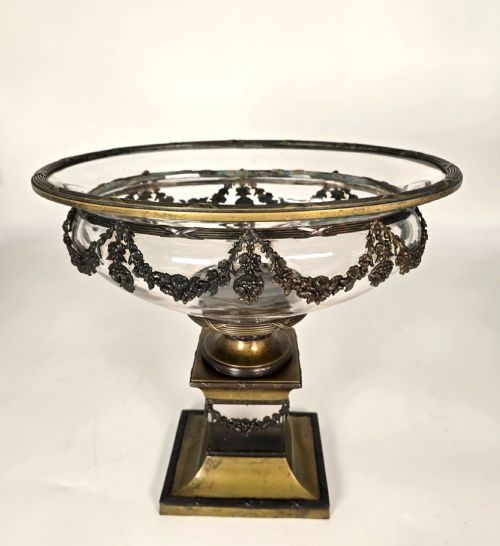
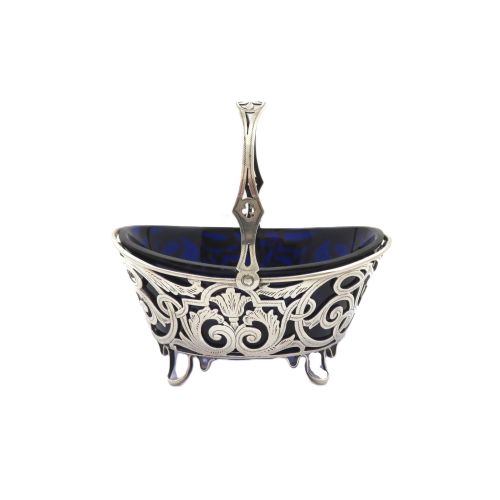
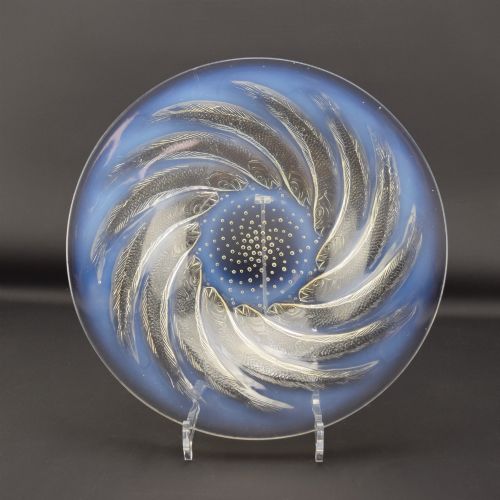
When searching for an antique glass centrepiece bowl, buyers encounter heavy crystal vessels, opalescent dishes, and coloured glass liners mounted in metal frames. The forms range from shallow open chargers and pedestalled tazzas to swing-handled baskets and pedestal bowls designed to hold fruit or flowers.
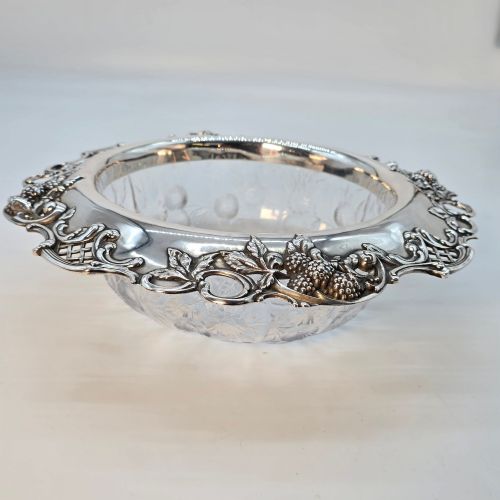
The pieces on this page span the Georgian, Victorian, Edwardian, and Art Deco periods, drawing on English, French, Belgian, and Bohemian workshops. Victorian and Edwardian examples frequently pair cut glass or coloured liners with sterling silver or silver-plated frames, while earlier Georgian items rely on heavy Irish cut crystal.
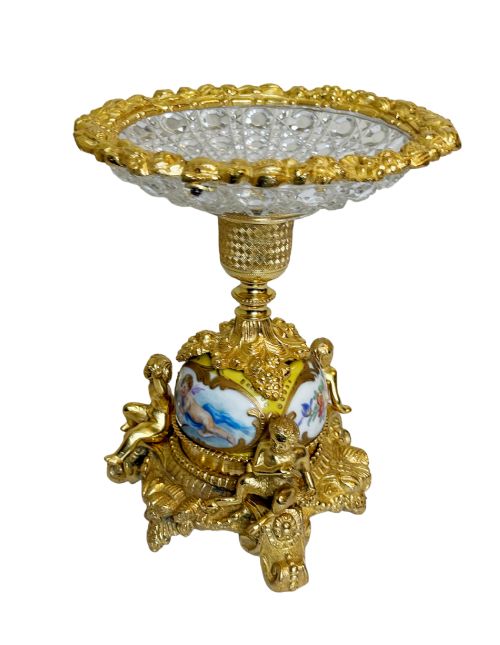
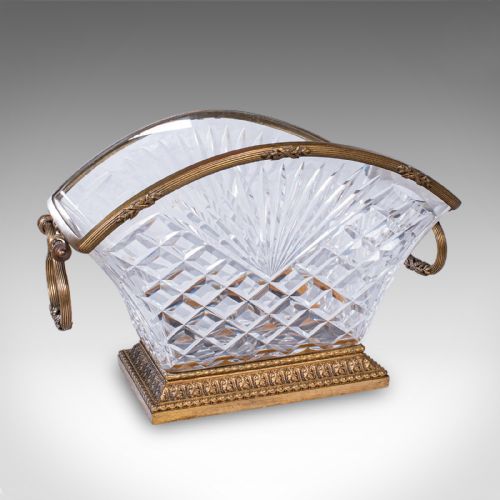
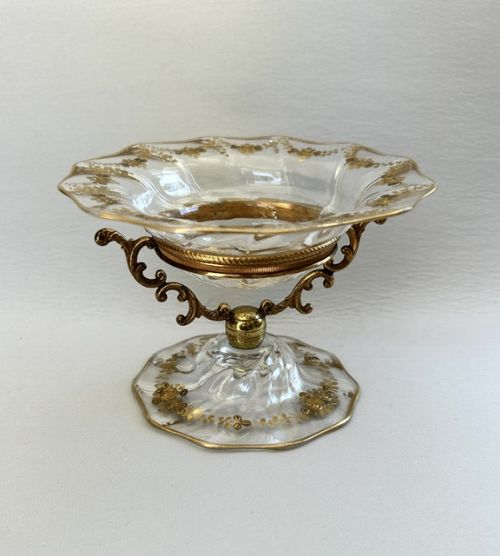
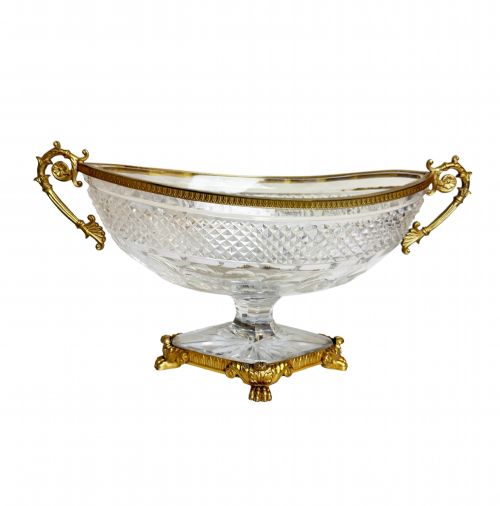
Mid-nineteenth century French pieces combine moulded crystal with gilt bronze, ormolu, and cherub figures in the Empire taste. Later twentieth-century works feature opalescent, millefiori, and press-moulded designs from continental makers.
Materials and Technique
Makers formed the glass vessels using heavy lead crystal, cut glass, or blown coloured glass, subsequently shaping them into bowls, baskets, and tazzas. Techniques involve deep wheel-cutting, acid-etching, and press-moulding to achieve tactile surface patterns.
Metal mounts utilise cast gilt bronze, ormolu, sterling silver, and silver plate, often pierced or chased with foliate and figural detailing. Liners fit snugly into swing handles or pierced frames secured by screws or pins.
Materials recorded across the inventory include cut glass, lead crystal, gilt bronze, silver plate, opalescent glass, and sterling silver.
Craftsmanship and Proportion
Quality rests in the weight of the crystal, the crispness of the wheel-cutting, and the balance between the glass bowl and its metal mount. Superior pieces display deep, sharp facets and heavy, well-cast bronze or silver frames that fit the glass vessel precisely.
The distinction between ordinary and exceptional work lies in the detail of the metalwork, such as chased cherubs or pierced frames, alongside the depth of colour and clarity in the glass itself.
Rene Lalique·Tiffany and Co·WMF·Val St Lambert·Graystan
The Antique Glass Centrepiece Bowl Glossary
- Ormolu
- Gilded bronze used widely in French mounts and decorative stands. The technique involves applying a mercury-gilding mixture to cast bronze.
- Vaseline glass
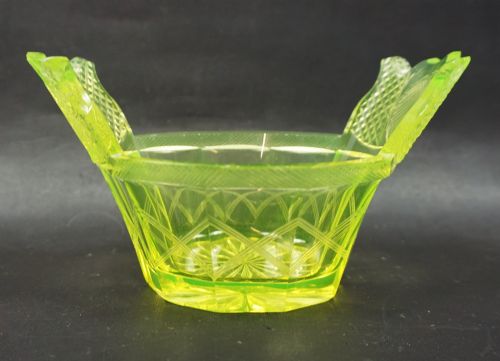
- Uranium glass that exhibits a distinct yellow-green tint and glows under ultraviolet light. It appears frequently in Edwardian and Art Nouveau pieces.
- Tazza
- A shallow ornamental bowl raised on a high foot or pedestal. These pieces function as decorative serving dishes or centrepieces.
- Traforato
- Pierced or openwork decoration found on glassware and metal frames. This Italian term describes ornamental lattice patterns.
- Opalescent glass
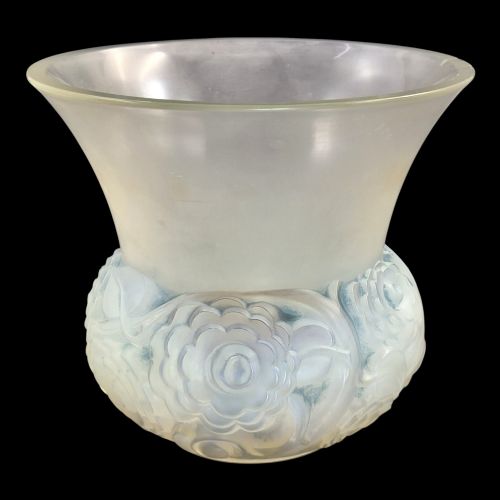
- Glass that displays milky, translucent blue or white tones that shift in changing light. It defines many Art Deco pieces.
Antique Glass Centrepiece Bowl: Frequently Asked Questions
What were glass centrepiece bowls used for?
These vessels stood at the centre of dining tables or sideboards to hold fruit, flowers, or sweetmeats during formal meals.
Their substantial weight and reflective surfaces added visual drama and colour to nineteenth and early twentieth-century room schemes.
How do I date a glass centrepiece?
Dating relies on combining the stylistic clues of the glass manufacture with the hallmarks on any silver or metal mount. Georgian and Victorian pieces show heavier hand-cutting, while Edwardian and Art Deco items introduce vaseline glass and opalescent moulded forms.
Metal mounts also provide clear chronological markers through their prevailing aesthetic, shifting from ornate Empire gilt bronze to clean Art Nouveau silver plate.
Are metal mounts removable?
Most metal frames, swing handles, and ormolu stands were engineered specifically for their glass liners. Some lift out easily for cleaning, while others are secured by integrated brackets.
Care should be taken when handling fitted pieces to avoid stressing the glass or the soldered joints of the metal.
How should I clean antique glass bowls?
Wash glass components gently in warm water using mild soap, avoiding abrasive pads that can scratch the surface. Metal mounts require careful dusting and should be kept dry to preserve the original gilt or silver-plated finish.
Submerging mounted pieces in water is discouraged to protect the integrity of historical glues and fitted frames.