







Hand Painted Glass Bowl
A hand painted glass bowl brings colour and texture to a room, offering rich enamel work and historic craftsmanship.
Hand Painted Glass Bowl
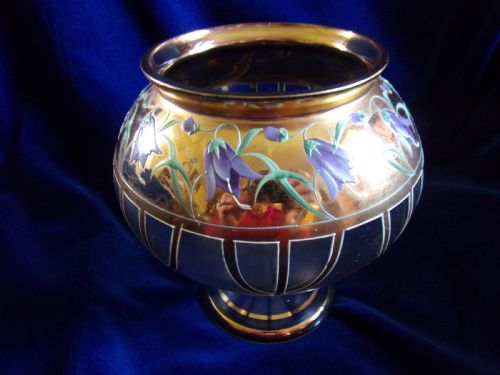
A hand painted glass bowl encompasses decorative vessels produced across the nineteenth and early twentieth centuries, featuring distinct enamel and gilt decoration upon glass bodies. When you examine a hand painted glass bowl on this page, you encounter forms ranging from Victorian cranberry glass centrepieces to Bohemian punch sets and Georgian Bristol blue tableware.
The selection spans diverse European traditions, including French opaline glass, English Burmese ware, and Continental art glass. Buyers often find smaller dressing table jars alongside substantial centrepieces and ceiling light shades, each demonstrating period-specific ornamentation.
Production methods intersect across multiple disciplines, uniting glassblowing with detailed brushwork in enamel and gold leaf. These items served both utilitarian roles at the table and purely decorative functions within period interiors.
How they were made
Makers shaped molten glass by hand, often incorporating mineral oxides to achieve deep hues such as cranberry, green, and Bristol blue. Skilled artisans then applied enamel paints and gold leaf directly to the cooled surface before firing the piece to fix the pigments.
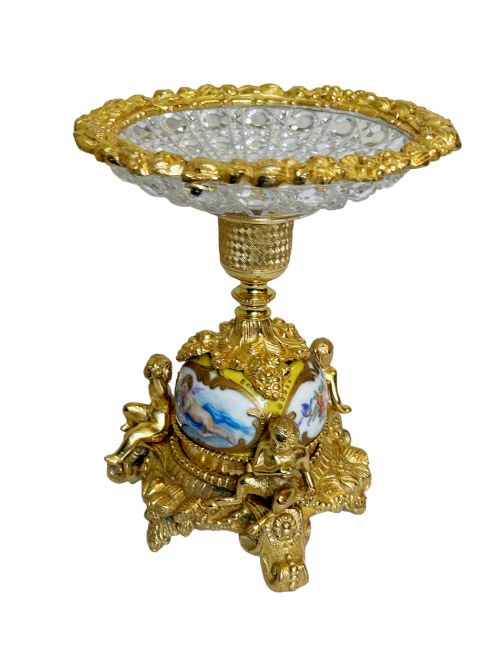
Mounts in gilt bronze, brass, and silver provided structural support and decorative frames for vessels like baskets and centrepieces. Cut crystal elements required precise wheel-cutting and polishing to catch the light alongside the painted surfaces.
Hand Painted Glass Bowl Retail Price Guide 2026
Typical asking prices for hand painted glass bowl among the pieces listed under this phrase on Sellingantiques today, from the lower quarter to the upper quarter. They describe what is for sale here now, not the wider market.
Victorian dining tables often featured elaborate cranberry epergnes that towered above the guests, serving as glittering conversation pieces during dinner parties.
What varies in quality
The refinement of the enamel work dictates the visual success of the piece, with delicate, multi-coloured brushwork showing superior artistic control over simpler painted bands. Precision in the gilding and the crispness of any cut crystal facets further distinguish finer examples from standard production.
The integration of metal mounts, whether gilt bronze or silver, indicates the original ambition of the piece, as does attribution to established makers like Thos. Webb and Sons or named artists such as Hannah Walton.
Thos. Webb and Sons·Hannah Walton
The Hand Painted Glass Bowl Glossary
- Bristol blue
- A deep cobalt blue glass produced in England, particularly popular during the Georgian and Victorian periods for tableware and decorative vessels.
- Burmese ware
- A heat-sensitive art glass shading from pale yellow to a delicate pink, famously produced by Thos. Webb and Sons.
- Enamel
- A fused glass powder applied as a pigment to the surface of the vessel and subsequently fired to create permanent, colourful designs.
- Gilt bronze
- Bronze metal treated with a fine layer of gold, frequently utilised for mounts, handles, and feet on nineteenth-century glass centrepieces.
- Opaline glass
- An opaque or translucent pale glass developed in France, often tinted in pastel shades and utilised for decorative jars and baskets.
Hand Painted Glass Bowl: Frequently Asked Questions
How do I clean a hand painted glass bowl?
Wash the glass gently in lukewarm water using a mild soap, avoiding harsh scrubbing or soaking that might damage the enamel or gold leaf.
Dry the vessel immediately with a soft, lint-free cloth to protect the historic surface.
Can I use these bowls for serving food?
While some historical items like punch sets and cream jugs served functional dining purposes, many decorative bowls feature delicate enamelling that is vulnerable to acidic foods and frequent washing.
Displaying them as decorative centrepieces helps preserve the painted decoration for the future.
How do I date a glass bowl?
Examine the colour palette, the style of the hand painting, and any metal mounts, comparing them with known Victorian, Georgian, or Art Nouveau design characteristics.
Maker marks, registration numbers, and signatures can also narrow the production period.
What is Victorian cranberry glass?
Victorian cranberry glass is a rich red-pink material created by adding gold chloride to the molten glass batch during production.
It was frequently worked into epergnes, centrepieces, and jugs, often paired with clear glass edgings or enamel decoration.