




Ruby Glass Bowl
A ruby glass bowl brings warmth and deep colour to a room, catching the light in a way clear glass simply cannot.
Ruby Glass Bowl
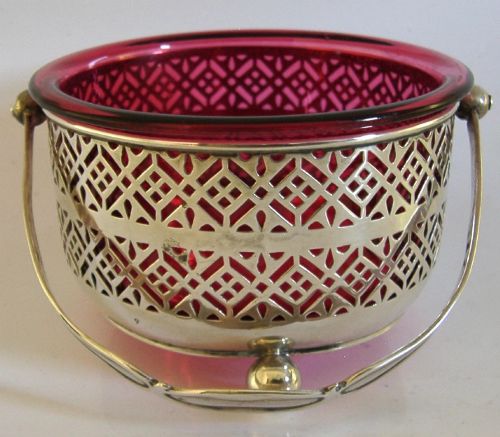
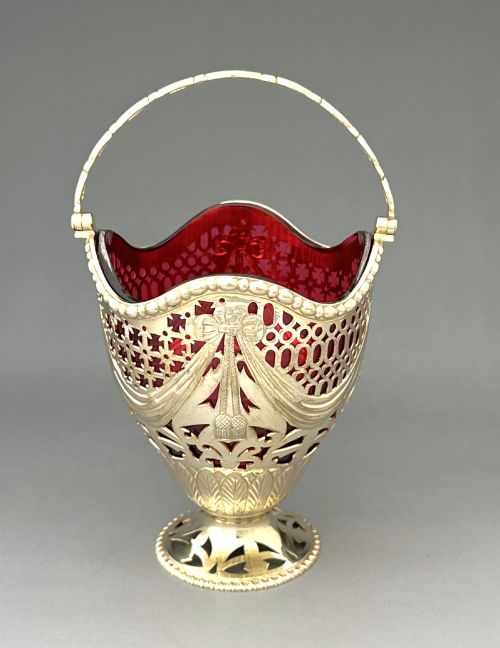
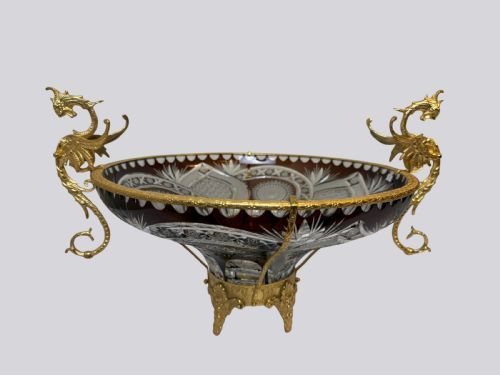
A ruby glass bowl encompasses a range of deep red and cranberry vessels designed for display, sugar service, and table use. The selection spans utilitarian preserve jars and finger bowls alongside decorative centrepiece baskets and gilded tazzas. Victorian and Edwardian examples dominate the offerings, often incorporating pierced silver plate or sterling silver mounts.
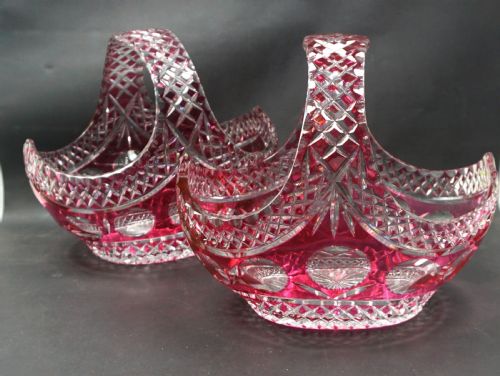
Buyers will frequently encounter pieces paired with metalwork, such as silver-plated baskets with swing handles or gilt bronze stands. The forms range from simple frilled dishes and pedestal bowls to elaborate epergnes and red over crystal cut glass baskets. Continental and English makers provide the primary origins across the nineteenth and early twentieth centuries.
Materials and methods
Glassmakers achieved the distinctive red hue through specialised mineral additions during the melting process, creating both solid ruby glass and layered red over crystal. Hand-blown techniques allowed for organic forms, frilled rims, and applied clear glass details like handles and feet. Many items integrate lead crystal or clear glass to provide contrast against the rich red body.
Metal mounts and frames required distinct craftsmanship, utilising silver plate, sterling silver, and gilt bronze. Pierced metalwork and swing handles were engineered to securely hold glass inserts like liners and baskets. Gilding and etching frequently embellish the surface, adding ornamental detail to the finished vessel.
Some delicate glass baskets arrive with swing handles that still swing freely after more than a century.
Distinctions in quality
Depth of colour and consistency in the glass set superior pieces apart from standard production. Rich, even saturation without cloudiness indicates careful chemical formulation during the glassmaking process. Hand-finished details, such as crisp cut panels or delicate gilding, distinguish finer studio work.
The integration of the glass with its metal mount demonstrates the overall standard of the piece. High-quality items feature substantial silver plate, sterling silver, or cast bronze mounts that fit the glass vessel precisely. Original mounts and matched components retain greater integrity than later replacements.
Val St Lambert·George Fox·WMF
The Ruby Glass Bowl Glossary
- Cranberry Glass
- A type of transparent glass coloured with gold chloride, producing a distinctive pinkish-red hue. It became immensely popular during the Victorian period for tableware and decorative items.
- Silver Plate
- A base metal coated with a thin layer of silver, frequently used for the frames, stands, and swing handles of nineteenth-century glass baskets.
- Tazza
- An ornate pedestal bowl or shallow cup elevated on a stem and foot, traditionally used for serving fruit or sweets on a dining table.
- Epergne
- A large, multi-tiered centrepiece featuring a central bowl and radiating trumpet vases or baskets, typically utilised for formal table decoration.
- Gilt Bronze
- Bronze metal decorated with a thin application of gold or gold leaf, providing a rich metallic contrast to coloured glass.
Ruby Glass Bowl: Frequently Asked Questions
How do I clean an antique ruby glass bowl?
Wash the glass gently in lukewarm water using mild dish soap and a soft cloth. Avoid harsh scrubbing brushes and abrasive cleaners that can scratch the surface or damage applied gilding.
Remove any metal stands or silver-plated mounts before cleaning if possible, and dry the glass thoroughly with a lint-free towel to prevent water spots.
Are these bowls safe for serving food?
Most antique bowls are suitable for serving dry foods, sweets, or fruit. However, historic glass can be sensitive to rapid temperature changes, so avoid putting hot liquids into them.
Acidic foods should not be left in antique glass for extended periods, as some older chemical formulations can react with strong acids.
How can I tell Victorian ruby glass apart from later pieces?
Victorian pieces often exhibit hand-blown characteristics such as pontil marks on the base, irregular thicknesses, and applied decorative elements. The depth of the red colour and the specific style of the silver-plated mounts also offer clues to the era.
Later twentieth-century productions tend to feature more uniform machine moulding and standardised dimensions without the subtle irregularities of nineteenth-century work.
How should I display a glass basket with a metal handle?
Place the piece in a secure location away from the edge of tables or shelves where the swing handle could be accidentally knocked. Natural light from a nearby window will accentuate the deep red tones of the glass.
Ensure the bowl is not subjected to direct, intense sunlight for prolonged periods, which can sometimes affect delicate glass colours.