




Enamelled Glass Dish
An enamelled glass dish combines vibrant colour with tactile surface decoration, offering a decorative vessel that catches the light brilliantly.
Enamelled Glass Dish
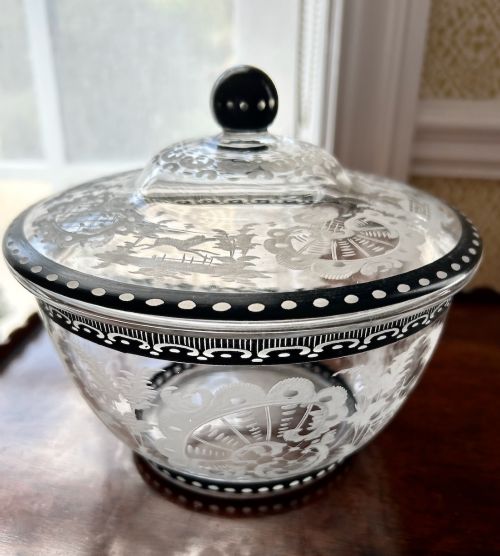
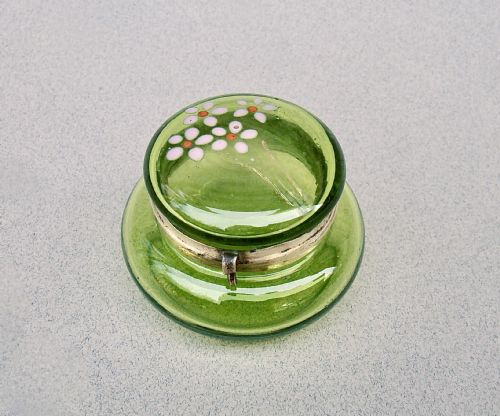
When you search for an enamelled glass dish, you find a variety of decorative vessels, lidded boxes, and dressing table jars produced across the nineteenth and twentieth centuries. These pieces range from small trinket boxes to larger decorative bowls, reflecting diverse domestic uses on vanity tables and dining sideboards.
Continental and British workshops dominate the selection, showing how different makers applied opaque and translucent pigments directly to blown or cut glass surfaces. These items served both practical storage functions and purely decorative display roles within period interiors.
How they were made
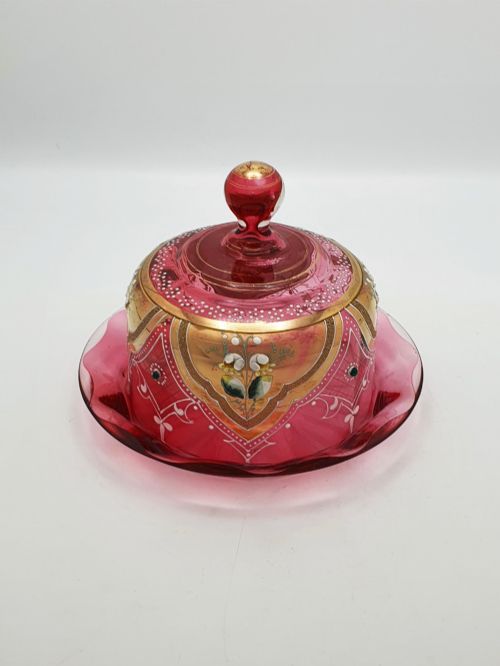
Glassmakers formed the foundational vessels using techniques such as free-blowing, mould-blowing, or cutting heavy crystal. Coloured glass varieties like cranberry and Bristol blue achieved their rich hues through the addition of metallic oxides during the initial melting process.
Artisans then applied enamel pigments to the hardened glass surface, often fixing the designs through a low-temperature firing process. Many pieces incorporate precious metals, utilising sterling silver lids, gold leaf accents, or metal mounts to frame the decorated glass.
Enamelled Glass Dish Retail Price Guide 2026
Typical asking prices for enamelled glass dish among the pieces listed under this phrase on Sellingantiques today, from the lower quarter to the upper quarter. They describe what is for sale here now, not the wider market.
The listings span from 1860 through the 1930s, featuring Art Deco, Art Nouveau, and Victorian design aesthetics.
What varies in quality
The refinement of the enamel work dictates much of the visual success, distinguishing freely painted floral motifs or precise geometric patterns from simpler, heavier applications. Artisans who achieved subtle shading and depth on the glass surface created pieces with lasting artistic merit.
The integration between the glass body and any metal elements, such as sterling silver lids or mounts, reveals the overall standard of manufacture. Well-fitted mounts and substantial cut crystal or coloured glass bodies indicate superior craftsmanship from established glassworks.
St Louis glassworks·Rene Lalique·Hannah Walton·François-Eugène Rousseau·Baccarat
The Enamelled Glass Dish Glossary
- Cranberry glass
- A rich red or pink transparent glass created by adding gold chloride to the molten batch. It became particularly popular during the Victorian era for decorative tableware and dressing table accessories.
- Enamel
- A decorative vitreous composition fused to the surface of glass through heat. It provides vibrant, opaque, or translucent colour that sits proud of the transparent vessel body.
- Plique-a-jour
- An enamelling technique where the pigment is fired in open wire cells without a backing, resembling miniature stained glass that allows light to pass directly through.
- Cut glass
- Glassware shaped and patterned by grinding facets or geometric designs into the surface with rotating wheels. This technique enhances the refractive qualities of heavy crystal bowls.
Enamelled Glass Dish: Frequently Asked Questions
How were these dishes used?
These pieces primarily served domestic functions on dressing tables and in reception rooms, holding small personal items like pins, rings, and cosmetics.
Larger lidded bowls and covered dishes also appeared on dining tables for serving specialised foods, while others functioned purely as decorative centrepieces.
How do I date an enamelled glass dish?
Dating relies heavily on stylistic markers, such as the flowing organic lines of Art Nouveau or the strict geometric forms of Art Deco. Hallmarks on accompanying silver lids or mounts provide precise years and assay office locations.
Colour palettes and manufacturing techniques also align with specific decades, helping to separate mid-Victorian production from later twentieth-century output.
What is Mary Gregory glass?
Mary Gregory pieces feature characteristic white enamel silhouettes depicting children, birds, or foliage, typically set against a rich green or cranberry glass background. Victorian dressing table sets frequently included these distinctive decorative items.
The style became a staple of late nineteenth-century decorative glass production across both British and American workshops.