
Antique Gilt Furniture
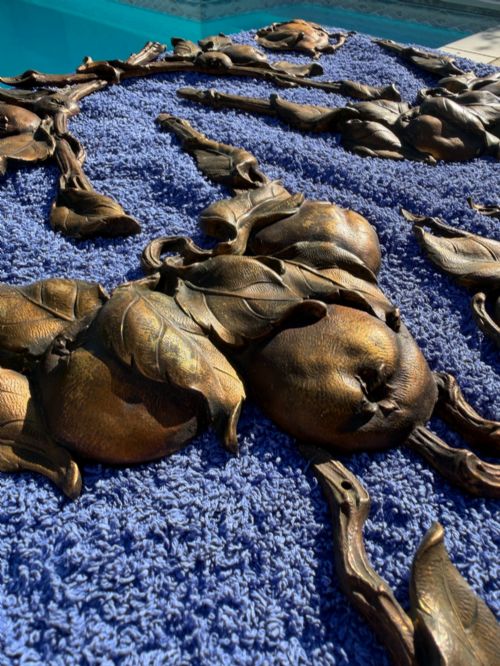
Antique gilt furniture brings dramatic surface reflection and carved splendour to a room, spanning console tables, armchairs and cabinets touched with gold leaf, ormolu and parcel-gilding.
Antique Gilt Furniture
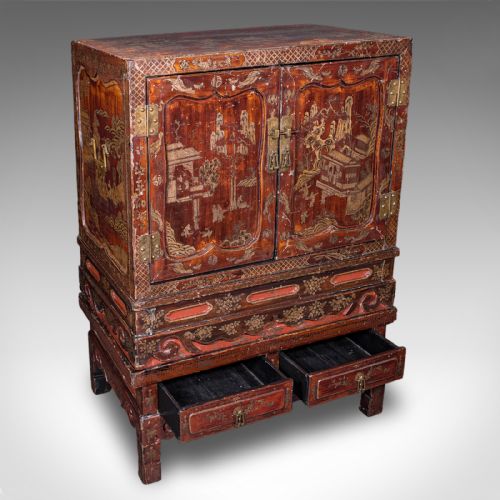
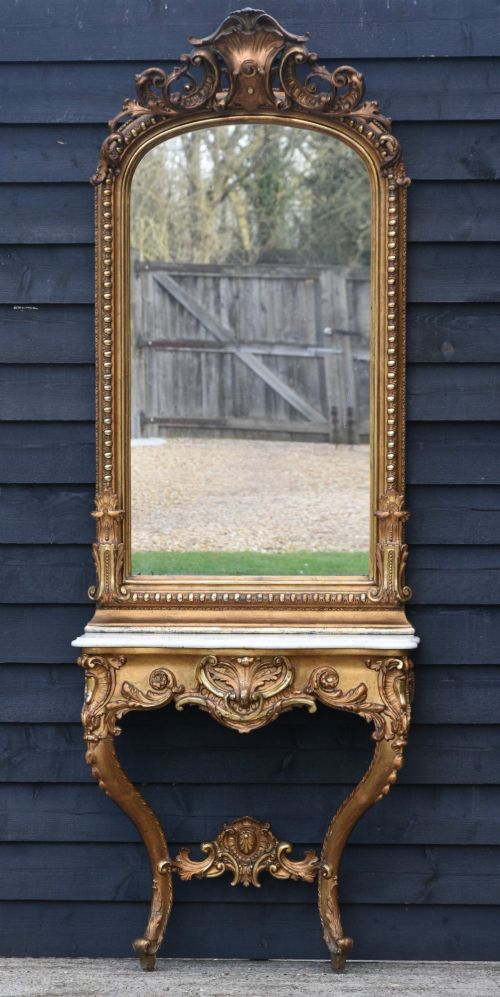
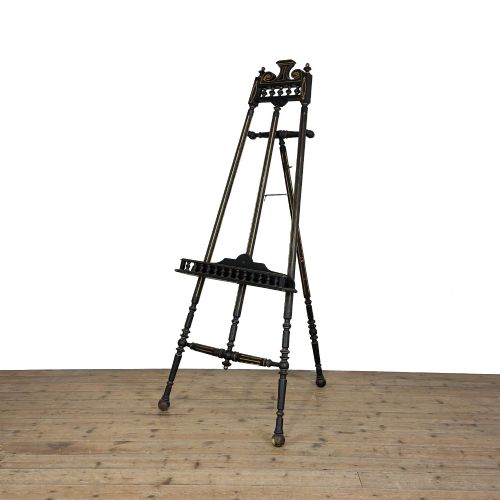
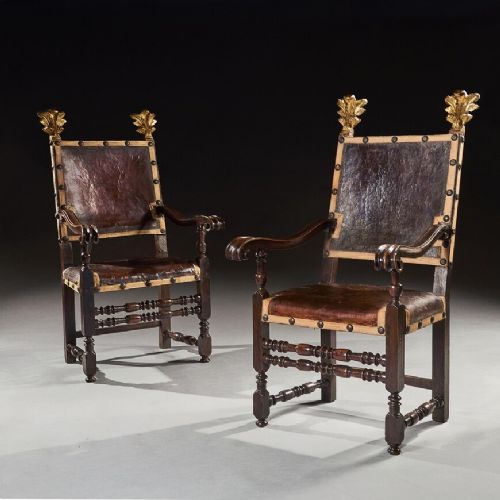
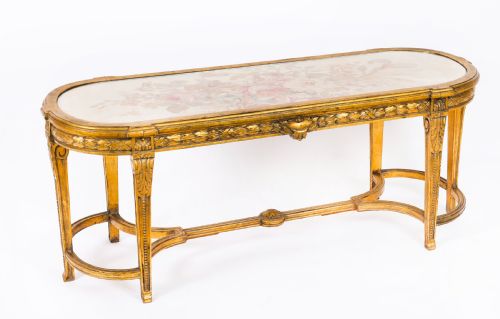
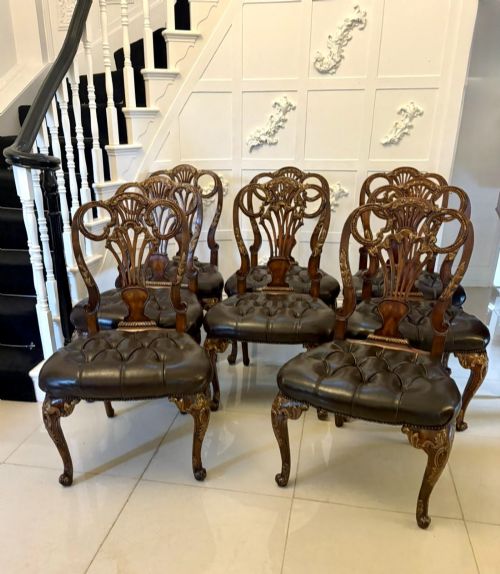
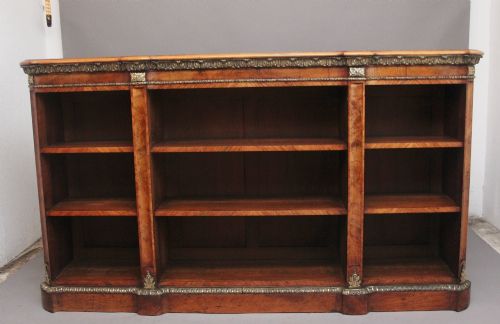
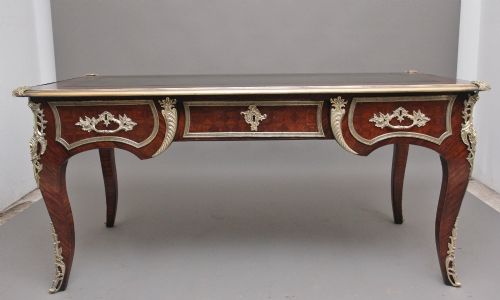
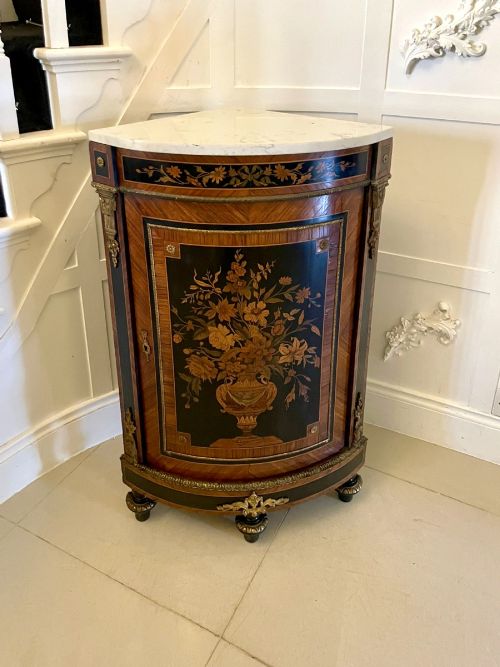
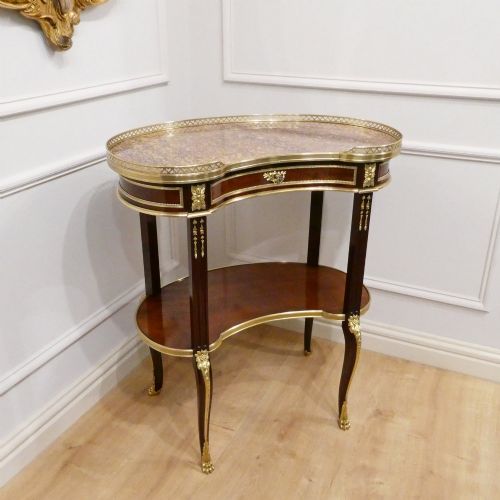
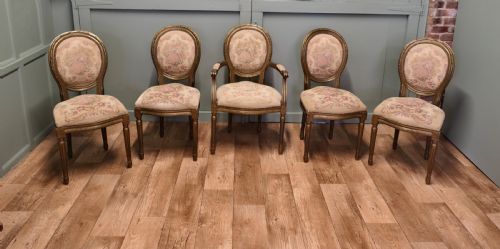
When searching for antique gilt furniture, buyers encounter pieces defined by applied gold leaf, gilt-bronze mounts and parcel-gilded details across several centuries. The selection here covers items ranging from 18th-century Italian console tables to Victorian ebonised étagères and Edwardian chinoiserie cabinets. Console tables paired with pier mirrors, armchairs in the Louis XV and Louis XVI revivals, and freestanding occasional tables form the core of what is available.
Origin and period heavily dictate the character of these items, with French cabinetmakers and Italian workshops dominating the formal end of the spectrum. Pieces manifest in styles spanning the Baroque, Regency, Aesthetic Movement and various French revivals. Buyers find everything from large salon suites and commodes with marble tops to smaller decorative desks, work tables and furniture mounts.
Materials and construction methods
Craftsmen built these pieces using structural timbers such as walnut, mahogany, kingwood and amboyna, often applying ebonisation or exotic veneers to the primary surfaces. Gilding was achieved through the application of thin gold leaf onto a prepared gesso and bole ground on carved giltwood, or through fire-gilding bronze and brass to create ormolu mounts.
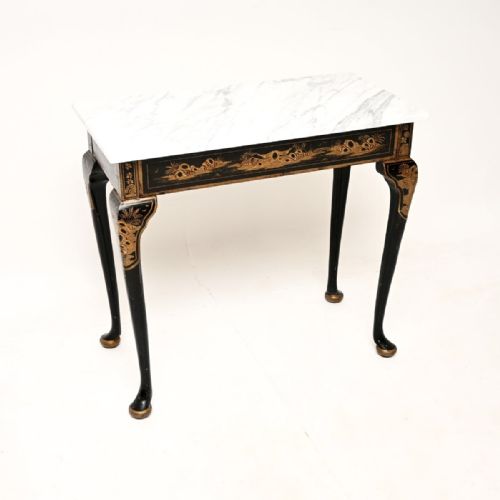
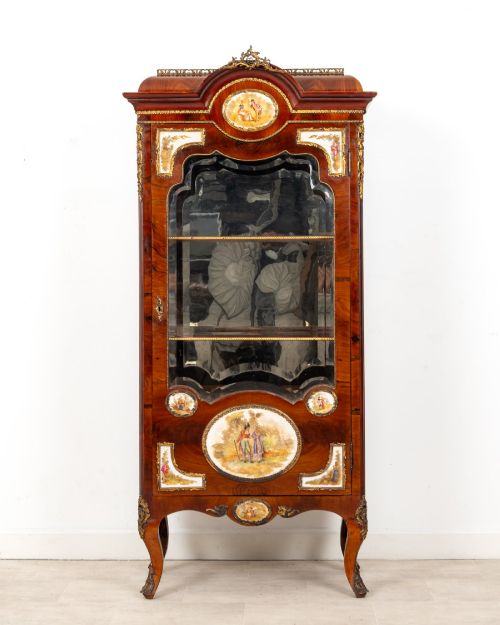
Surface ornamentation frequently incorporated marquetry, parquetry, lacquer and painted chinoiserie scenes alongside porcelain plaques and marble tops. Joinery methods relied on traditional cabinetmaking techniques, occasionally incorporating sophisticated mechanical elements within desks, tables and music boxes.
The listings encompass items spanning the 18th century through the early 20th century, dominated by French and British aesthetic movements.
Distinctions in standard and execution
The division between standard items and exceptional pieces rests upon the crispness of the wood carving, the depth and purity of the gold leaf, and the weight and chasing of the ormolu mounts. Finer examples display hand-chiselled detailing on bronze elements rather than cast uniformity, alongside superior timber selection such as figured kingwood or amboyna.
Attribution to documented makers or prominent Parisian and British workshops elevates an item's standing, as does the survival of original marble tops, leather inserts and finishing details like vernis martin panels. Proportion, structural integrity and the harmony between the carved frame and its surface gilding govern the overall success of the piece.
Poix Blin·Johnstone and Jeanes·Maison Millet·Joseph-Emmanuel Zwiener·Jacob-Desmalter·Maples and Co.·H. J. Hatfield and Sons·Wylie and Lochead·Henry Dasson·Gillows
The Antique Gilt Furniture Glossary
- Ormolu
- Gilded bronze, typically produced by applying a mercury-gold amalgam to cast bronze before heating to drive off the mercury. This technique creates a durable, rich golden finish characteristic of decorative mounts on fine cabinets and desks.
- Giltwood
- Timber, usually lime or pine, that has been carved and coated with layers of gesso and size before applying thin sheets of gold leaf. It forms the structural medium for ornate 18th and 19th-century console tables and frames.
- Parcel-gilt
- A method where only specific portions of an object, such as carved highlights or mouldings, are gilded while the underlying wood or painted surface remains visible. It provides contrast on Regency and Victorian furniture.
- Vernis Martin
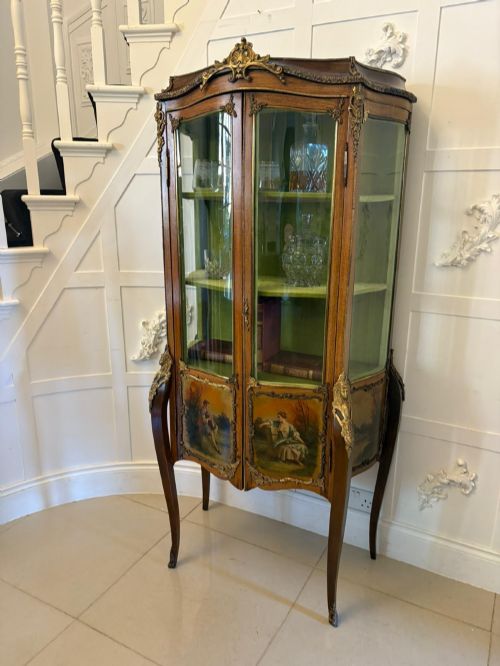
- A type of simulated Japanese lacquer developed in France during the 18th century, using successive layers of varnish. It frequently decorates the panels of fine commodes and vitrines.
- Pier glass
- A large mirror designed to hang on the wall space between windows, often positioned directly above a matching console table. These matched pairs are a staple of formal 19th-century salons.
Antique Gilt Furniture: Frequently Asked Questions
What is ormolu on furniture?
Ormolu refers to gilded bronze mounts applied to the exterior of cabinets, desks and tables for decorative accent. Makers cast the bronze and refined the details by hand before applying a gold amalgam.
These metallic elements protect vulnerable corners and add reflective contrast against dark timbers like mahogany, kingwood and ebonised wood.
How do I identify French revival styles?
French revival pieces draw upon the court styles of Louis XV and Louis XVI, translated through 19th-century manufacturing. Louis XV Revival designs favour asymmetrical curves, cabriole legs and elaborate rococo ormolu mounts.
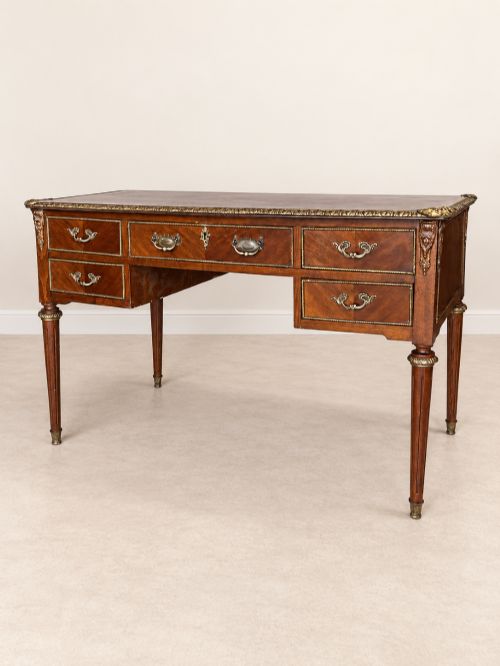
Louis XVI style pieces emphasise symmetry, straight fluted legs, neoclassical plaques and restrained geometric parquetry.
Where were console tables placed?
Console tables were traditionally fixed against a wall, frequently beneath a pier mirror between two windows in a formal reception room. Because the backs were often finished plainly or designed to stand flush against a wall, they relied on the mirror above to complete the visual composition.
Later Victorian and Edwardian examples adapted the form for freestanding use or smaller drawing-room settings.
How should I care for giltwood?
Giltwood surfaces require gentle dusting with a soft, dry ostrich feather brush to prevent accumulation without disturbing the delicate gold leaf. Moisture and chemical polishes must be avoided entirely, as water lifts the underlying gesso ground.
Keeping pieces away from direct sunlight and fluctuating heat sources preserves the stability of both the carved wooden frames and the metallic finishes.