



Serpentine Painted Commode
A serpentine painted commode brings sweeping curves and decorative brushwork into a room, serving as a striking storage piece with considerable presence.
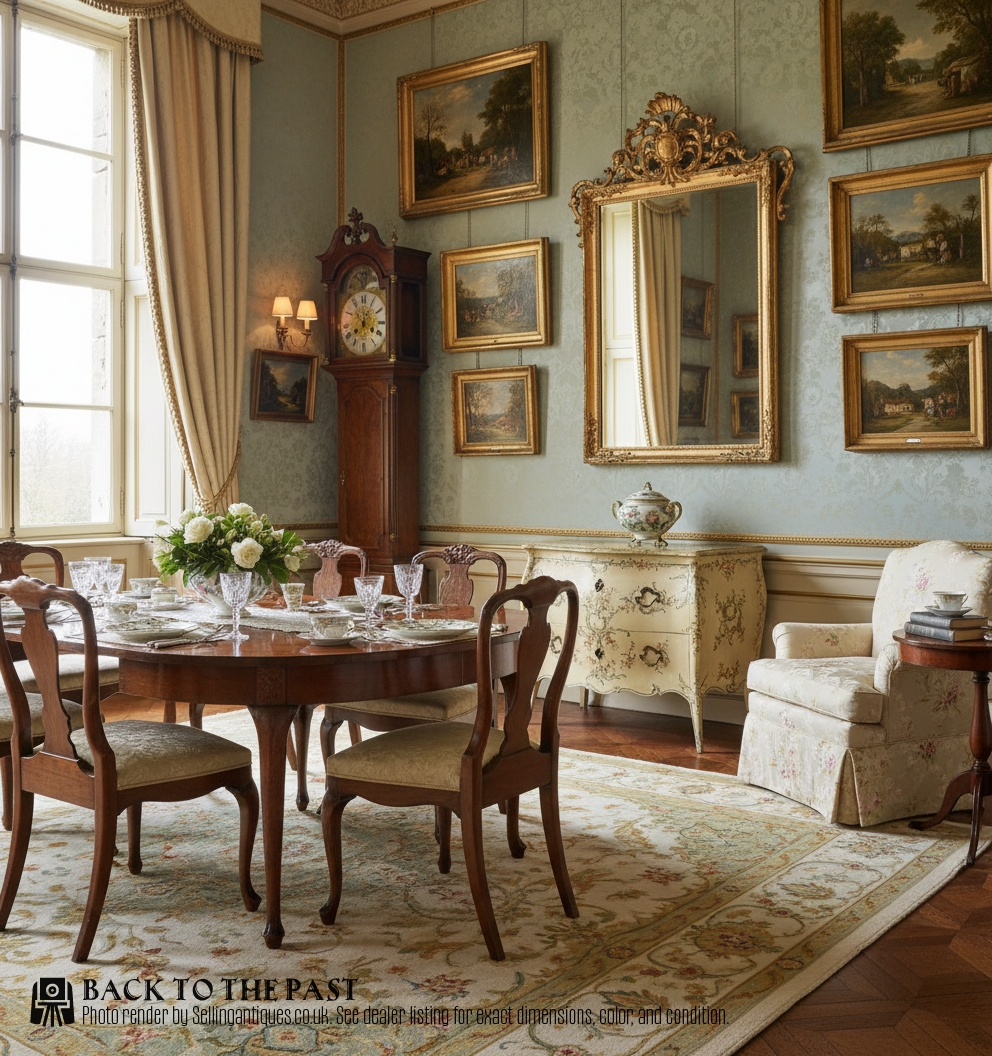
Serpentine Painted Commode
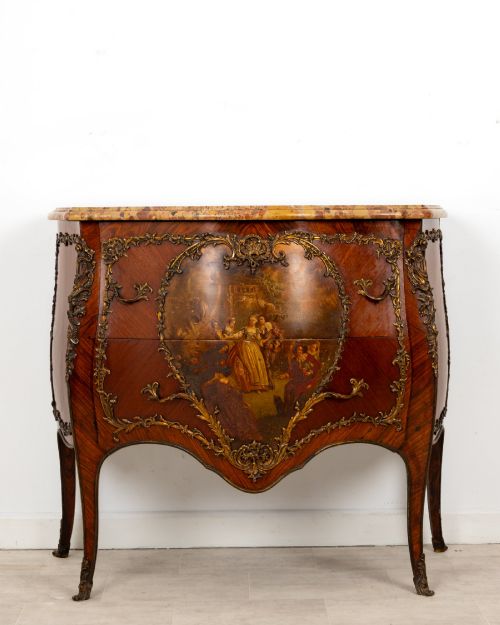
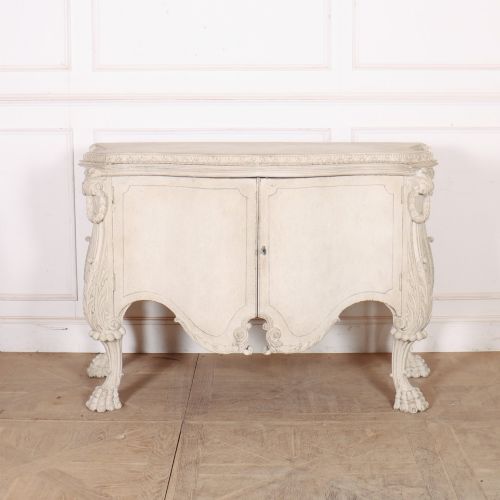
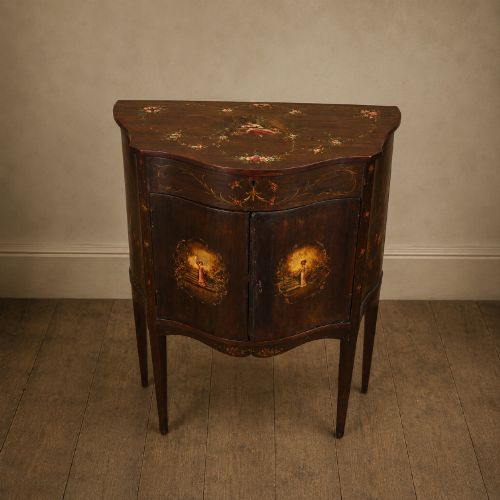
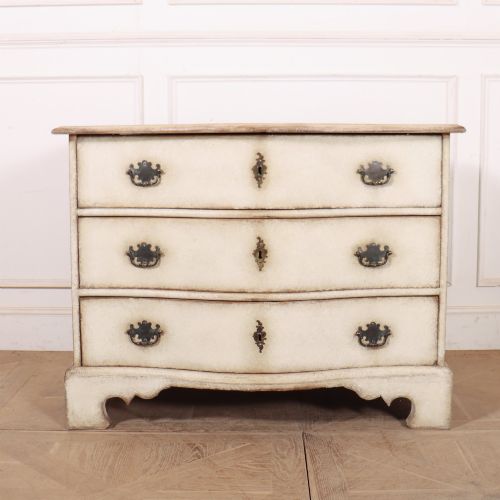
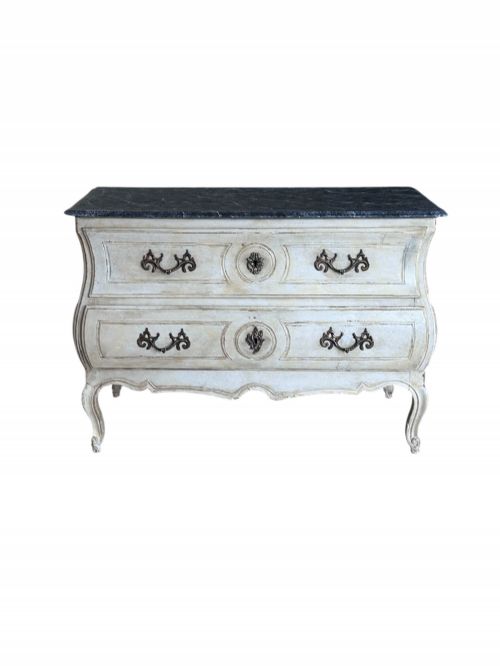
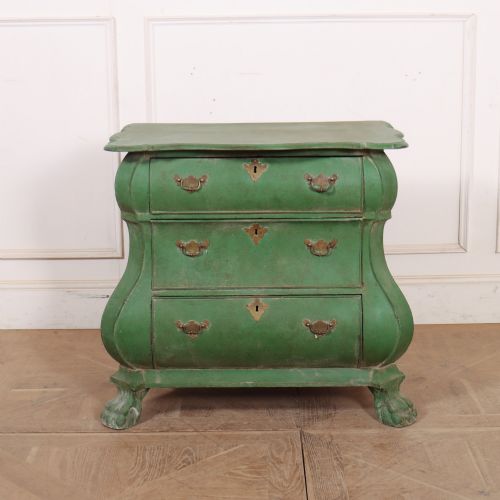
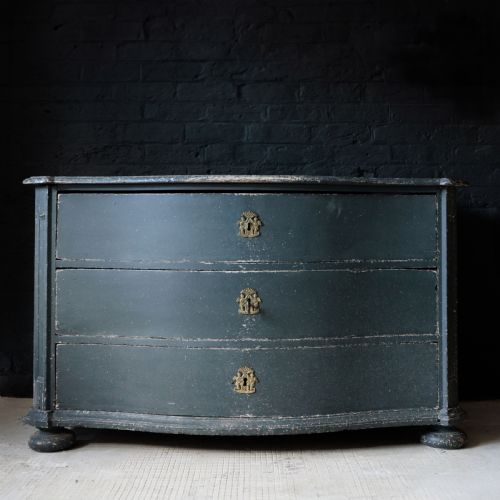
A serpentine painted commode is a drawer-based storage unit defined by an undulating front edge and a decorative painted finish. These pieces emerge in various regional styles, most notably from French, Italian, Dutch, and Scandinavian workshops.
The form spans several centuries, drawing on eighteenth-century origins through nineteenth-century revivals and later periods. Pieces appear as chests of drawers, side cabinets, and commodes featuring distinct curved lines and painted wood surfaces.
How they were made
Construction relies on timber foundations such as oak, pine, and general wood, shaped to form the characteristic undulating serpentine profile. Carpenters shape the drawer fronts and carcasses to achieve the flowing contours typical of these commodes.
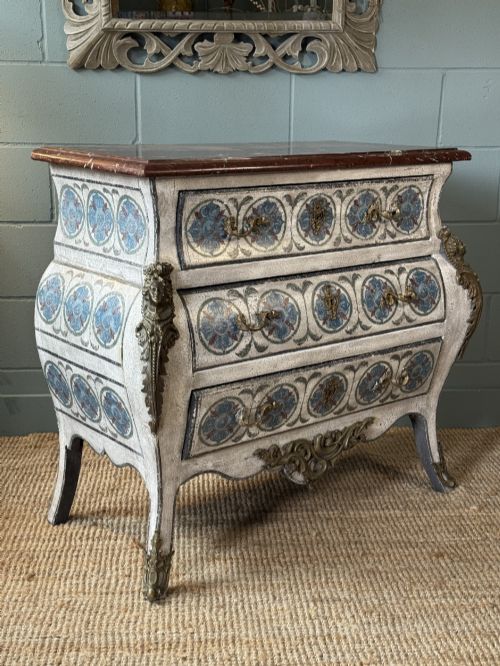
Surfaces receive paint finishes, sometimes supplemented with marble tops, brass fittings, and metal elements. Painters apply pigments directly to the wood, occasionally utilising gilt details to accentuate the carved contours.
Certain commodes hide their curves behind secretive bombastic fronts that make even the most stubborn sock drawer look theatrical.
What varies in quality
The refinement of the painted surface and the precision of the serpentine shaping distinguish different examples. Skilled brushwork and harmonious colour choices elevate the visual impact of the painted decoration.
The integration of materials such as fitted marble tops and quality brass hardware alters the character of the piece. Construction integrity in the drawers and carcass reflects the original cabinetmaker's competence.
The Serpentine Painted Commode Glossary
- Serpentine
- A front contour that curves inward centrally and outward at the sides, creating a gentle undulating wave. This shape requires precise carpentry to execute across drawer fronts.
- Commode
- A low chest of drawers or cabinet designed for domestic storage. The form evolved from seventeenth-century tables into enclosed drawer units.
- Bombe
- A swelling, bulging outward profile found on the sides and fronts of certain continental pieces. This volumetric shape demands advanced woodworking techniques.
- Rococo
- A decorative style characterised by asymmetry, scrollwork, and organic curves. This aesthetic heavily influences the ornamentation of eighteenth-century commodes.
- Sheraton Revival
- A late nineteenth-century design movement drawing inspiration from late eighteenth-century neoclassical furniture. Pieces from this revival often incorporate satinwood and delicate painted motifs.
Serpentine Painted Commode: Frequently Asked Questions
Where did serpentine commodes originate?
These commodes developed across various European countries including France, Italy, England, and the Netherlands. Regional cabinetmakers adapted local timbers and artistic traditions to shape the undulating fronts.
Craftsmen in different workshops applied distinct painted finishes, ranging from provincial floral designs to elaborate continental schemes.
How do I clean a painted commode?
Dust the surface regularly with a soft, dry cloth to prevent dirt accumulation. Avoid harsh chemical cleaners that might damage the painted wood finish.
Consult a professional restorer if the paint shows signs of flaking or instability. Gentle maintenance preserves the historic pigment layers.
How do I date a painted commode?
Dating relies on examining construction methods, timber types, and the style of the painted decoration. Eighteenth-century examples display different joinery techniques compared to nineteenth-century revival pieces.
Hardware styles and regional characteristics also provide clues to the period of manufacture.