



Antique German China
Antique german china brings together centuries of European porcelain tradition, offering collectors everything from delicate cabinet cups to expressive figures.
Antique German China
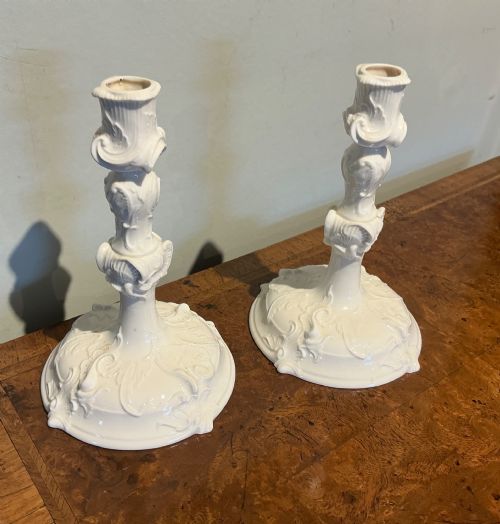
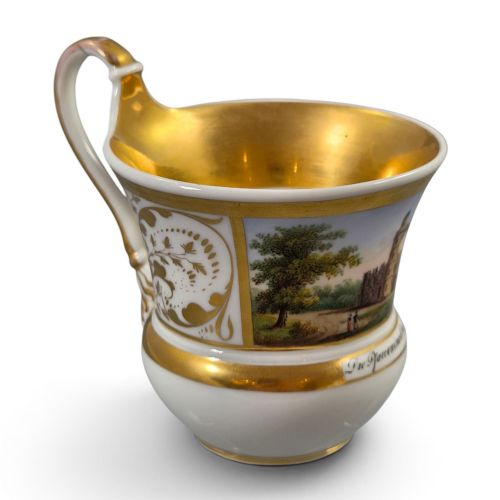
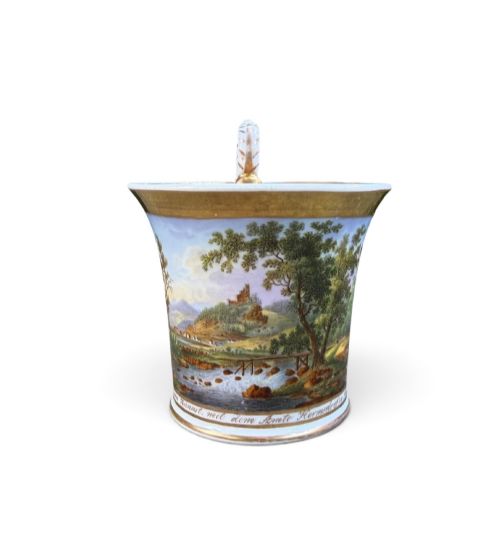
When you search for antique german china, you encounter a diverse array of hard-paste porcelain objects spanning from the eighteenth century through the early twentieth century. The selection on this page centres on cabinet plates, decorative dishes, elaborate figurines, candlesticks, and matched sets.
The objects most frequently met here hail from the nineteenth century, reflecting the Victorian and Edwardian eras alongside earlier Georgian and eighteenth-century pieces. Makers span renowned names like Meissen, KPM Berlin, and Volkstedt, presenting forms decorated with floral sprays, topographical scenes, and pastoral subjects.
Collector interest focuses heavily on how well these porcelain bodies retain their original hand-painted details and gilding. Whether examining a single cabinet cup or a pair of candlesticks, the appeal lies in the historical continuity of German ceramic production.
What varies in quality
Quality in these ceramics rests primarily upon the crispness of the porcelain moulding and the precision of the hand-painted decoration. Pieces originating from premier factories demonstrate superior control over fine enamel work and gilding.
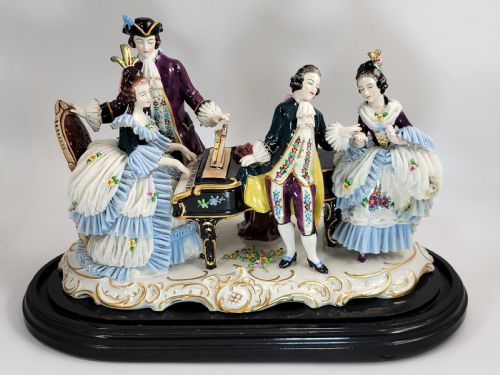
The finesse seen in sculptural forms - such as lace figures or allegorical groups - distinguishes finer examples from standard production pieces. Preservation of the original glaze and minimal wear to surface gilding further elevate a piece's standing.
Listings feature hard-paste porcelain, enamel, and gold leaf across periods ranging from the eighteenth century to the 1930s.
Nymphenburg·KPM Berlin·Meissen·Triebner Ens & Eckert·Paul Müller Selb·Müller Volkstedt·Helena Wolfsohn·Ernst Bohne Söhne·Sitzendorf
The Antique German China Glossary
- Hard-paste porcelain
- A durable ceramic composition fired at high heat, invented in Europe during the early eighteenth century. This material forms the sturdy base for most pieces on this page.
- Gilding
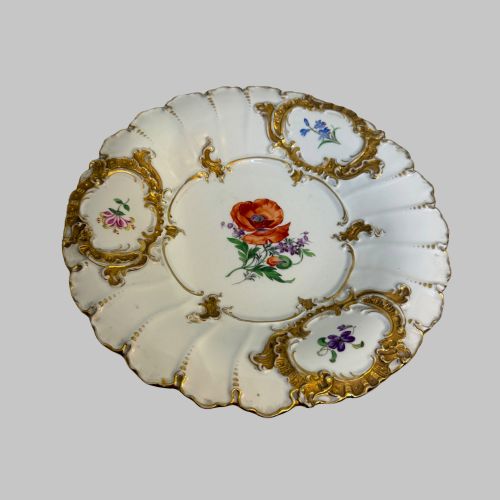
- The application of gold leaf or gold paint to highlight rims, handles, and moulded details. It adds a reflective sheen to plates and cabinet cups.
- Streublumen
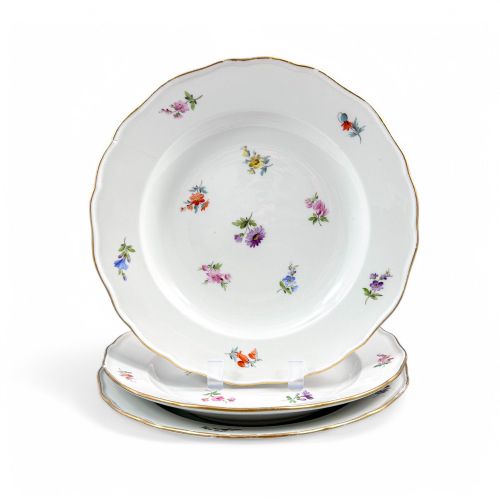
- A decorative scatter pattern of small, detached floral sprigs painted across porcelain surfaces. Meissen frequently utilised this motif on plates and dishes.
- Cabinet plate
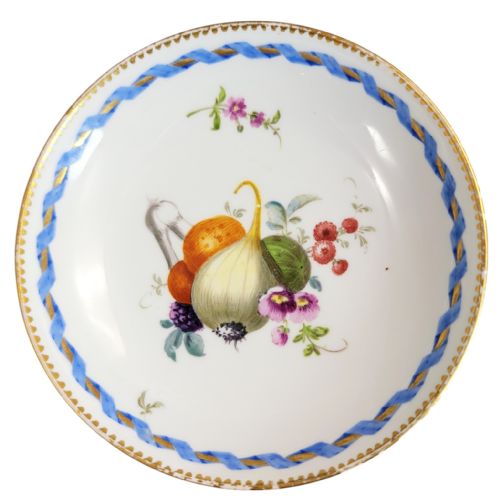
- A decorative ceramic plate intended for display in a cabinet rather than for daily dining use. These often feature elaborate topographical or hand-painted scenes.
- Enamel
- Opaque glass-like material fused to the porcelain body during firing to create vibrant, permanent colours. It provides the palette for floral bouquets and figural garments.
Antique German China: Frequently Asked Questions
What is hard-paste porcelain?
Hard-paste porcelain is a ceramic material composed of kaolin and petuntse, fired at exceptionally high temperatures. This process creates a vitrified, non-porous body that resists scratching and holds fine details.
Factories in Germany mastered this formula early, allowing them to produce thin yet durable cabinet cups, plates, and intricate figures that survived centuries.
How do I display cabinet plates?
Cabinet plates are best displayed using dedicated wall hangers or secure plate stands designed to support porcelain weight evenly. Keep them away from direct sunlight to preserve the vibrancy of hand-painted enamels.
Grouping plates by shared motifs, such as floral sprays or topographical views, creates a cohesive display that highlights their historical manufacture.
What are porcelain fairings?
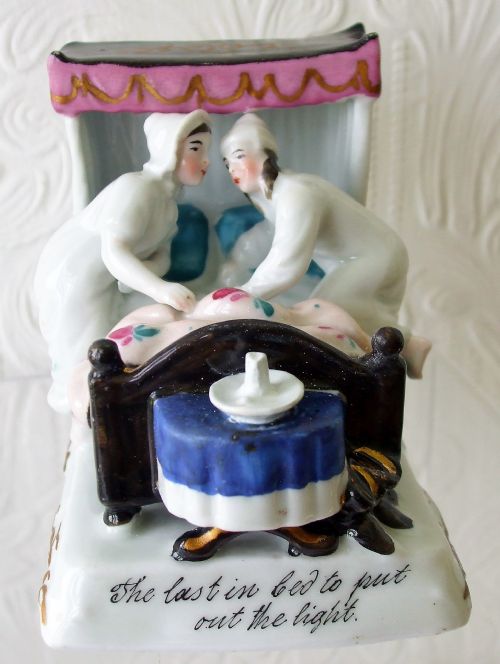
Porcelain fairings are small, often humorous figural groups produced during the nineteenth century, frequently inscribed with popular sayings or titles. Victorians often bought these inexpensive novelty items at annual fairs.
They offer a lighter glimpse into period domestic life, contrasting with formal cabinet plates and classical allegorical figures.