



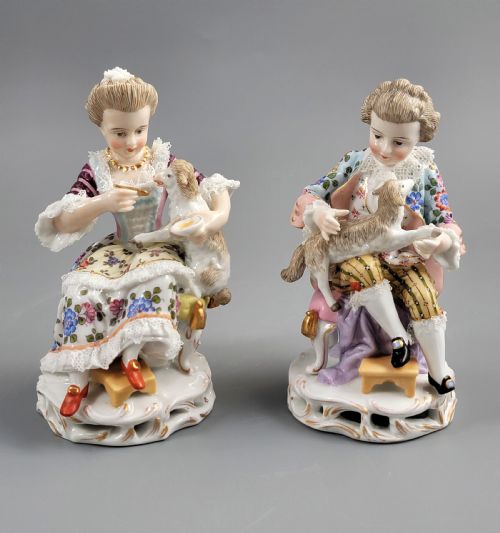

Rococo Revival Figurines
Rococo revival figurines bring ornate nineteenth-century theatricality to a room through glazed porcelain, biscuit figures, and gilt bronze.
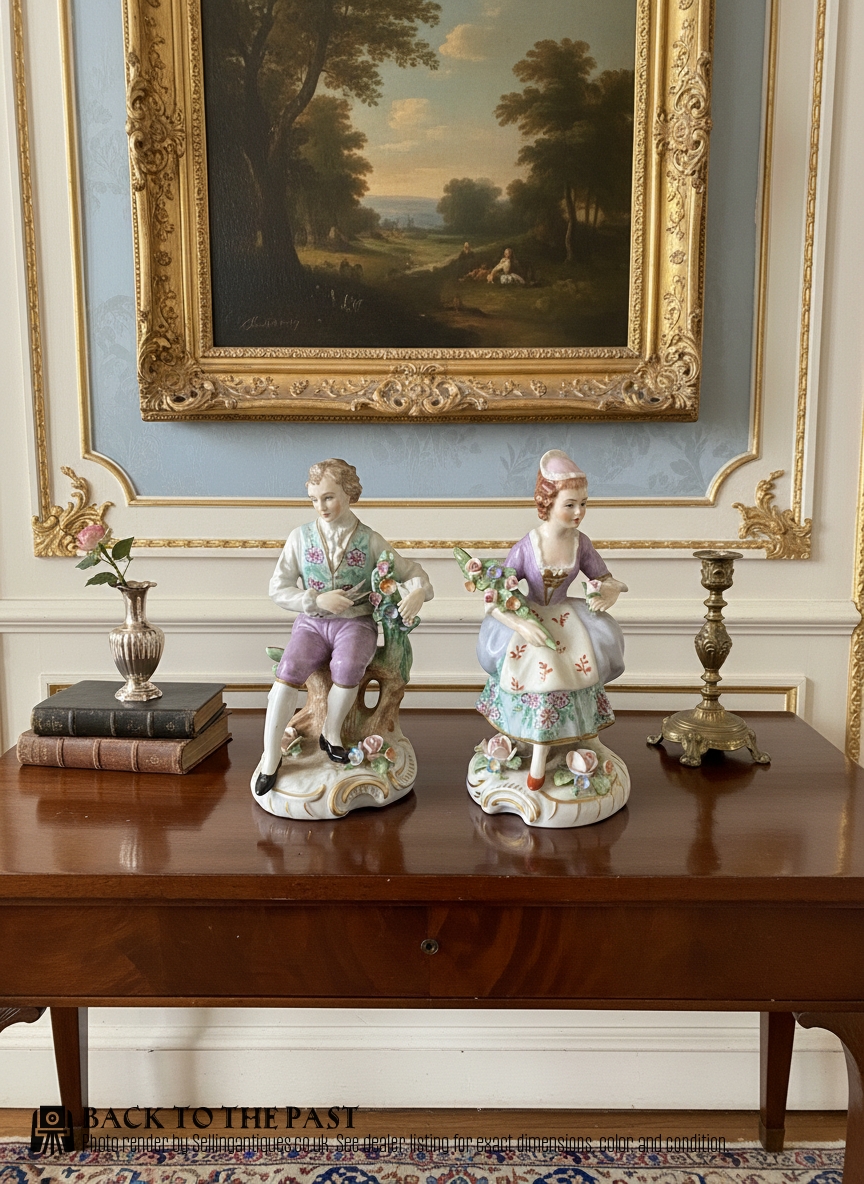
Rococo Revival Figurines
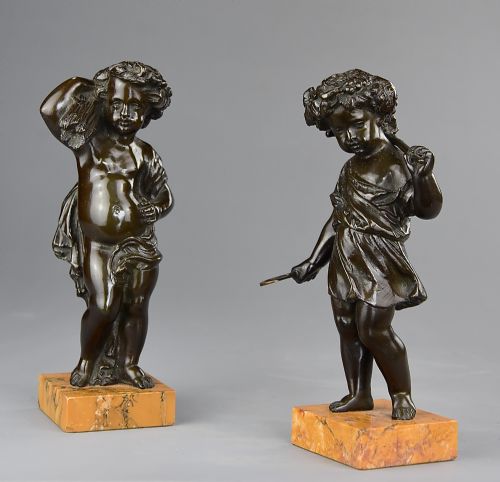
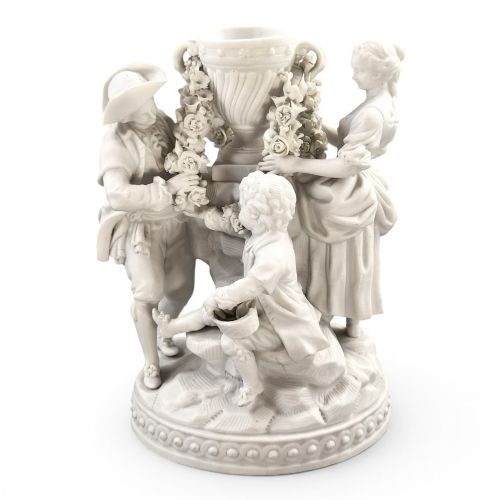
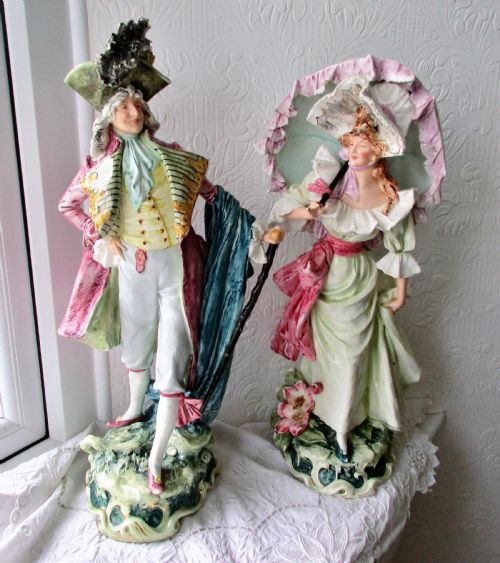
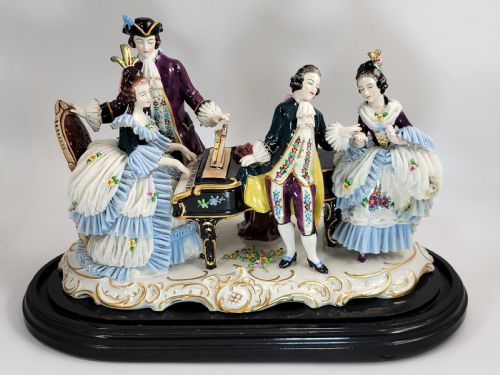
When you search for rococo revival figurines, you encounter decorative sculptural objects produced across the nineteenth century, including Victorian examples and items from the eighteen-eighties and eighteen-nineties. The selection on this page centres on porcelain figures, pairs of allegorical characters, and figural groups depicting gallants, musicians, children, and shepherds.
Many of these pieces draw inspiration from eighteenth-century models by factories such as Chelsea, Derby, and Meissen, reinterpreted by later European makers in France and Germany. You also find utilitarian forms such as figural candlesticks, table lamps, and mantel clocks incorporating bronze cherubs or porcelain groups.
French and German workshops dominate the physical evidence, ranging from Volkstedt and Sitzendorf to Samson of Paris and Vion et Baury. These works reflect a widespread nineteenth-century enthusiasm for playful, florid historicism.
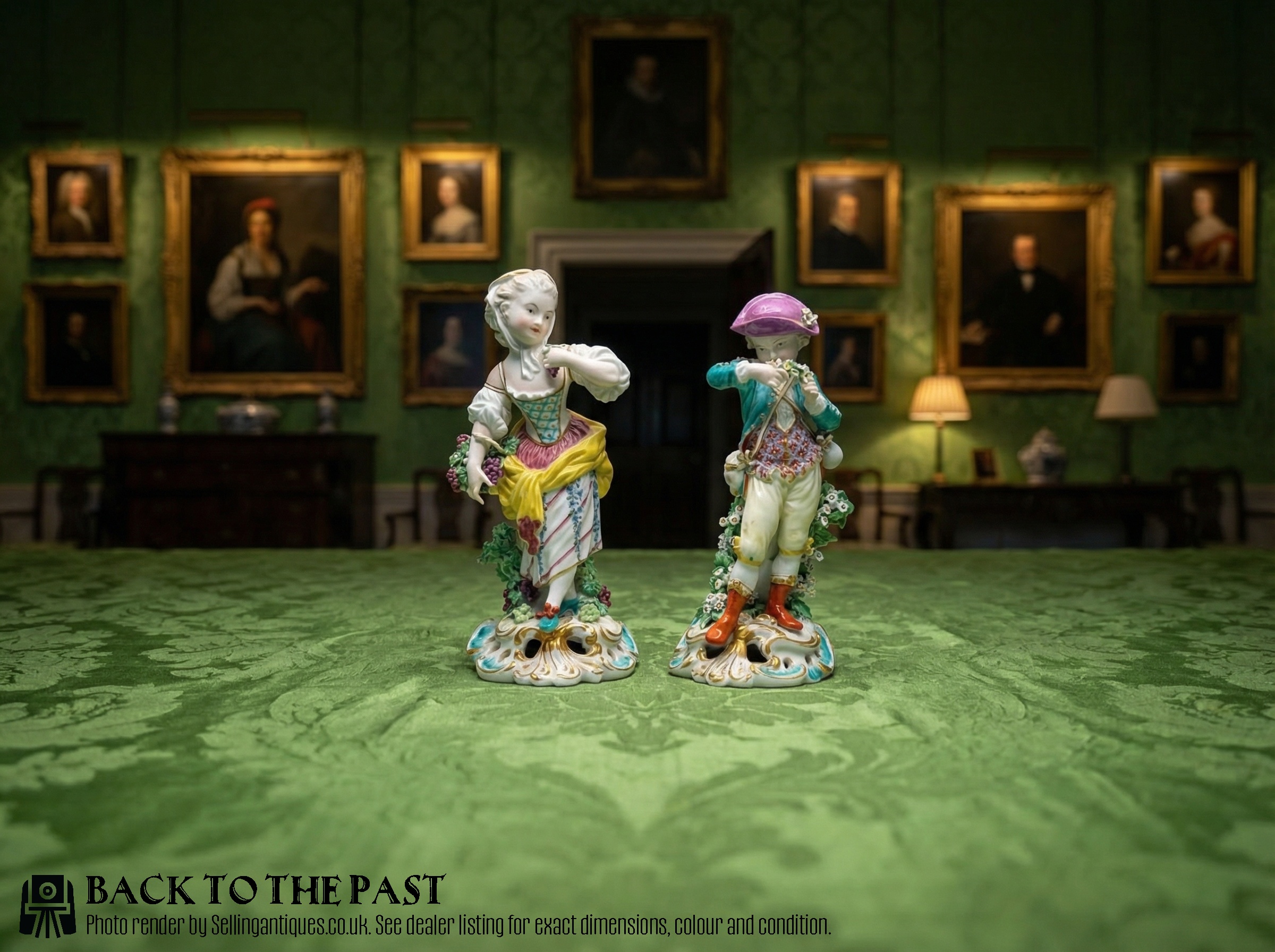
How They Were Made
Makers utilised hard-paste and biscuit porcelain, often pairing glazed surfaces with delicate handpainted details, enamel highlights, and gilt bronze mounts. Some German factories applied fine porcelain lace to figural groups, requiring intricate firing techniques.
Bronze casters produced allegorical putti and statuettes using traditional foundry methods, subsequently applying gold leaf or gilding. Mantel clocks combined these cast bronzes with substantial variegated marble stands.
Rococo Revival Figurines Retail Price Guide 2026
Typical asking prices for rococo revival figurines among the pieces listed under this phrase on Sellingantiques today, from the lower quarter to the upper quarter. They describe what is for sale here now, not the wider market.
The listings show nineteenth-century porcelain, bronze, and enamel items, dominated by German and French regional manufacture.
What Varies in Quality
Quality rests in the crispness of the modelling and the precision of the handpainted decoration, distinguishing finely rendered facial expressions and detailed floral garlands from simpler production. The finesse of the bocage work and the delicacy of applied porcelain elements dictate the success of the piece.
The integration of materials also defines the tier of the object, seen in the weight of the gilt bronze mounts, the quality of the variegated marble bases, and the fidelity of the historic revival style.
Volkstedt·Samson of Paris·Sitzendorf·Vion et Baury·Ernst Bohne Sohne·KPM Berlin·Helena Wolfsohn·Minton
The Rococo Revival Figurines Glossary
- Biscuit porcelain
- Unglazed white porcelain with a matte, marble-like texture. It gained popularity in the nineteenth century for figures and sculptural groups.
- Bocage
- An ornamental background of carved or modelled foliage and flowers surrounding a porcelain figure. It is frequently found on eighteenth-century revival pieces.
- Hard-paste porcelain
- A dense ceramic material fired at high temperatures using kaolin and petuntse. It provides a durable base for detailed nineteenth-century figurines.
- Gilt bronze
- Metal cast in bronze and treated with gold leaf or a gold amalgam. It adds metallic warmth to clocks, candelabra, and lamp bases.
Rococo Revival Figurines: Frequently Asked Questions
What materials are rococo revival figurines made from?
These decorative objects primarily utilise hard-paste porcelain, unglazed biscuit porcelain, and bronze. Makers frequently added enamel colours, gold leaf, and gilt bronze mounts.
Some German and French workshops also incorporated variegated marble stands, glass elements, and delicate porcelain lace into their figural compositions.
Who made these nineteenth century figures?
Production was centered in European porcelain hubs, notably in France and Germany. Prominent factories and studios include Volkstedt, Sitzendorf, Samson of Paris, and Vion et Baury.
Many of these makers consciously emulated earlier eighteenth-century styles from Meissen, Chelsea, and Derby.
How do you date a porcelain figurine?
Dating relies on factory marks stamped or painted on the underside, stylistic indicators, and the type of ceramic body used. Nineteenth-century revival pieces often imitate earlier marks, requiring careful examination of paste and painting technique.
Associated hardware, such as clock movements or bronze mounts, also helps establish the period of manufacture.
How were figural clocks and lamps constructed?
Makers often combined cast bronze cherubs or porcelain groups with functional elements like clock mechanisms and lamp fittings. Bronze figures were mounted onto heavy marble bases to provide stability.
Electrical conversion in later periods frequently altered original lighting components while preserving the decorative sculpture.