


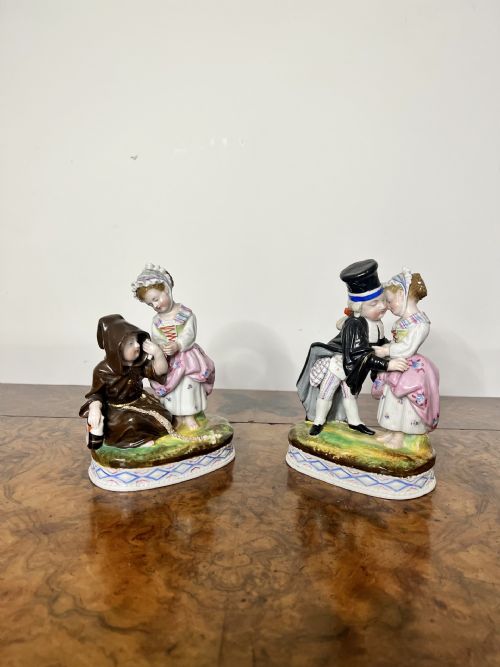


Multicoloured Porcelain Statuette
A multicoloured porcelain statuette brings painted life to your room, capturing historical dress and pastoral scenes in vibrant ceramic form.
Multicoloured Porcelain Statuette
When you search for a multicoloured porcelain statuette, you look at glazed ceramic figures depicting human groups, animals and characters. The selection includes examples ranging from eighteenth-century German workshops to twentieth-century English makers.
The objects take the form of single figurines, pairs and larger figure groups. Common subjects show musicians, gardeners, children and historical figures dressed in detailed period attire.
How they were made
Makers shaped these pieces from fine ceramic clay before firing and applying polychrome enamel colours. Many examples incorporate intricate hand-painting alongside glazed surfaces.
Detailing often includes applied gold leaf, gilt accents and specific ceramic glazes to highlight clothing folds and facial expressions. Bisque porcelain finishes appear alongside high-gloss transparent glazes.
Listings feature porcelain statuettes spanning the eighteenth, nineteenth and twentieth centuries, using earthenware, enamel and gold leaf.
What varies in quality
The sophistication of the modelling separates standard decorative items from superior sculptural works. Finer examples capture natural movement in limbs and fabric folds.
Volkstedt·Triebner Ens And Eckert·Meissen·Royal Copenhagen·Samson·Limbach Thuringia·Gotthelf Greiner·Royal Doulton·Minton
The Multicoloured Porcelain Statuette Glossary
- Bisque
- Unglazed ceramic porcelain that has been fired once, producing a matte, tactile finish resembling marble. This surface texture allows for sharp definition in sculptural details.
- Polychrome enamel
- Glass-based coloured pigments fused to the ceramic surface during a secondary firing. These colours provide the bright hues found on garments and floral elements.
- Gilt
- A thin layer of gold applied to surface details such as clothing hems, bases or decorative borders. This adds metallic contrast to the painted porcelain colours.
- Figurine
- A small three-dimensional sculptural representation of a human or animal figure. These objects are typically designed for display on tabletops and mantelpieces.
Multicoloured Porcelain Statuette: Frequently Asked Questions
How should I display these figures?
Place them in stable cabinets or on dedicated mantelpieces away from direct sunlight and heavy traffic.
Ensure the supporting surface is level to prevent accidental tipping of these delicate ceramic objects.
How do I clean old porcelain statuettes?
Dust gently using a soft, dry artist brush to remove particles without disturbing delicate painted enamel details.
Avoid immersing antique glazed pieces in water, particularly if unglazed bisque areas or applied gold leaf are present.
What periods do these figures cover?
The listings span from the eighteenth century through the Victorian and Edwardian eras into the nineteen-thirties.
Earlier pieces often reflect rococo and neoclassical tastes, while later examples showcase twentieth-century manufacturing styles.
Are these items marked by makers?
Many figures carry factory underglaze blue marks, impressed numbers or painted cyphers on the underside.
Some English and continental workshops used specific pattern numbers or designer initials to identify individual ceramic models.