
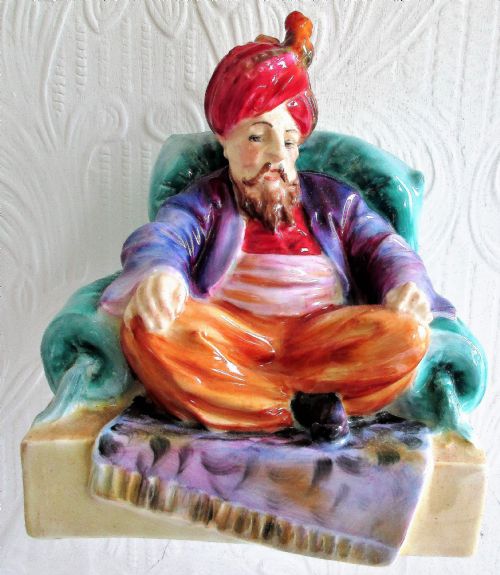


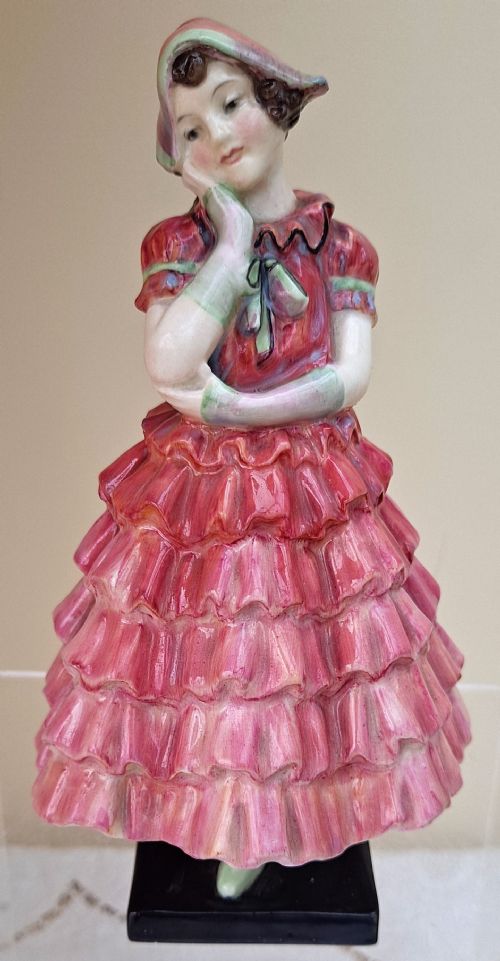


Royal Doulton Statuette
These porcelain royal doulton statuette examples capture character studies from early twentieth century England.
Royal Doulton Statuette
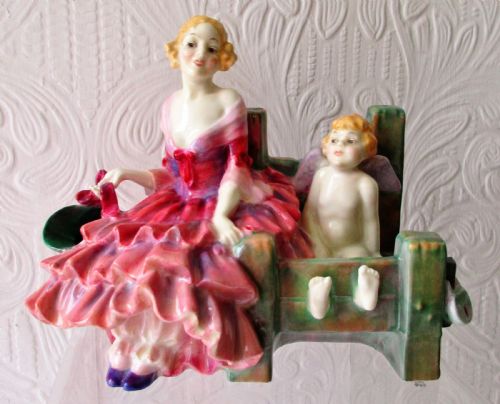
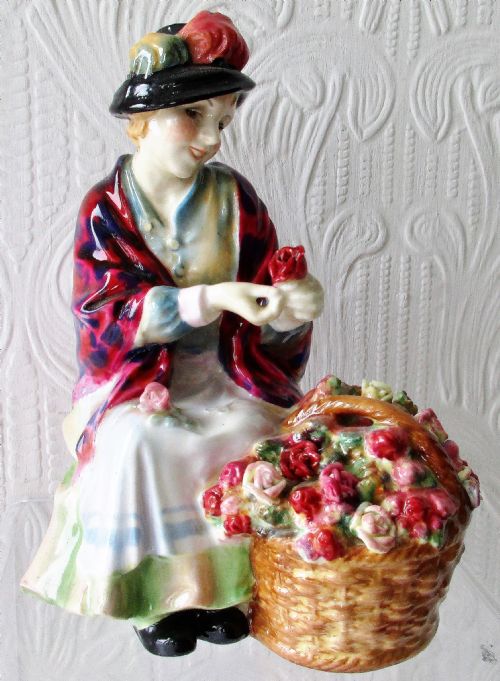
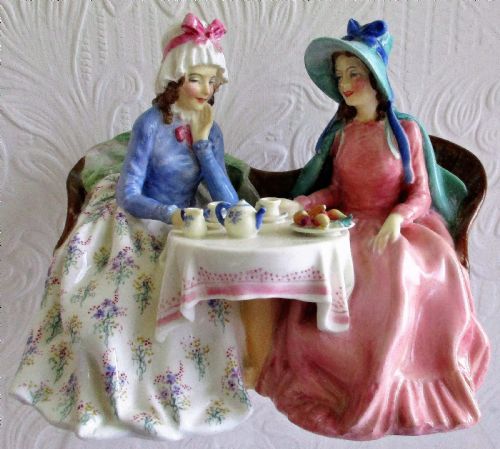
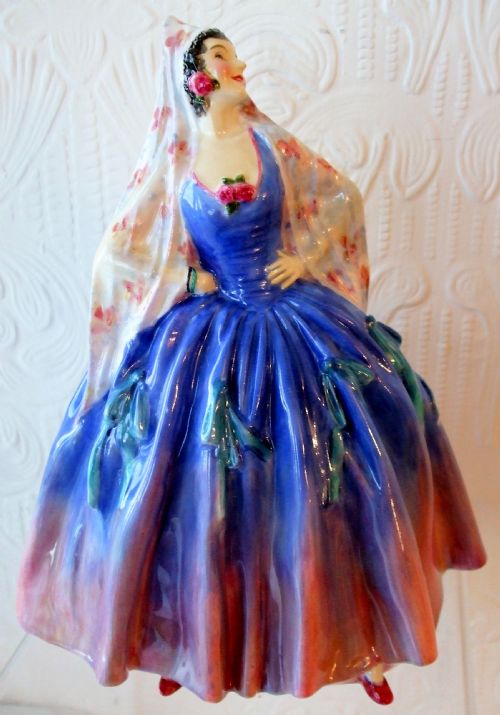
A royal doulton statuette represents figures modelled in porcelain, bone china, and ceramic during the nineteen thirties and nineteen forties. These pieces depict named subjects such as 'In the Stocks', 'Modena', and 'Afternoon Tea', capturing historical and everyday characters in domestic scenes.
Most examples found here date from nineteen thirty, reflecting Art Deco and Early twentieth century English styles alongside Regency Revival influences. The forms range from Spanish ladies to street vendors, each given a specific title and model number.
Collectors focus on these glazed porcelain figurines for their distinct characterisation and period dress. The figures illustrate how English potteries portrayed narrative subjects through moulded and painted ceramics.
Materials and Technique
These statuettes are constructed from porcelain and bone china, shaped into ceramic figures before undergoing a firing process. Once formed, artisans applied ceramic glaze to seal the surface and provide a smooth finish.
Colour and detail were added beneath or over the glaze, defining the clothing and facial expressions characteristic of the period. The combination of fine ceramic bodies and carefully applied glaze gives each piece its distinct appearance.
Listings feature porcelain and bone china statuettes produced across the nineteen thirties and nineteen forties.
Assessing Quality
The application of ceramic glaze and colour consistency also separate standard production from superior work. Subtle shading and clean lines across porcelain and bone china surfaces indicate higher craftsmanship.
Royal Doulton
The Royal Doulton Statuette Glossary
- Bone China
- A type of soft-paste porcelain containing bone ash, known for its bright white body and durability. It provides a refined base for detailed ceramic painting.
- Porcelain
- A ceramic material made by heating raw materials, including clay in the form of kaolin, to high temperatures. It forms a dense, impermeable body suitable for intricate figurine modelling.
- Ceramic Glaze
- A vitreous layer or coating of a ceramic substance that has been fused to a ceramic body through firing. It colours, decorates, and seals the underlying porcelain.
- Art Deco
- A style of visual arts, design, and architecture that first appeared in France during the nineteen twenties. It influences the geometric simplicity and clean lines seen in some figurine designs.
- Regency Revival
- An architectural and decorative style looking back to the Regency era of early nineteenth century Britain. This aesthetic informs the costume and presentation of specific figures.
Royal Doulton Statuette: Frequently Asked Questions
What periods do these statuettes represent?
These figures originate from the nineteen thirties and nineteen forties, capturing the design aesthetics of those decades.
The styles span Art Deco, Early twentieth century English, and Regency Revival influences.
What materials were used?
The pieces are constructed from porcelain and bone china, utilising ceramic bodies formed and fired in kilns.
A protective ceramic glaze covers the surface to finish each statuette.
How are the figures identified?
Each piece bears a specific title, such as 'In the Stocks' or 'Modena', alongside an HN model number.
These numbers help identify the exact design and production period of the porcelain figurine.
How should I display them?
These glazed porcelain figures suit display in cabinets or on stable shelves away from direct foot traffic.
Keep them out of harsh sunlight to protect the painted details over the glaze.