

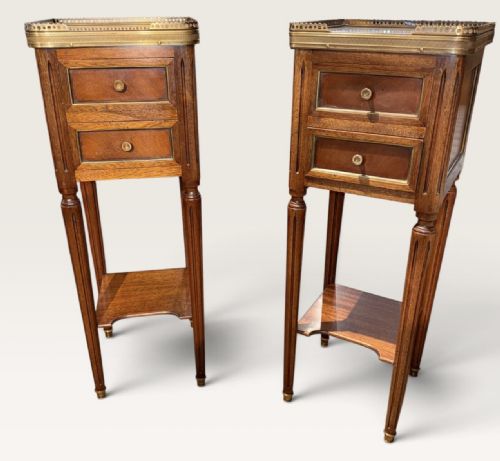
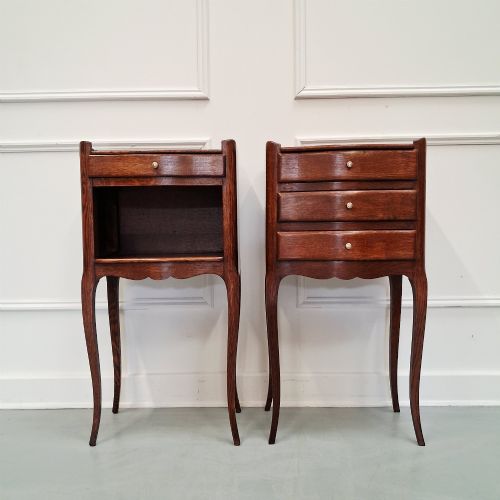
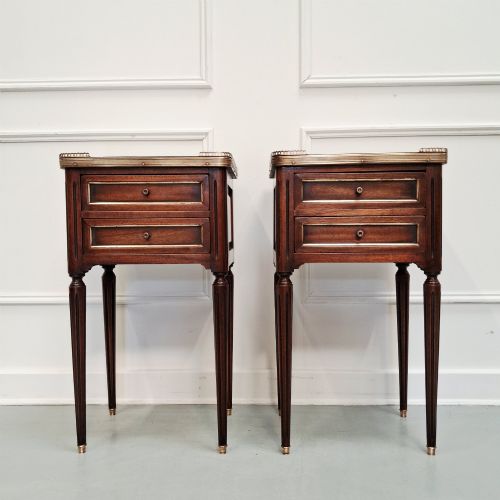
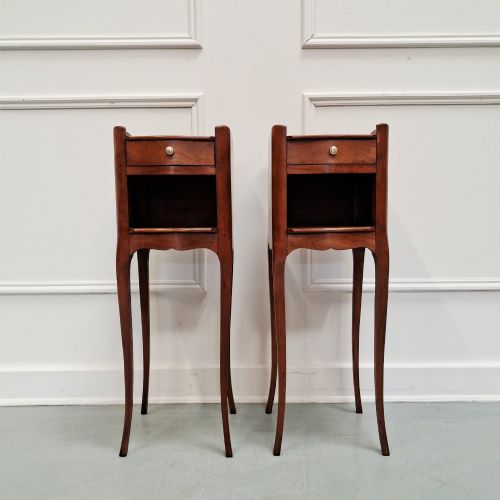
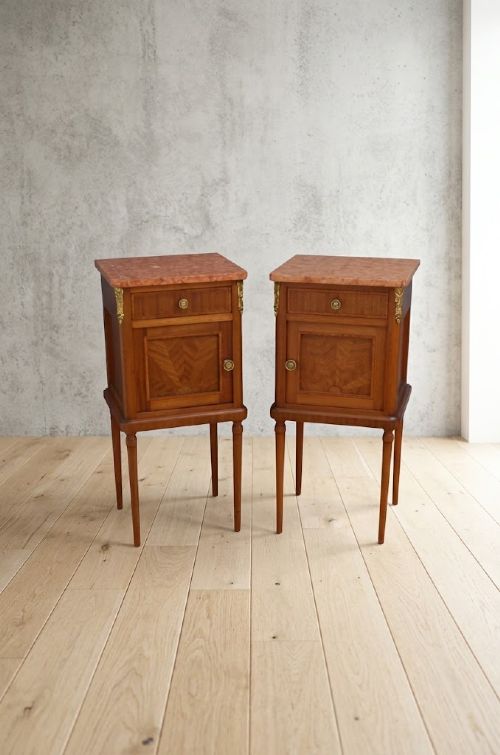
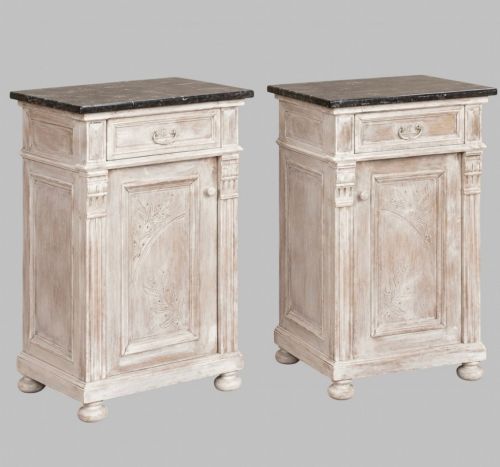
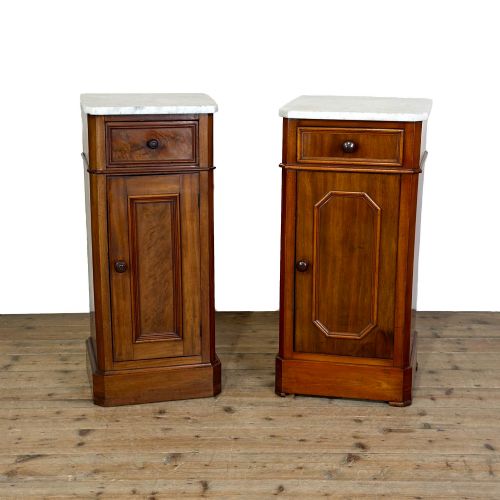
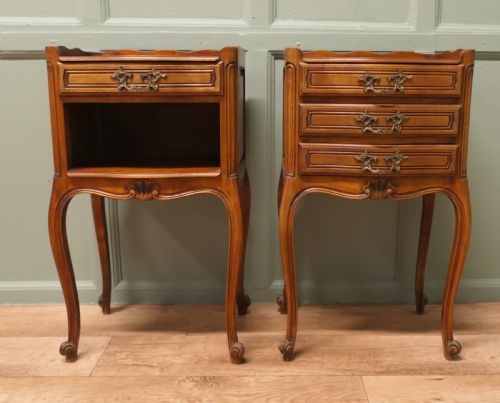
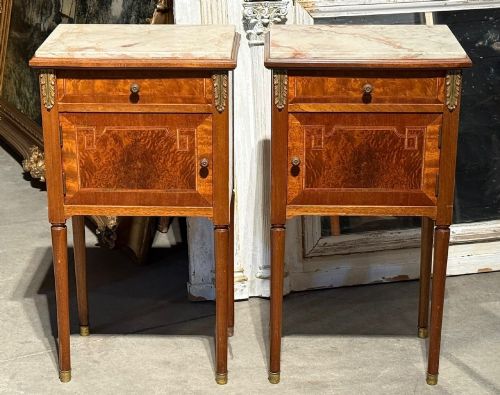
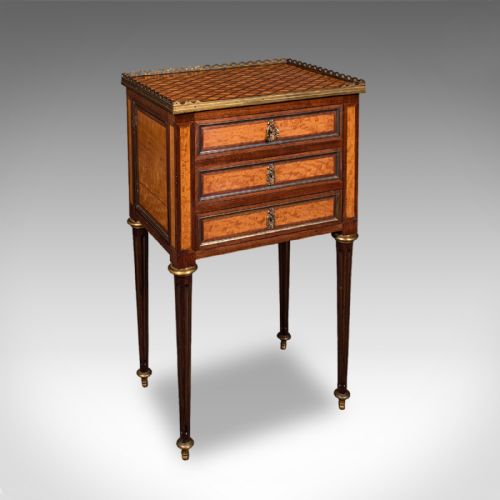
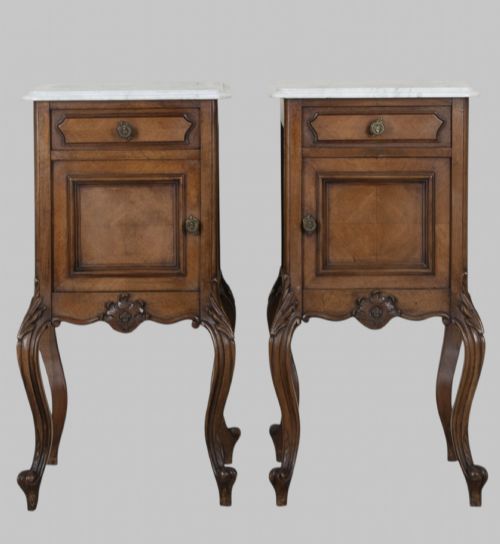
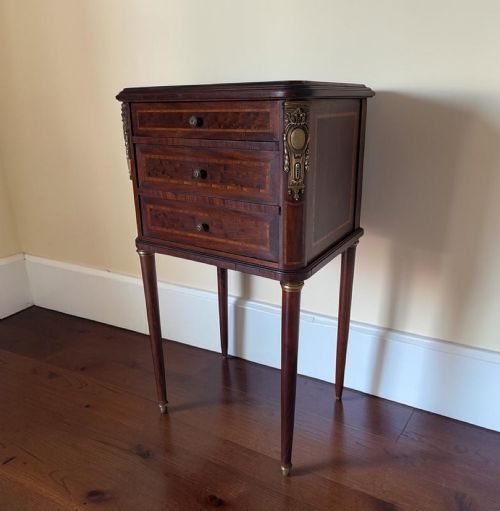
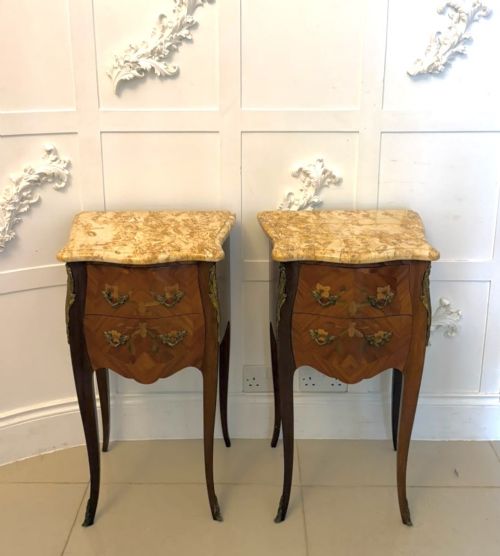
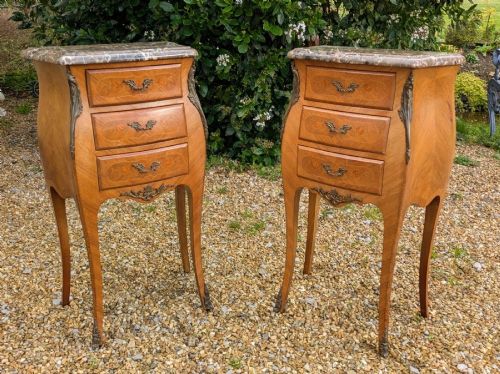

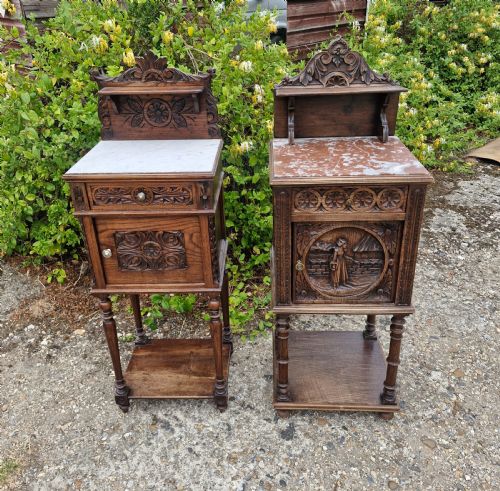
Antique French Chevet
An antique French chevet brings continental elegance and bedside storage together through marble tops and marquetry.

Antique French Chevet
An antique French chevet is a compact bedside table or cabinet designed to sit beside a bed. These pieces take the form of bedside cabinets, nightstands, side cabinets, and occasional tables.
The selections span the nineteenth and twentieth centuries, encompassing Victorian examples alongside revivalist interpretations. Buyers frequently encounter walnut and mahogany cabinets topped with marble.
Design vocabulary draws from French provincial traditions, chateau aesthetics, and Louis XV or Louis XVI revival styles. Pieces appear individually or as matched pairs ready for domestic placement.
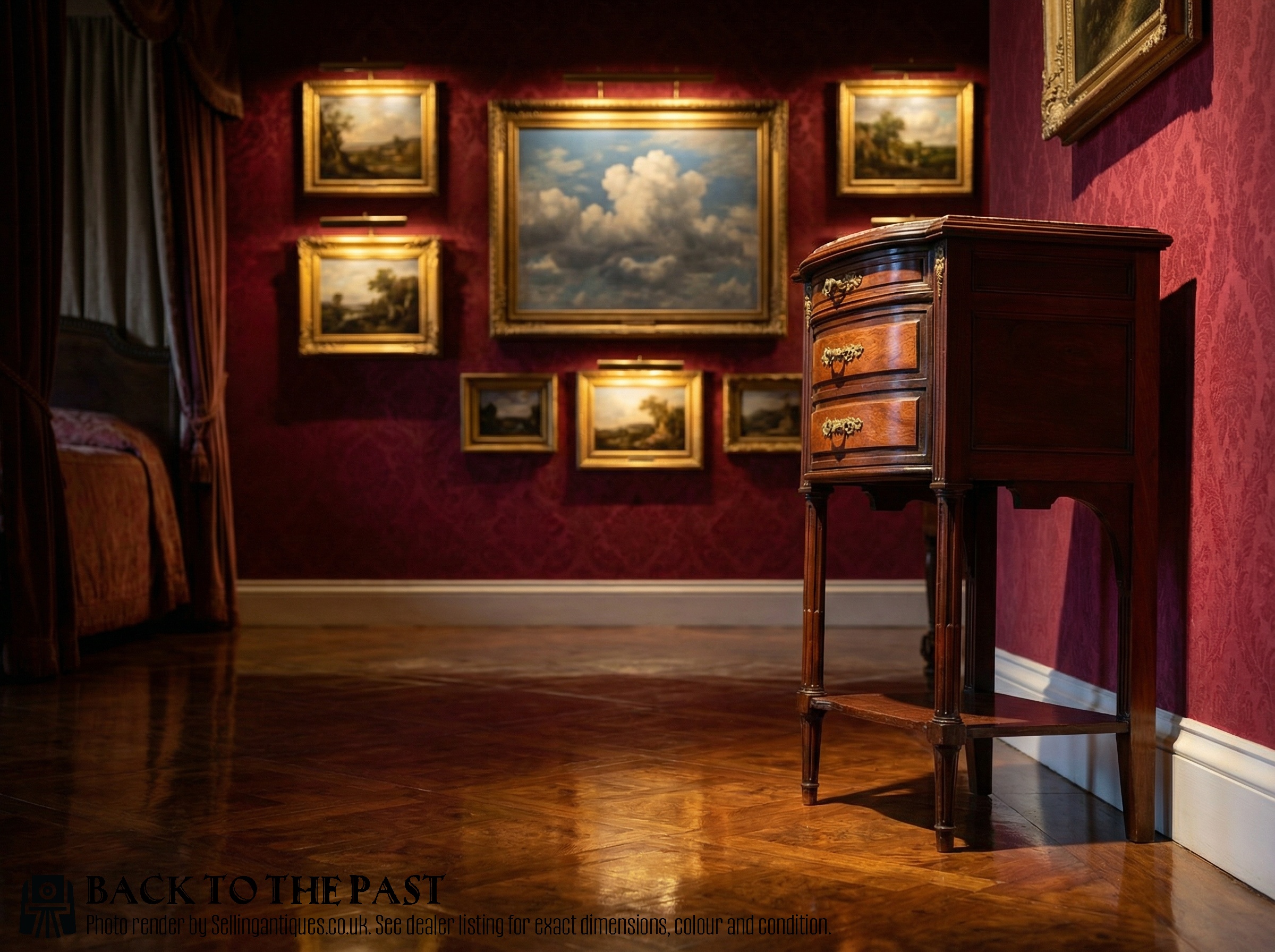
Materials and Construction
Cabinetmakers build these pieces using hardwoods such as walnut, mahogany, oak, cherry, rosewood, and kingwood. Surfaces often showcase intricate marquetry, parquetry, and contrasting satinwood inlays.
Many cabinets incorporate polished marble tops, sometimes specified as Sainte-Anne marble, paired with cast or chased ormolu mounts and brass details.
Construction methods range from three-drawer bedside chests to two-tier occasional tables and cupboards with fitted interior storage.
Antique French Chevet Retail Price Guide 2026
Typical asking prices for french chevet among the pieces listed under this phrase on Sellingantiques today, from the lower quarter to the upper quarter. They describe what is for sale here now, not the wider market.
Listings feature woods including walnut, mahogany, kingwood, rosewood, oak, and cherry, frequently paired with marble and ormolu.
Craftsmanship and Proportion
Superior examples separate themselves through the crispness of their marquetry and the precision of their parquetry patterns. The choice of timber grain and the neatness of proportions dictate visual balance.
Quality reveals itself in the integration of heavy materials like marble and ormolu with delicate wooden frames. Ormolu mounts that fit snugly and marble slabs with clean edges elevate the standard.
Meticulous attention to drawer construction and the subtle application of brass detail distinguish finer work from standard output.
The Antique French Chevet Glossary
- Chevet
- A French term for a bedside table or small cabinet. It typically refers to a piece designed to sit beside a bed for night-time storage.
- Ormolu
- Gilt bronze mounted onto furniture. This decorative technique involves applying finely ground gold to a bronze base.
- Marquetry
- Inlaid wood veneers forming decorative patterns or pictures. Craftsmen cut contrasting timbers to create complex geometric or floral designs on the surface.
- Parquetry
- Geometric wood inlay forming patterns such as cubes or chevrons. This technique decorates table tops and cabinet doors with precise wooden tiles.
- Sainte-Anne marble
- A distinct dark grey Belgian limestone with white fossil veins. It frequently appears as a durable, polished top on continental cabinets.
Antique French Chevet: Frequently Asked Questions
What is an antique French chevet?
An antique French chevet is a small bedside cabinet or table originating from France during the nineteenth or twentieth century.
These pieces provide compact storage by the bed while displaying decorative elements like marble tops and wood veneers.
How were antique chevets used?
These cabinets served to hold nighttime essentials such as candles, books, and personal items within arm's reach of the bed.
Enclosed cupboards and drawers kept personal belongings hidden, while open tiers or tops held lamps and water pitchers.
How do I style a chevet at home?
A chevet fits neatly beside a modern or traditional bed as a functional bedside table with distinct character.
The marble top provides a durable surface for a lamp or glass, while the timber base warms the bedroom decor.
How do I identify Louis styles?
Louis styles reflect historic French royal aesthetics revived during the nineteenth century through curved cabriole legs and ornate mounts.
Louis XV pieces favour asymmetry and flowing floral marquetry, whereas Louis XVI designs lean toward neoclassical symmetry and straighter lines.