


Antique Floral Inlay Cabinet
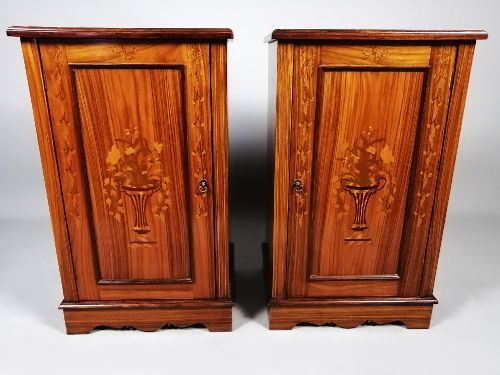
An antique floral inlay cabinet brings detailed botanical marquetry into a room, offering both practical storage and a strong decorative presence.
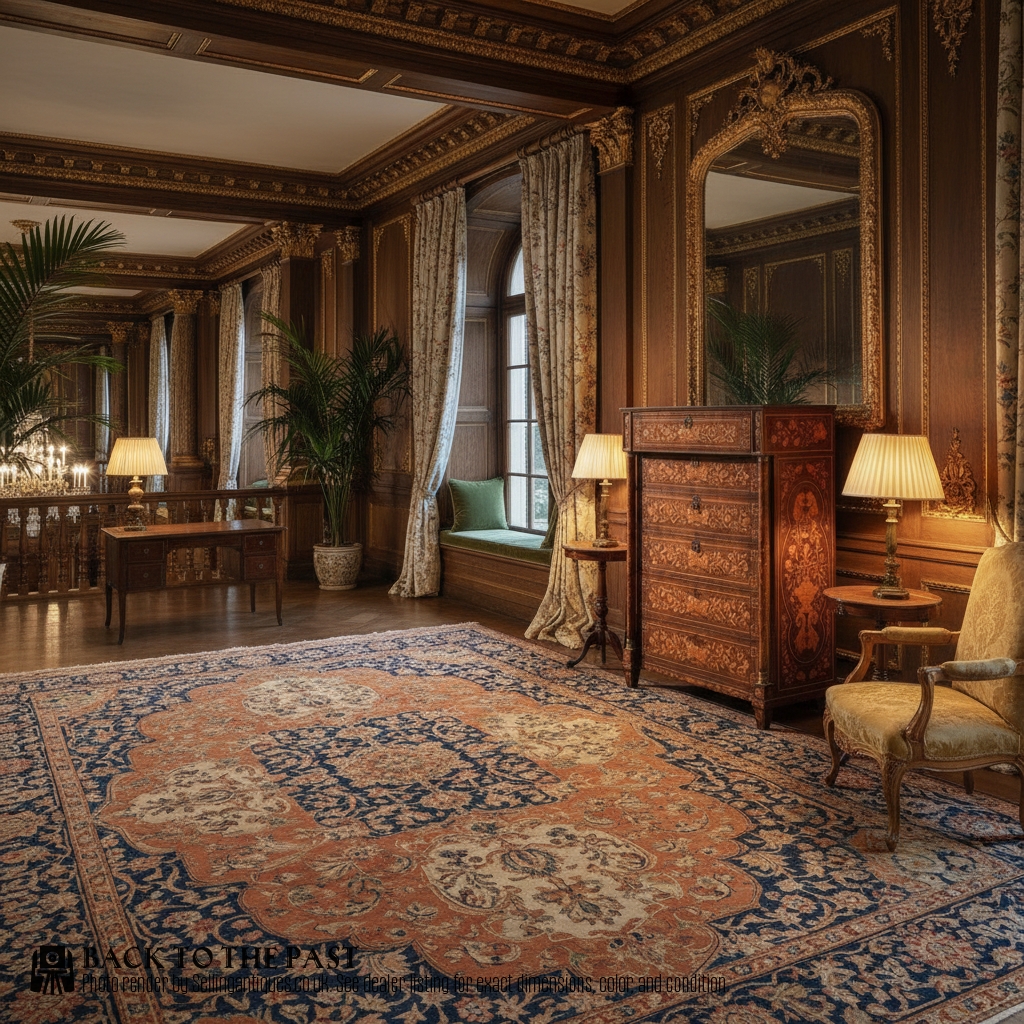
Antique Floral Inlay Cabinet
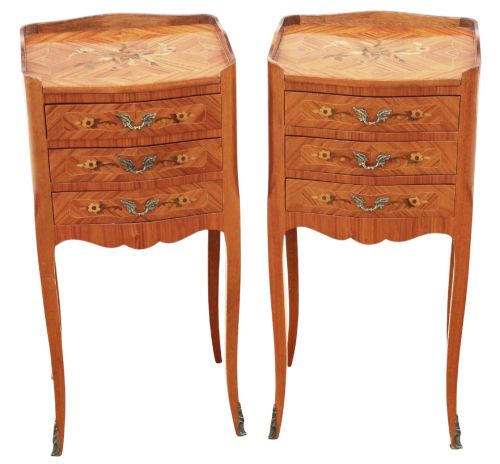
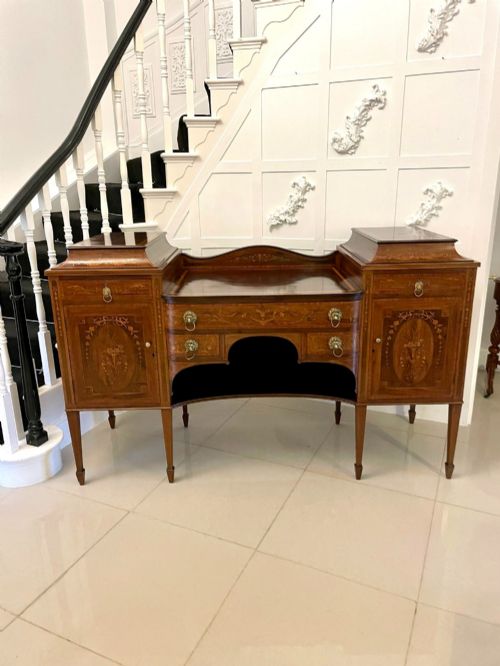
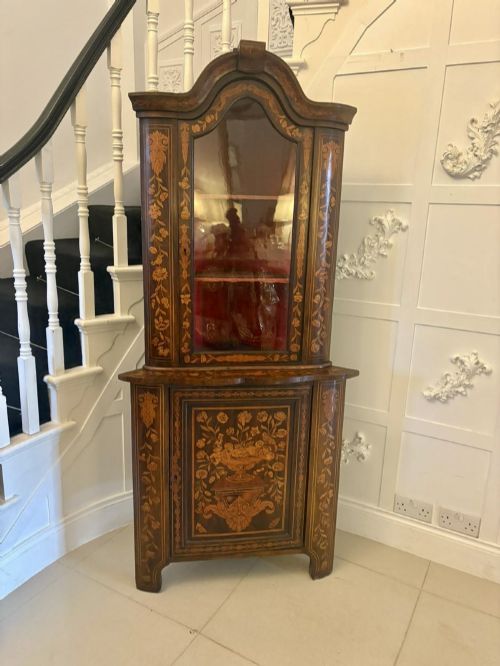
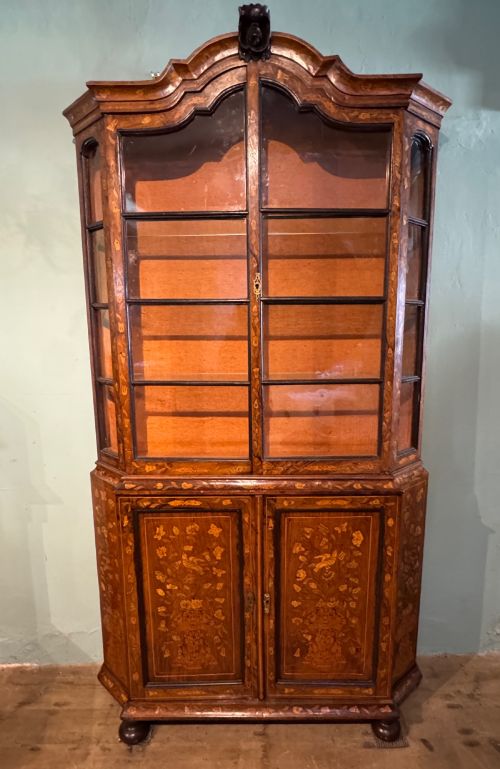
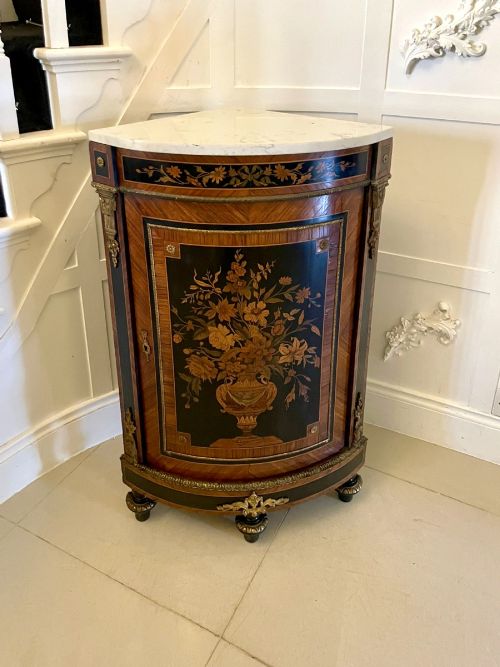
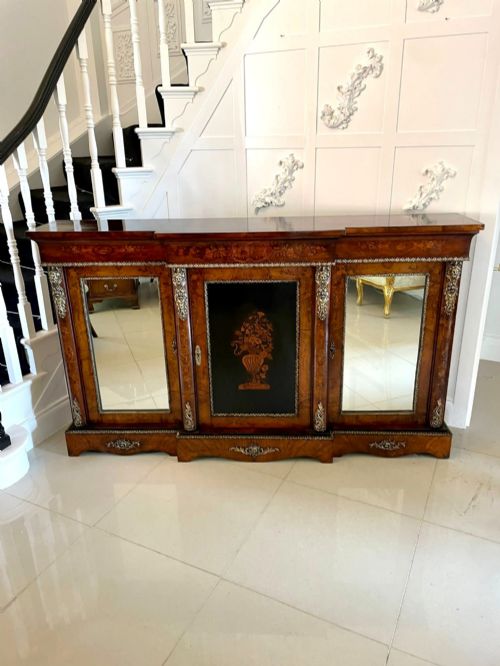
An antique floral inlay cabinet encompasses various forms designed for storage and display, ranging from bedside cupboards and corner units to large credenzas, sideboards, and bureau bookcases.
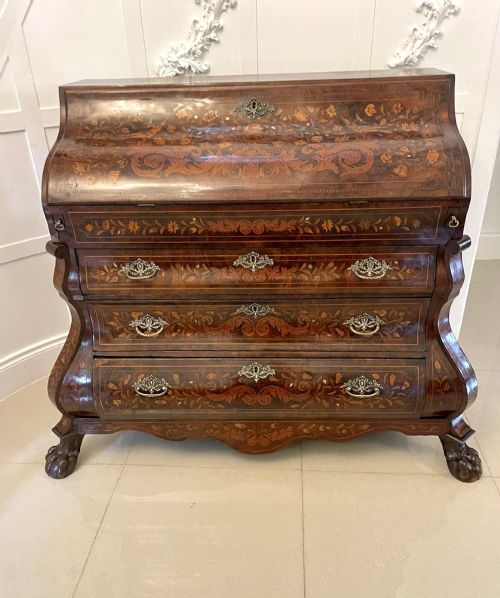
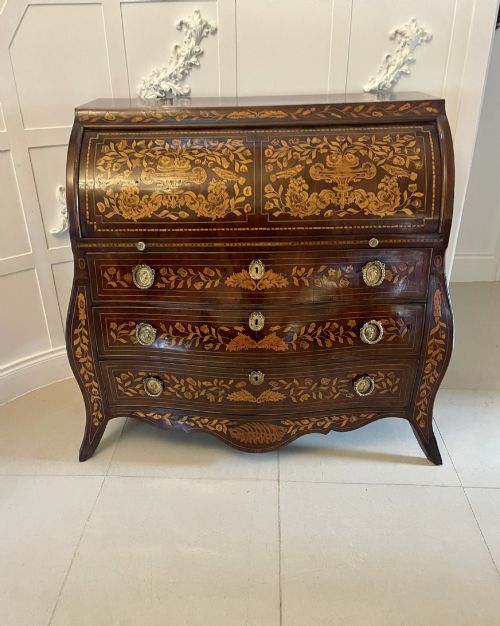
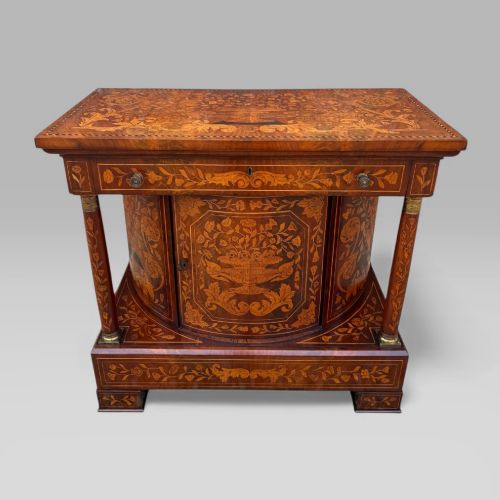
The selection on this page relies heavily on 18th century Dutch marquetry pieces alongside 19th century Victorian and Edwardian examples in walnut, mahogany, and rosewood.
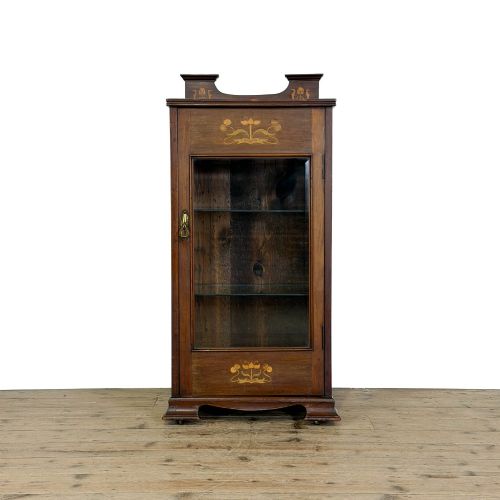
Buyers will frequently encounter display cabinets, corner cabinets, and sideboards that utilise intricate floral motifs across their doors and drawers.
Materials and technique
Cabinet makers utilised dense hardwoods such as mahogany, walnut, rosewood, and satinwood as the foundational structure for these pieces.
Floral inlay work employs marquetry techniques, cutting delicate pieces of contrasting woods, fruitwood, and occasionally pewter or brass to form botanical patterns.
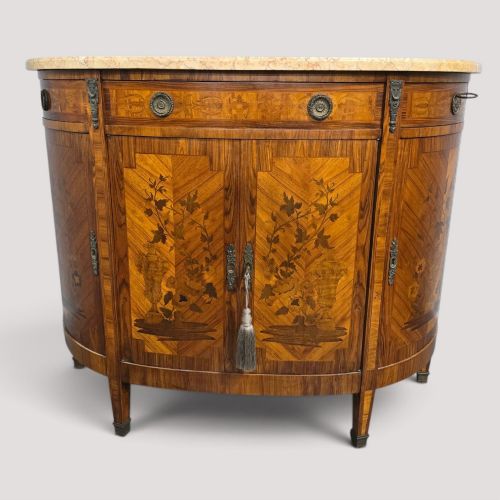
Selected pieces incorporate cast or gilt ormolu mounts and marble tops to accent the timber and marquetry design.
The available furniture spans Georgian, Victorian, Edwardian, and Art Nouveau periods.
Craftsmanship and design
Quality rests in the precision of the marquetry cutting and the tightness of the fit between the contrasting woods that form the floral details.
Finer examples show thoughtful figure in the underlying burr walnut or mahogany veneers, whereas lesser pieces rely on simpler timber grains.
Structural complexity, such as bombe shaping, serpentine fronts, or integrated ormolu mounts, separates standard production from exceptional cabinet work.
Hewetsons London·Edwards and Roberts
The Antique Floral Inlay Cabinet Glossary
- Marquetry
- Decorative veneer work forming pictures or patterns, utilising thin slices of wood applied to a structural carcase.
- Credenza
- A low cabinet or sideboard, frequently fitted with glass doors or central cupboards, used for storage and display.
- Ormolu
- Gilt bronze mounts applied to furniture for decorative accent, common in French and high-end Victorian pieces.
- Bombe
- An outward-swelling curved shape seen on the fronts and sides of certain 18th century cabinets and chests.
- Vitrine
- A glass-fronted display cabinet specifically designed to showcase porcelain, glassware, or small objects.
Antique Floral Inlay Cabinet: Frequently Asked Questions
Where should I place a cabinet?
Corner cabinets suit unused angles in dining rooms or drawing rooms, while narrow bedside cupboards and lamp tables fit smaller bedroom spaces.
Larger credenzas and display cabinets require a prominent wall where their floral marquetry can be seen properly without obstruction.
How do I clean the wood?
Dust the cabinet regularly with a dry, soft, lint-free cloth to prevent dirt accumulation within the intricate inlay work.
Apply a quality beeswax periodically to nourish the timber and protect the contrasting marquetry veneers from drying out.
Are these pieces stable for daily use?
Solid mahogany, walnut, and rosewood constructions provide durable framing for everyday domestic storage requirements.
Keep them away from direct heat sources and strong sunlight to prevent the timber from warping and the veneer from lifting.
How do I date a cabinet?
Examine the secondary woods inside the drawers and the construction methods used for the carcase and backboards.
Stylistic indicators such as Art Nouveau curves or 18th century Dutch floral layouts help narrow down the period of origin.