




Vintage Marquetry Corner Cabinet
A vintage marquetry corner cabinet brings intricate floral and geometric wood inlay into awkward angles, turning dead space into a focal point.
Vintage Marquetry Corner Cabinet
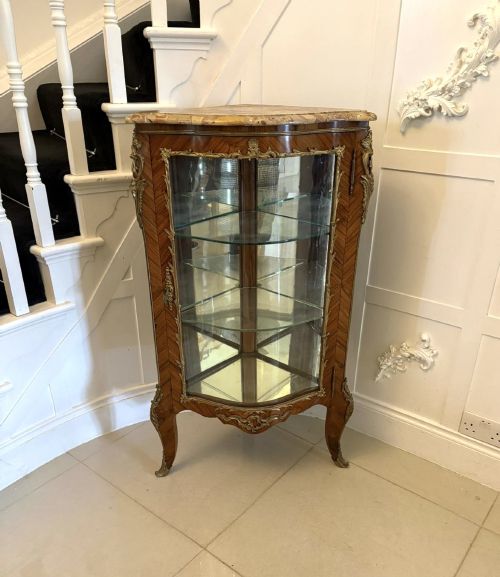
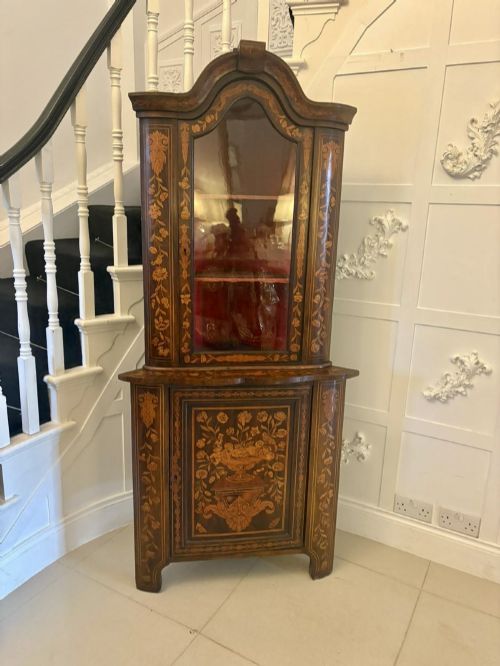
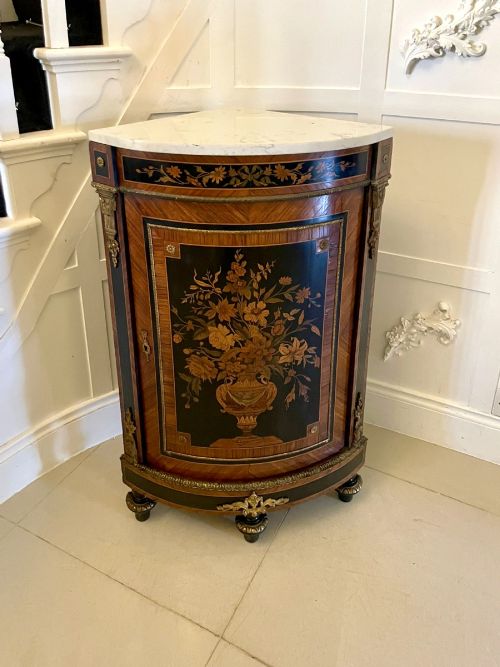
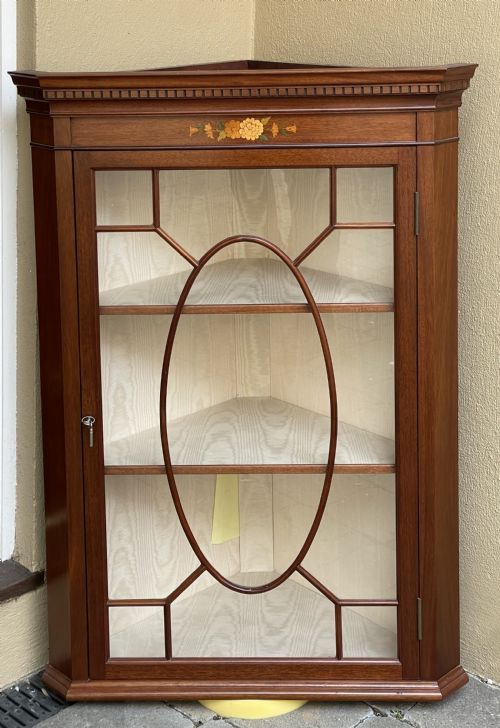
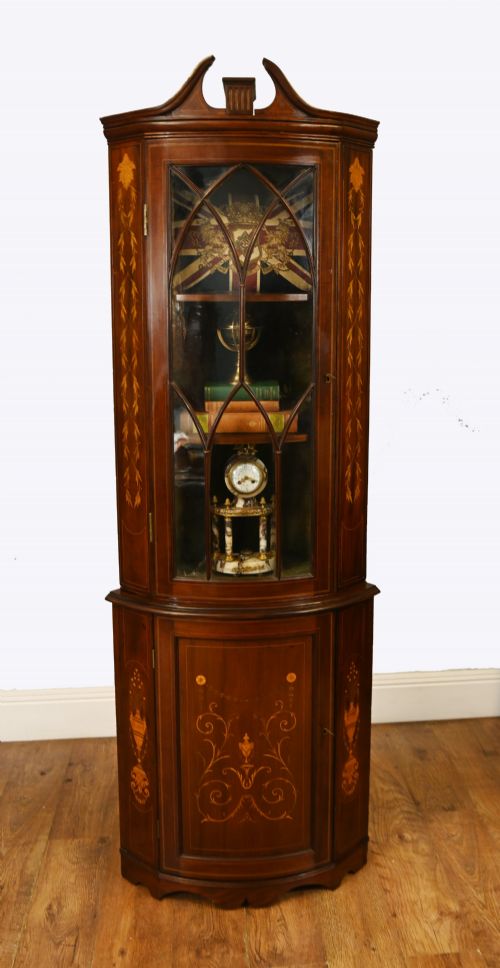
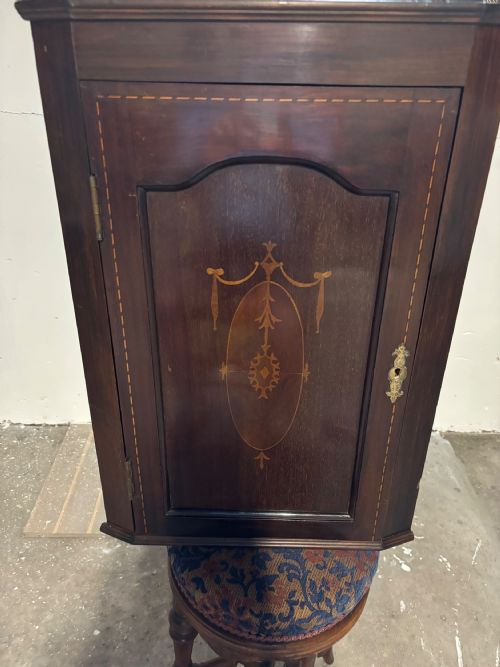
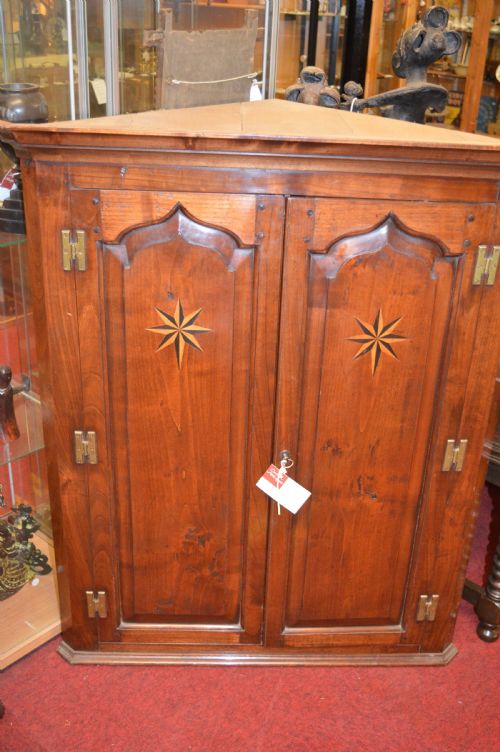
A vintage marquetry corner cabinet is a specialised storage or display piece designed to fit neatly into the ninety-degree junction of a room. The selections here span forms such as hanging cupboards, standing double-height units, and glazed display cases.
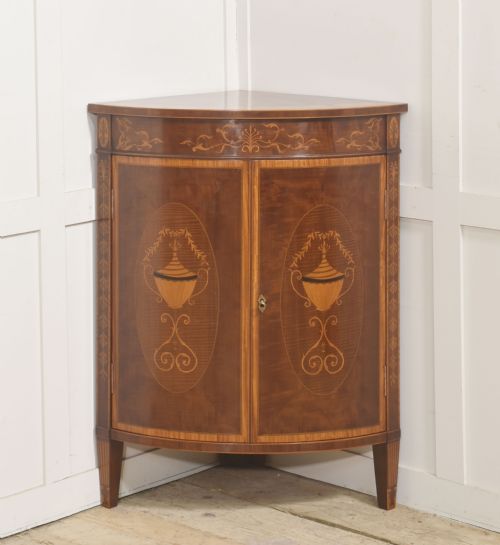
The most common examples you will encounter date from the Edwardian period and adopt Sheraton Revival or Georgian styles. These pieces utilise the triangular footprint to maximise display potential without dominating a floor plan.
What varies in quality
Quality in these cabinets rests upon the crispness of the marquetry cutting and the integration of the contrasting veneers. Finer examples display meticulous attention to grain direction and tight joints where the cabinet meets the wall.
The choice of secondary timbers, the delicacy of the astragal glazing bars, and the weight of the brass mounts also separate standard production from superior workshop output.
The listings span multiple periods from the eighteenth century to the 1960s, with Edwardian Sheraton Revival pieces being the most prevalent form.
Edwards And Roberts
The Vintage Marquetry Corner Cabinet Glossary
- Marquetry
- Decorative veneer work where pieces of various coloured woods are assembled to form pictorial or geometric patterns on a carcase. It differs from inlay by covering the entire surface rather than resting within carved recesses.
- Sheraton Revival
- A late nineteenth and early twentieth century design movement that reinterpreted the lighter, neoclassical furniture forms of the eighteenth-century designer Thomas Sheraton. These pieces typically feature satinwood inlay on mahogany.
- Ormolu
- Gilt bronze mounts applied to furniture for decorative enrichment, common on French revival pieces from the nineteenth century. The technique involves applying a mercury and gold amalgam to bronze before firing.
- Serpentine
- A curved furniture front characterised by a convex centre flanked by concave wings. This undulating shape requires advanced woodworking skill to match the veneer grain accurately.
- Astragal
- The narrow wooden moulding that divides panes of glass within a cabinet door. Fine examples feature slender profiles that maximise visibility into the display interior.
Vintage Marquetry Corner Cabinet: Frequently Asked Questions
Where should I place a corner cabinet?
These cabinets suit dead corners in dining rooms, hallways, or drawing rooms where standard rectangular furniture blocks traffic flow. They make efficient use of underutilised angles while drawing the eye upward.
Ensure the wall angle matches the ninety-degree right-angle of the cabinet carcase to guarantee a flush fit against the skirting boards.
Are these cabinets used for display or storage?
Many Edwardian and nineteenth-century examples feature glazed doors intended for showcasing porcelain, glassware, or small collections. Others provide enclosed wooden cupboards for concealing tableware or household items.
Standing double-height versions often combine both functions, offering open display shelves above and a concealed lower cupboard.
How do I identify a Sheraton Revival piece?
Sheraton Revival furniture from the Edwardian era typically employs light mahogany or satinwood with delicate contrasting stringing and floral marquetry motifs. The silhouettes mimic eighteenth-century neoclassical designs with tapered legs and subtle cornices.
Check the interior secondary woods and construction fixings to confirm the later nineteenth or early twentieth-century manufacturing date.