



Floral Inlay Corner Cabinet
These floral inlay corner cabinet pieces bring rich marquetry and clever room-fitting forms into domestic spaces.
Floral Inlay Corner Cabinet
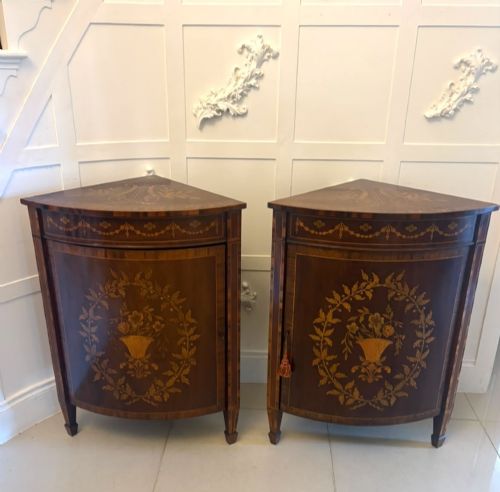
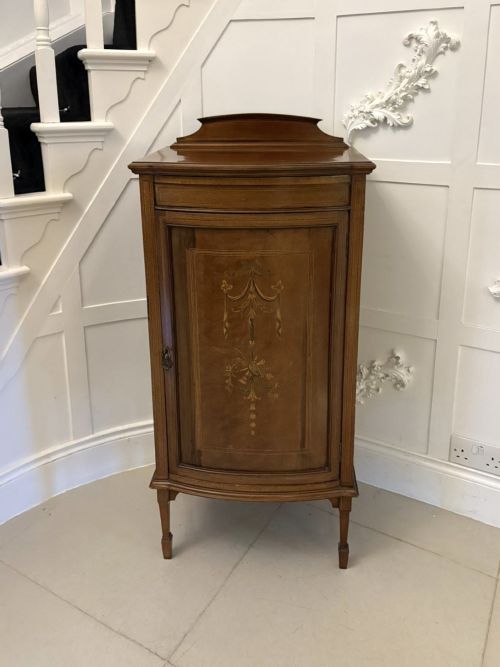
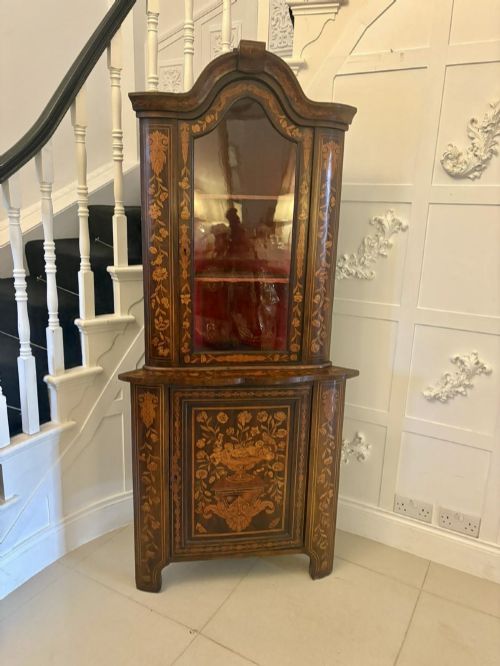
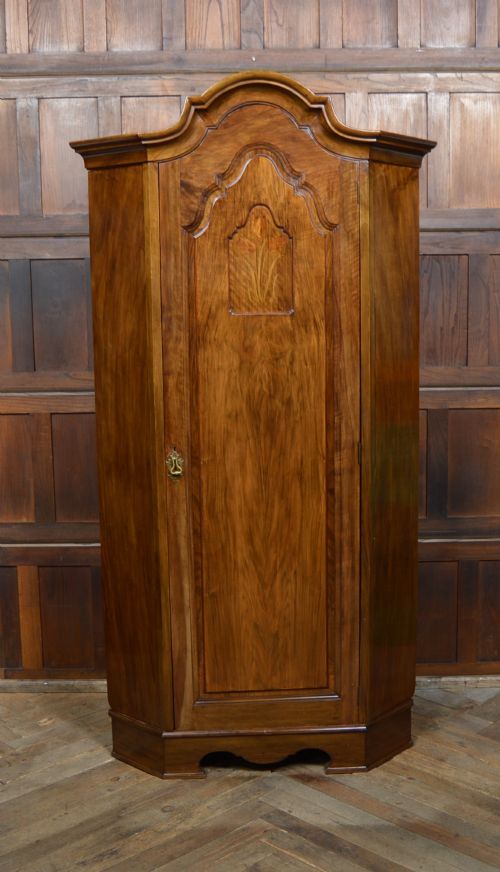
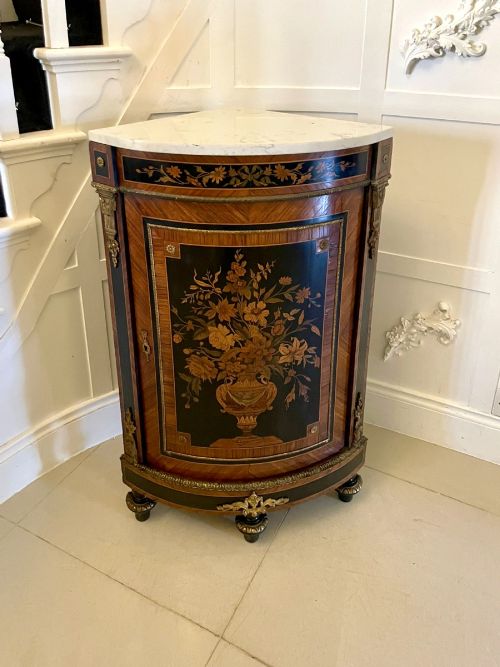
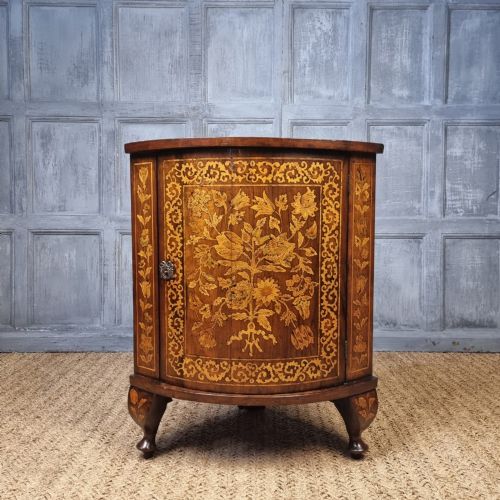
A floral inlay corner cabinet is a fitted storage or display piece designed to utilise neglected room angles, appearing across periods from the eighteenth century through to the twentieth century. The selection here leans heavily towards Dutch Baroque, Louis XVI style, and Victorian revivals, taking the form of corner cupboards, floor-standing cabinets, and wall units.
Makers shaped these items in mahogany, walnut, and fruitwood, often decorating the doors with elaborate marquetry floral designs. Buyers searching this phrase will encounter both single units and matched pairs, ranging from tall display cabinets with glass panels to serpentine double cabinets.
Origin points span English, French, and Dutch workshops, showing how different European traditions adapted the corner footprint. While some pieces stand directly on the floor, others incorporate marble tops or sit as tall display units.
How they were made
Cabinet makers constructed the foundational carcase using timbers like mahogany, walnut, and fruitwood, shaping them to fit precise right-angled room spaces. These structural woods provided the stability needed for tall floor-standing cupboards and heavy double door arrangements.
Surface decoration relied on detailed marquetry and inlay work using various woods to form floral motifs across the doors and panels. Workshops also integrated materials such as marble for tops, alongside brass and bronze for mounts and hardware.
Floral Inlay Corner Cabinet Retail Price Guide 2026
Typical asking prices for floral inlay corner cabinet among the pieces listed under this phrase on Sellingantiques today, from the lower quarter to the upper quarter. They describe what is for sale here now, not the wider market.
Listings feature walnut, mahogany, fruitwood, and tulipwood, combined with marble tops, glass panels, and bronze mounts.
What varies in quality
The precision and complexity of the floral marquetry dictate much of the visual hierarchy across these items, separating simpler panels from dense, multi-wood botanical scenes. Finer examples display meticulous cutting where different fruitwoods and contrasting timbers meet tightly without excessive filler.
Structural ambition also marks out superior pieces, particularly those utilising serpentine fronts, curved glass, or heavy marble tops fitted precisely to wooden carcases. The choice of primary timber, from plain mahogany to figured walnut and tulipwood, shapes the overall presence of the cabinet.
The Floral Inlay Corner Cabinet Glossary
- Marquetry
- A decorative technique where small pieces of veneer are fitted together to form pictorial designs on a wooden surface. This method creates the floral patterns seen across the doors of these cabinets.
- Serpentine
- A curved shape that undulates outward and inward in a gentle wave. This profile adds movement to the front of certain corner cabinets.
- Fruitwood
- Timber derived from fruit-bearing trees such as pear, apple, or cherry, often used for its fine grain and colour variation in inlay work. It provides subtle tones for petals and stems within marquetry panels.
- Corner cupboard
- A storage unit built specifically with a triangular or angled plan to fit into the junction of two walls. These pieces maximise interior room capacity while occupying minimal floor space.
Floral Inlay Corner Cabinet: Frequently Asked Questions
How do I style a corner cabinet?
Position your cabinet in an empty room angle to anchor the space and draw the eye upward. Use glass-fronted versions to display ceramics or glassware where natural light can catch the interior.
Keep surrounding furniture simple so the floral marquetry remains the focal point of the corner. Allow adequate clearance for doors to open fully without striking adjacent walls or furniture.
What periods do these cabinets come from?
The pieces span from the eighteenth century through the nineteenth and twentieth centuries. You will find eighteenth-century French and Dutch examples alongside Victorian revivals and later twentieth-century interpretations.
Each period brings distinct stylistic cues, from Dutch Baroque curves to Louis XVI restraint and Victorian proportions. Checking the secondary woods and construction methods helps confirm the era of manufacture.
Are these cabinets sold as pairs?
Listings occasionally include matched pairs of corner cabinets alongside single standalone units. Pairs offer symmetry for flanking a fireplace or framing a windowed wall in larger reception rooms.
Single cabinets work effectively in smaller rooms or transitional hallways where a single focal point is sufficient. Review individual descriptions to confirm whether pieces are offered together or separately.
What maintenance do inlaid woods need?
Protect inlaid surfaces by keeping cabinets away from direct sunlight and sudden temperature shifts that cause wood to move. Dust regularly with a soft, dry cloth and apply occasional specialist wax to nourish the timber.
Avoid placing damp items or unsealed planters directly on wooden or marble tops. Proper humidity control prevents the delicate veneers of floral marquetry from lifting over time.