





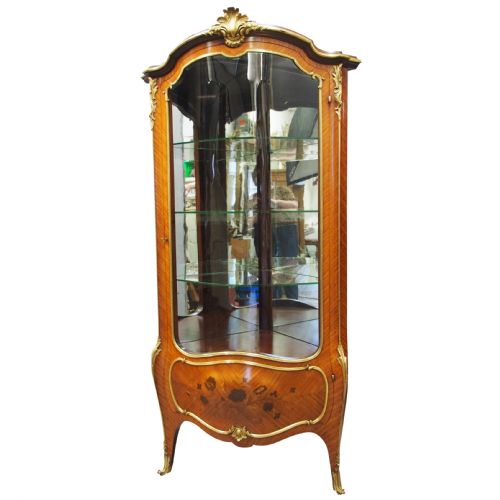
Antique French Corner Cupboard
An antique French corner cupboard brings architectural elegance and useful storage to an awkward room angle, crafted from fine timbers and detailed mounts.
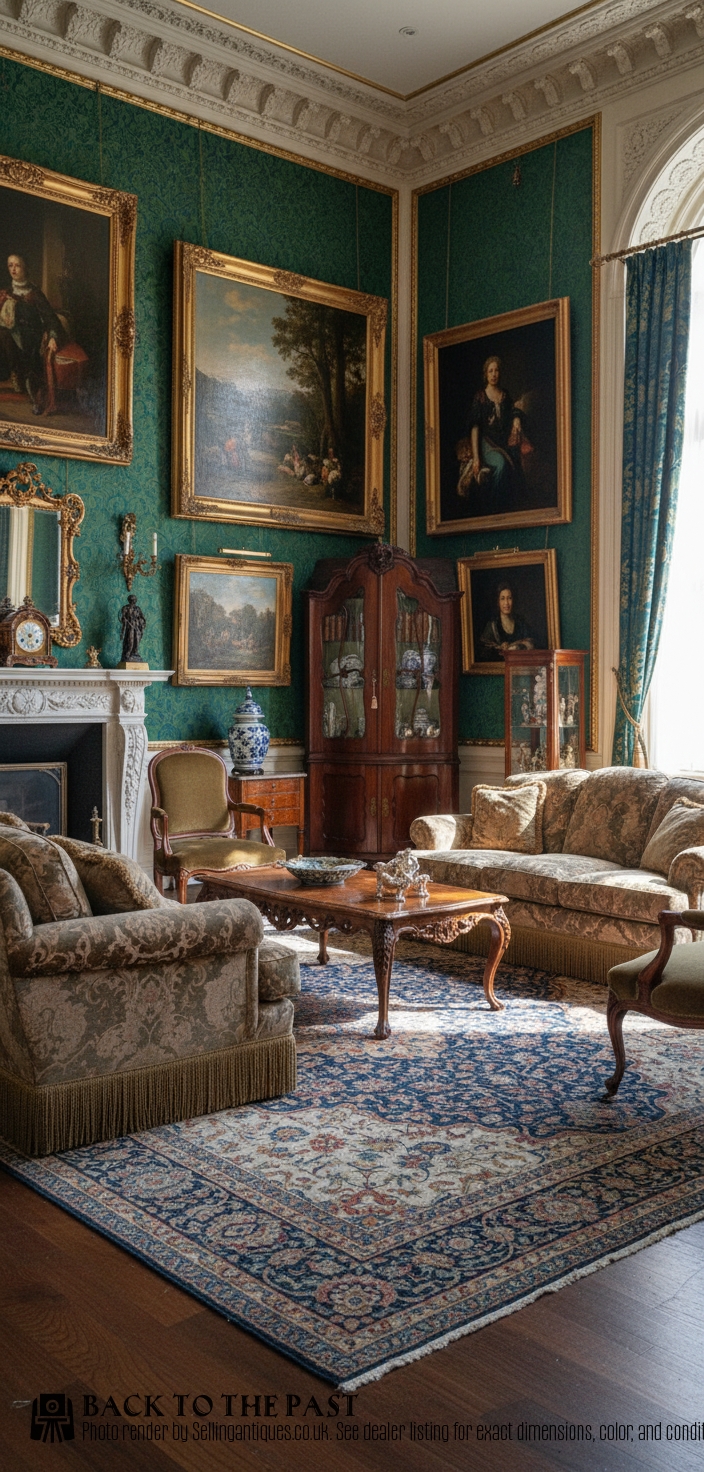
Antique French Corner Cupboard
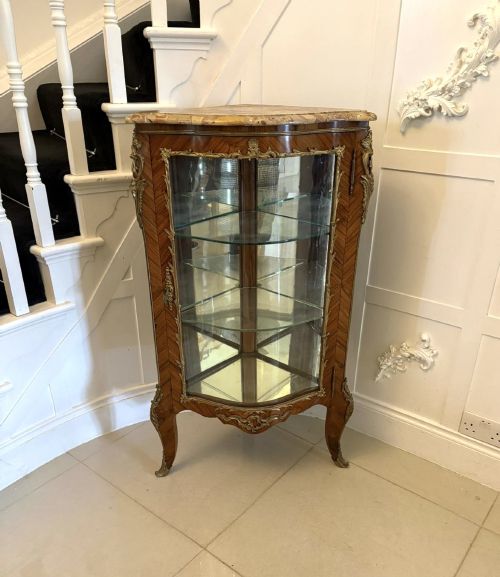
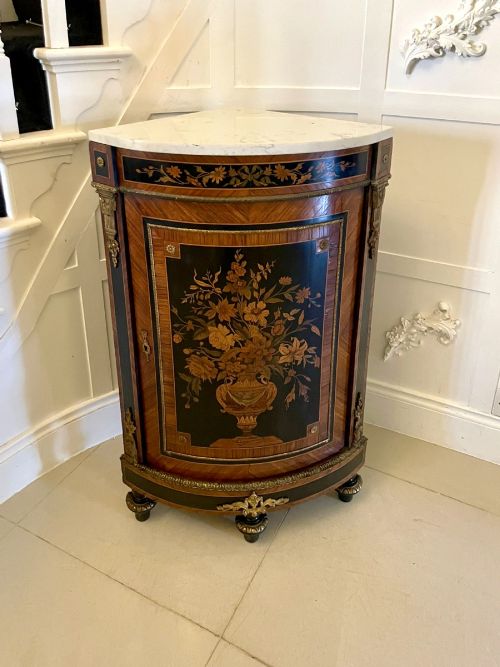
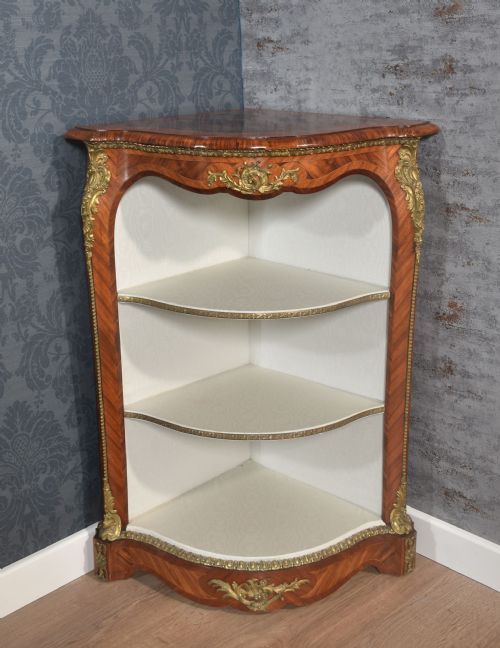
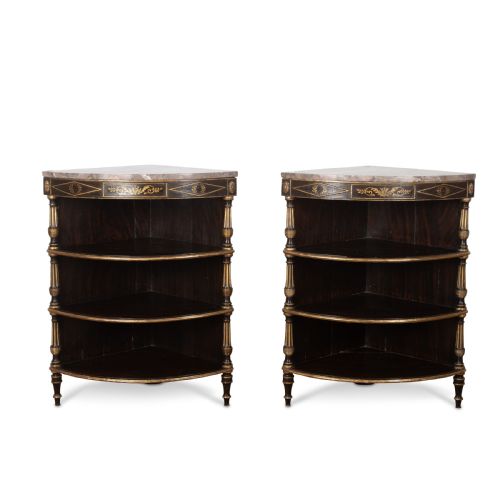
An antique French corner cupboard fits snugly into the intersection of two walls, making clever use of dead space while offering display or enclosed storage. These pieces take various forms on this page, including serpentine display cabinets, bow front cupboards, and bombe shaped vitrines.
The materials and styles span centuries and regions, showing influences from Louis XV Revival and French Rococo to Louis XVI Style and Art Deco. Buyers meet works executed in kingwood, walnut, mahogany, and oak, often paired with marble tops and glazed doors.
Origins stretch from 18th-century workshops to the Victorian era and 1920s production, reflecting changing tastes in French provincial and chateau interiors. Each piece adapts the corner cabinet format to suit domestic requirements for shelving and display.
How they were made
Cabinet makers utilised choice hardwoods such as kingwood, tulipwood, mahogany, and walnut as a base for intricate marquetry, parquetry, and wood veneers. Frames were constructed using sturdy timbers like oak, supporting curved serpentine or bombe forms.
Decorative embellishments relied on cast ormolu mounts, brass inlays, and goncalo alves details, alongside fitted marble tops that added weight and a finished surface. Glazed glass panels and shaped wooden shelves completed the interior and exterior construction.
Some cabinets are so curved they seem to lean into the corner like polite guests at a crowded party.
What varies in quality
Quality depends upon the precision of the parquetry and marquetry work, where tighter veneer matching and richer timber grains distinguish finer examples. The crispness of the ormolu mounts and the weight of the integrated marble tops also mark the tier of craftsmanship.
Structural complexity influences the standing of a piece, separating straightforward panelled cupboards from serpentine, bow front, and bombe shaped vitrines that demand greater skill from the cabinet maker.
The Antique French Corner Cupboard Glossary
- Kingwood
- A dense, richly figured timber utilised for high-end veneer work in cabinet making. It often displays contrasting dark and golden brown tones.
- Ormolu
- Gilded bronze mounts applied to furniture for decorative effect. These cast elements highlight the corners and framing of finer cabinets.
- Marquetry
- The art of applying small pieces of veneer to a structure to form decorative patterns or pictures. This technique defines many formal French pieces.
- Bombe
- A swelling, outward-curved contour found on the front and sides of certain cabinets. It requires advanced woodworking skill to achieve successfully.
- Parquetry
- Geometric mosaic woodwork used for surfaces such as table tops and cabinet doors. It creates a repeating pattern across the wood.
Antique French Corner Cupboard: Frequently Asked Questions
Where should I place a corner cupboard?
These cabinets suit dining rooms, living spaces, or hallways where empty wall angles need functional furniture. They utilise neglected corners to hold books, glassware, or decorative objects without blocking walkways.
Measuring the wall depth on both sides of the corner ensures the cabinet sits flush and matches the proportions of the room.
How do I care for timber and marble?
Dust wood surfaces regularly with a soft, dry cloth and avoid placing pieces in direct sunlight or near heat sources to prevent veneer lifting. Marble tops benefit from prompt wiping of spills to protect the stone from staining.
Applying appropriate wax polish occasionally helps maintain the lustre of kingwood, walnut, and mahogany finishes.
Are these cabinets used for display?
Many examples feature glass doors and shaped internal shelves designed specifically for showcasing porcelain, glassware, or collections. Other versions provide enclosed wooden doors for concealing items out of sight.
The choice between an open vitrine style and a solid cupboard depends on whether you wish to display or store the contents.
How can I tell the period?
Dating relies on stylistic clues such as rococo curves, Louis XVI symmetry, or later 19th-century revival details. Materials like kingwood, ormolu, and specific veneer patterns also align with particular manufacturing eras.
Examining the construction methods inside the cabinet provides further indication of its age and origin.