



Carved Mahogany Corner Cupboard
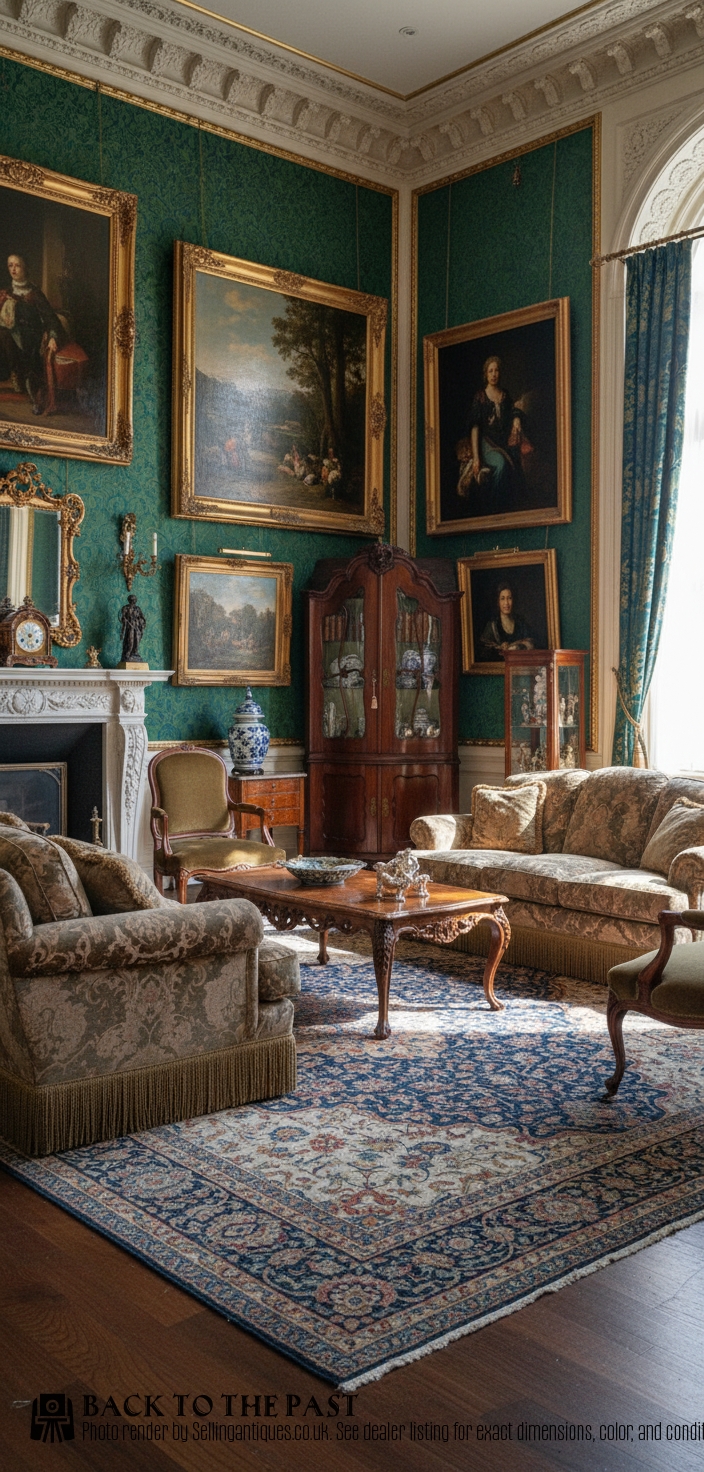
A carved mahogany corner cupboard makes use of overlooked architectural space while bringing rich timber grain and period character into a room.
Carved Mahogany Corner Cupboard
A carved mahogany corner cupboard is a specialised storage piece designed to fit neatly into the ninety-degree junction of two walls, making efficient use of awkward room layouts. The selection ranges from wall-hanging units and freestanding pieces on stands to large display cabinets, bookcases and wardrobes.
Examples span several distinct periods including the Georgian era, the Victorian period, and the Edwardian years. You will encounter various regional interpretations and revival styles such as Chippendale and Anglo-Moorish.
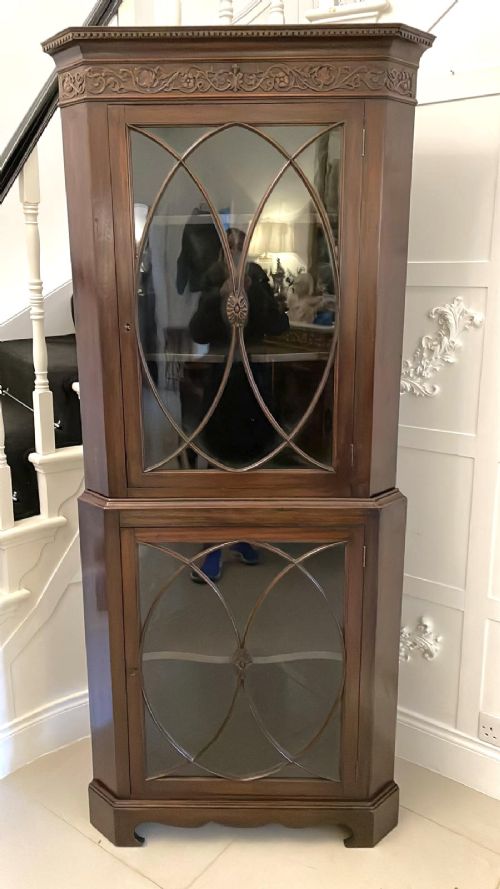
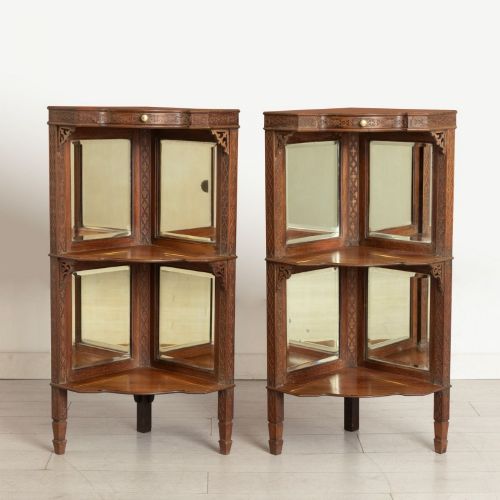
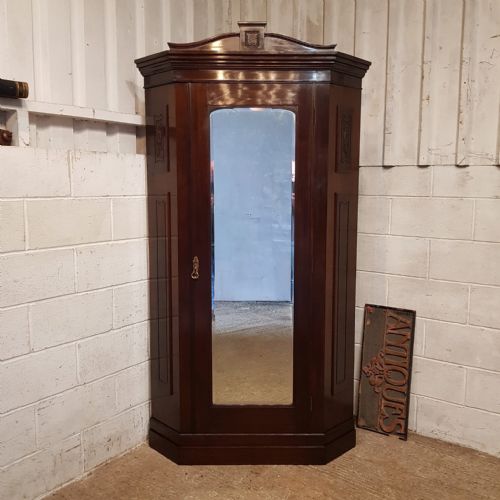
The primary form centres on a single door opening to reveal internal shelving, occasionally supplemented by astragal glazing or mirror glass panels. These cabinets serve equally well for displaying china or concealing everyday items.
Materials and construction
The primary timber across these pieces is mahogany, chosen for its deep warm tone and stability, sometimes paired with secondary woods like walnut or pine. Structural integrity relies on traditional joinery suited to angled furniture, ensuring the heavy timber doors hang true over decades of use.
Surface decoration frequently involves carved detailing, particularly on pieces reflecting Georgian or Chippendale influence. Hardware such as brass hinges and escutcheons provides functional contrast to the dark polished wood.
Glazing takes the form of individual glass panes held by wooden astragals, while other variations incorporate mirror glass to reflect light within the room or display compartment.
Carved Mahogany Corner Cupboard Retail Price Guide 2026
Typical asking prices for carved mahogany corner cupboard among the pieces listed under this phrase on Sellingantiques today, from the lower quarter to the upper quarter. They describe what is for sale here now, not the wider market.
Some corner cupboards come with keys that still turn the brass locks after more than a century.
Distinctions in quality
Quality in a carved mahogany corner cupboard reveals itself in the crispness and depth of the timber carving rather than plain surface decoration. Finer pieces demonstrate careful selection of mahogany grain on the door panels, creating balanced visual patterns.
Construction methods distinguish standard utility furniture from superior cabinet work, seen in the thickness of the timber, the snugness of the corner fit, and the robustness of the internal shelving. The presence of maker marks or attribution to established workshops adds a layer of distinction to the workmanship.
Edwards & Roberts·Goodhall, Lamb and Heighway·Liberty & Co.
The Carved Mahogany Corner Cupboard Glossary
- Astragal glazed
- A method of dividing a glass door into smaller panes using narrow wooden moulding strips. This technique is frequently seen on display cabinets.
- Corner cupboard
- A storage unit specifically built with a triangular or wedge-shaped footprint to occupy the junction between two walls. They save floor space while offering substantial internal capacity.
- Chippendale period
- An eighteenth-century design style associated with Thomas Chippendale, characterised by ornate carved mahogany and classical motifs. Pieces from this era represent significant cabinet-making skill.
- Escutcheon
- A protective plate surrounding a keyhole, usually made of brass on better furniture. It prevents the wood around the lock from sustaining wear through repeated use.
Carved Mahogany Corner Cupboard: Frequently Asked Questions
How do I install a hanging corner cupboard?
Hanging models require secure fixing into wall studs or masonry using appropriate brackets to support the substantial weight of solid mahogany.
Because these units concentrate weight at an angle, professional installation ensures the piece remains level and safe.
How do I care for antique mahogany timber?
Maintain the finish by keeping the cupboard away from direct sunlight and sudden temperature shifts that can dry out the wood. Regular dusting with a soft cloth preserves the polish without building up excess residue.
Occasional application of traditional wax helps nourish the mahogany and maintain its natural lustre.
How can I tell a Georgian piece from a later revival?
Georgian pieces generally show hand-cut joinery, older secondary timbers, and proportions dictated by eighteenth-century design standards. Revival pieces made around nineteen hundred often incorporate machine-cut elements and distinct hardware styles from that later era.
Examining the interior construction and timber shrinkage helps clarify the actual period of manufacture.