
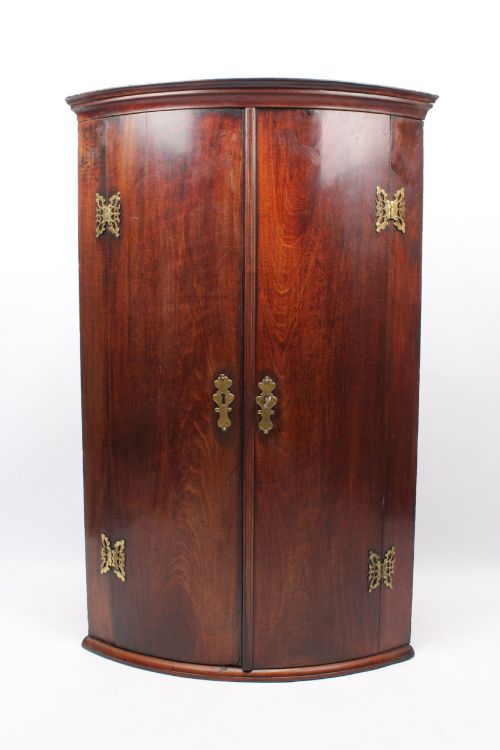
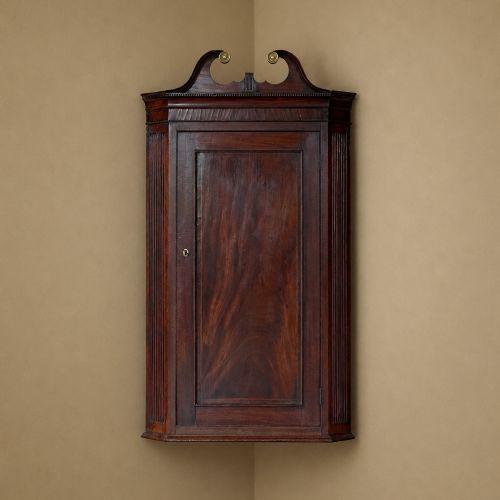
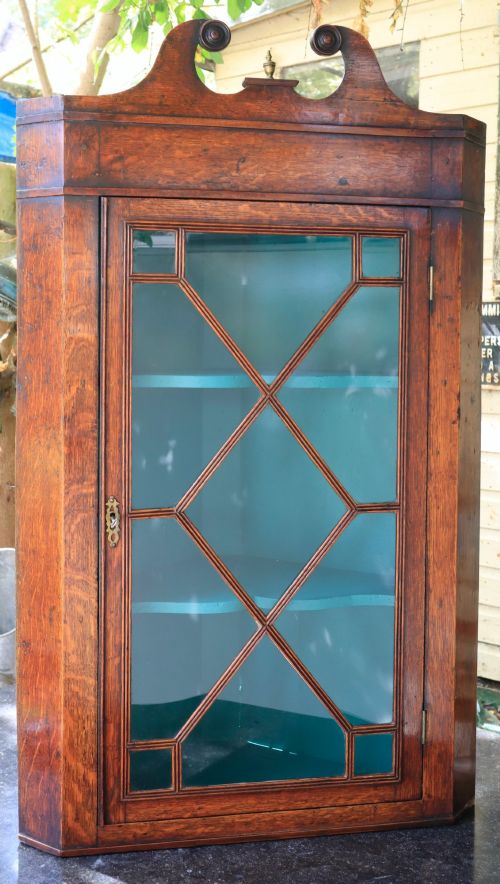
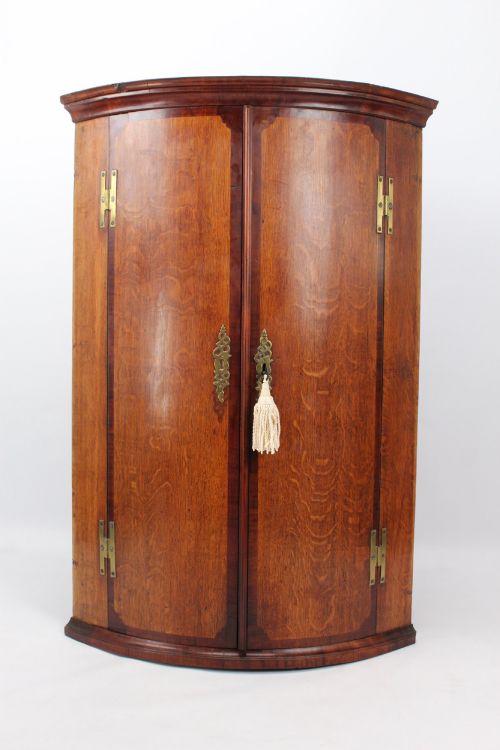
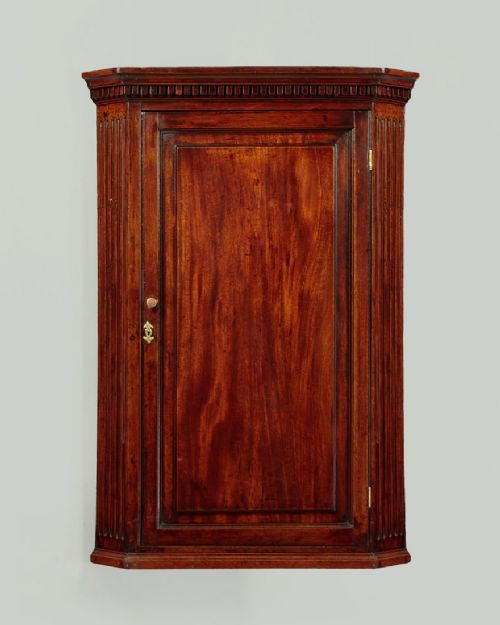
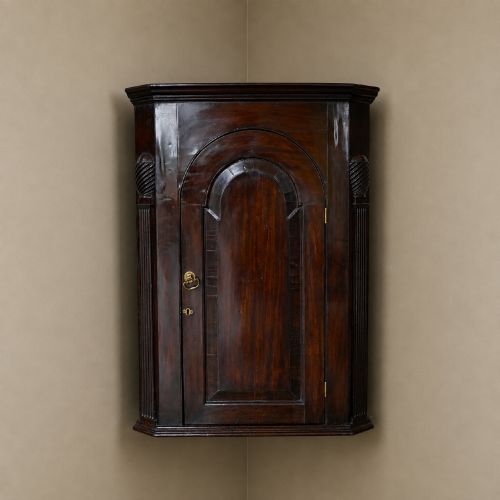
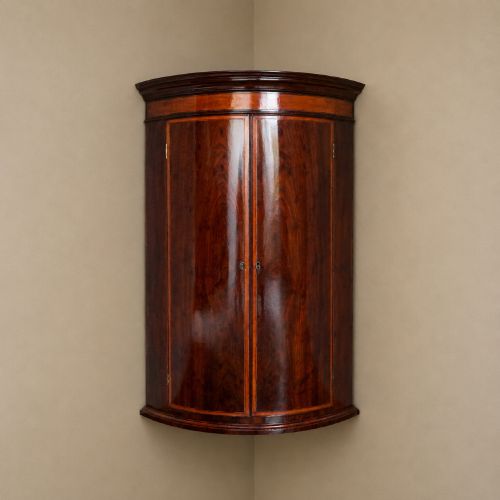
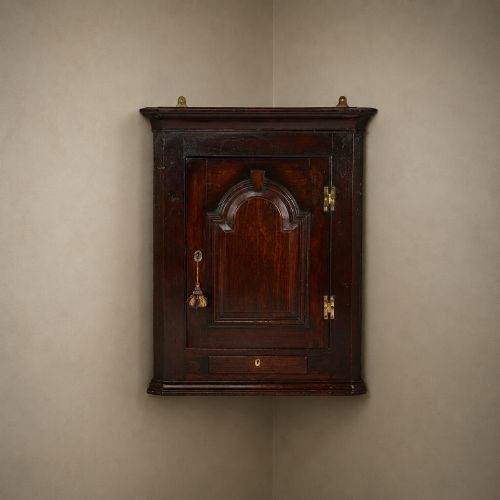
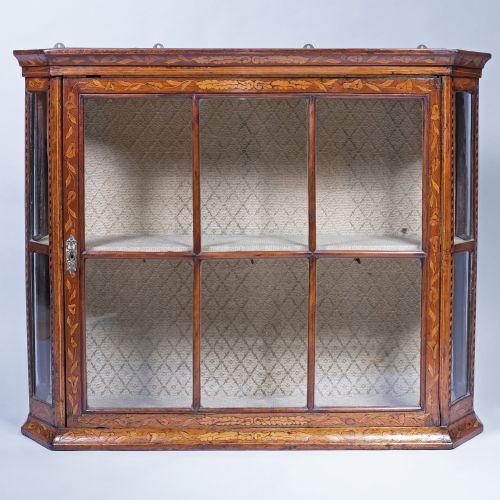
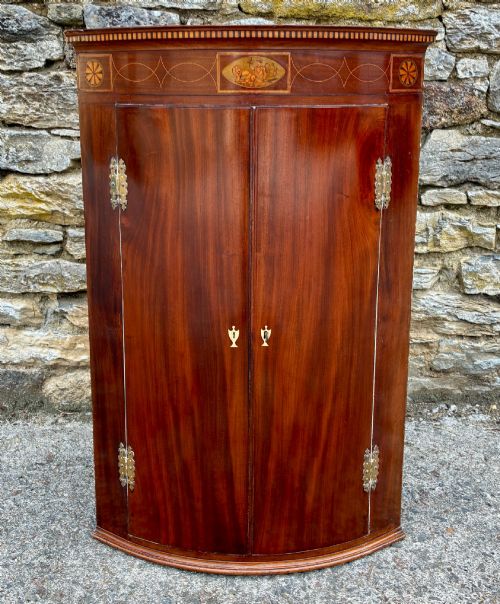
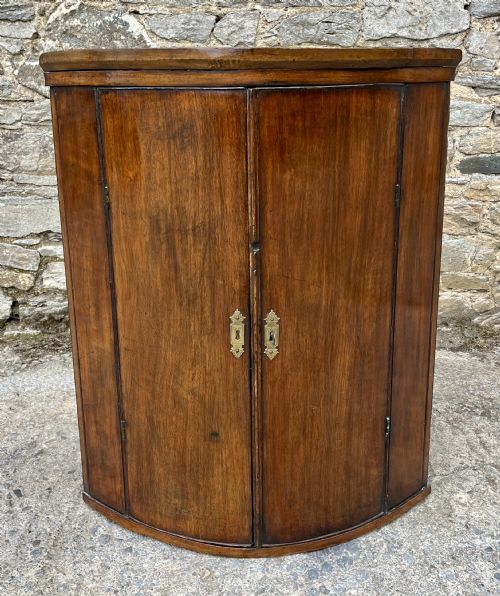
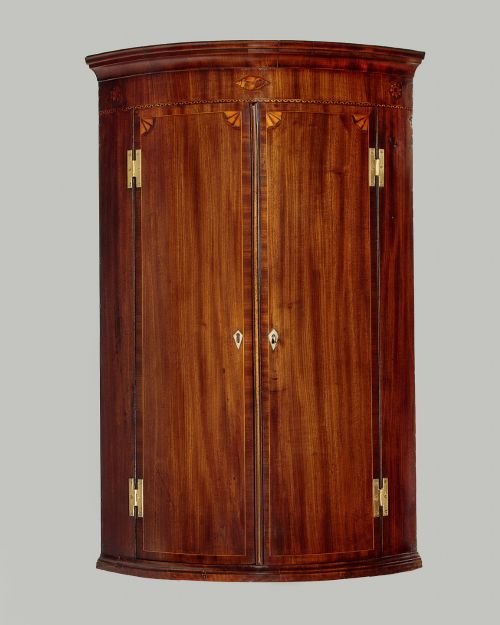
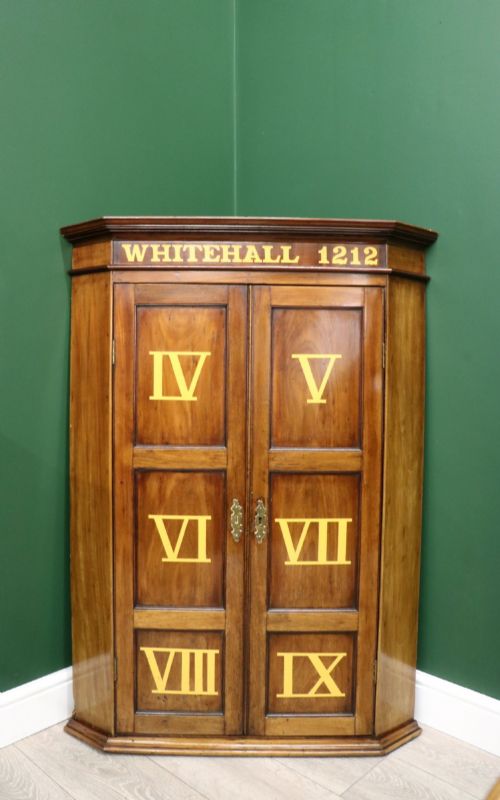
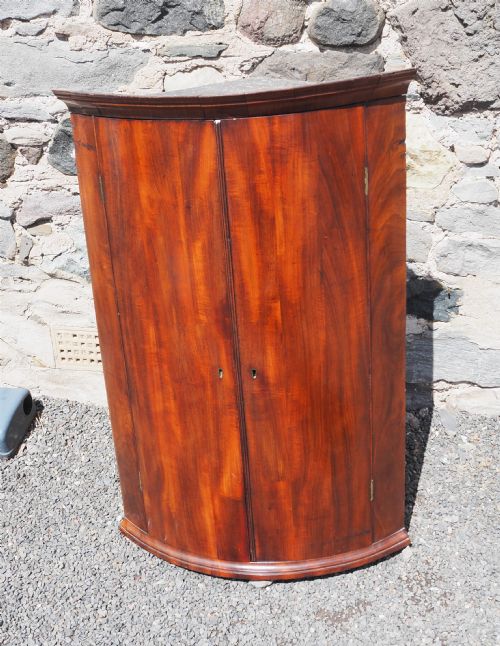
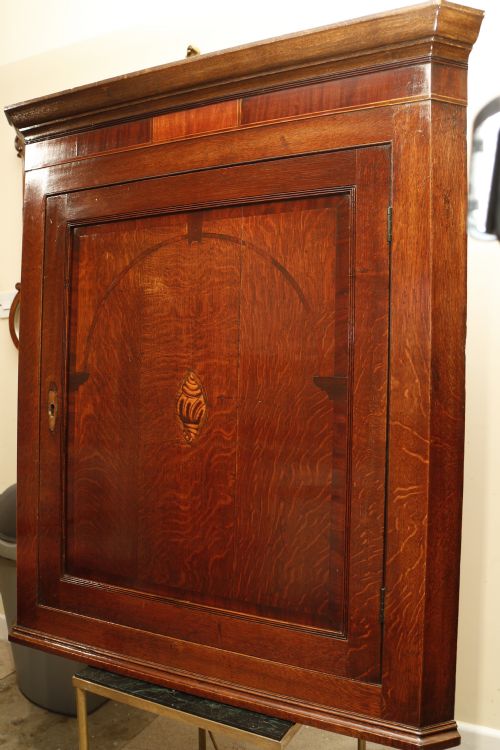

Georgian Mahogany Hanging Cabinet
A georgian mahogany hanging cabinet turns unused room corners into functional display space.
Georgian Mahogany Hanging Cabinet
A georgian mahogany hanging cabinet provides wall-mounted storage traditionally designed to fit snugly into the corner of a room. These pieces primarily appear as corner cupboards and wall cabinets dating from the eighteenth and early nineteenth centuries.
Makers constructed these wall-hung pieces to utilise domestic space efficiently while displaying household valuables. The surviving examples demonstrate how period joiners adapted cabinetry for compact domestic interiors.
What Varies in Quality
The refinement of the timber selection dictates the visual standing of an individual piece, separating plain stock from heavily figured grain patterns like plum pudding or flame mahogany. Superior examples incorporate precise crossbanding and delicate inlay work that demands advanced cabinet-making skill.
Structural integrity rests on the original methods used to join the curved front frames and housing joints. Pieces retaining their original brass furniture, working locks, and interior drawer components command greater interest than those altered over subsequent centuries.
Listings feature eighteenth-century and nineteenth-century pieces constructed from mahogany, oak, and satinwood, incorporating brass and glass elements.
The Georgian Mahogany Hanging Cabinet Glossary
- Bow front
- A convex curved cabinet front that projects outward from the corner walls. This curved profile requires specialised shaping of both the frame and the corresponding door.
- Crossbanding
- A border technique where thin strips of veneer are laid perpendicular to the grain of the central panel. This frames the primary timber surface with a contrasting directional pattern.
- Cornice
- The moulded projection running along the top edge of the cabinet structure. Elaborate versions feature architectural details such as broken arch pediments.
- Pigeon holes
- Small internal compartments arranged in a tier for sorting documents or letters. These appear within specific desktop and wall-mounted desk organiser formats.
Georgian Mahogany Hanging Cabinet: Frequently Asked Questions
How do I hang a heavy corner cabinet safely?
These wall-mounted cupboards require secure fixing directly into structural masonry or solid wooden wall studs using appropriate heavy-duty brackets. The weight distribution relies heavily on the strength of the original hanging straps fixed to the backboards.
Professional installation is recommended due to the combined weight of dense mahogany timber, internal contents, and historical fixings. Ensure the supporting wall can bear the sustained load before mounting.
What was the original purpose of these cabinets?
Georgian households utilised these wall-hung units primarily for storing and displaying valuable tableware, glassware, or medicinal bottles. Positioning them in corners kept valuable items visible while preserving valuable floor space in smaller rooms.
Later adaptations saw them employed for holding spirits or documents, reflecting the versatile nature of domestic storage during the period. Their elevated placement also kept contents safely away from household dampness and pests.
How do I distinguish between eighteenth-century and later revival pieces?
Examination of the internal construction reveals the age of a piece, specifically looking at hand-sawn timber marks and secondary woods like oak. Eighteenth-century examples display irregular hand-planed surfaces and traditional joinery methods distinct from twentieth-century machinery.
Revival pieces, such as those from the Edwardian era or mid-twentieth century, often utilise standardised modern screws and uniform timber milling. Checking the interior backboards and drawer linings provides clear evidence of manufacturing period.
How should I care for mahogany surfaces?
Maintain the timber by applying natural beeswax sparingly and buffing with a soft cloth to preserve the historical patina. Avoid placing the cabinet in direct sunlight or near heat sources to prevent the mahogany and veneers from drying out.
Clean glass panels with a gentle cloth while avoiding harsh chemical sprays that might damage adjacent wooden frames. Regular dusting prevents particle accumulation within carved mouldings and delicate inlay.