


Brown Wall Cabinet
A brown wall cabinet brings practical storage to compact spaces while anchoring a room with warm timber tones and period character.
Brown Wall Cabinet
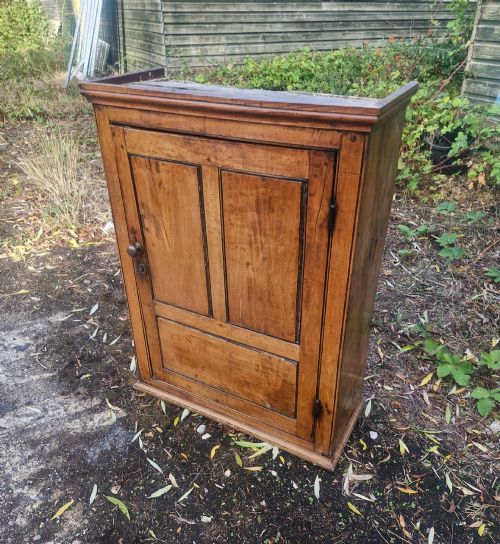
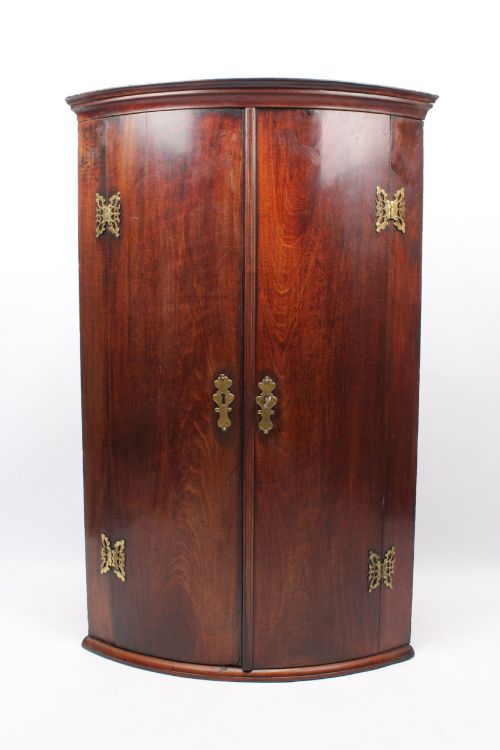
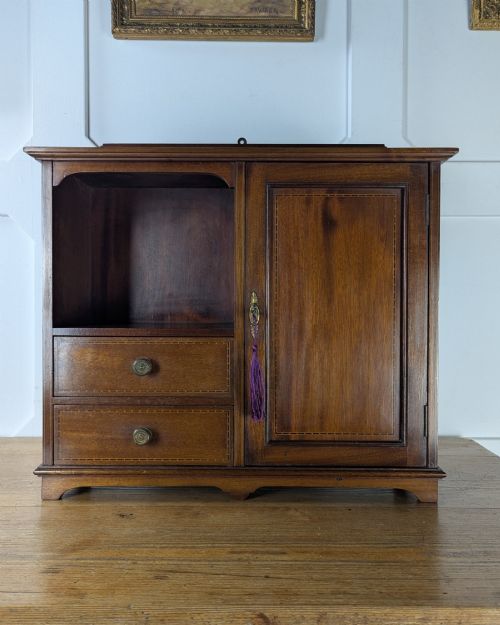
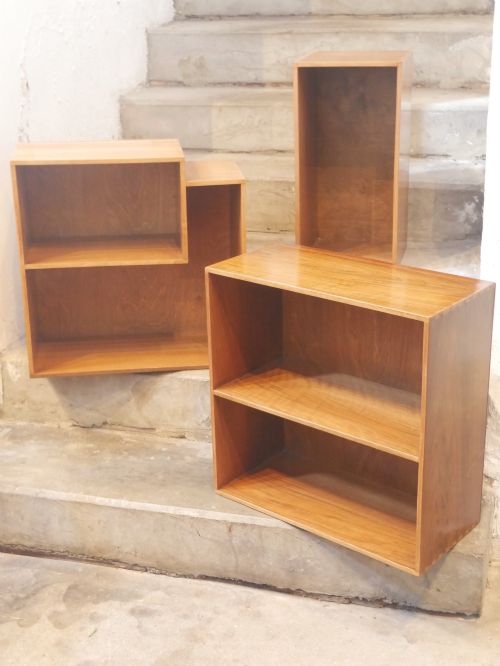
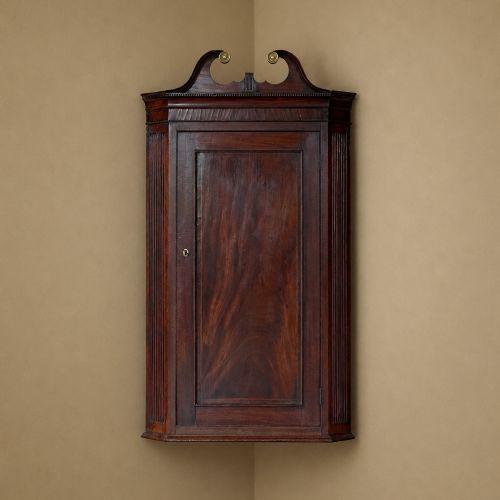
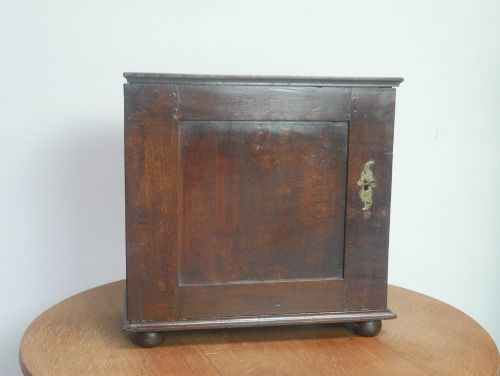
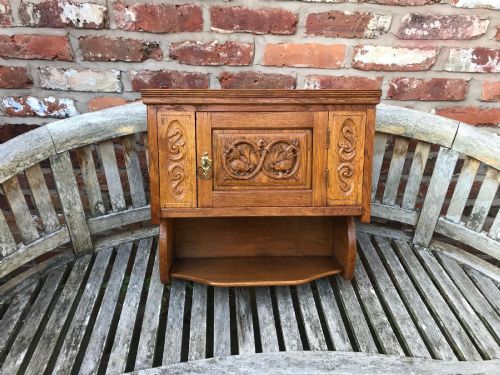
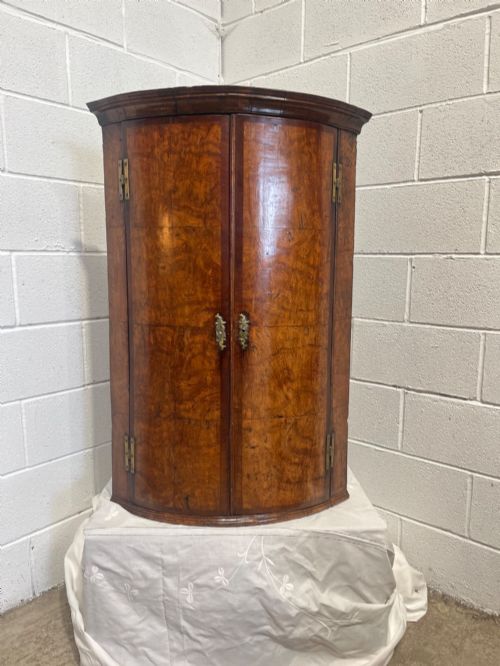
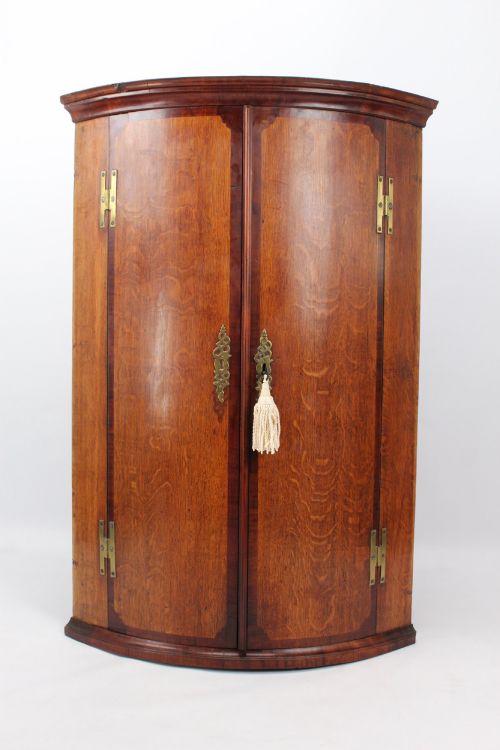
A brown wall cabinet is fundamentally a hanging cupboard, corner cupboard, or small display piece designed to utilise vertical wall space efficiently. When you search for a brown wall cabinet, you encounter diverse forms ranging from compact oak spice cupboards to bow front corner cabinets in rich mahogany.
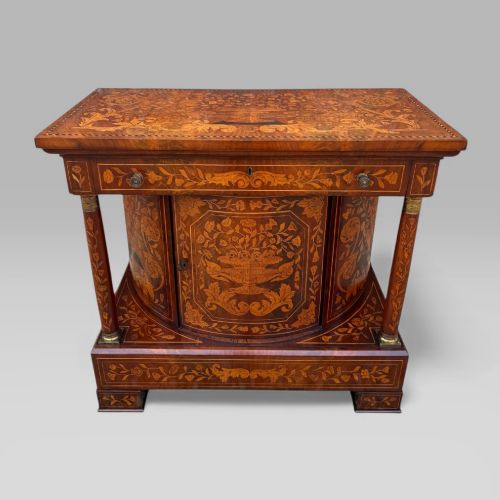
The selections span multiple centuries and stylistic traditions, including Georgian, Victorian, and Arts and Crafts designs. Pieces often feature timber construction in oak, mahogany, or walnut, sometimes enhanced by glass doors or marquetry inlay.
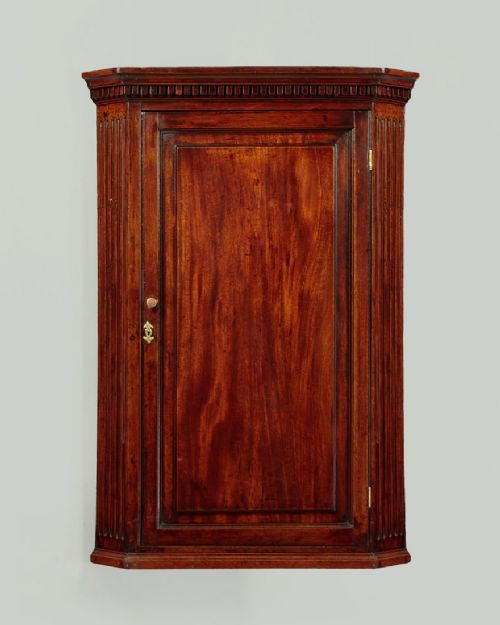
Corner cupboards and hanging wall units dominate the selection, offering functional shelving enclosed by panelled or glazed doors. These items reflect domestic storage needs from the seventeenth century through to the early twentieth century.
Materials and construction methods
Cabinet makers relied predominantly on solid hardwoods such as oak, mahogany, and walnut to construct durable frames and mounting structures. Timbers were often selected for their distinct grain patterns, including burr oak and plum pudding mahogany, which added visual depth to the surface.
Joinery techniques involved traditional methods like mortise and tenon frames, dovetail joints on drawers, and pegged panels to ensure stability over centuries of use. Surfaces were finished with polished wax or polish to protect the wood while accentuating its natural colour.
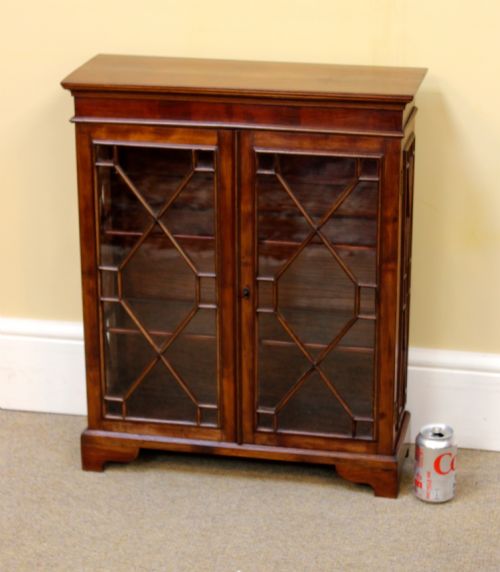
Decorative elements were integrated directly into the construction through hand carving, brass hinges, and inlaid satinwood or marquetry details. Glazed doors utilised lead or wooden glazing bars to secure individual panes of glass within the cabinet door frame.
Listings feature oak, mahogany, walnut, and satinwood across periods spanning the seventeenth to the twentieth century.
Judging quality in period wall cabinets
Quality rests heavily on the choice of timber and the preservation of original surfaces, with superior pieces showing choice grain selection and minimal replacement hardware. The crispness of hand-carved details and the precision of inlaid marquetry separate standard utility cupboards from finer cabinetmaker output.
Structural integrity depends on original backboards, secure hanging brackets, and doors that hang true without sagging. Original glass panes, period brass escutcheons, and functioning locks add significant merit to a piece.
The harmony of proportions, particularly in bow front corner cabinets and miniature display pieces, dictates the visual success of the design. Subtle variations in moulding profiles and cornice details indicate the level of craftsmanship invested in the original workshop.
Arthur Simpson of Kendal·William Yale
The Brown Wall Cabinet Glossary
- Marquetry
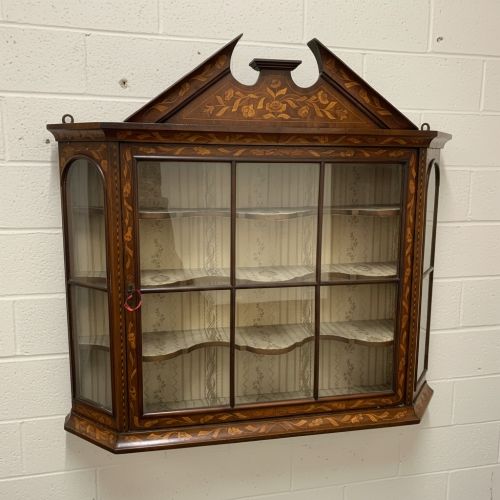
- Inlaid wood veneers forming decorative patterns. This technique was used on eighteenth-century Dutch pieces to create floral or pictorial scenes across cabinet doors.
- Bow front
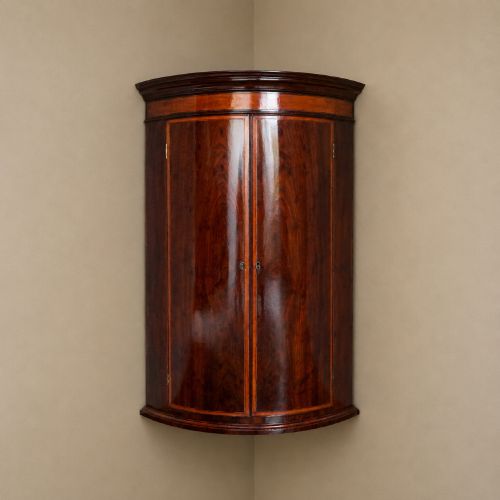
- A convexly curved cabinet front. This shape gained popularity in the Georgian period to soften room corners and enhance visual movement.
- Spice cupboard
- A small wall-hung timber cabinet containing internal drawers. These compact units stored expensive culinary spices in early domestic kitchens.
- Escutcheon
- A protective plate surrounding a keyhole. Brass examples often provide decorative contrast on dark mahogany and oak cupboard doors.
- Cornice
- The decorative moulding crowning the top of a cabinet. It provides a finished architectural transition between the wall and the furniture piece.
Brown Wall Cabinet: Frequently Asked Questions
How do I hang a heavy oak wall cabinet safely?
Wall cabinets require secure attachment directly into wall studs or masonry using appropriate fixings rated for the combined weight of the timber and its contents. Professional installation ensures the hanging brackets distribute the load evenly without straining historic joints.
Older cabinets often feature original internal fixing points or reinforced backboards designed for wall mounting. Checking the integrity of these mounting areas before installation prevents structural damage to the piece.
What is the difference between a corner cabinet and a wall cupboard?
A corner cabinet is specifically shaped with an angled back to fit neatly into the ninety-degree junction of two walls. These units maximise awkward room spaces while providing enclosed shelving.
Standard wall cupboards feature flat backs designed for placement on straight wall surfaces. Both forms serve similar storage functions but utilise different architectural footprints within a room.
How do I care for antique mahogany and oak furniture?
Timber surfaces benefit from occasional applications of beeswax to nourish the wood and maintain a gentle protective sheen. Avoid using silicone sprays or harsh chemical cleaners that can degrade historic polishes.
Keep cabinets away from direct sunlight and strong heat sources such as radiators to prevent the wood from drying out and splitting. Stable indoor humidity levels preserve both the timber and traditional joinery.