


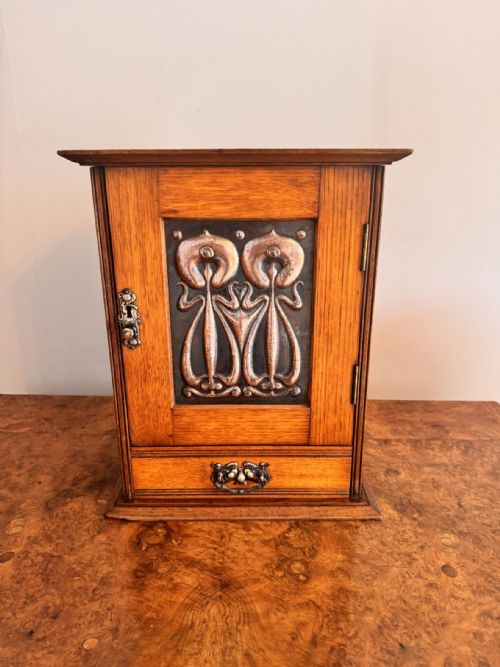
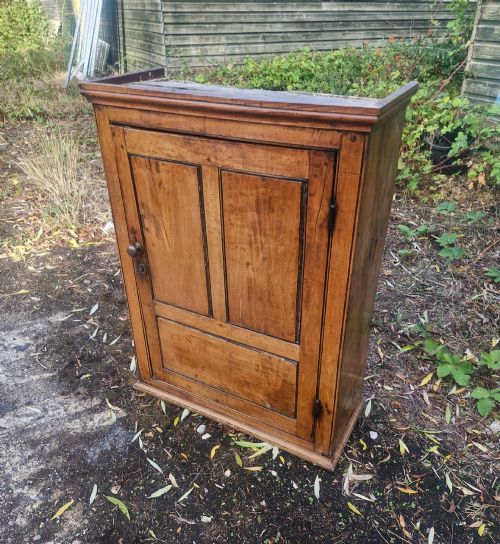
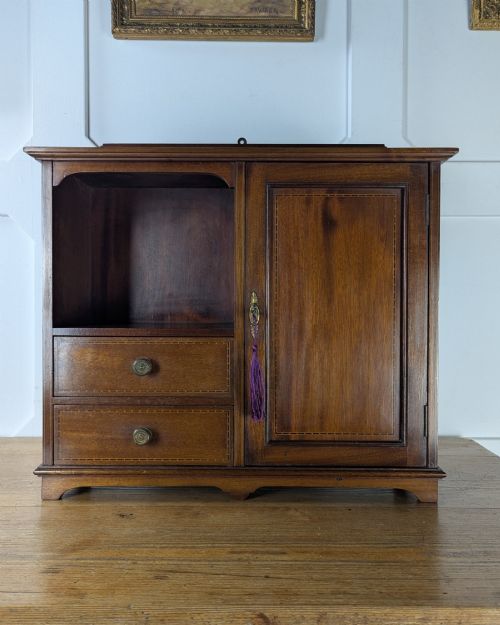
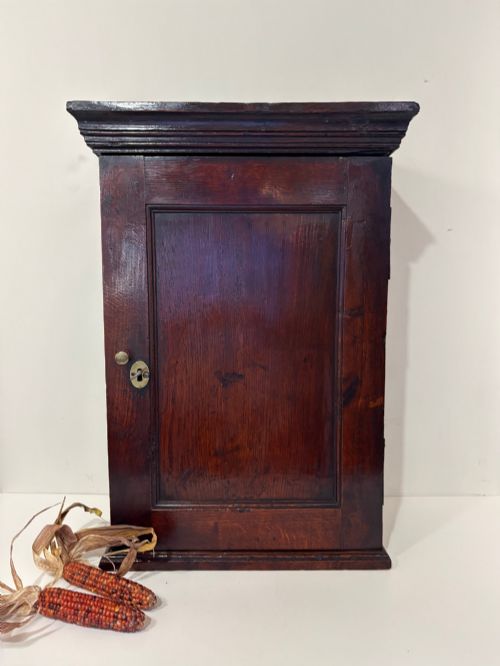
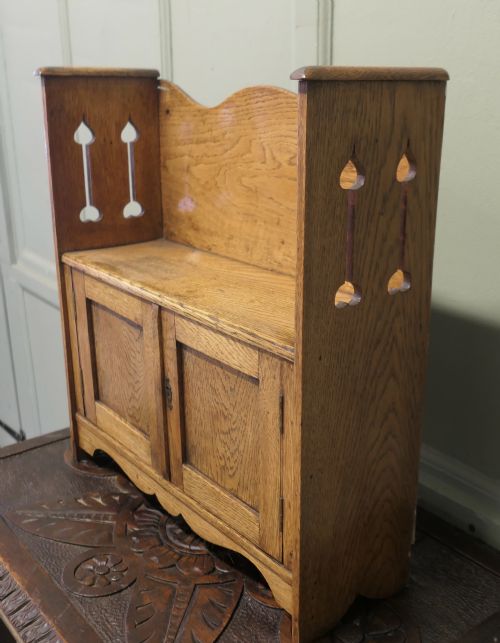
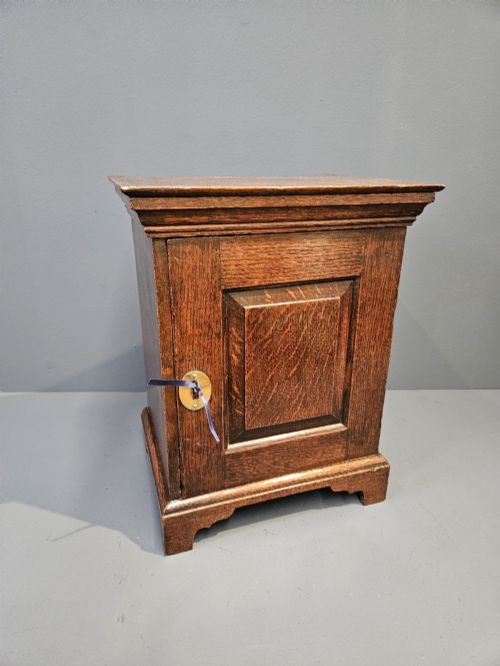
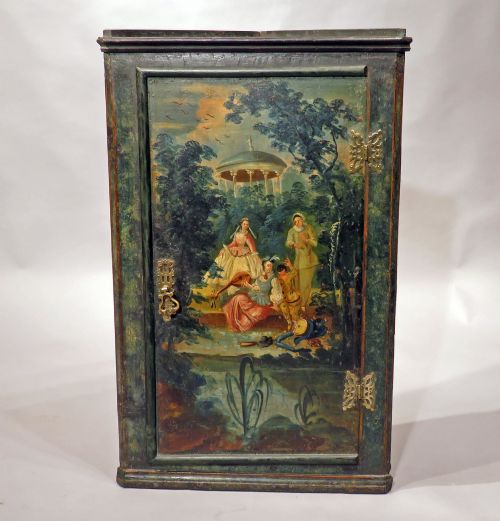
Small Wall Cupboard
These small wall cupboards are compact storage pieces designed to save floor space while housing spices, keys, or display items.
Small Wall Cupboard
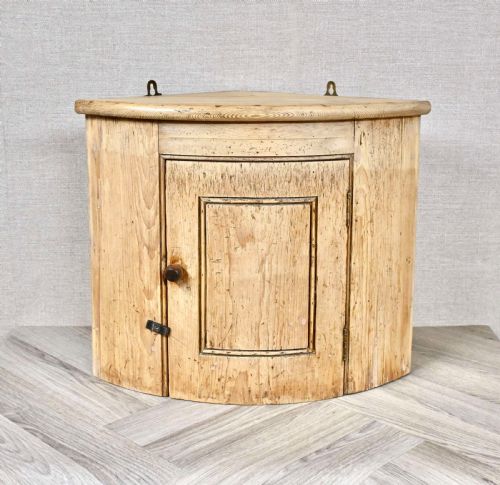
A small wall cupboard is a compact hanging unit designed to be mounted directly onto a room partition, saving floor space while providing secure storage. These pieces range from spice cupboards and key cabinets to corner cupboards and small glazed display units.
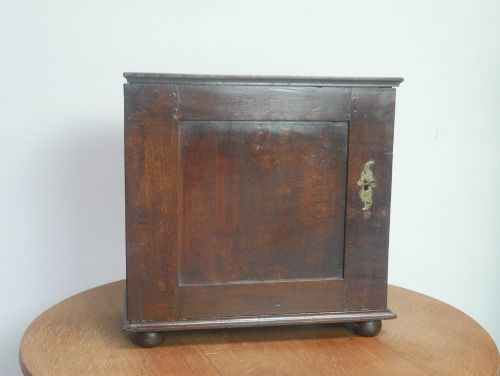
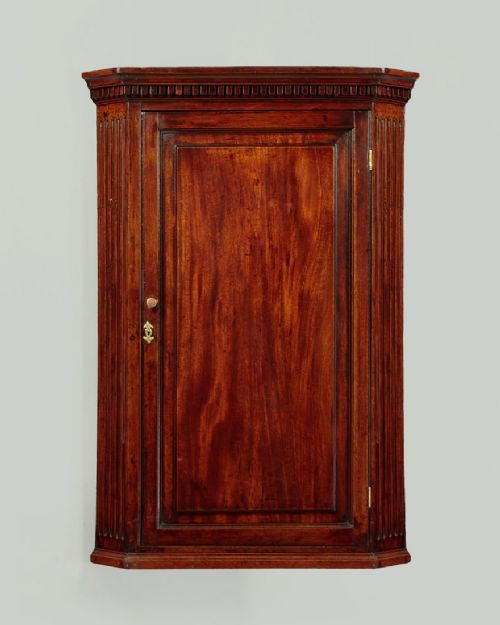
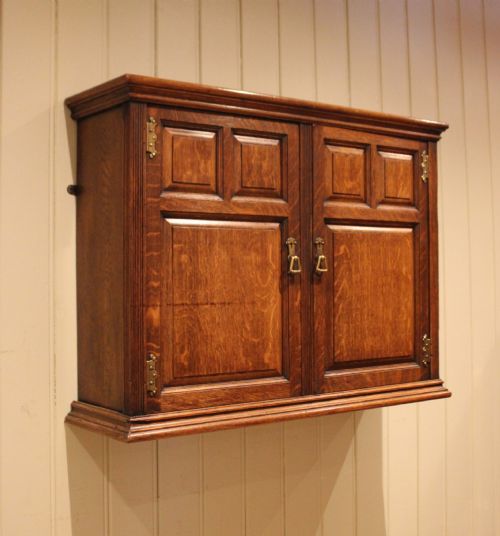
The versions most frequently met on this page date from the 18th and 19th centuries, reflecting Georgian, Victorian, and Edwardian domestic habits. Common forms include oak spice cupboards with small internal drawers and mahogany or pine corner cabinets built to fit domestic angles.
Materials and construction
Makers relied heavily on native hardwoods like oak and mahogany, alongside softer timbers such as pine for carcasses and internal shelving. Brass hardware, including hinges, key escutcheons, and working locks, provides structural reinforcement and functional detail.
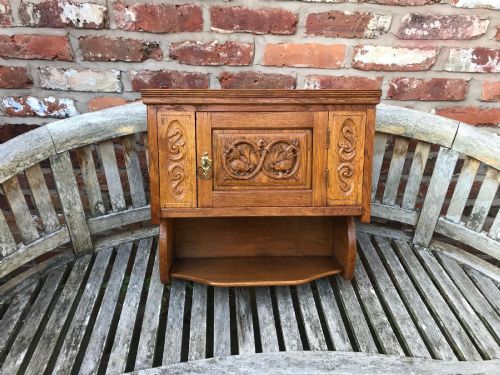
Joinery techniques span traditional panelled doors, hand-carving, and inlay work utilising satinwood, amboyna, or marquetry. Surfaces are finished with paint, glaze, or waxed polish depending on the period and the regional workshop tradition.
Listings feature oak, mahogany, pine, and walnut timbers spanning the 17th, 18th, and 19th centuries.
What separates the best from the rest
Quality in a small wall cupboard rests on the selection of timber and the precision of the cabinetmaker's joinery. Finer examples display carefully matched wood grains, well-fitted panel doors, and intact original brass furniture rather than later replacements.
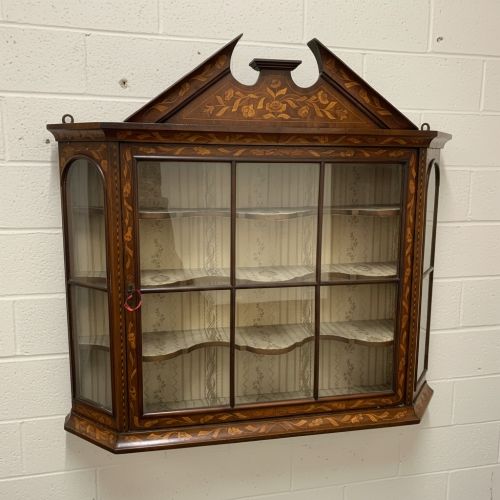
Decorative elaboration also distinguishes the range, moving from simple utilitarian pine boxes to sophisticated Dutch marquetry, carved oak panels, or inlaid satinwood. The crispness of carved details and the survival of original painted interiors elevate specific pieces above standard utility items.
The Small Wall Cupboard Glossary
- Spice cupboard
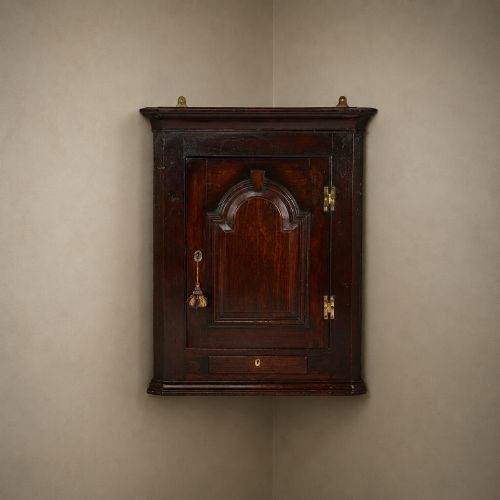
- A small wall-mounted cabinet traditionally fitted with multiple internal drawers for storing culinary spices and herbs. These early pieces frequently feature dense oak construction and simple brass latches.
- Corner cupboard
- A cabinet specifically constructed with an angled back to fit neatly into the corner of a room. They appear in both hanging wall formats and floor-standing variants.
- Marquetry
- A decorative technique where thin pieces of coloured wood veneer are assembled to form pictorial or geometric patterns on a cabinet surface. It is often seen on finer 18th-century and Edwardian pieces.
- Escutcheon
- A protective plate surrounding a keyhole, usually fashioned from brass. On antique cabinets, these plates often provide clues to the period through their specific shape and mounting.
- Glazed door
- A cabinet door inset with glass panels to allow the display of contents while protecting them from dust. These are typical of display cabinets and later Edwardian hanging units.
Small Wall Cupboard: Frequently Asked Questions
Where were small wall cupboards placed in historic homes?
These cabinets were typically mounted at eye level in kitchens, hallways, or dining parlours where contents needed to be kept secure and within easy reach.
Corner versions made efficient use of awkward room angles, while flat-backed wall units hung above work surfaces or tables.
Can I use a spice cupboard in a modern kitchen?
These compact cabinets adapt readily to modern interiors for storing dry goods, small jars, or everyday kitchen items. Their shallow depth prevents them from protruding too far into working spaces.
Care should be taken to protect antique wood finishes from excessive moisture and direct heat sources found in contemporary kitchens.
How do I distinguish a Georgian corner cupboard from an Edwardian one?
Georgian corner cupboards generally display heavier oak or mahogany timbers, simple panelled doors, and utilitarian brass H-hinges. They prioritise sturdy construction and practical storage over elaborate ornamentation.
Edwardian interpretations frequently incorporate lighter satinwood inlay, glazed display doors, and refined Arts and Crafts styling or Edwardian revival motifs.