


Serpentine Glass Vitrine
A serpentine glass vitrine offers a curved, polished stage for precious objects, bringing nineteenth-century French and English craftsmanship into domestic rooms.
Serpentine Glass Vitrine
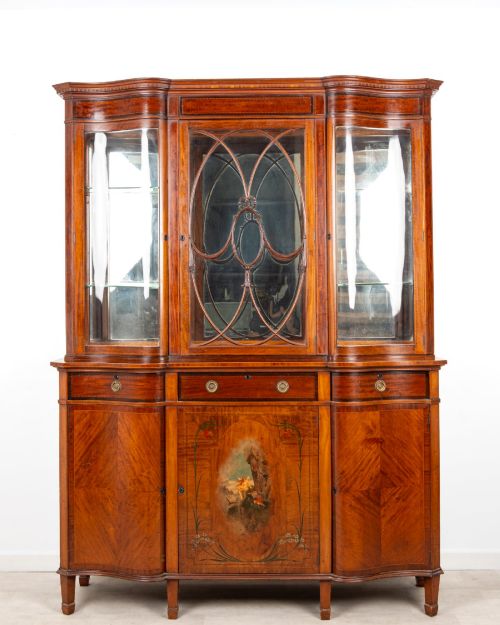
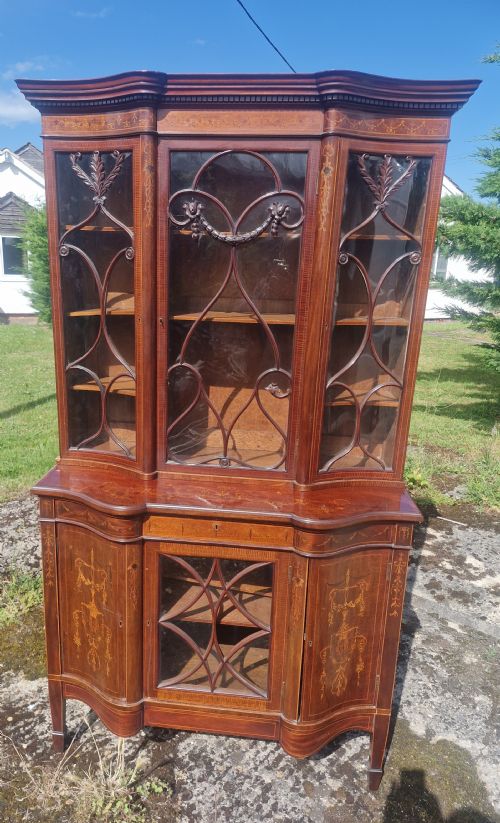
A serpentine glass vitrine is a display cabinet defined by its undulating, wave-like front profile and glazed panels designed to showcase objets d'art. Buyers searching this phrase encounter nineteenth-century pieces ranging from freestanding French cabinets to Edwardian English corner cupboards.
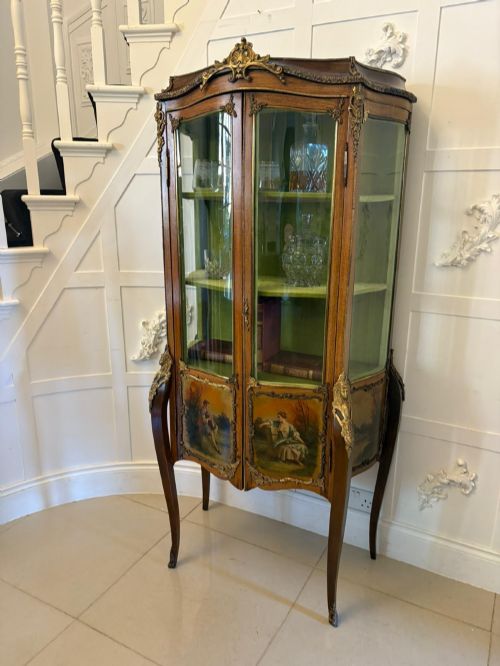
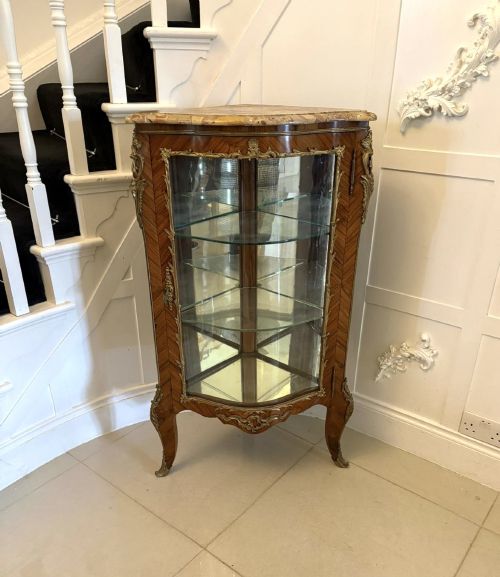
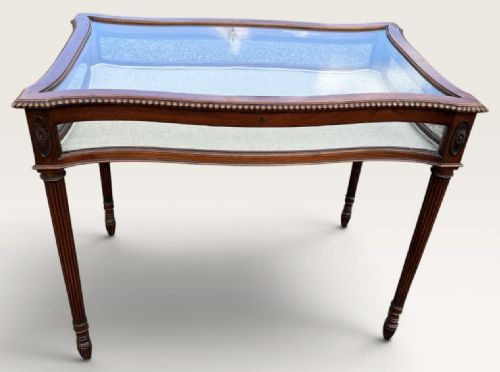
The forms span tall display cabinets, smaller corner units, and bijouterie tables with glass tops. Most examples draw upon Louis XV, Louis XVI, and Sheraton revivals, utilising rich timber veneers and glazed doors to maximise light across the interior shelves.
How they were made
Cabinetmakers built these pieces using foundational hardwoods such as mahogany and walnut, overlaid with decorative veneers including kingwood, satinwood, and fruitwood. Skilled hands shaped the timber to form the characteristic double-curved serpentine contour before applying intricate marquetry or parquetry patterns.
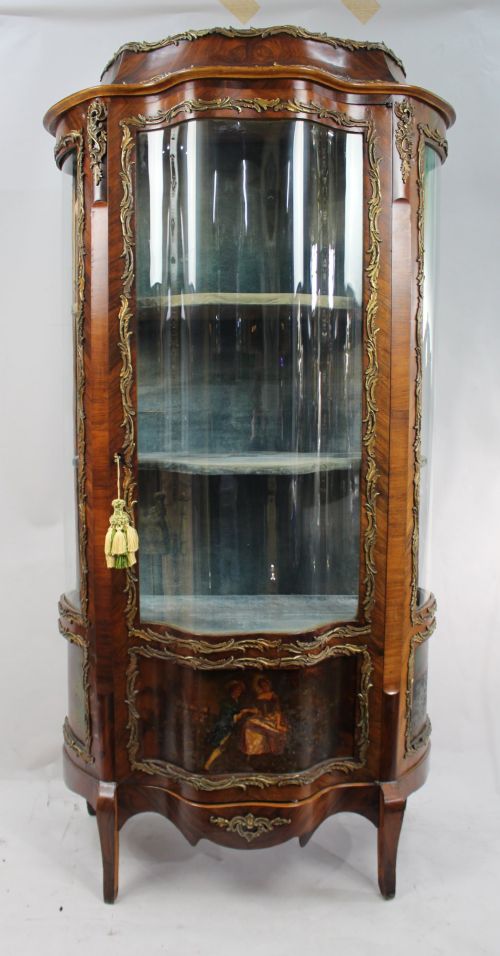
Gilt bronze and ormolu mounts were cast and chased to frame the glass doors and accentuate the corners and feet. Many French pieces incorporate painted panels in the Vernis Martin technique, adding decorative pictorial scenes beneath clear varnish layers.
Materials recorded on this page include hand-cast ormolu mounts, glazed display panels, silk-lined interior fabrics, and intricate fruitwood marquetry.
What varies in quality
Quality rests in the fluidity of the serpentine curve and the precision of the timber matching across the undulating surface. Superior examples display crisp, heavy ormolu mounts that fit the timber contours exactly, rather than generic castings fixed as an afterthought.
The intricacy and preservation of the marquetry inlay and painted panels dictate the upper tier of these pieces. Cabinetwork signed by established makers shows finer joinery and more ambitious proportions in both freestanding vitrines and corner cabinets.
Edwards and Roberts·Angela Kaufman·Linke
The Serpentine Glass Vitrine Glossary
- Serpentine
- A cabinet front featuring alternating convex and concave curves that resemble the undulating movement of a snake. This shaping requires expert carpentry to ensure doors and frames seat properly.
- Vitrine
- A glass-fronted cabinet designed for the display and protection of fine porcelain, silver, and curiosities. The sides are frequently glazed to allow light to enter from multiple angles.
- Ormolu
- Gilded bronze mounts applied to furniture edges and feet for architectural definition and decorative contrast. The best examples are hand-chased after casting to sharpen the surface details.
- Vernis Martin
- A simulated Japanese lacquer technique developed in France, using translucent varnishes over painted decorations. It gives cabinets a luminous, glossy finish with depth.
- Marquetry
- The art of applying small pieces of veneer to form decorative pictures and geometric patterns on furniture surfaces. Woods of contrasting natural tones create the design.
Serpentine Glass Vitrine: Frequently Asked Questions
What is a serpentine glass vitrine?
A serpentine glass vitrine is a glazed display cabinet with a distinctive undulating front profile, designed to showcase collections of small decorative items and porcelain.
These pieces combine curved woodwork with glass panels on the front and sides to maximise internal light and visibility from multiple angles.
Where were these cabinets placed?
In nineteenth-century drawing rooms and reception spaces, these cabinets stood against main walls or fitted neatly into room corners to utilise floor space efficiently.
Table versions, known as bijouterie tables, sat centrally to display smaller items like medals, miniatures, and trinkets beneath a glass viewing lid.
How do I care for timber and ormolu?
Keep these cabinets away from direct sunlight and heat sources to prevent the delicate kingwood, mahogany, or satinwood veneers from drying out and cracking.
Dust the ormolu mounts gently with a soft dry cloth without using abrasive metal cleaners that can strip the original gilding.
How do I tell French and English styles apart?
French vitrines from the nineteenth century frequently employ kingwood, extensive ormolu mounts, and Vernis Martin painted panels following Louis XV or Louis XVI revivals.
English Edwardian and late Victorian pieces often utilise mahogany with delicate satinwood inlay, reflecting Sheraton revival influences with a lighter structural feel.