


Brass Mounted Display Case
A brass mounted display case brings together glass and metal to hold small treasures, shaped by Victorian makers and French revival tastes.
Brass Mounted Display Case
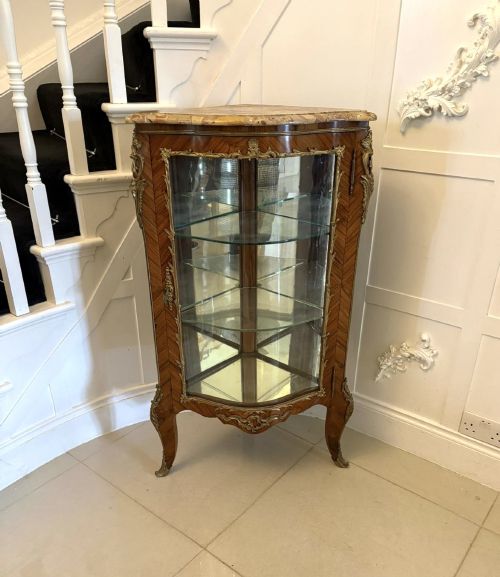
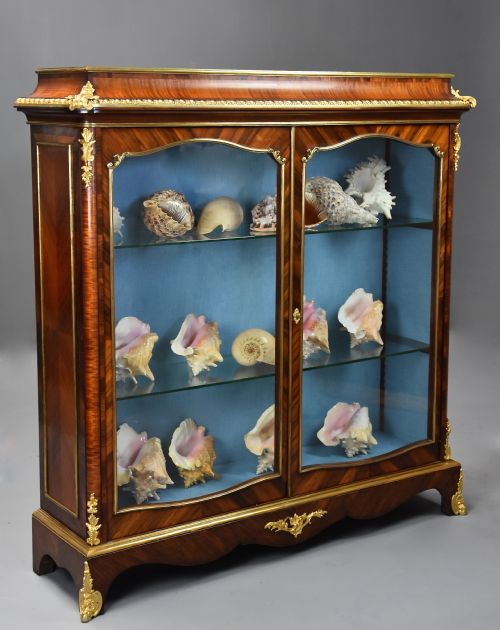
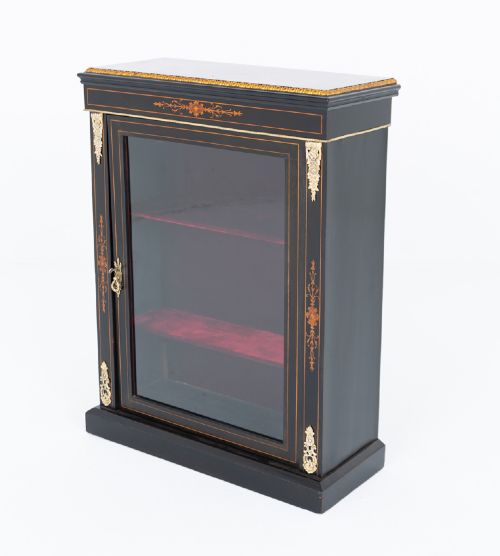
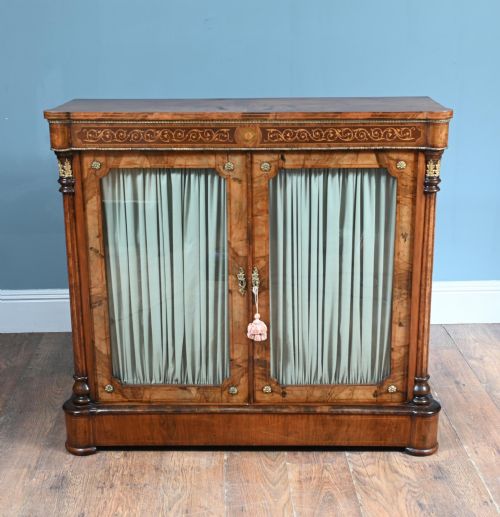
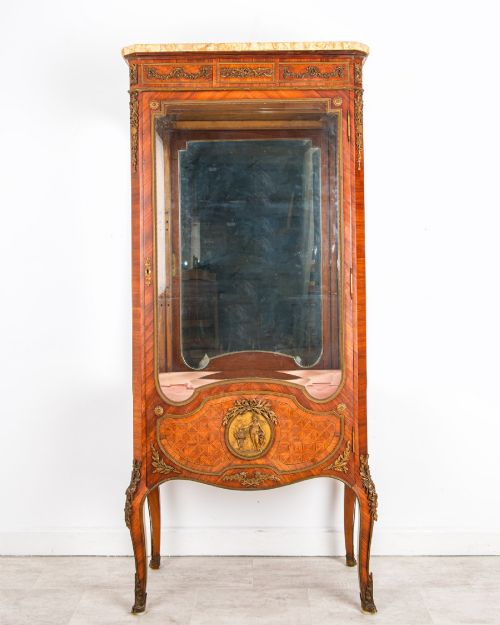
A brass mounted display case is primarily found in forms such as vitrines, pier cabinets, and bijouterie tables. These pieces emerge predominantly from the nineteenth century and stretch into the early twentieth century, spanning Victorian and Edwardian periods.
French revival styles dominate the selection, with Louis XV, Louis XVI, and Directoire influences appearing alongside British walnut and mahogany pier cabinets. Buyers most frequently encounter freestanding or corner vitrines designed with glass panels to showcase collections.
The objects range from large credenzas and bookcases down to tabletop bijouterie cases and small key cabinets. Mahogany, walnut, and ebonised wood provide the primary carcases for these displays.
Materials and construction
Makers construct these cases using timbers like kingwood, mahogany, walnut, and ebonised wood, frequently enhanced with intricate Boulle inlay, tulipwood banding, or Vernis Martin painted panels. Glass provides the viewing panes for the sides and doors.
Ormolu and gilt brass mounts are cast and applied to frame the glass, accentuate corners, and highlight the lines of the cabinet. Marble tops appear on several French examples, adding weight and a contrasting surface above the timber carcase.
Materials recorded across the inventory include ormolu, velvet, kingwood, ebonised wood, and Sevres plaques.
Quality and execution
The refinement of the ormolu or gilt brass mounts separates standard pieces from exceptional examples, as finely chased bronze work demands superior craftsmanship. The choice and figure of timber veneers, such as figured walnut or matched kingwood, also dictate the grade of the cabinet.
Integration of secondary materials like Sevres-style porcelain plaques or delicate marquetry elevates the ambition of the piece. Precision in the joinery of serpentine fronts and curved glass doors marks the upper tier of production.
The Brass Mounted Display Case Glossary
- Vitrine
- A glass-fronted cabinet designed for displaying fine porcelain, curiosities, or books. The term originates from the French word for glass.
- Ormolu
- Gilded bronze used for decorative mounts and hardware on furniture. Makers cast and chased the metal to achieve sharp ornamental detail.
- Pier cabinet
- A low cabinet built specifically to fit the wall space between windows. Victorian examples frequently incorporate glass doors and brass mounts.
- Bijouterie table
- A glass-topped table designed for displaying jewellery and small collectibles at viewing height. These pieces often feature velvet-lined interiors.
- Boulle
- Marquetry technique utilising brass and tortoiseshell inlaid into a dark ground. Named after the French cabinetmaker André-Charles Boulle.
Brass Mounted Display Case: Frequently Asked Questions
What is a vitrine?
A vitrine is an enclosed glass cabinet designed to display porcelain, silver, and curiosities while protecting them from dust.
These pieces typically feature glazed doors and sides to allow maximum light to reach the items inside.
Where should I place a display case?
These cabinets suit drawing rooms, studies, or hallways where natural light illuminates the glass and metal mounts.
Freestanding or corner vitrines work best against solid walls away from direct sunlight to protect interior fabrics and timber.
How do I care for velvet interiors?
Velvet linings require gentle brushing with a soft-bristled brush to remove dust without damaging the pile.
Avoid using liquid cleaners on the fabric or the surrounding timber and brass mounts.
How do I distinguish French and English styles?
French pieces from this category often utilise kingwood, marble tops, and elaborate ormolu mounts influenced by Louis revival periods.
English examples more commonly employ figured walnut or mahogany in rectilinear pier cabinets with simpler brass stringing.