

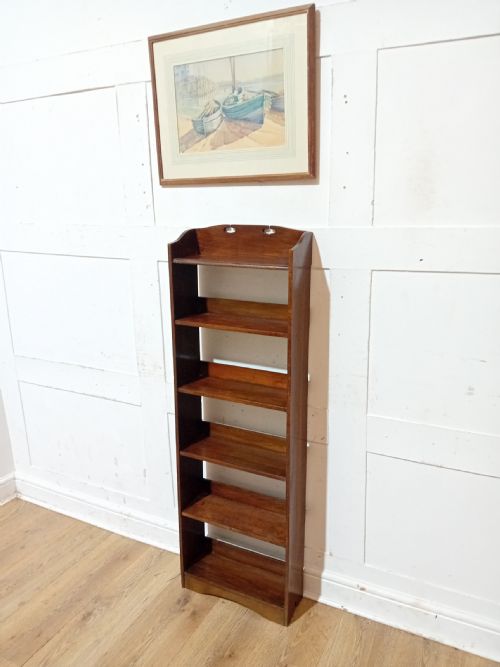


Tall Narrow Bookshelf
A tall narrow bookshelf solves difficult wall spaces while keeping volumes close at hand.
Tall Narrow Bookshelf
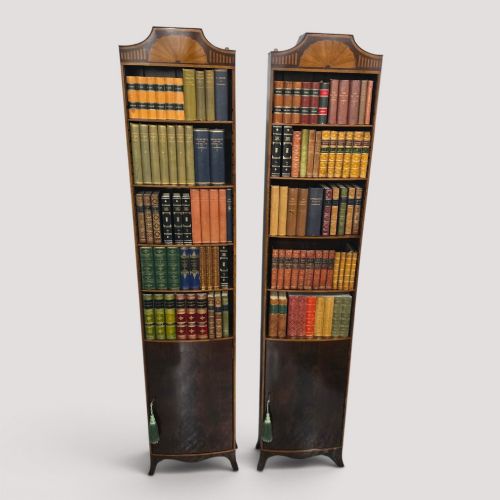
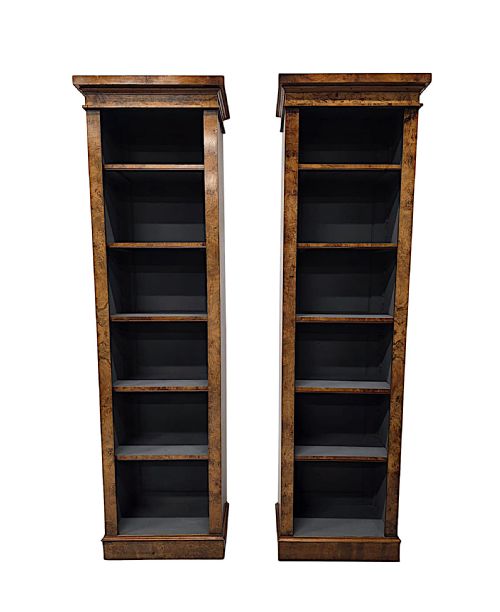
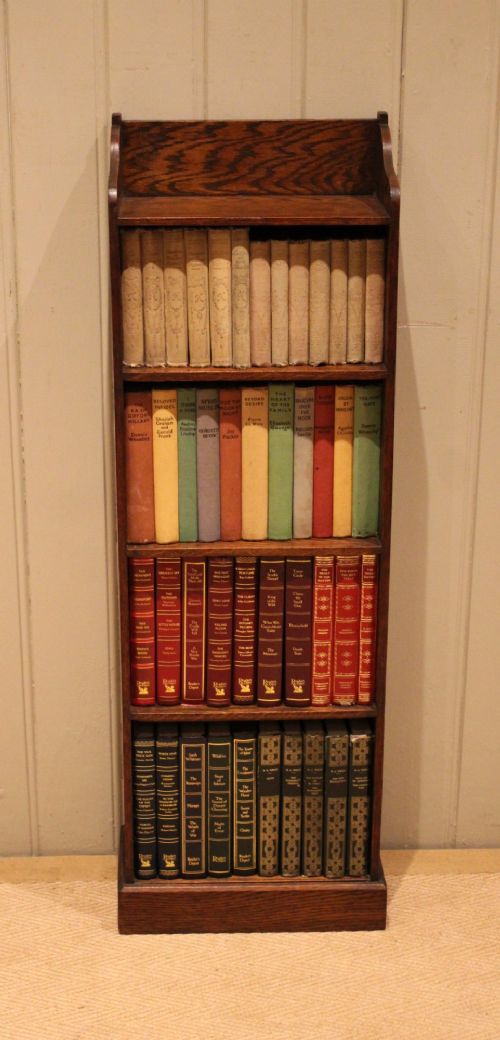
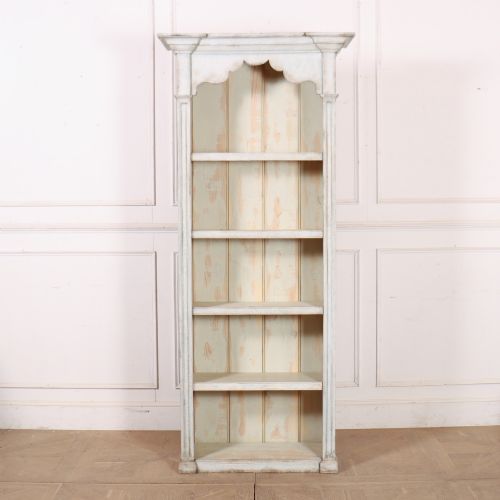
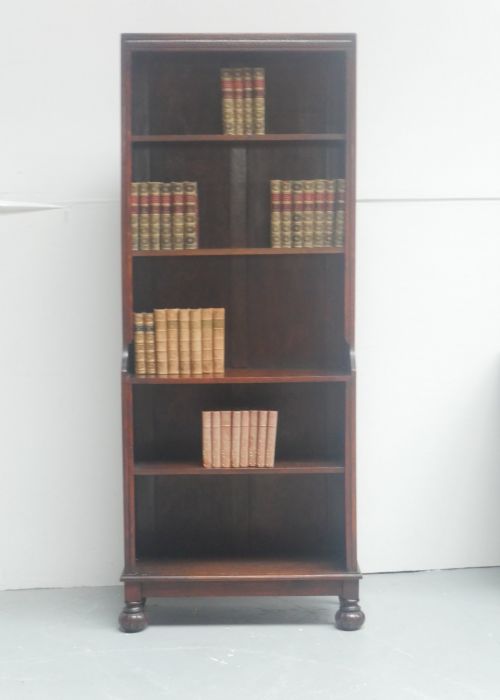
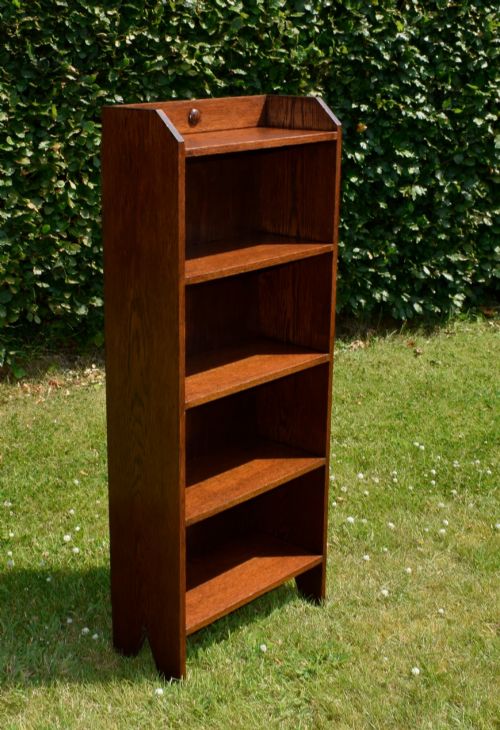
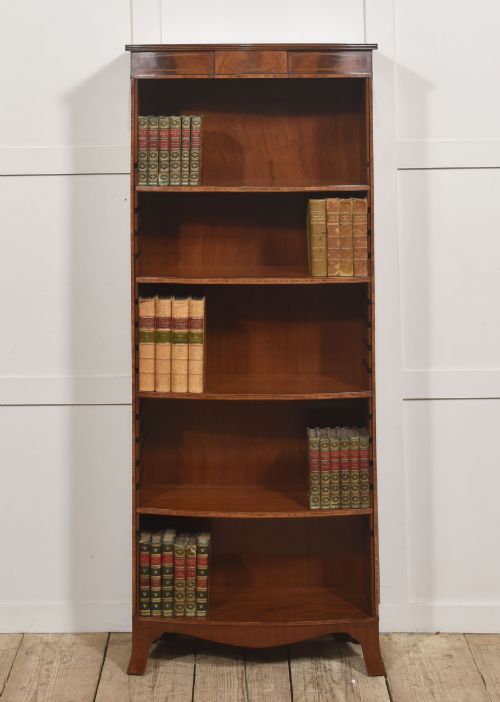
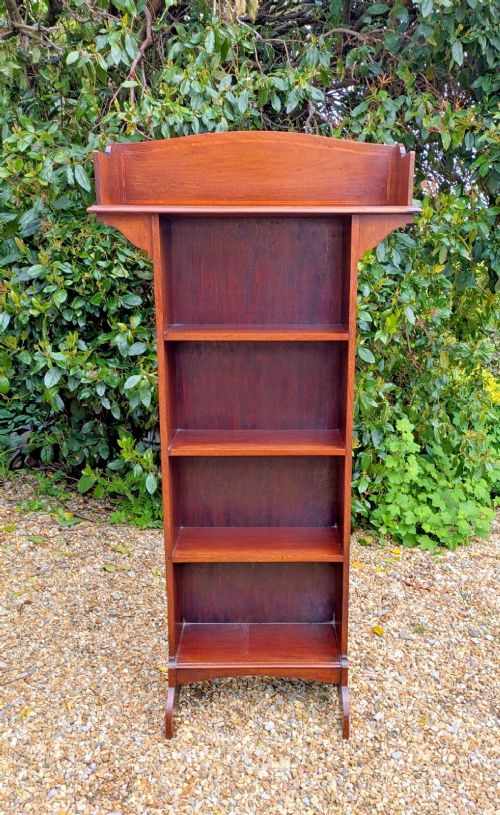
A tall narrow bookshelf provides upright shelving designed to fit tight spaces without dominating a room. These pieces appear in forms such as open bookcases, whatnots, display shelves, and occasional cabinet combinations.
Most examples found here date from the Victorian, Edwardian, and interwar periods, stretching from the late nineteenth century through the nineteen-thirties. Makers utilised styles ranging from plain Arts and Crafts oak to inlaid mahogany and burr walnut.
The proportions remain consistently slender, intended to maximise vertical storage within modest floor plans. Buyers encounter open front designs predominantly, though cupboard sections and glazed doors occasionally appear near the base.
How they were made
Cabinetmakers built these shelves using timbers such as oak, mahogany, walnut, and pine, often selecting quarter-sawn oak for durability or figured burr walnut for decorative impact. Surfaces received polish, wax, or traditional paint finishes.
Construction methods relied on solid timber framing, dovetail joints for internal compartments, and brass hardware for mounts or hinges. Detail work included beaded edges, carved mouldings, and delicate wood inlays.
Specific workshops utilised specialised joinery, such as the distinctive framing seen in Arts and Crafts pieces attributed to makers like Wylie Lochhead. Ormolu mounts and fine veneers appeared on select formal items from the nineteenth century.
What varies in quality
Quality rests upon the selection of timber figures and the crispness of applied mouldings or inlays. Plain utility pieces contrast with refined examples displaying figured burr walnut or detailed brass mounts.
Structural integrity depends on sturdy joints and straight vertical uprights that support heavy rows of books without sagging. Superior examples maintain original surface finishes and harmonious proportions.
Wylie Lochhead of Glasgow·E.A. Taylor
The Tall Narrow Bookshelf Glossary
- Open bookcase
- A piece of furniture consisting solely of upright sides and horizontal shelves without doors. This format allows immediate access to books.
- Whatnot
- A set of open shelves standing on slender supports, originally used for displaying ornaments and small volumes. They became popular during the Victorian and Edwardian eras.
- Ormolu
- Gilded bronze used for decorative mounts on fine furniture. It appears on select nineteenth-century pieces to accent corners and cornices.
- Burr walnut
- A prized timber veneer showing swirling knot formations. Cabinetmakers applied it to front surfaces for a highly decorative grain pattern.
Tall Narrow Bookshelf: Frequently Asked Questions
How do I style a tall narrow bookshelf?
Balance heavy volumes on lower shelves with smaller books and decorative objects higher up to maintain visual stability. Leave small gaps between groupings to prevent the tall frame from looking overcrowded.
Anchor the piece against a wall and align items toward the front edge so the depth of the shelves reads clearly from across the room.
Are these shelves sturdy enough for heavy books?
Solid timber construction in oak and mahogany provides dependable strength for standard library collections. Fixed shelves offer greater weight capacity than adjustable wooden boards.
Heavier folio volumes sit best on lower shelves where the upright supports transfer weight directly to the floor.
How do I identify an Edwardian bookcase?
Edwardian pieces often feature lighter timbers such as inlaid mahogany or fumigated oak, reflecting changing domestic tastes around nineteen hundred. Look for neat proportions and restrained decorative inlays rather than heavy Victorian carvings.
Construction details usually include machine-cut elements alongside traditional hand-finished joints, marking the transition into twentieth-century production.