



Marble Top Corner Cabinet
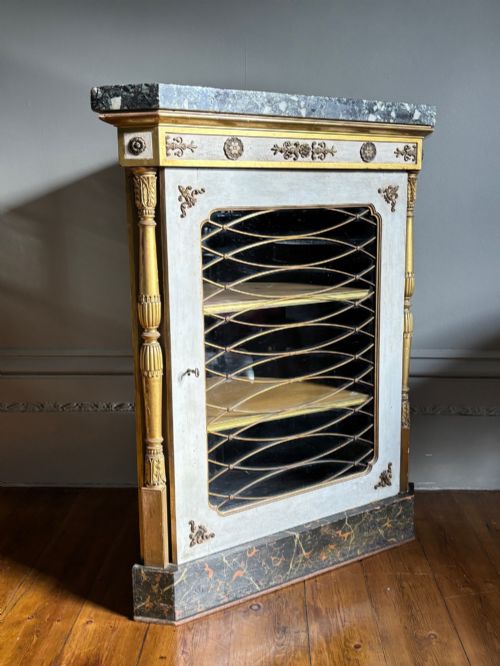
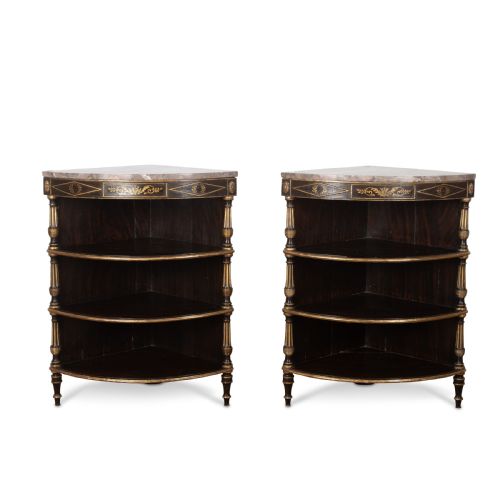
A marble top corner cabinet fits awkward angles with stone and timber, giving small rooms a solid surface and concealed storage.
Marble Top Corner Cabinet
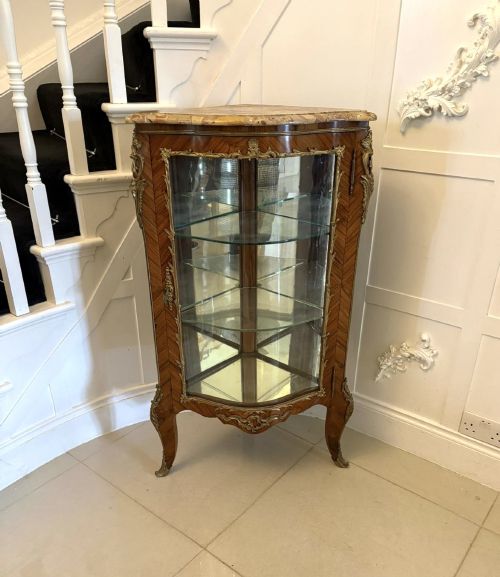
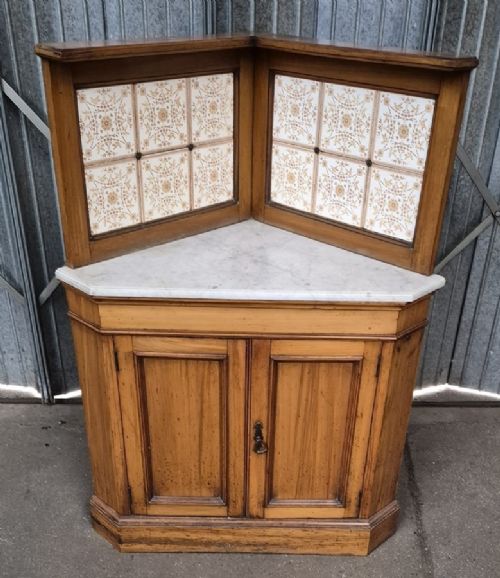
A marble top corner cabinet uses stone shelving and fitted wood to turn unused wall junctions into functional furniture. These pieces span centuries of design, with French revival pieces and Victorian washstands appearing frequently in the selection.
Forms range from glazed display cabinets and serpentine cupboards to utilitarian washstands fitted with stone surfaces. Makers shaped these pieces to fit ninety-degree angles, saving floor space while offering surface area on top.
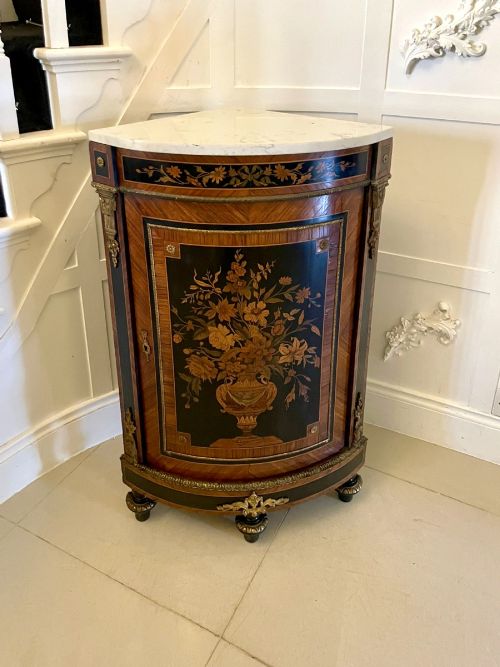
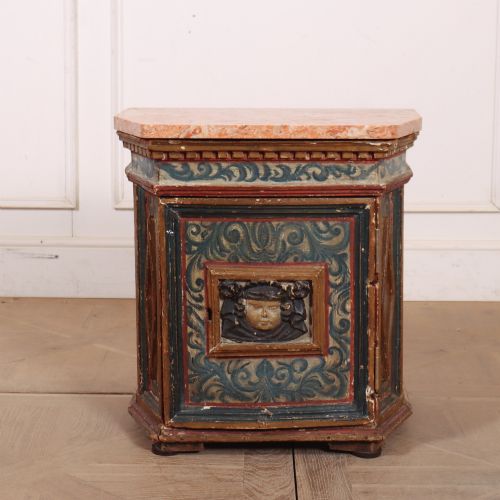
Origin and period dictate the silhouette, moving from eighteenth-century inlaid timber to nineteenth-century revival styles and later twentieth-century forms. The stone slab protects the wood underneath from spills and heavy objects.
Materials and construction
Cabinetmakers built these carcases using hardwoods like walnut and kingwood, often applying marquetry, parquetry, or tulipwood veneers in geometric and floral patterns. Ormolu mounts and brass hardware accent the corners and door edges on continental pieces.
The defining element is the fitted stone slab, cut to follow the angled contours of the wooden top. Glass doors, mirrored interiors, and bronze details complete the construction on refined display variations.
Marble Top Corner Cabinet Retail Price Guide 2026
Typical asking prices for marble top corner cabinet among the pieces listed under this phrase on Sellingantiques today, from the lower quarter to the upper quarter. They describe what is for sale here now, not the wider market.
Styles span Italian Baroque, French Rococo, Louis XVI revival, and Art Deco designs.
Evaluating craftsmanship and condition
Quality rests on the precision of the veneer work and the thickness of the stone slab. Finely matched wood grains and tight parquetry distinguish superior examples from simpler painted or plain timber versions.
The integration of the marble top matters, as does the crispness of any cast or chased ormolu mounts. Original hardware and undisturbed interior fittings elevate a piece above later replacements.
Walker And Sons
The Marble Top Corner Cabinet Glossary
- Ormolu
- Gilded bronze mounts applied to furniture for decoration. This technique was widely used on eighteenth and nineteenth-century French pieces.
- Marquetry
- Fitted pieces of wood veneer arranged to create pictorial designs on a cabinet surface. It requires precise cutting and careful gluing.
- Serpentine
- A gently curving furniture front that swells outward and inward. This shape demands expert carpentry to fit stone tops accurately.
- Parquetry
- Geometric patterns formed by small pieces of wood veneer. It creates a tiled effect across cabinet doors and panels.
- Washstand
- A piece of furniture designed for personal washing, typically incorporating a stone top to resist water. Some corner variants double as enclosed cupboards.
Marble Top Corner Cabinet: Frequently Asked Questions
Will a corner cabinet fit standard walls?
These cabinets are built to slot into standard ninety-degree room angles. Measure your corner height and wall depth carefully before placement.
Some older pieces feature slight wall angle variations, so check the rear edges. A stable floor ensures the heavy stone top sits evenly.
How do I date these cabinets?
Examine the secondary woods inside the carcase and the construction methods used on the drawers and backboards. Style markers like Louis XVI revival motifs or Art Deco lines also point to specific eras.
Hardware types and veneer thickness provide further clues to the manufacturing decade. Compare these details against known period examples.
Are the marble tops fixed in place?
Most marble slabs rest loose on top of the wooden carcase, held in place by their own considerable weight. This allows for easier moving and transport.
Heavier stones sometimes use wooden battens or pins to stop sliding. Lift the stone off before moving the cabinet to prevent damage.