
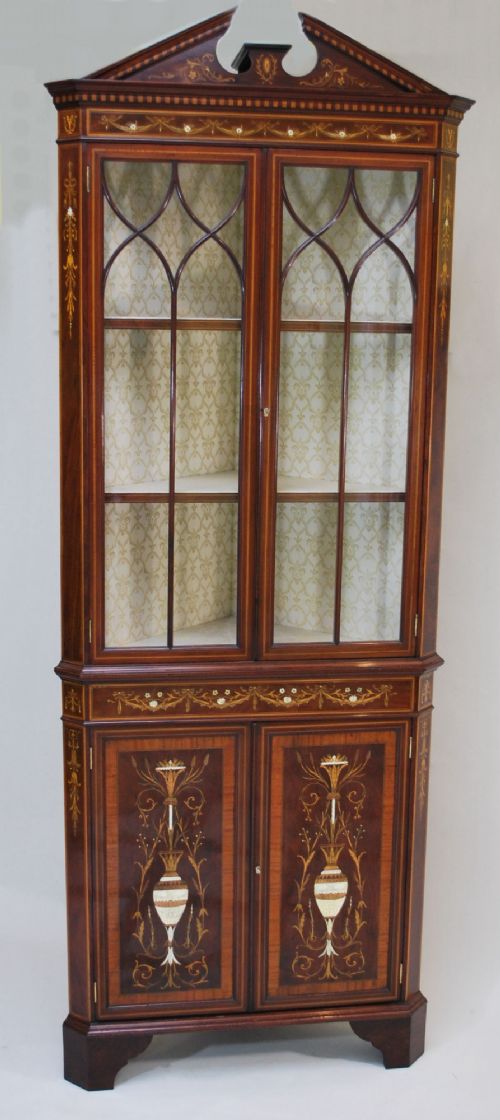
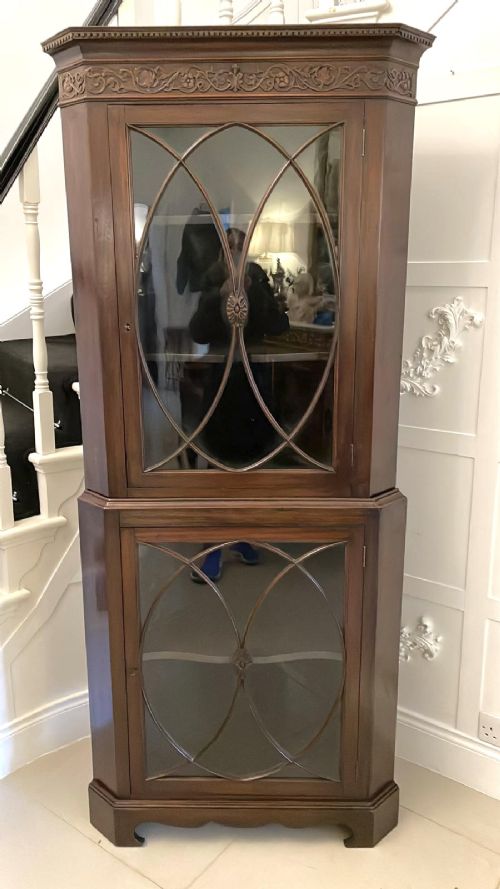
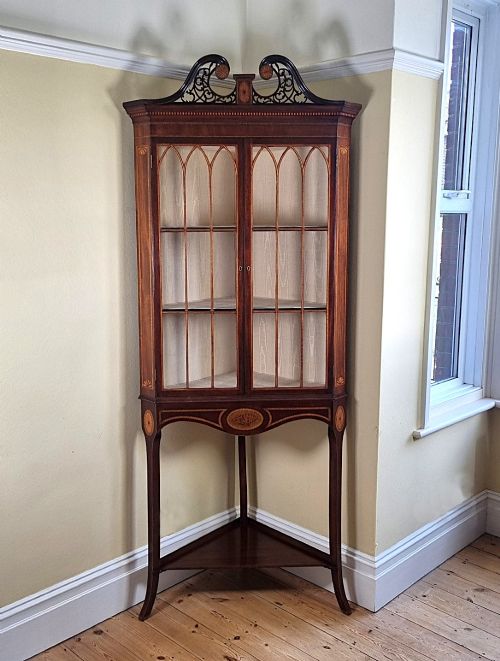
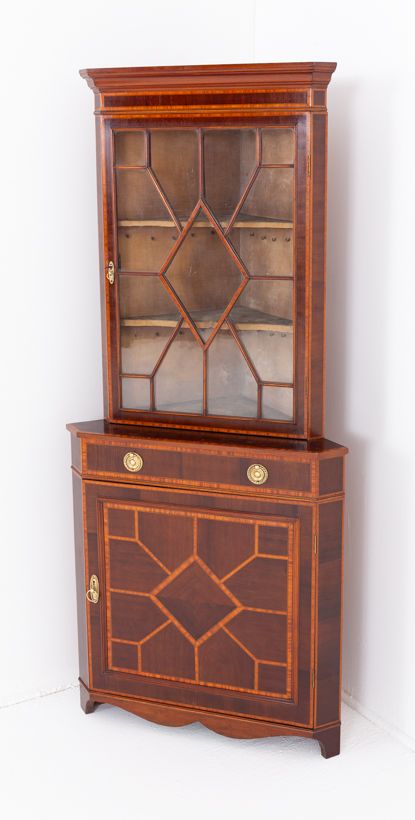
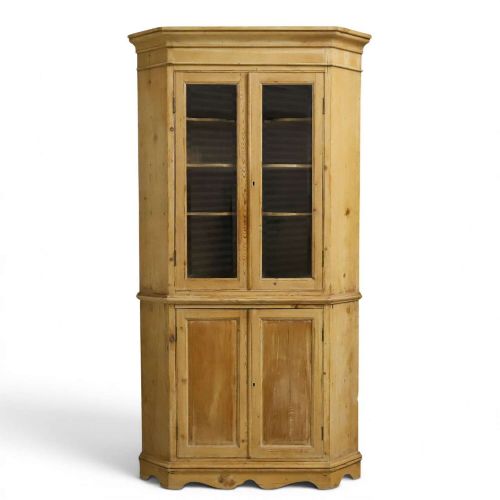
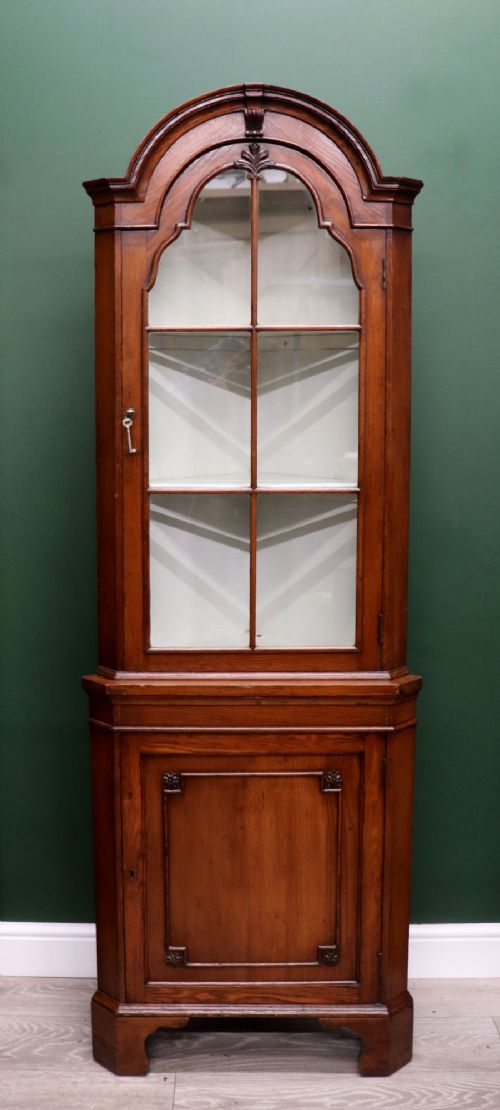
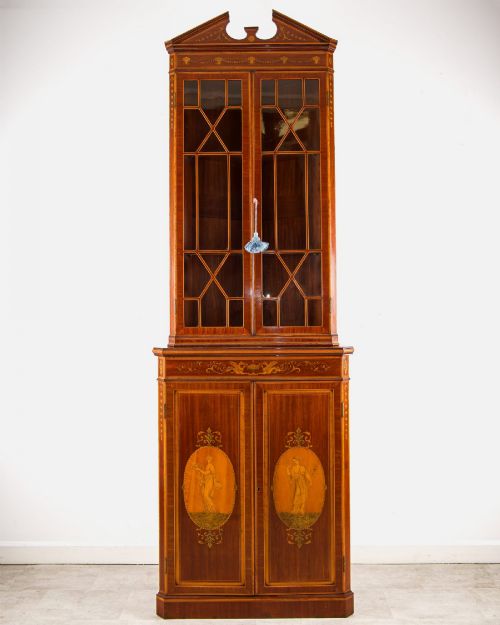
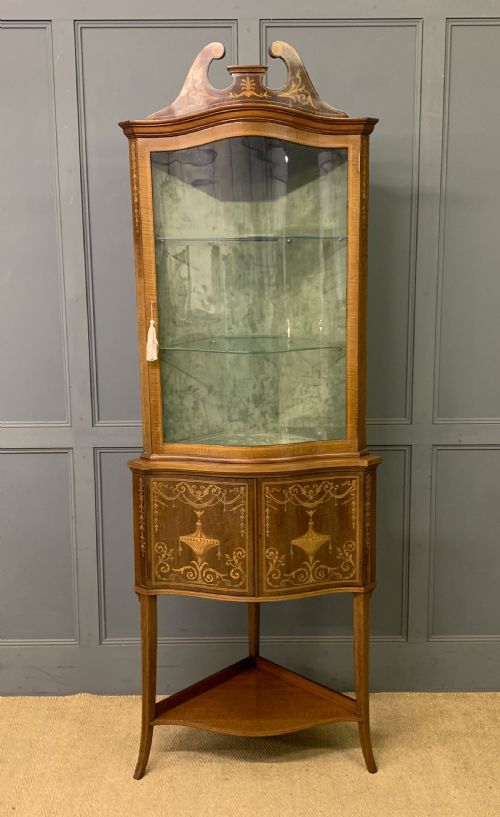


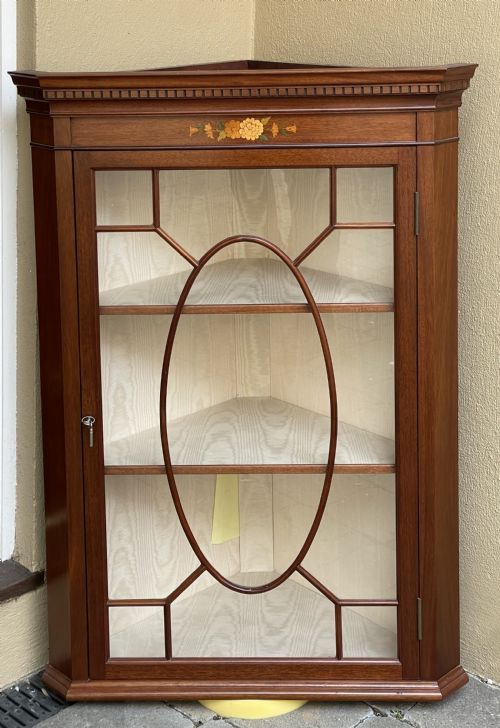

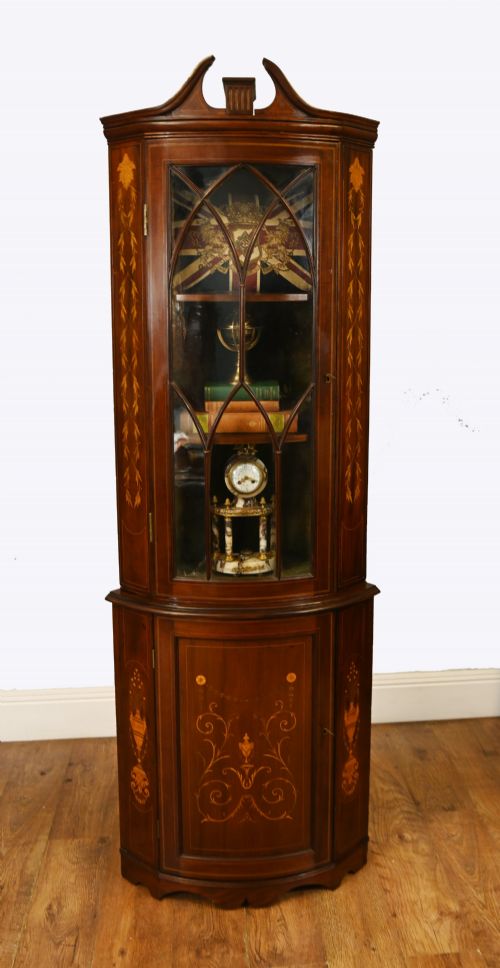


Corner Vitrine Cabinet
These corner vitrine cabinet pieces turn wasted angles into display space, offering glassed fronts to showcase treasured items while fitting snugly into room junctions.
What these corner vitrine cabinet items are
A corner vitrine cabinet makes use of empty room junctions by presenting a glazed front for the display of porcelain and small objects. These items range across Georgian, Victorian, Edwardian, and Art Deco periods.
The physical form adapts strictly to ninety-degree wall angles, utilising single doors or pairs of doors. Surfaces vary from plain wood to elaborate inlaid woodwork and painted finishes.
Examples on this page draw from English and French origins, encompassing traditional mahogany pieces as well as walnut, satinwood, and Vernis Martin interpretations.
How they were made
Cabinet makers constructed these bodies from timber carcasses of mahogany, walnut, and satinwood, often embellishing the exterior with boxwood inlay and ormolu mounts. Glass panels were fitted into doors to allow interior visibility.
Surfaces received treatments ranging from French polishing to painted decoration. Interior elements frequently incorporated mirrored backs to enhance light reflection through the displayed contents.
Retail Price Guide 2026
Typical UK retail prices for corner vitrine cabinet, calculated from the Sellingantiques database of over a million retail prices indexed since 2003. This retail price guide relies exclusively on Sellingantiques data; no external sources or auction records are used, so the figures do not describe the wider market.
Listings feature mahogany, walnut, satinwood, and mirror materials spanning Georgian, Victorian, Edwardian, and Art Deco periods.
What varies in quality
The standard of timber selection and intricacy of inlay work mark the distinction between simpler cupboards and finer display pieces. Finer examples display meticulous boxwood detailing and well-proportioned ormolu mounts.
Construction integrity in the joints and the clarity of the original glass panes dictate the overall refinement. Pieces that retain their original mirrored backs and intact painted surfaces command greater visual cohesion.
The Corner Vitrine Cabinet Glossary
- Vitrine
- A glass-fronted cabinet designed specifically for displaying fine objects or porcelain. It protects contents from dust while providing maximum visibility.
- Ormolu
- Gilded bronze mounts applied to furniture for decorative effect. This technique was popular in French and revival pieces.
- Vernis Martin
- A decorative furniture finishing technique imitating Japanese lacquer. It uses layered varnishes to create luminous painted scenes.
- Boxwood Inlay
- Contrasting light wood inserted into recesses in a darker timber surface. It creates crisp geometric or floral borders.
Frequently Asked Questions
What is a corner vitrine cabinet?
A corner vitrine cabinet is a glazed storage piece built to fit into the ninety-degree angle of a room. It combines the space-saving nature of a corner cupboard with glass viewing panels.
These pieces were traditionally used to house valuable porcelain and small decorative objects. The glass door protects the contents while keeping them visible from across the room.
How do I date a corner cabinet?
Dating relies on identifying the prevailing style, timber choices, and construction methods used in the carcass. Georgian examples tend to use solid mahogany with simpler lines, while Victorian pieces often feature walnut and elaborate inlay.
Later Edwardian and Art Deco iterations introduce different veneer patterns and hardware. Examining the interior backing and glass manufacturing provides additional clues to the era of production.
Where should I place it in a room?
These cabinets are designed to slot directly into any empty internal room corner. Placing them opposite a light source helps illuminate the glass-fronted display area.
Because they utilise vertical wall space without protruding far into the floor plan, they suit smaller rooms or hallways where standard rectangular furniture might block pathways.
Can I store heavy items inside?
Most corner cabinets are constructed with internal wooden or glass shelves intended for light decorative objects like ceramics and glassware. Overloading them with heavy books or dense metalware risks damaging the shelf supports.
Review the sturdiness of the internal fixed or adjustable shelving before placing heavy collections inside. The primary function of a vitrine is display rather than heavy storage.