


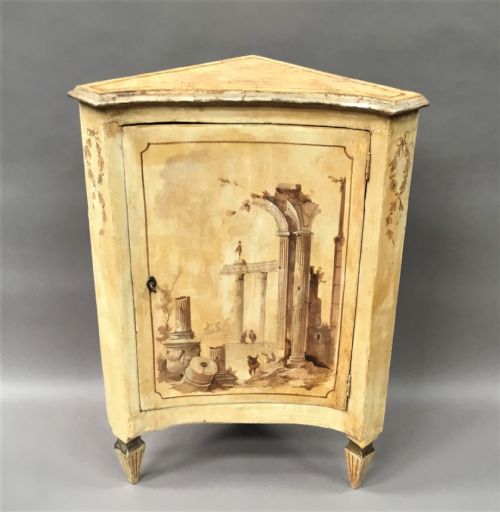
Italian Neoclassical Cabinet
These pieces of italian neoclassical cabinet work bring formal architectural proportion and refined marquetry into a room.
Italian Neoclassical Cabinet
When you search for an italian neoclassical cabinet, you are looking at case furniture that relies on classical symmetry, clean straight lines and restrained architectural motifs rather than heavy baroque curves. The pieces seen here span the eighteenth century, the nineteenth century and later revival periods, bringing together forms from sideboards and chests of drawers to bedside commodinos and corner cupboards.
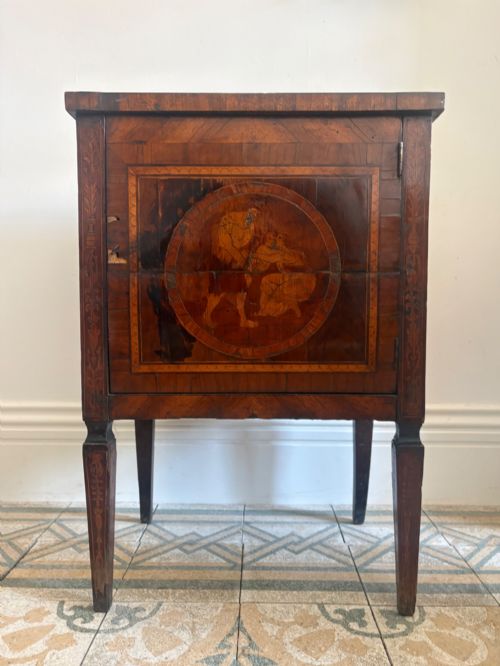
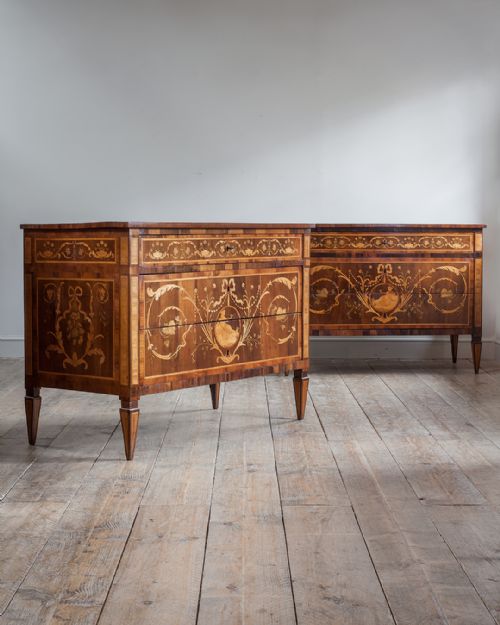
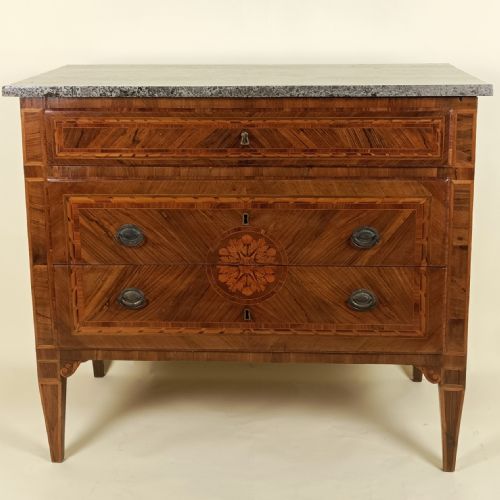
The version you are most likely to meet on this page is a walnut or painted wood piece featuring marquetry inlay, originating from workshops in Italy during the eighteenth or nineteenth centuries. These items serve equally as functional storage and as display surfaces for lamps, books or ceramics.
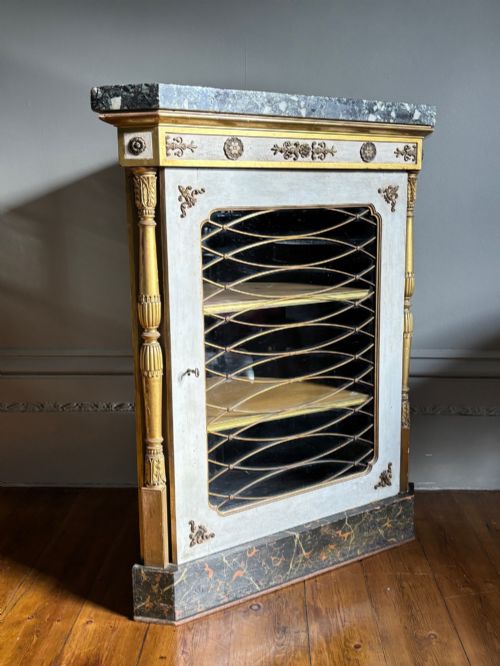
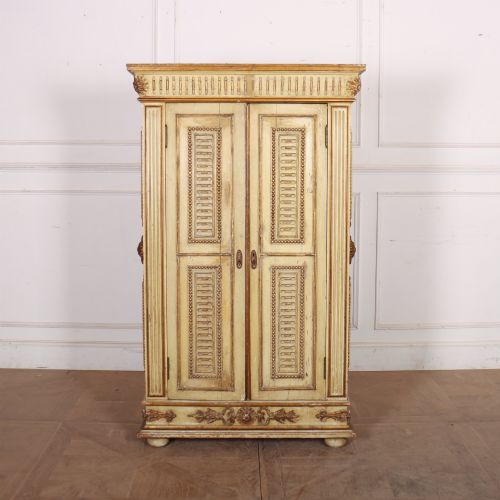
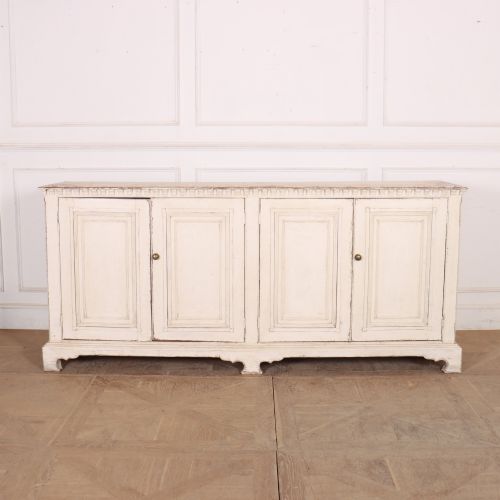
Regional variations appear across the selection, with walnut and fruitwood examples from Lombardy alongside painted enfilades and corner cabinets. Whether a tall standing cupboard or a low bedside cabinet, each item demonstrates the balanced proportions characteristic of the neoclassical style.
Judging quality in these cabinets
The standard of an italian neoclassical cabinet rests on the precision of its marquetry and the choice of timber veneers. Finely cut inlay work that remains flush with the surrounding wood indicates careful workshop execution.
Proportion and surface finish dictate the visual strength of the piece. Crisp architectural mouldings, well-preserved painted or gilt surfaces, and intact structural joins separate standard utility furniture from exhibition quality work.
The listings show walnut as the dominant wood, accompanied by fruitwood, mahogany, kingwood, and painted finishes.
Pietro Ferrario
The Italian Neoclassical Cabinet Glossary
- Marquetry
- Decorative veneer work arranged in geometric or pictorial patterns across wooden surfaces. It uses different coloured woods to create contrast.
- Commodino
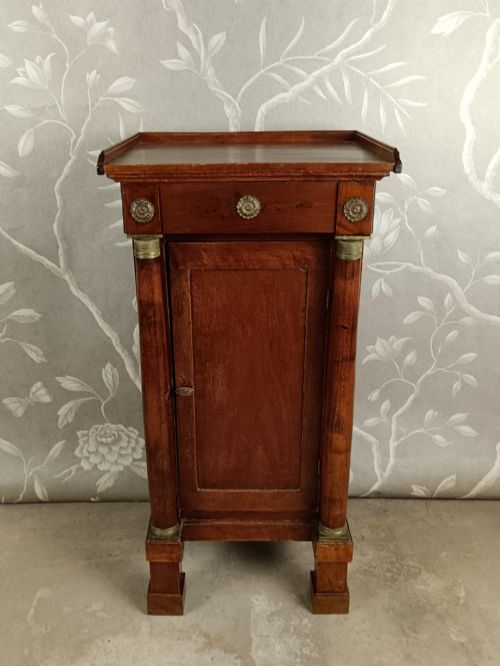
- A small bedside cabinet or commode typical of Italian furniture design. These compact pieces often feature a single door or small drawers.
- Enfilade
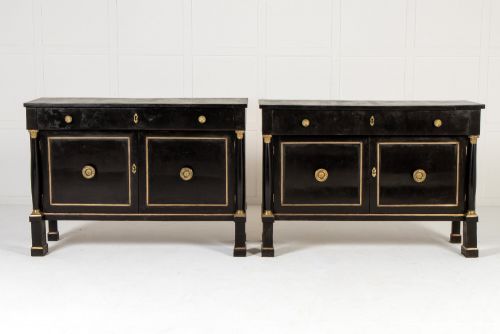
- A long sideboard or cabinet designed to stand against a wall, often featuring multiple doors in a linear arrangement. This form provides substantial storage capacity.
- Demi-lune
- A half-moon shape used for the footprint and top of certain side cabinets and tables. This curved form fits flush against a wall.
- Gesso
- A plaster mixture applied to wood surfaces as a preparation for paint or gilding. It provides a smooth base for decorative finishes.
Italian Neoclassical Cabinet: Frequently Asked Questions
Where should I place an italian neoclassical cabinet?
These cabinets suit reception rooms, hallways or bedrooms where their architectural lines can be appreciated against a plain wall. Corner cupboards fit neatly into unused angles of a room while providing functional storage.
Smaller bedside cabinets and commodinos function well beside a bed or as accent tables in a study. Their restrained proportions prevent them from overwhelming smaller spaces.
How do I care for walnut and fruitwood surfaces?
Keep wooden furniture away from direct sunlight and heat sources to prevent the timber and veneers from drying out or splitting. Dust regularly with a dry, soft cloth.
Apply a suitable wax polish occasionally to nourish the wood and maintain its natural sheen. Avoid using abrasive cleaners or excessive moisture on painted or gilded sections.
What distinguishes an eighteenth century piece from a later revival?
Eighteenth century examples show construction methods and timber ageing consistent with the period of manufacture, such as hand-cut dovetails and older secondary woods. Regional Italian workshops produced these items for contemporary domestic use.
Revival pieces from the late nineteenth or early twentieth centuries often display exceptional exhibition quality craftsmanship, utilising historical styles with later nineteenth or twentieth-century joinery techniques.
Are painted cabinets original to the neoclassical period?
Painted wood finishes were widely used in Italian neoclassical furniture to complement interior decorative schemes. Many pieces feature original painted surfaces combined with parcel gilt details.
Examining the paint layers and underlying gesso helps determine the age and history of the finish. These painted surfaces require gentle handling to preserve their integrity.