





French Marquetry Chiffonniere
A French marquetry chiffonniere brings intricate floral inlays and rich timbers together, offering both display space and refined storage for a period interior.
French Marquetry Chiffonniere
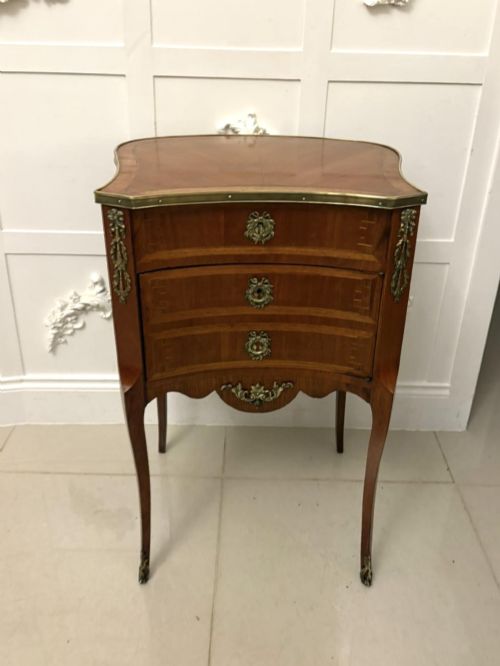
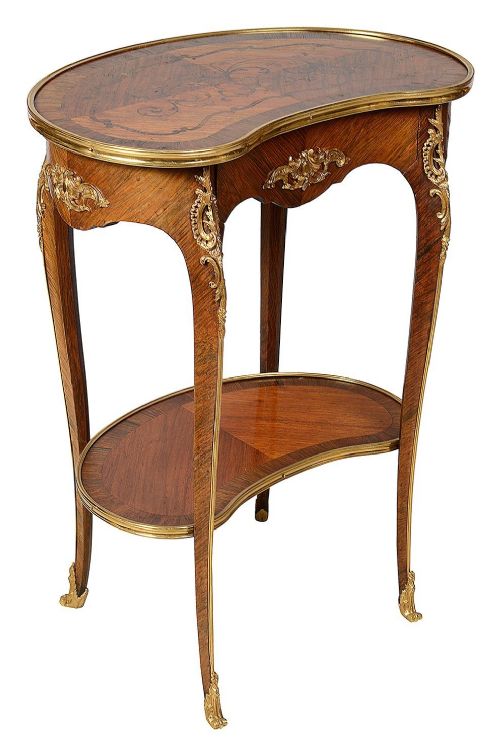
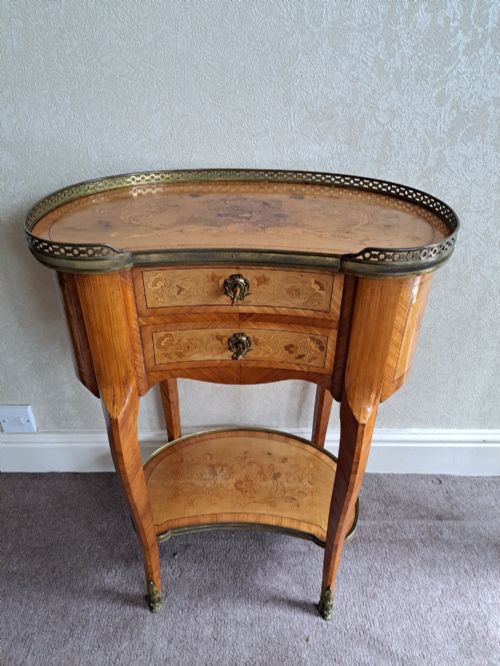
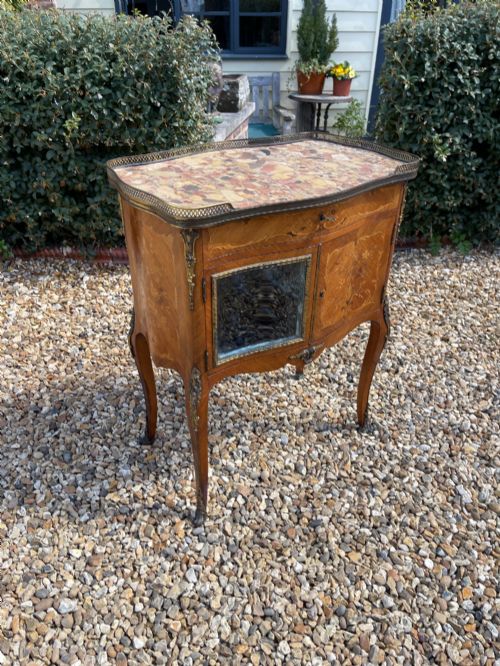
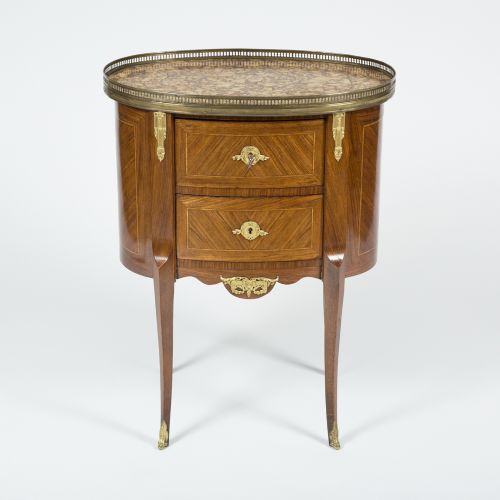
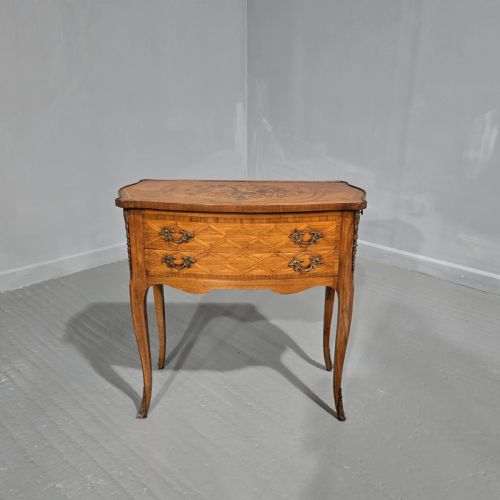
A French marquetry chiffonniere is a low cabinet or small table designed for intimate storage and display, appearing here primarily in nineteenth-century interpretations. These pieces take various forms including side cabinets, side tables, commodes, and vitrines that serve functional roles in reception rooms and bedrooms alike.
The aesthetic draws heavily from revival periods, most notably Louis XV and Louis XVI styles, where decorative veneer work takes centre stage. Buyers encountering these listings will find pieces that combine compact footprints with ornamental brass and ormolu mounts.
Origins trace directly to French cabinet-making traditions, though many examples date from the Victorian era and the early twentieth century. Walnut, kingwood, and rosewood form the structural foundations for these detailed wood-in-lay surfaces.
How they were made
Cabinet-makers constructed these pieces using dense hardwoods like walnut, kingwood, and rosewood as a base for elaborate veneer work. Individual pieces of contrasting timber were hand-cut and fitted together to form pictorial or geometric marquetry patterns across the surfaces.
Gilded ormolu and brass mounts were cast and applied to corners, feet, and borders to accent the curved outlines typical of Louis XV and Rococo revival designs. Marble tops, including varieties such as green marble and breche d'alep, were frequently fitted to the upper surfaces of commodes and cabinets for durability and finish.
French Marquetry Chiffonniere Retail Price Guide 2026
Typical asking prices for french marquetry chiffonniere among the pieces listed under this phrase on Sellingantiques today, from the lower quarter to the upper quarter. They describe what is for sale here now, not the wider market.
Some tables hide their chiffonniere roots entirely under elaborate floral marquetry, serving secretly as grand stages for afternoon tea.
What varies in quality
The fidelity of the marquetry design sets the standard for these pieces, distinguishing crisp, finely shaded floral inlays from simpler, repetitive patterns. Precision in the cutting and tight joints between contrasting veneers indicate skilled workshop production.
Mounting hardware also dictates overall quality, with heavy, well-chased ormolu elements showing superior craftsmanship compared to plain or loosely fitted brass. The choice of upper surface, such as shaped marble rather than plain timber, reflects the ambition of the original commission.
The French Marquetry Chiffonniere Glossary
- Marquetry
- The art of applying pieces of veneer to a structure to form decorative patterns and pictures. This technique defines the surface decoration of the pieces on this page.
- Ormolu
- Gilded bronze used for decorative mounts and feet on furniture. It provides bright metallic contrast against dark timbers like kingwood and walnut.
- Kingwood
- A dense, richly figured timber often used in fine cabinet-making. Its dark brown and golden tones lend themselves well to detailed inlays.
- Breche d'alep
- A specific type of quarried marble featuring brecciated patterns of various mineral colours. It frequently appears as a fitted top on commodes and cabinets.
- Vitrine
- A glass-fronted cabinet designed for the display of small objects. This form appears alongside side tables and enclosed cabinets in the available selections.
French Marquetry Chiffonniere: Frequently Asked Questions
What is a chiffonniere used for?
A chiffonniere served traditionally as a multi-purpose storage piece for linens, papers, or small personal items in domestic rooms. Over time, smaller variations evolved to function as decorative side tables or display cabinets.
Today, they suit living spaces and hallways where a compact footprint is required alongside surface display area. Their drawers and cupboards offer practical concealment while the decorative tops hold lamps or ornaments.
How do I date a French cabinet?
Dating relies on examining the underlying construction timbers, secondary woods, and the specific stylistic revival movement influencing the design. Pieces from the nineteenth century often combine traditional joinery with distinct revival aesthetics from the Louis reigns.
Ormolu casting style and the type of veneer work further help narrow the era of production. Consulting the listed period markers, such as Victorian or specific decades, provides an initial chronological anchor.
What wood is used in marquetry?
Marquetry utilises a wide variety of native and exotic timbers to achieve contrasting natural colours without the use of artificial dyes. Woods such as walnut, rosewood, and kingwood supply deep browns, purples, and rich amber tones.
Lighter woods like fruitwood or holly are often employed for floral details and stems to create visual depth. The natural grain direction of each sliver is carefully chosen to catch the light from different angles.
Are these pieces French in origin?
The designs and stylistic vocabulary derive directly from French cabinet-making traditions, particularly the Louis XV and Louis XVI periods. Many items were indeed made in France during the nineteenth and early twentieth centuries.
Revival pieces were also manufactured in other European workshops that adopted French styling techniques. The listings reflect this heritage through stylistic labels and traditional construction methods.