




Antique Famille Rose Urn
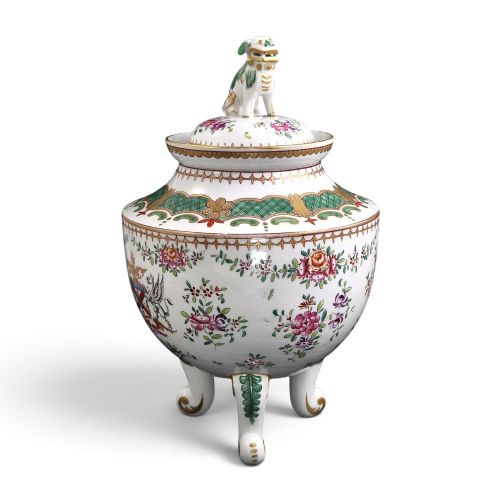
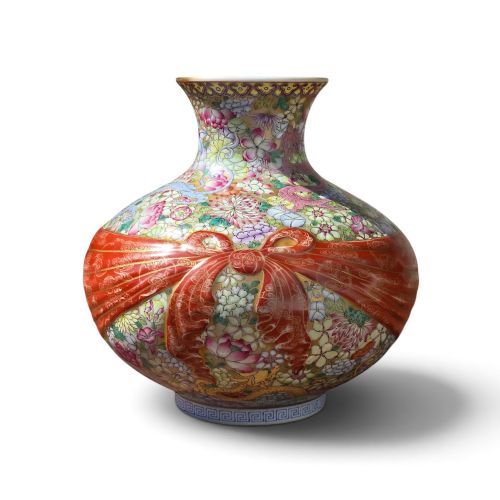
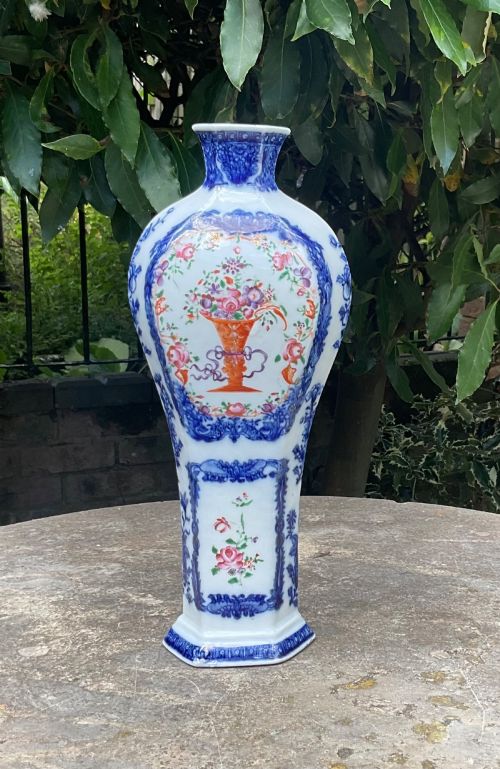
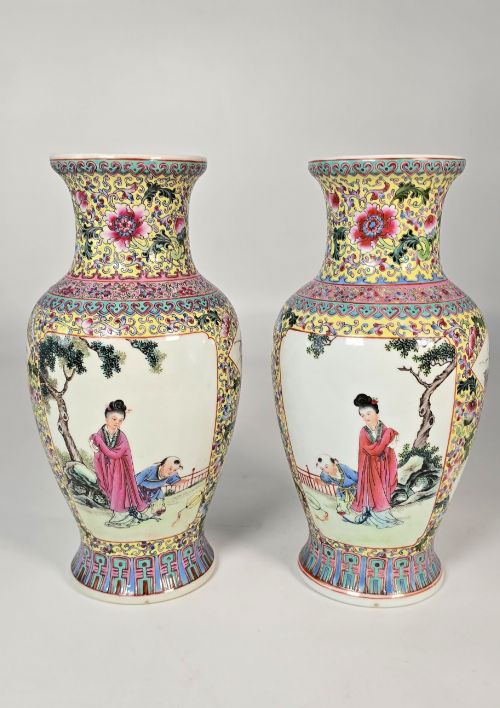
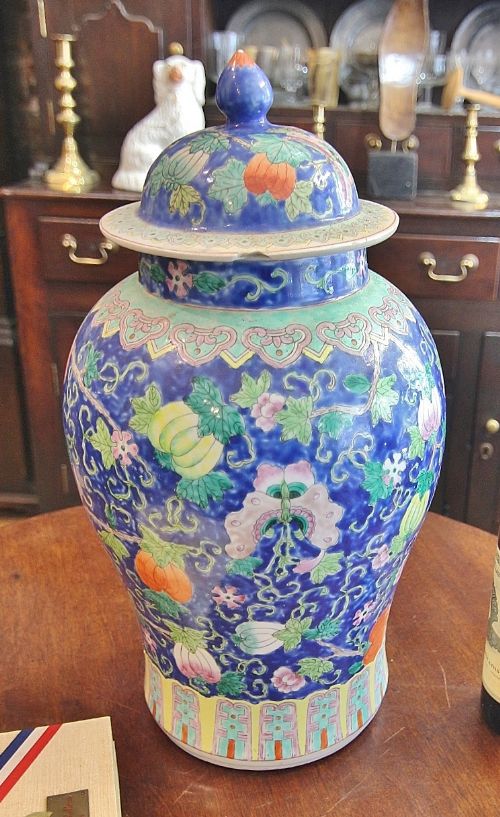
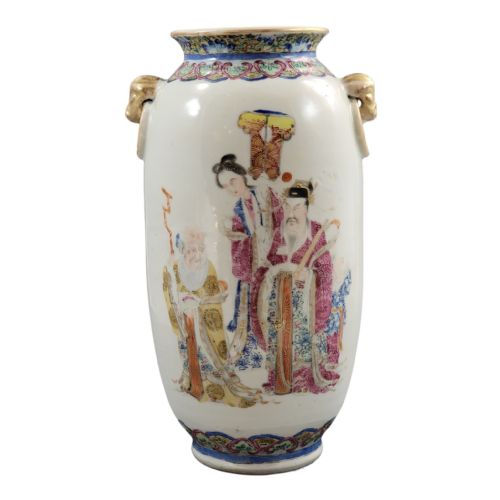
These porcelain vessels in pink-dominant enamels offer the intricate hand-painted detail that defines an antique famille rose urn.
Antique Famille Rose Urn
When you search for an antique famille rose urn, you encounter porcelain vessels spanning the eighteenth, nineteenth, and early twentieth centuries. The selection on this page consists predominantly of nineteenth-century Chinese Canton pieces, Rose Medallion wares, and European interpretations from makers such as Samson of Paris.
Forms range from lidded jars and moon flasks to monumental floor vases and table lamps adapted from earlier bodies. Styles stretch from Qing Dynasty and Chinese Export porcelain to late Qing, Republic Period, and Chinoiserie adaptations.
Materials and technique
The foundation of every piece is hard-paste porcelain, painted with opaque enamel glazes dominated by the rose pink palette that gives the style its name. Artisans applied hand-painted pigments, frequently accented with gold leaf and gilt work, over the fired ceramic body.
Many items incorporate detailed hand-painted figural scenes, birds, and flowers, while others utilise specific palettes like iron-red alongside ribbon-wrapped or millefleurs motifs. Certain vessels were subsequently fitted with brass or mounted on wooden stands.
Immortal figures and dual dragons gaze out from nineteenth-century glazes, proving that ancient deities make surprisingly resilient roommates.
Variations in quality
The skill of the hand-painting dictates the standard of each piece, distinguishing hurried factory output from intricate brushwork by named artists or major workshops. Precision in the enamel colours and the crispness of the gilt detailing separate standard decorative wares from finer examples.
The integrity of the porcelain body and the preservation of the enamel glaze over centuries heavily influence desirability. Larger monumental dimensions and matching pairs also elevate the standing of a vessel within the category.
Samson of Paris·Gao Hengsheng
The Antique Famille Rose Urn Glossary
- Famille rose
- A ceramic palette introduced in China during the Qing Dynasty, characterised by opaque pink enamels derived from colloidal gold. This colour scheme distinguishes the grouping from earlier green and yellow families.
- Rose medallion
- A distinct Canton pattern featuring panelled designs alternating between court figures, birds, and flowers, filled with intricate borders. It appears frequently on nineteenth-century exported porcelain.
- Canton
- A major port city in southern China from which vast quantities of decorated porcelain were exported to the West during the Qing Dynasty. Pieces from this region often combine bold enamels with gilt accents.
- Chinoiserie
- European artistic styles that reflect Chinese artistic motifs and techniques. European potteries like Samson of Paris produced pieces in this manner.
- Moon flask
- A flattened circular porcelain vessel with a short neck and two small handles, often decorated with painted scenes on both sides.
Antique Famille Rose Urn: Frequently Asked Questions
How do I identify Canton porcelain?
Canton porcelain typically displays vibrant hand-painted enamels with compartmentalised panels of figures and botanicals. Rose Medallion is the most common subtype seen in this grouping.
Look closely at the gilt work and the density of the border patterns, which often cover the entire surface of the vessel.
What is the difference between Qing and Republic periods?
Qing Dynasty pieces date from before nineteen twelve and generally exhibit heavier potting and traditional imperial or export motifs. Republic Period items span the early twentieth century and sometimes feature artist signatures or lighter porcelain bodies.
Both periods utilise the characteristic pink enamel palette associated with these vessels.
Were these vessels originally made as lamps?
Many examples were originally produced as lidded jars, vases, or urns for display. Later conversions turned several of these porcelain bodies into table lamps during the nineteenth and twentieth centuries.
Original drilled bases or later mounted fittings are common modifications found in the current selection.
How should I clean my antique porcelain?
Dust the surface gently with a soft, dry brush to remove particles without disturbing the enamel. Avoid harsh chemical cleaners or submersion, particularly on pieces with exposed gilt work.
Handle the vessels by the body rather than the delicate handles or covers to prevent accidental chips.