


Chinese Porcelain Flower Vases
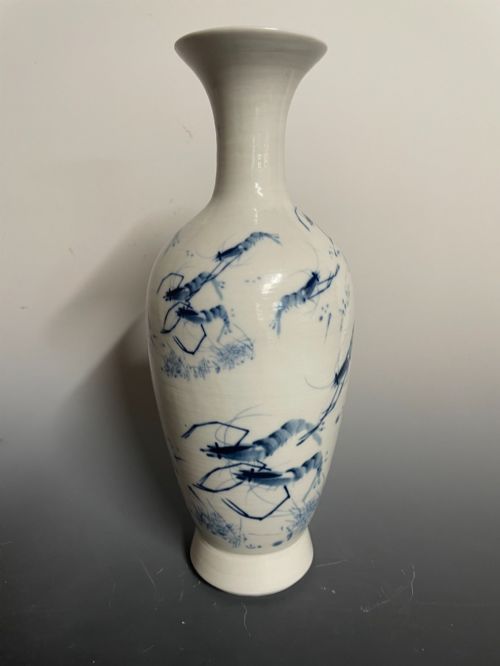
These chinese porcelain flower vases bring hand-painted floral decoration and rich enamel glazes straight into a room.
Chinese Porcelain Flower Vases
When you search for chinese porcelain flower vases, you encounter a selection of vessels ranging from the eighteenth century to the early twentieth century. The inventory spans several distinct decorative traditions, including Canton pieces, famille rose, and millefleurs patterns.
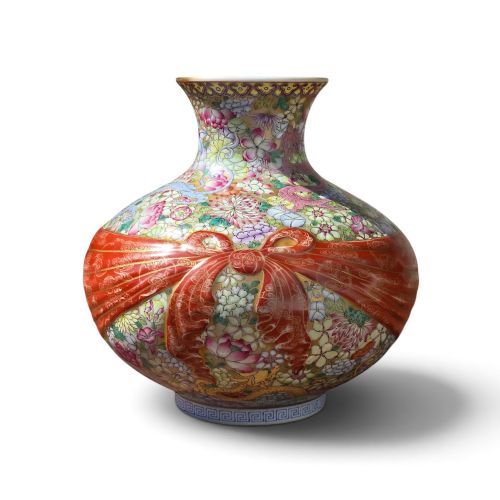
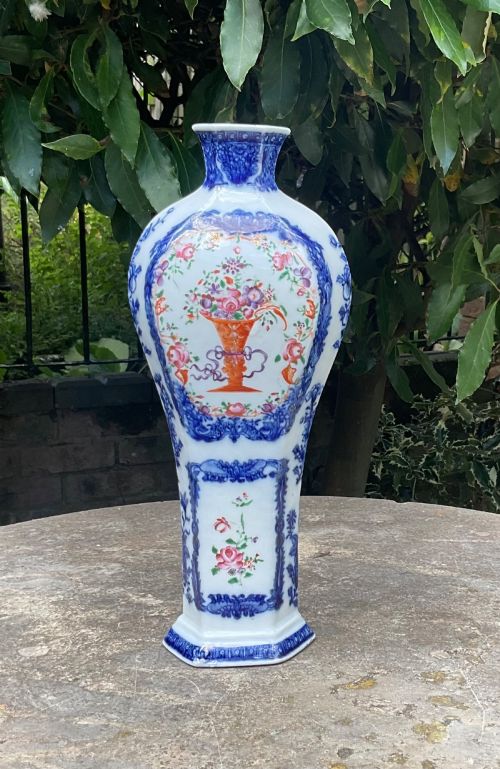
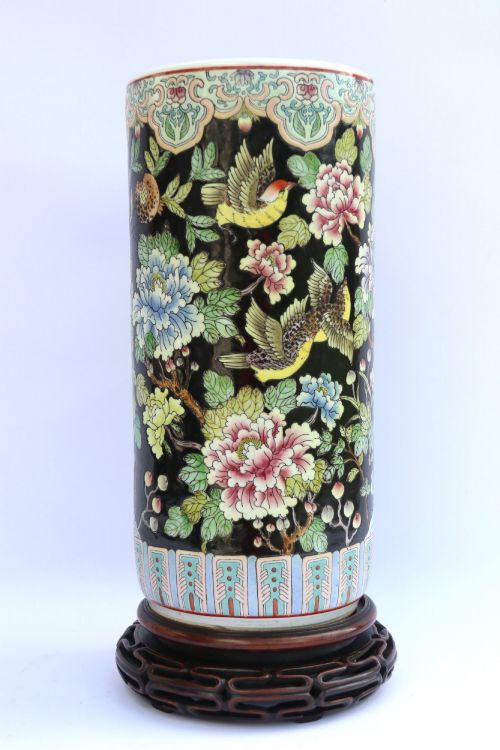
You are most likely to meet nineteenth-century examples on this page, alongside earlier eighteenth-century forms such as tulipières and baluster vases. Many of these vessels retain traditional floral motifs, featuring birds, alternating bands of flowers, and ribbon-wrapped designs.
The objects take various functional forms, from standard decorative vases and jars to pieces mounted as table lamps. Several examples are accompanied by original hardwood stands, preserving the traditional way these vessels were displayed.
How they were made
The makers formed these vessels from white clay, applying cobalt glaze or cobalt oxide glaze beneath a transparent layer before firing. Overglaze enamel colours, gold leaf, and gilt details were then added by hand in multiple stages.
Specialised workshops employed iron-red pigments alongside diverse enamel glazes to create complex narrative and botanical scenes. Certain vessels also incorporate moulded relief elements such as dual dragons entwined around the neck.
Listings feature porcelain vessels created across multiple centuries, including eighteenth-century items with Qianlong marks and nineteenth-century Canton pieces.
What varies in quality
The distinction between ordinary and exceptional work lies in the brushwork and the precision of the enamel application. Master painters achieved remarkable depth in floral motifs and bird plumage through careful layering of pigments.
The richness of the gilding and the clarity of the underlying porcelain body also separate standard production from finer pieces. Inclusion of marks denoting specific periods or reigns adds historical interest to individual vessels.
The Chinese Porcelain Flower Vases Glossary
- Famille Rose
- A palette of opaque enamel colours dominated by pink, introduced during the Qing dynasty. This technique allowed artists to create delicate shading on floral and figural subjects.
- Canton Porcelain
- Ware decorated in the factories of Guangzhou, typically featuring dense panels of figures, birds, and flowers. The style became immensely popular for export markets during the nineteenth century.
- Baluster Vase
- A tall vessel form featuring a rounded body that tapers toward the base and flares at the neck. The silhouette resembles an architectural baluster.
- Tulipière
- A bulbous vessel with multiple spouts designed specifically for displaying individual stems of bulb flowers. Examples of this form appear in both European and Chinese export commissions.
- Millefleurs
- A dense decorative pattern translating to a thousand flowers, covering the entire surface of the porcelain. Every available space is filled with meticulously painted blossoms.
Chinese Porcelain Flower Vases: Frequently Asked Questions
How do I date an antique Chinese vase?
Dating relies on examining the painting style, the formulation of the enamel colours, and any reign marks stamped or painted on the base. Comparing the potting technique and glaze characteristics to known examples helps narrow down the period.
Historical context matters just as much as physical marks, because later pieces frequently imitated earlier styles. A careful look at the wear on the base and the condition of the pigments provides further clues to age.
Were these vases made for export?
Many nineteenth-century examples and specific forms like tulipières were indeed created for international markets, blending traditional Chinese techniques with Western tastes. Export wares often featured vibrant palettes designed to appeal to European and American collectors.
At the same time, pieces bearing specific reign marks were produced for domestic use or imperial patronage. The distinction usually appears in the complexity of the narrative scenes and the refinement of the paste.
How should I display a porcelain vase?
Displaying these vessels requires a stable surface away from direct sunlight to protect fragile enamel colours and gold leaf over time. Placing them where natural light catches the glaze enhances the painted details.
If the piece includes an original hardwood stand, use it to support the base and provide historical context. Avoid crowded tabletops where the delicate body might suffer accidental impact.
What is the difference between Canton and Famille Rose?
Famille rose defines a specific pink-dominant enamel palette utilised across various Chinese porcelain styles from the eighteenth century onward. Canton porcelain refers more specifically to the geographic production centre in Guangzhou known for its colourful, panelled designs.
Canton pieces frequently incorporate famille rose pigments within their bustling compositions of birds, flowers, and figures. Therefore, a vase can technically belong to both categories simultaneously depending on its decoration and origin.