


Chinoiserie Blue Ceramic Urns
Chinoiserie blue ceramic urns bring painted landscape scenes and traditional oriental motifs into a room through decorative vessels spanning several centuries.
Chinoiserie Blue Ceramic Urns
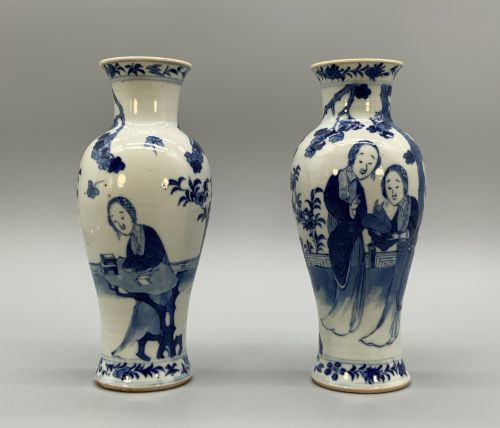
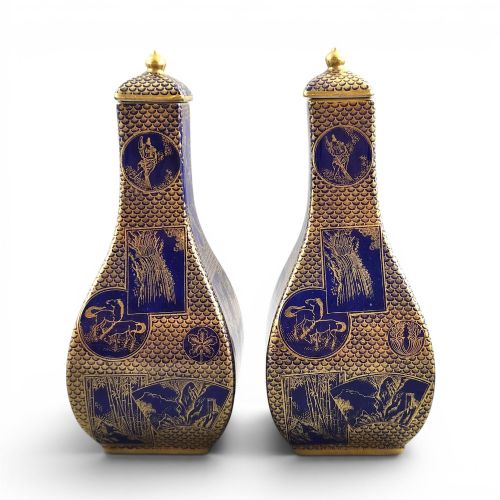
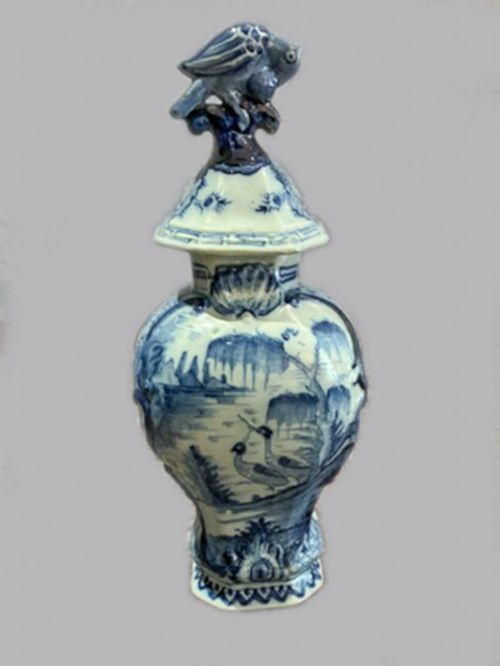
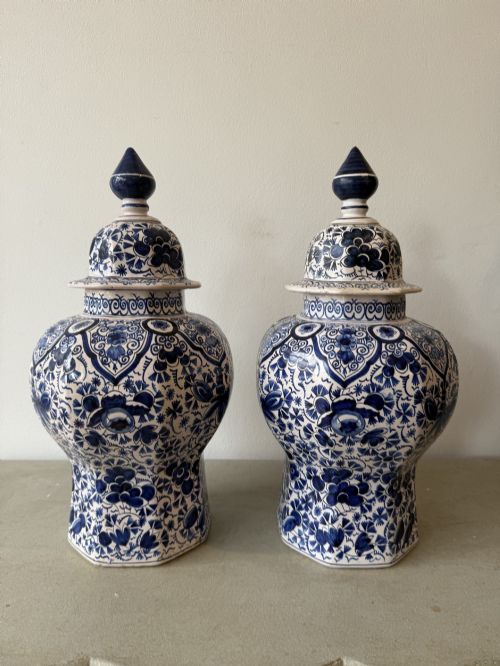
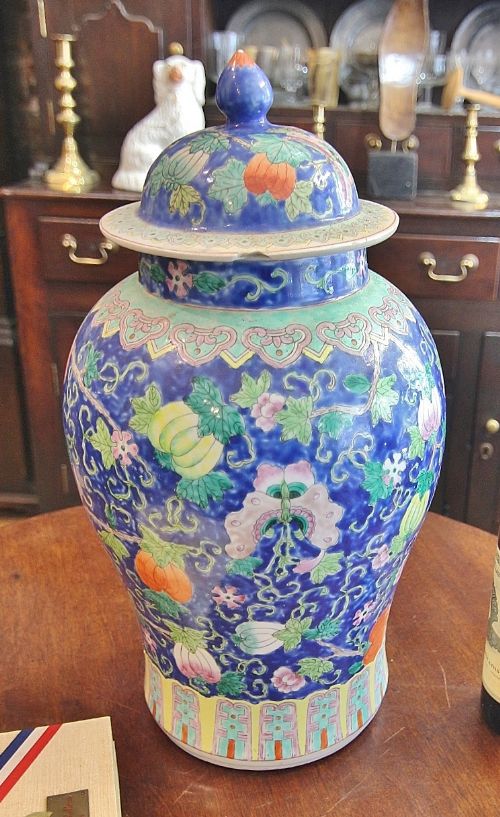
Chinoiserie blue ceramic urns encompass lidded vases, ginger jars, and baluster vessels decorated with cobalt blue designs upon white or coloured grounds. These pieces draw on eighteenth-century Kangxi styles as well as nineteenth-century interpretations from English potteries and Dutch delftware makers.
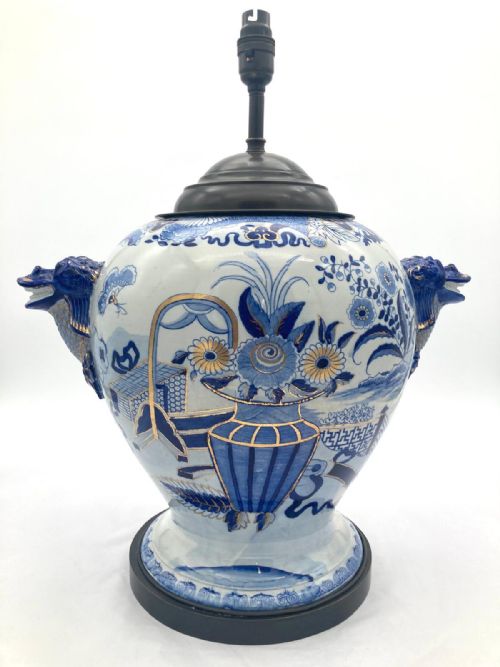
Buyers encounter objects ranging from porcelain ginger jars bearing figural ladies to heavy ironstone hall vases and ribbed beaker forms. Many examples from the nineteenth century onward arrive converted into table lamps mounted on brass or gilt bases.
Origins stretch across Chinese export workshops, English factories such as Mason's, and European delft potteries producing earthenware vessels. Dating spans from the eighteenth century through to the mid-twentieth century.
Materials and construction
Potters shaped these vessels from porcelain, ironstone, and tin-glazed earthenware before applying cobalt blue pigment beneath or over the glaze. Ironstone pieces provide a dense, heavy body capable of supporting large decorative forms and rich mazarine blue grounds.
Many items incorporate metal mounts in ormolu, brass, or gilt bronze, securing lids or adapting the ceramic bodies for electrical wiring. Hand-painted bird, flower, and figural compositions define the surface decoration across both Asian export pieces and European revivals.
Listings feature porcelain, ironstone, and tin-glazed earthenware spanning periods from the seventeenth century through to the mid-twentieth century.
Evaluating quality and execution
Quality rests in the crispness of the cobalt painting and the depth of the glaze, distinguishing finely detailed hand-pencilled birds and flowers from simpler transfer-printed patterns. The weight and stability of the ceramic body, particularly in large ironstone hall vases, indicate superior manufacture.
The integration of metal mounts and subsequent lamp conversions affects the integrity of the piece, where secure fittings and well-preserved gilt or ormolu bronze enhance the finished object.
Mason's·Hicks and Meigh·Carlton Ware
The Chinoiserie Blue Ceramic Urns Glossary
- Chinoiserie
- European decorative style reflecting Chinese artistic influences, featuring imagined landscapes, pagodas, and figural scenes.
- Baluster
- A vase form with a rounded body that tapers toward the neck and stands upon a wider base.
- Ironstone
- A durable type of earthenware patented in the nineteenth century, known for its heavy body and resistance to chipping.
- Mazarine blue
- A deep, rich shade of cobalt blue utilised extensively on nineteenth-century ceramic grounds.
- Tin-glazed earthenware
- Pottery covered with a white glaze containing tin oxide, providing an opaque surface for blue painting.
Chinoiserie Blue Ceramic Urns: Frequently Asked Questions
What periods do these blue ceramic urns come from?
The pieces span from the seventeenth and eighteenth centuries up to the mid-twentieth century. They include period Chinese export wares alongside nineteenth-century English ironstone and European delftware.
Maker dates and stylistic revivals help distinguish older production from later twentieth-century interpretations.
How were these ceramic vessels originally used?
Many functioned as display pieces, lidded ginger jars for storage, or potpourri containers holding dried botanical scents. Their decorative blue and white surfaces suited formal reception rooms and halls.
Subsequent generations frequently converted larger vases and urns into table lamps by adding electrical wiring and metal mounts.
How do I identify ironstone versus porcelain?
Porcelain typically presents a translucent body with a resonant ring when tapped, whereas ironstone is opaque, heavier, and exceptionally dense. Ironstone was developed in the nineteenth century to provide a robust alternative to imported porcelain.
Factory marks on the base often confirm ironstone production by English firms.
Are electrified lamp conversions original?
Most lamp fittings and ormolu or brass mounts were added later in the nineteenth or twentieth centuries to adapt decorative urns for domestic lighting. These conversions utilise the original ceramic bodies while updating the function for modern interiors.
Rewiring is often carried out to ensure electrical safety while retaining the historic base.