



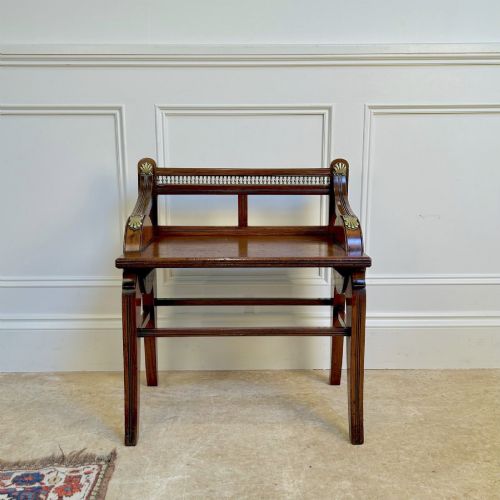
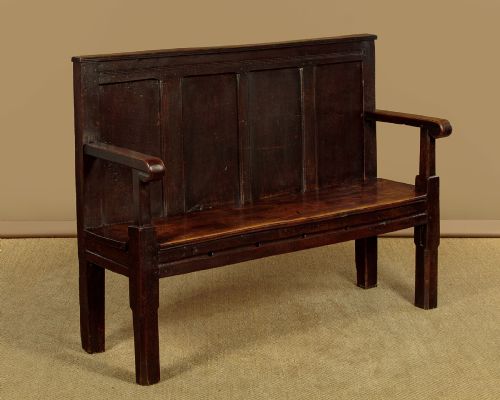
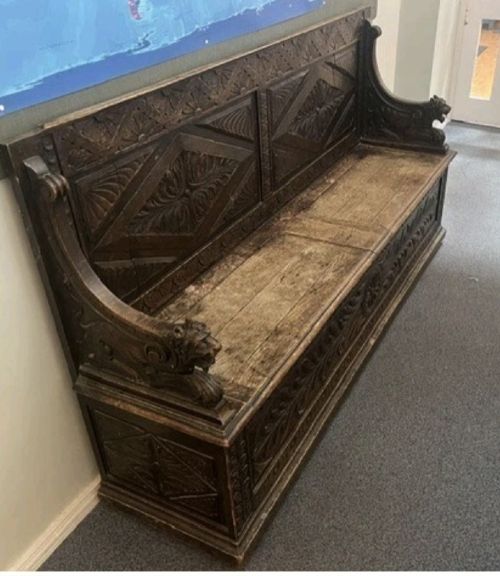
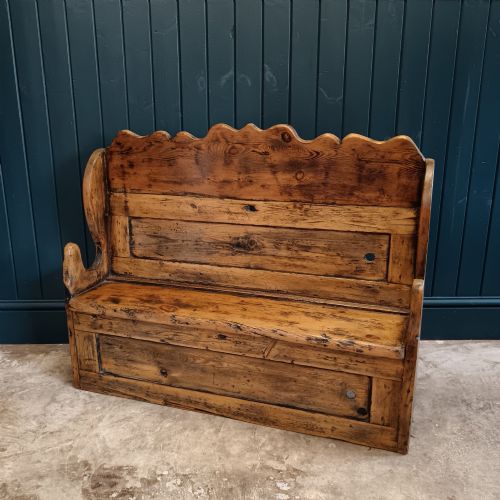
Antique Entry Settle
An antique entry settle offers practical hallway seating with built-in storage, shaped by centuries of country house and vernacular design.
Antique Entry Settle
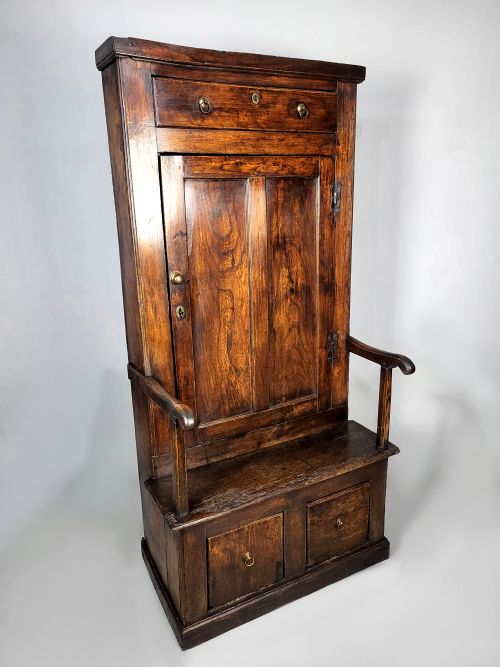
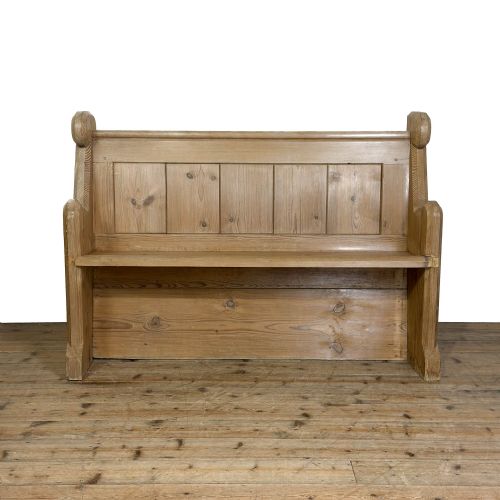
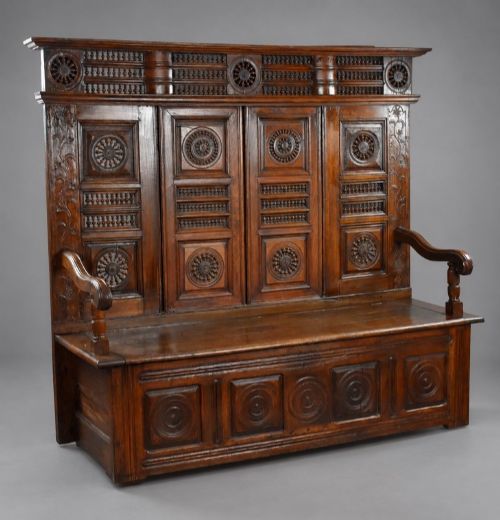
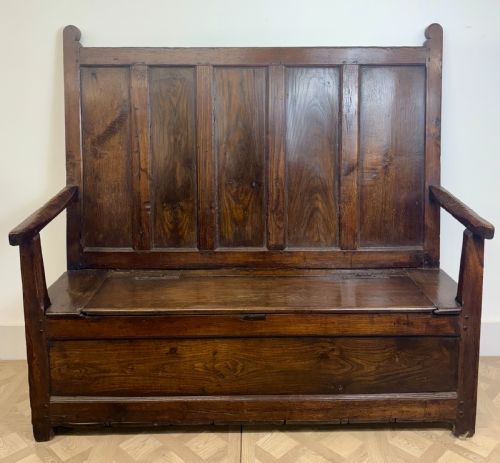
An antique entry settle serves as a substantial hallway seat, combining high backs and side panels to block cold drafts in historic homes. You will frequently encounter heavy oak and pine box versions that double as storage chests.
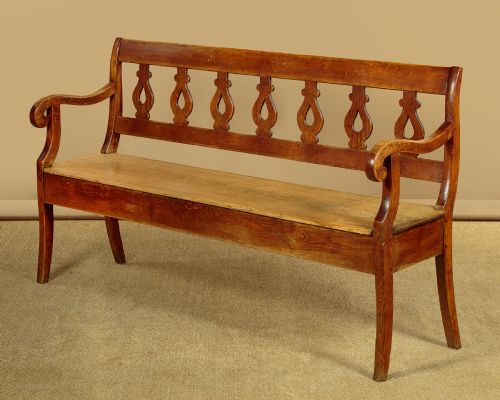
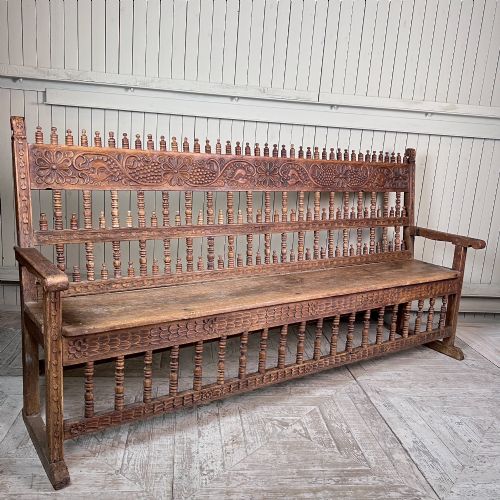
The form stretches from sixteenth-century Renaissance examples through eighteenth-century country workshops and into Victorian revival pieces. Regional variations include elm bacon settles, Hungarian painted benches, and tall chapel pews.
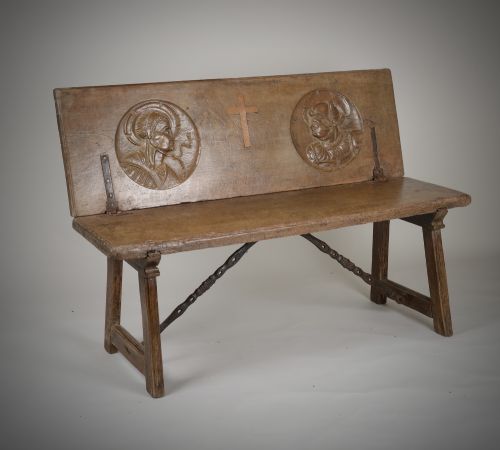
Makers adapted the basic bench into multifunctional pieces, such as monks benches that convert into tables. Most survive in timber like oak, ash, and elm, carrying the marks of long daily use in domestic hallways.
Materials and construction
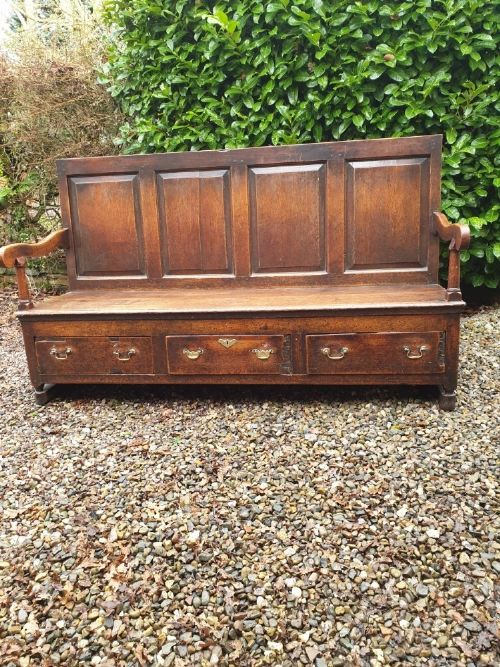
Cabinetmakers and country joiners utilised solid local hardwoods like oak, walnut, and elm alongside softer pine for panelled backs and seat boxes. Frame construction typically relied on mortise and tenon joints secured with wooden pegs.
Many country pieces received surface treatments including lead-based or milk paints in grey, blue, and cream, while others show natural waxed finishes. Carving, applied mouldings, and hinged storage lids define the decorative and structural execution of the better workshops.
Antique Entry Settle Retail Price Guide 2026
Typical asking prices for entry settle among the pieces listed under this phrase on Sellingantiques today, from the lower quarter to the upper quarter. They describe what is for sale here now, not the wider market.
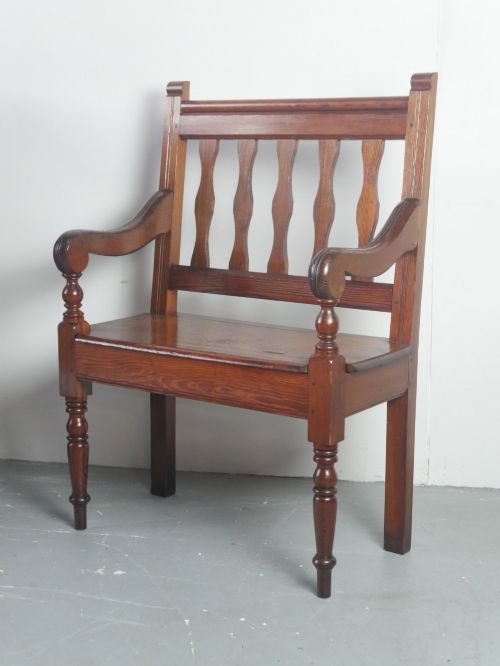
Listings span multiple centuries, ranging from sixteenth-century Renaissance benches to early twentieth-century Arts and Crafts hall seats.
Assessing quality and integrity
Quality rests on the integrity of the timber and the honesty of the construction, distinguishing genuine period workshop production from later assembled items. Original panel thickness, untouched surface patination, and undisturbed pegged joints separate superior examples.
The survival of original painted finishes or early hardware like hinges and latches determines the desirability of vernacular pieces. Proportions matter greatly, particularly where high backs meet narrow hallway depths.
James Shoolbred
The Antique Entry Settle Glossary
- Box settle
- A bench featuring an enclosed storage compartment beneath the seat, accessed by lifting the lid.
- Bacon settle
- A specialised eighteenth-century form with a high panelled back incorporating a large cupboard for curing meat.
- Monks bench
- A convertible seat with a hinged back that folds down flat to form a table surface.
- Vernacular furniture
- Domestic objects made by local craftsmen using regional traditions and readily available native timbers.
- Panelling
- Construction method using fitted wooden frames and thin floating panels to allow for timber movement.
Antique Entry Settle: Frequently Asked Questions
How do I place an entry settle?
Position the settle against a solid hallway wall where the high back can create a defined entryway space. Ensure there is adequate clearance for people to pass and for any under-seat storage box to open fully.
Keep the timber away from direct heat sources such as radiators to prevent the wood panels from splitting. A breathable beeswax polish helps maintain the surface finish over time.
What is a box settle used for?
The integrated box cavity beneath the seat provided historic households with secure storage for heavy outdoor wear, blankets, and boots. In modern hallways, this compartment serves the same practical purpose for everyday clutter.
The solid timber lid also acts as the primary bench seat, often softened with loose cushions or pads for comfort.
How do I date an oak settle?
Examine the construction joints, tool marks, and timber shrinkage patterns across the back panels and seat base. Hand-cut peg placement and irregular board widths generally point towards eighteenth-century or earlier country workshop production.
Later Victorian and Arts and Crafts revivals often display more uniform machine-sawn timber dimensions and cleaner internal framing.
Are painted settles original?
Many regional pine settles, particularly Hungarian and Welsh examples, retain early or original painted finishes in muted tones like grey, blue, and cream. Close inspection of the paint layers reveals craquelure and wear consistent with age.
Some pieces were stripped down to bare pine by later owners, while others preserved their historic pigment through generations of domestic use.