




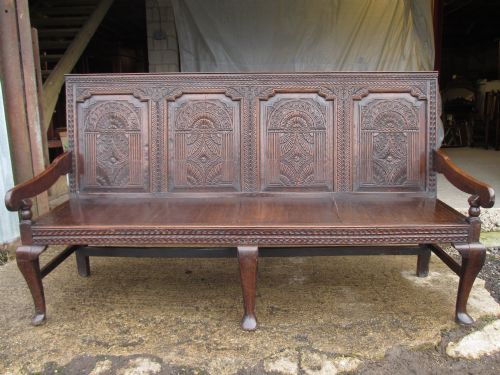
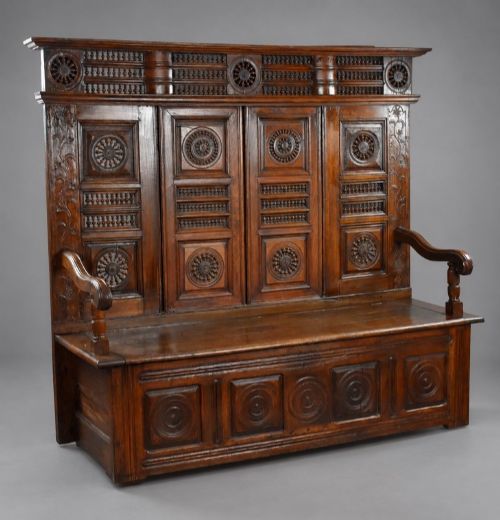
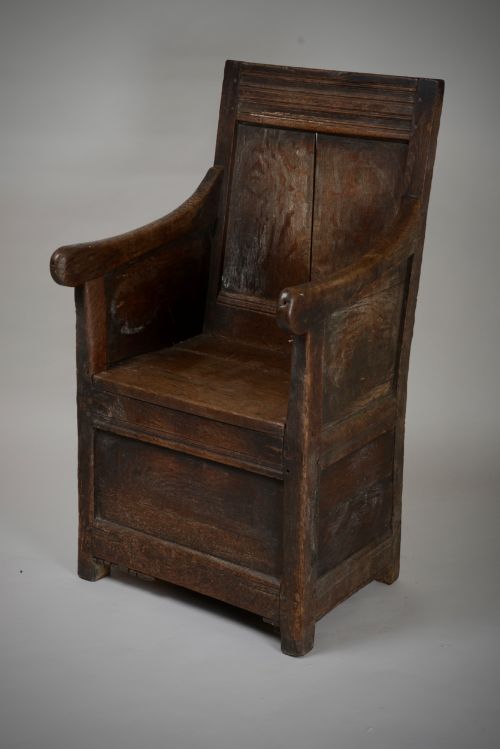
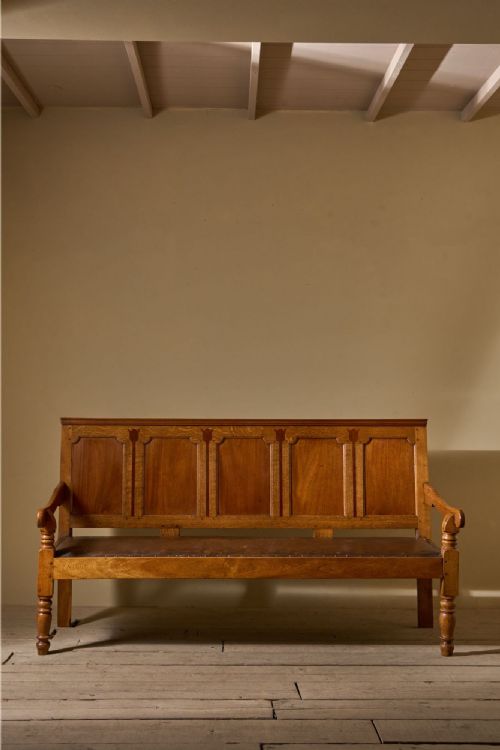
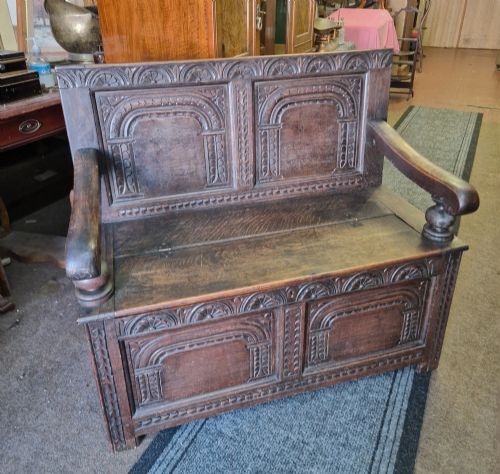
Carved Panelled Settle
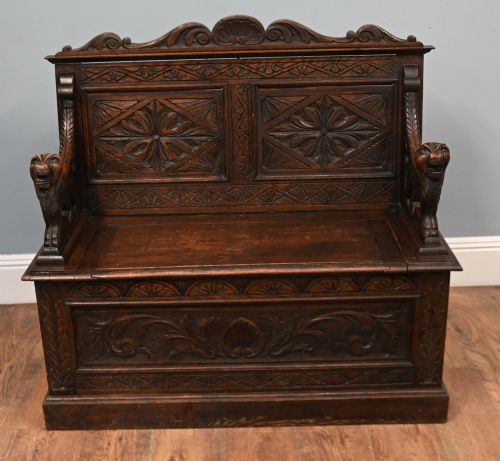
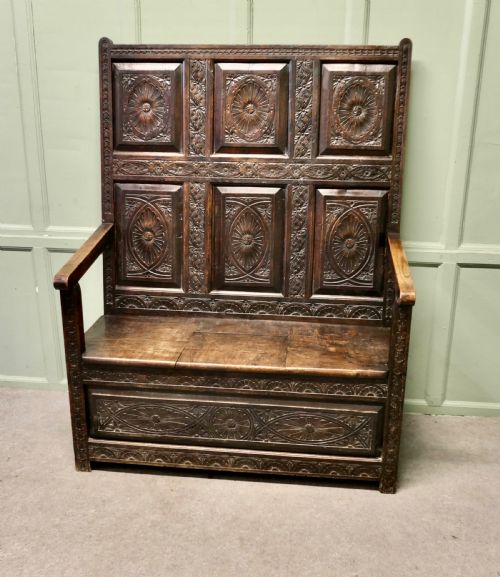
A carved panelled settle offers solid timber construction and high-backed seating shaped by centuries of domestic use.
Carved Panelled Settle
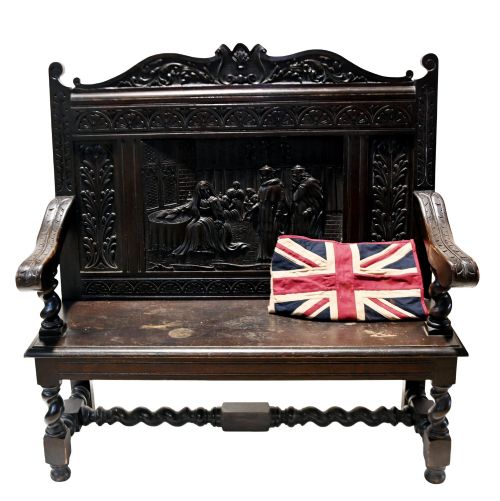
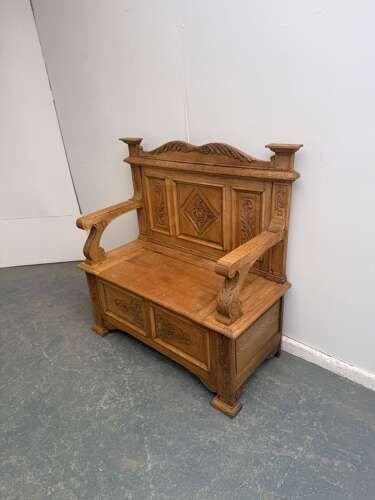
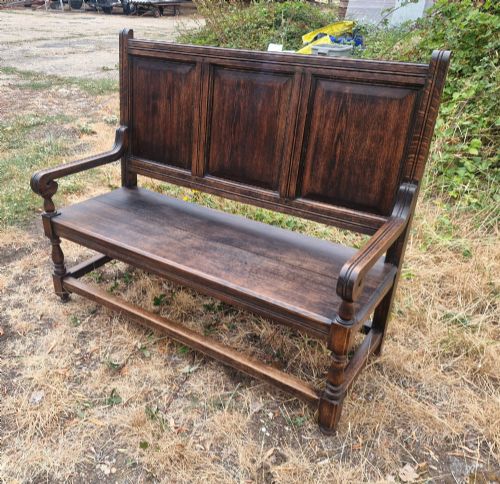
A carved panelled settle functions as a substantial wooden seat designed to keep draughts away from the user while providing a rigid backrest. The pieces found on this page span from the seventeenth century through to the Edwardian period, with eighteenth-century and nineteenth-century examples appearing most frequently.
Makers constructed these forms primarily as settles, hall benches, and box settles, often incorporating hinged seats for storage beneath. Oak serves as the dominant material, accompanied by walnut, mahogany, fruitwood, and hard woods.
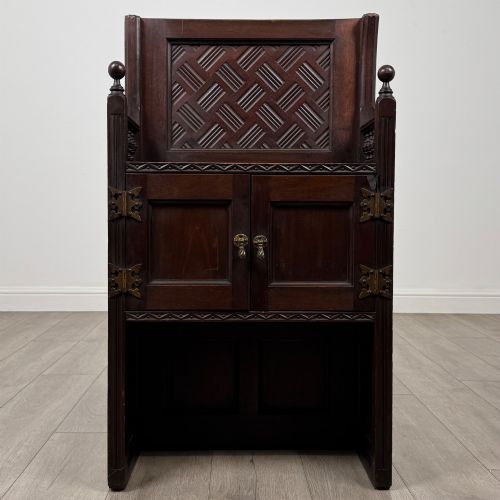
Revival styles such as Jacobean, Renaissance, and Victorian Gothic sit alongside Georgian country pieces. Buyers will encounter high-backed box constructions and smaller proportions designed for hallways and domestic rooms.
How these pieces were made
Cabinet makers utilised solid timber, chiefly oak, joining panels with mortise and tenon construction to withstand heavy daily use. Hand carving defines the surface decoration, showing relief patterns, architectural motifs, and panelled backs.
Makers integrated storage by attaching iron hinges to the seats of box settles, allowing the bench top to lift upwards. Wax finishes and limed treatments were applied to seal the timber and enhance the grain.
Carved Panelled Settle Retail Price Guide 2026
Typical asking prices for carved panelled settle among the pieces listed under this phrase on Sellingantiques today, from the lower quarter to the upper quarter. They describe what is for sale here now, not the wider market.
Listings span the seventeenth, eighteenth, and nineteenth centuries, with oak remaining the predominant material across regional British and continental European workshops.
What varies in quality
The depth and crispness of the hand carving separate standard production pieces from finer examples. Sharp, well-defined relief work on the panels and crest rails indicates skilled workshop execution.
Timber selection and structural integrity also divide the range, with dense old-growth oak and intact original box bases holding greater architectural presence than later adaptations.
The Carved Panelled Settle Glossary
- Box settle
- A wooden bench featuring an enclosed base with a hinged seat lid for storage. This form kept blankets and household items close to the hearth.
- Panel
- A flat piece of timber framed within stiles and rails to prevent warping. Panels frequently display the hand carving characteristic of these seats.
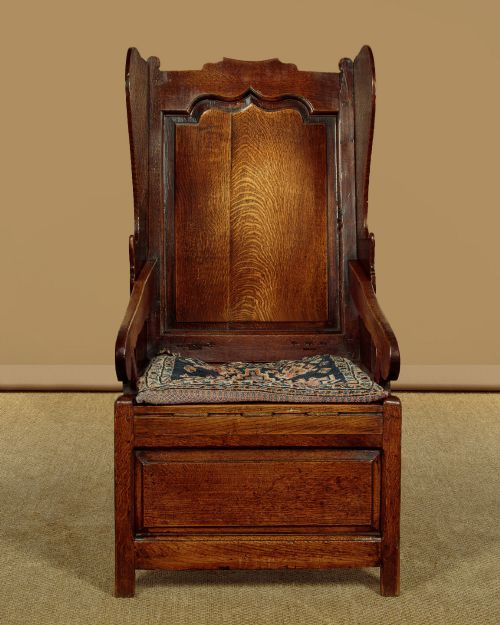
- Lambing chair
- A high-backed wooden seat with solid side wings designed to shield the occupant from cold draughts. These often include enclosed lower sections.
- Mortise and tenon
- A traditional woodworking joint where a projecting tongue fits tightly into a matching cavity. This method secures the frame without modern metal fasteners.
Carved Panelled Settle: Frequently Asked Questions
What is a carved panelled settle?
A carved panelled settle is a wooden bench with a high panelled back and solid arms, built to provide seating while blocking draughts in domestic rooms.
Most examples appear in oak, frequently incorporating a storage box beneath a hinged seat.
How were settles used historically?
These seats were placed near fireplaces or in hallways to shelter occupants from cold air circulating through older buildings.
The enclosed box bases also served practical storage functions for household goods and textiles.
How do I identify seventeenth-century pieces?
Seventeenth-century settles display heavy framing, pegged joints, and deep hand-carved motifs reflecting period joinery techniques.
They rely on sturdy oak construction and unpainted timber surfaces developed through centuries of handling.
Where should I place a settle?
Settles suit large hallways, dining spaces, or living rooms where their high backs can anchor a room's layout.
Ensure adequate floor space to accommodate their depth and the swing of any storage lid.