

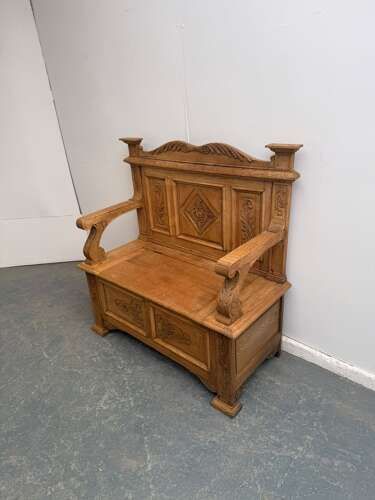
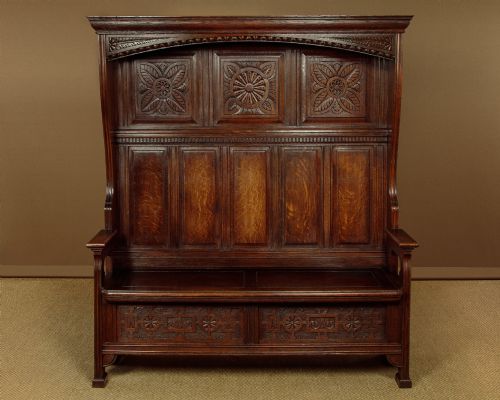
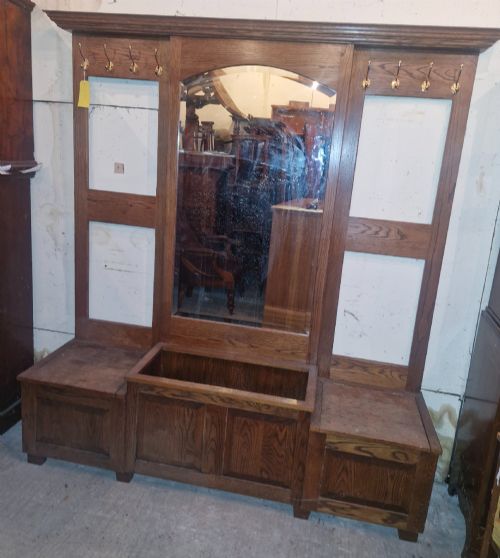
Traditional Wooden Hall Seat
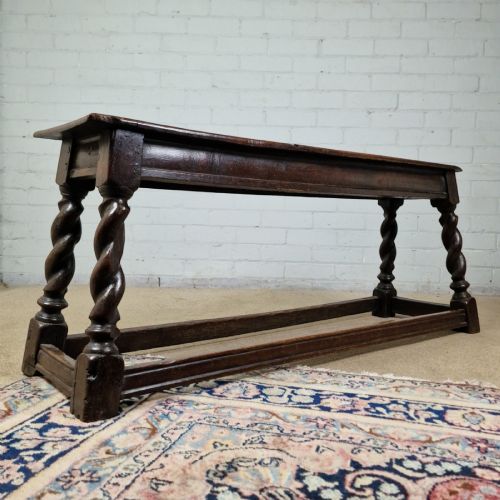
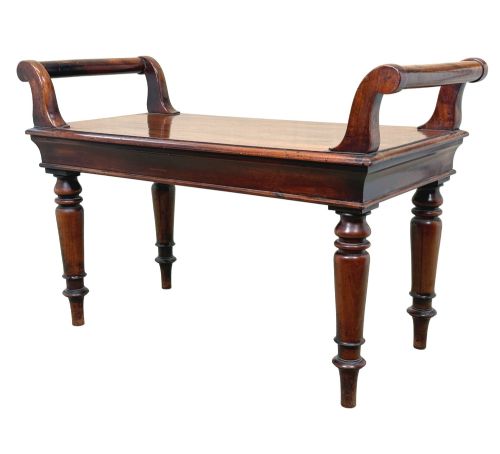
A traditional wooden hall seat welcomes visitors with solid construction and enduring utility, offering a practical spot for putting on boots.
Traditional Wooden Hall Seat
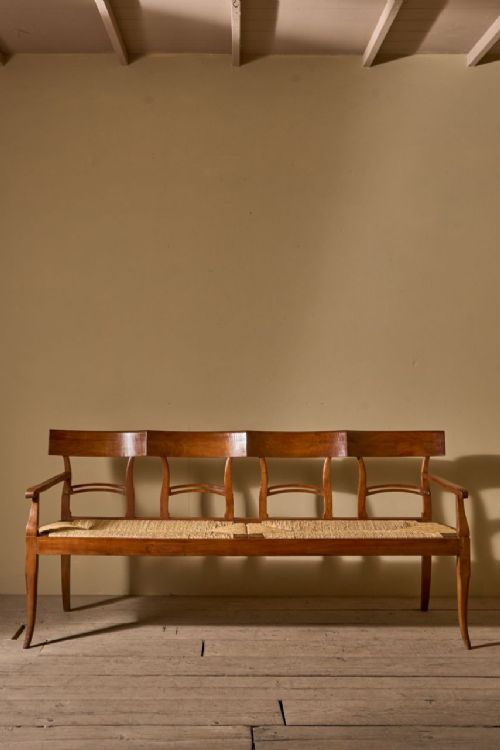
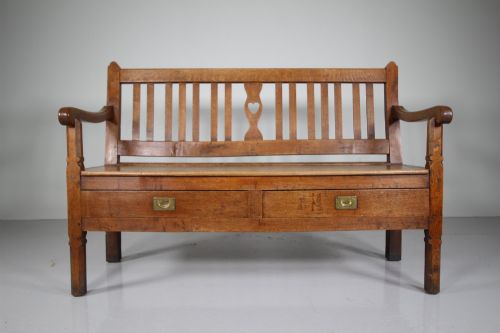
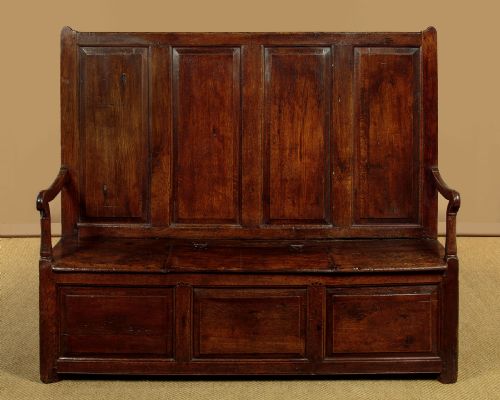
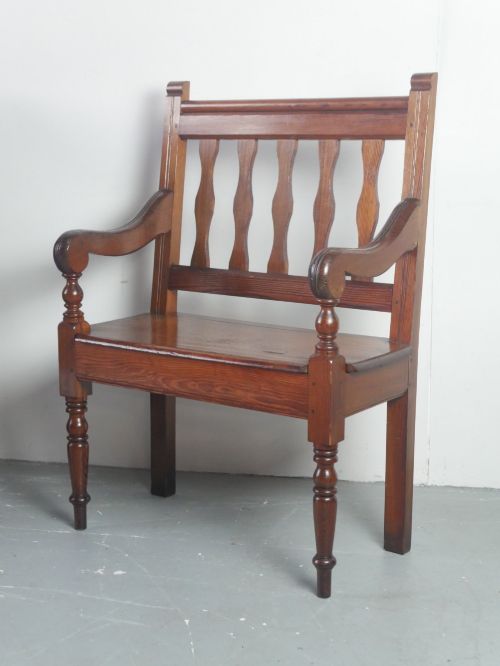
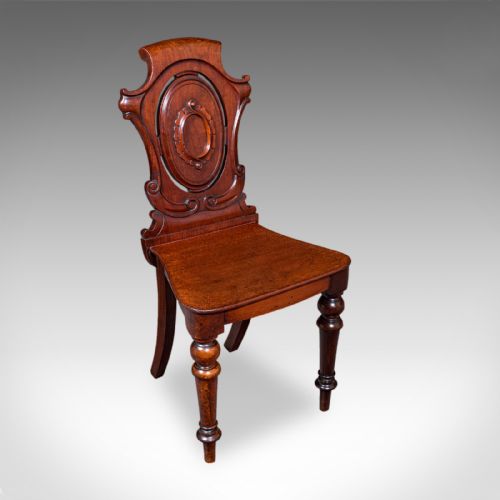
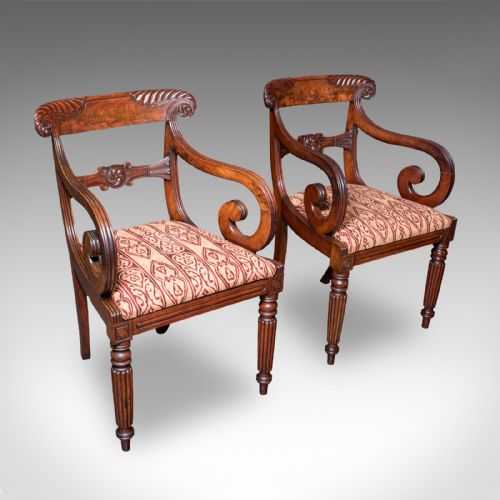
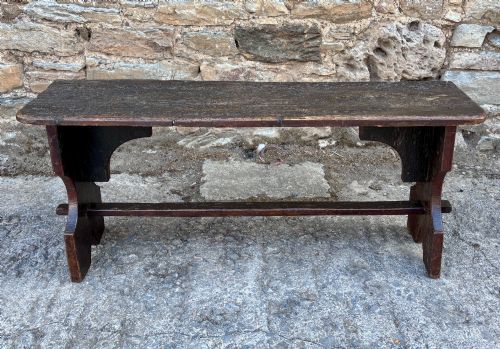
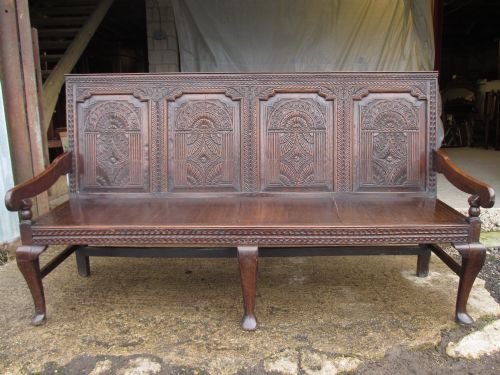
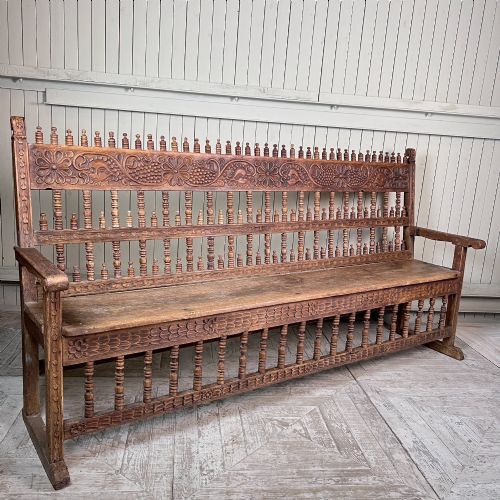
A traditional wooden hall seat takes many functional forms, including long benches, high-backed settles, and individual chairs placed near an entryway.
The pieces on this page span several centuries, with examples originating from Georgian, Victorian, and earlier periods fashioned in diverse regional styles.
Buyers frequently encounter robust oak and pine benches alongside carved mahogany reception seats designed for hallways and vestibules.
Materials and Technique
Carpenters relied heavily on solid hardwoods like oak, mahogany, and cherry, often pairing them with softer pine for internal or regional builds.
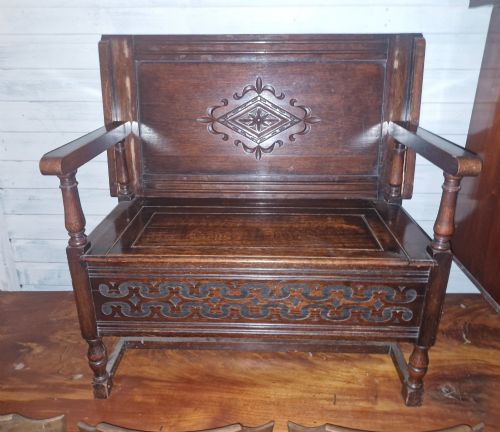
Construction techniques involve traditional joinery, panelled backs, and hinged lids on box settles, sometimes complemented by rush seating or iron hardware.
Horseshoe-shaped seating designs cross continents to sit comfortably beside traditional Welsh box settles.
Build and Material Integrity
Quality rests in the selection of timber and the honesty of the construction, where dense grain and solid panel work distinguish superior pieces from utilitarian ones.
The integrity of the joints and the preservation of original surfaces dictate the standing of a piece within its period.
The Traditional Wooden Hall Seat Glossary
- Settle
- A wooden bench with a high back, solid arms, and often a storage compartment beneath the seat. This form kept draughts away from the user in colder rooms.
- Box settle
- A variation featuring a concealed chest beneath the hinged seat. It provided practical storage for blankets and outerwear in busy entryways.
- Rush seat
- A seating surface woven from dried marsh plants. It creates a flexible, textured pad common in country furniture.
- Wainscot chair
- An early wooden armchair constructed with panelled framing. The style echoes the wood panelling used on interior walls.
- Window seat
- A long, narrow bench intended for placement beneath a window. These pieces share similar proportions with hallway seating.
Traditional Wooden Hall Seat: Frequently Asked Questions
What is a traditional wooden hall seat used for?
These pieces serve primarily as seating in entryways, mudrooms, and corridors. They offer a stable perch for removing footwear upon entering a home.
Many variants also incorporate built-in storage boxes beneath the lift-up seat. This compartment holds miscellaneous household items out of sight.
What woods are common in these seats?
Oak appears frequently across seventeenth, eighteenth, and nineteenth-century examples. Pine and mahogany also feature prominently in regional and formal pieces.
Craftmakers selected these dense timbers for their durability under daily use. Secondary woods like cherry and walnut occasionally appear in specific regional variants.
Where should I place a hall seat at home?
A hallway or large foyer provides the traditional setting for these items. They anchor the entrance space while remaining immediately useful.
Alternatively, they function well in dining areas or large kitchens against a wall. Their shallow depth allows them to fit narrow passageways without blocking movement.