


Primitive Pine Seat
Primitive pine seat designs bring honest utilitarian forms and aged surfaces into a modern interior.
Primitive Pine Seat
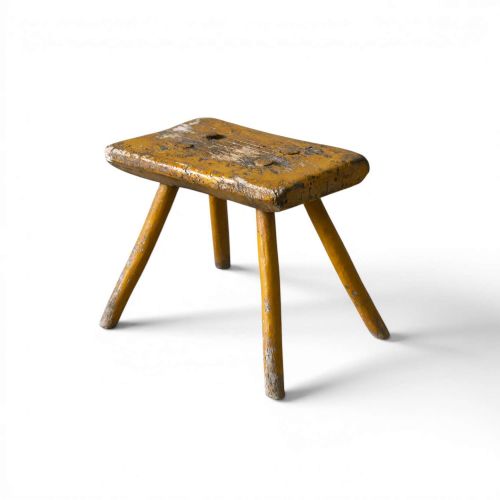
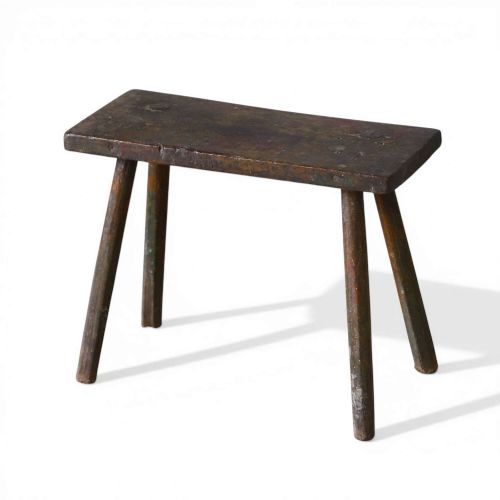
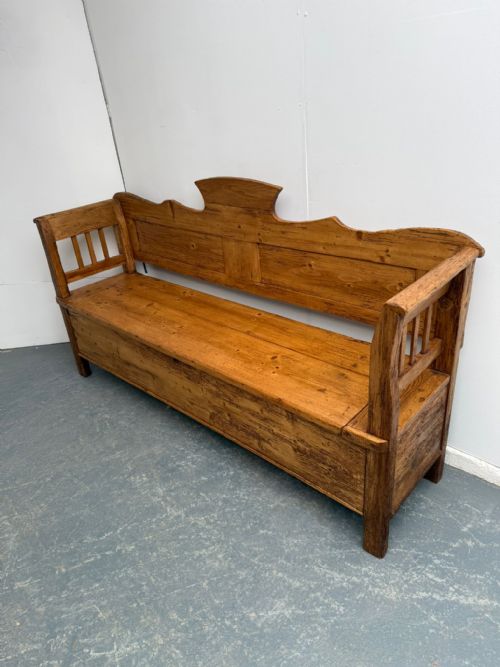
A primitive pine seat encompasses benches, stools, armchairs, and settles built for functional use across rural European households and gardens. These pieces range from compact milking stools to generous three-seater box settles and long garden benches.
You are most likely to encounter nineteenth century examples, alongside Georgian pieces and early twentieth century Scandinavian garden forms. These items reflect vernacular traditions from England, Eastern Europe, Hungary, and Sweden.
Makers focused entirely on utility, producing robust seating from accessible local timber without the constraints of formal urban cabinet making. The resulting objects carry distinct regional characteristics while maintaining a straightforward domestic purpose.
Materials and construction
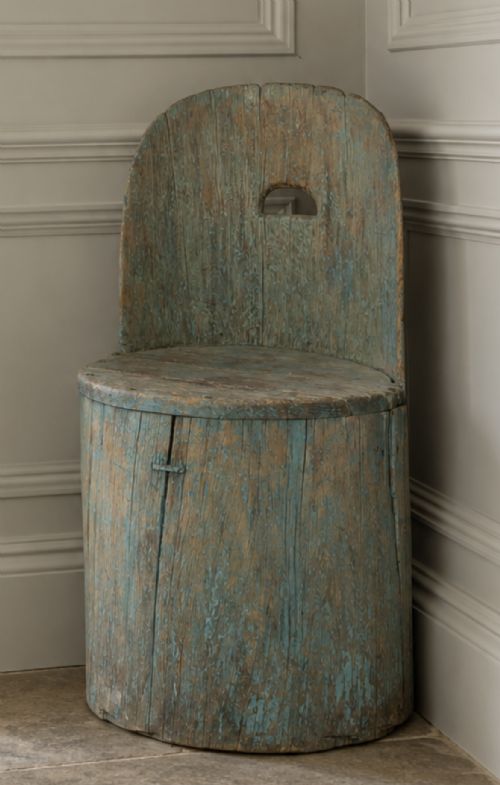
Constructed primarily from solid pine, timber, and weathered wood, these seats rely on straightforward joinery suited to domestic and agricultural settings. Dug out chairs utilise hollowed log sections, while settles and benches employ pegged joints and thick boards.
Surfaces frequently display original ochre or green paint, alongside scumble finishes and waxed treatments that protect the underlying wood. Iron fixings appear where structural reinforcement was necessary for daily use.
Current listings feature items spanning from seventeen hundred through the early twentieth century, incorporating English, Hungarian, and Scandinavian origins.
Quality and proportion
Quality rests in the survival of original surface treatments, such as untouched layers of old paint or rich patinated wax. Pieces that retain their honest working character without excessive restoration command greater appreciation.
Proportion and unusual structural forms elevate specific examples above standard utility items. Neat proportions and deliberate vernacular detailing separate ordinary workshop output from more compelling regional survivals.
The Primitive Pine Seat Glossary
- Settle
- A wooden bench with a high back, solid arms, and a closed base that often lifts to reveal storage. This form kept draughts away from inhabitants in unheated rooms.
- Scumble
- A decorative painting technique involving a translucent glaze dragged over an opaque base coat to simulate finer grain. It was commonly used on vernacular furniture to imitate expensive hardwoods.
- Milking stool
- A small, sturdy three-legged seat designed for agricultural workers handling dairy cattle. The tripod base remained stable on uneven barn floors.
- Dug out chair
- A seating form hewn directly from a single solid log or trunk. This ancient method produces heavy, monolithic forms with organic curves.
Primitive Pine Seat: Frequently Asked Questions
What is a primitive pine seat?
A primitive pine seat is a utilitarian piece of historical furniture built for everyday domestic or agricultural use. These items prioritize function over ornamentation, utilising straightforward construction methods.
They encompass various forms including benches, stools, armchairs, and settles originating from different European regions. Their appeal lies in their honest craftsmanship and aged wooden surfaces.
How were old pine benches used?
These benches served practical functions in farmhouses, cottages, and gardens across Europe. They provided robust seating around dining tables, near hearths, or outdoors.
Enclosed settles additionally served to block cold draughts in poorly insulated rooms while offering discreet storage beneath the seat.
How do I care for weathered pine?
Preserving these surfaces requires keeping the timber away from direct heat sources and excessive moisture. Sudden environmental changes can cause old wood to split.
Apply gentle wax sparingly if the finish appears dry, but avoid modern varnishes that alter the historic patina. Allow the natural texture and old paint layers to remain untouched.
How can I tell the period?
Dating relies on observing construction marks, tool traces, and the wear patterns accumulated across generations of use. Georgian pieces often display different proportions compared to later nineteenth century examples.
Original paint layers, surface patination, and regional woodworking traits also help contextualize when and where a piece was made.