





Rustic Storage Bench
A rustic storage bench combines practical seating with hidden utility, emerging primarily from nineteenth-century country workshops and provincial homes.
Rustic Storage Bench
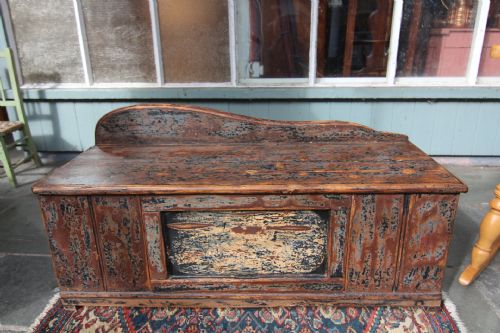
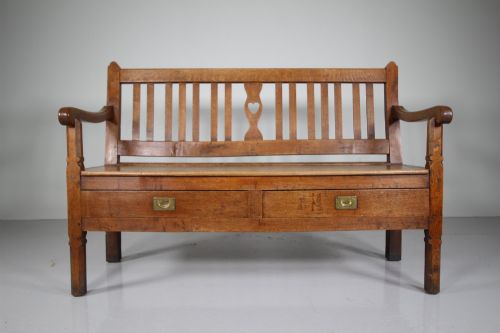
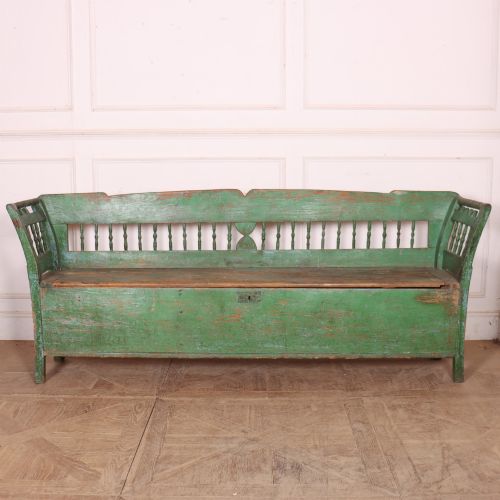
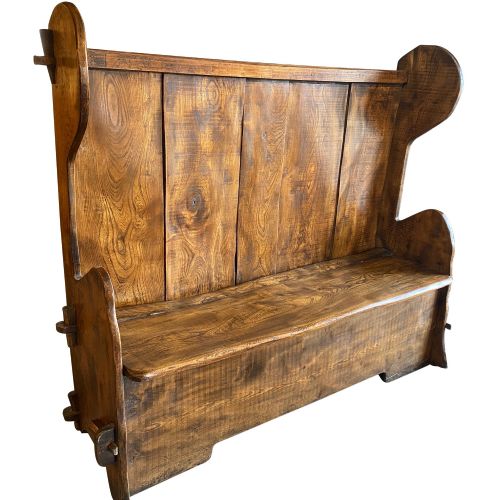
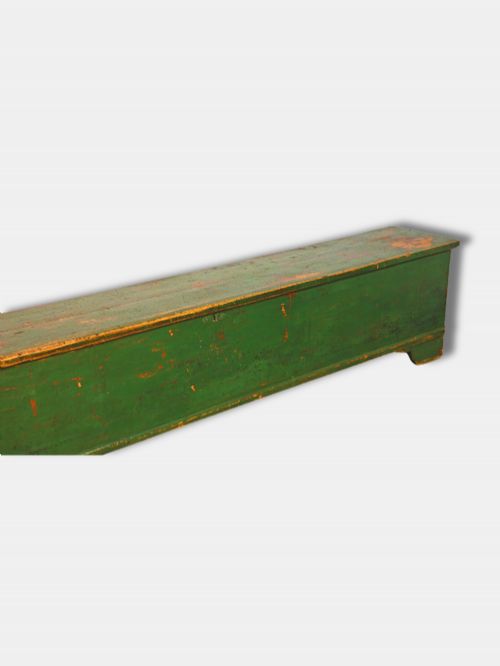
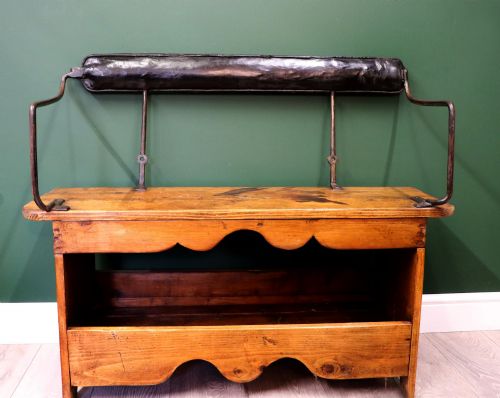
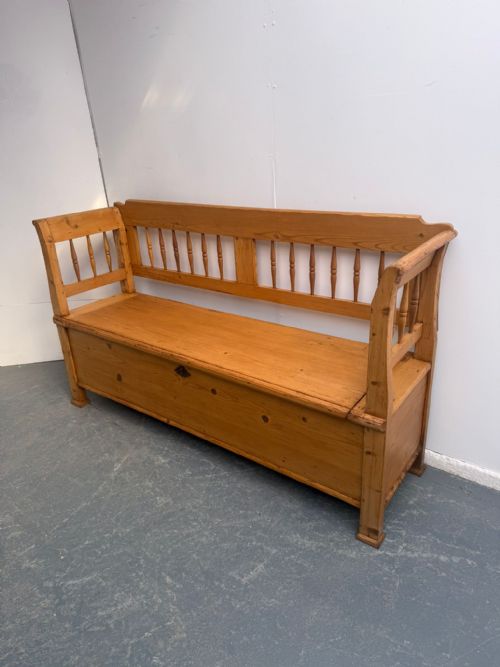
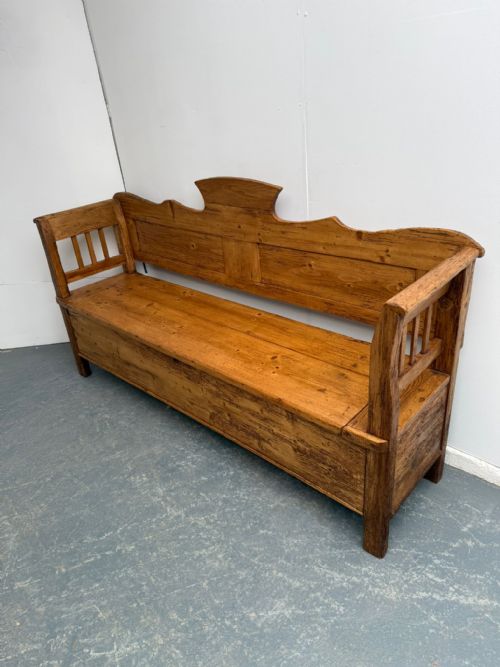
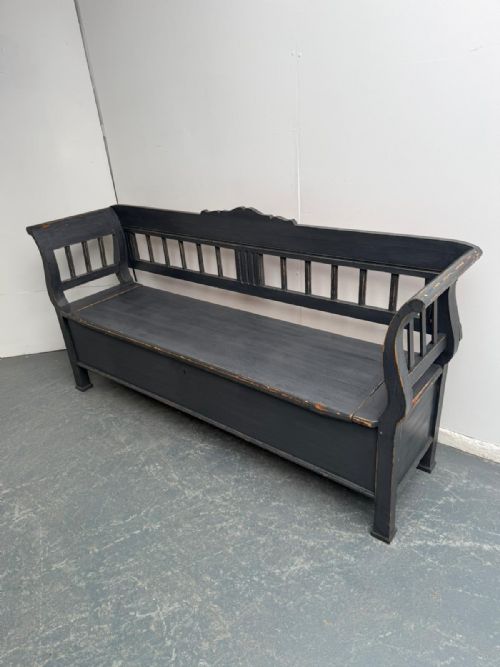
A rustic storage bench provides a dual function of seating and enclosed storage, commonly taking the form of a settle, box settle, hall bench, or chest. These pieces stem from various traditions including English, Welsh, Swedish, Austrian, Hungarian, and Dutch provincial life.
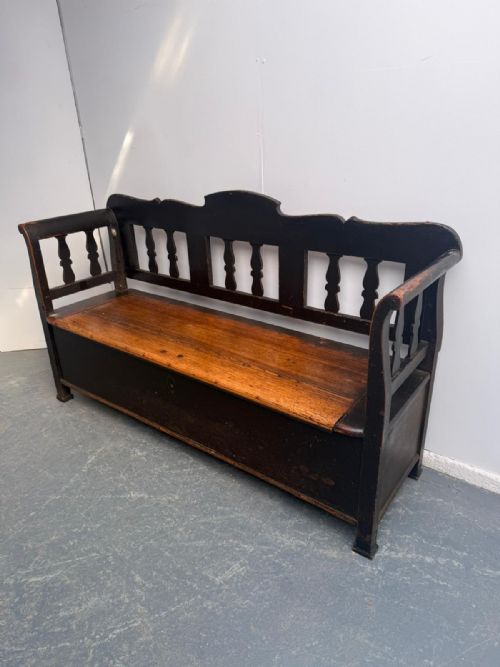
The most frequent examples encountered here are pine box settles and benches dating from the Georgian and Victorian periods, often retaining original paintwork in grey, black, blue, or cream, alongside waxed natural finishes.
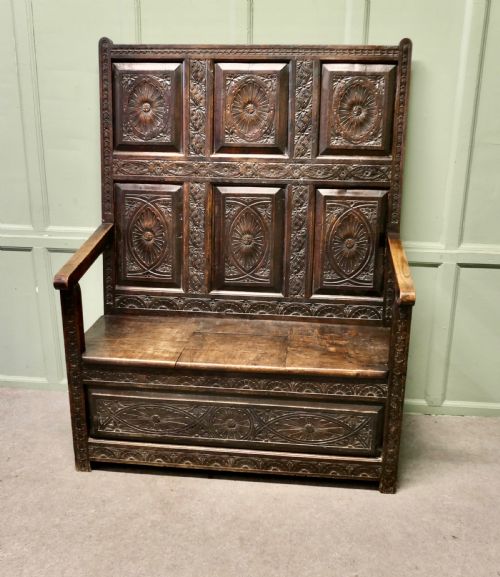
Forms range from high-backed oak box settles of the eighteenth century to spindled pine benches and blanket chests adapted for seating, reflecting the domestic needs of rural households across Europe.
Factors of quality
Quality rests upon the integrity of the original timber, the survival of early or original painted surfaces, and the proportion of the piece. Unaltered box construction and authentic period hardware distinguish superior examples from heavily restored ones.
The sophistication of regional joinery, such as carved high backs or panelled framing, elevates certain oak and elm settles above simpler pine utility benches.
Listings feature pieces spanning the eighteenth century, Georgian era, Victorian period, and early twentieth century, constructed primarily from pine, oak, and elm.
The Rustic Storage Bench Glossary
- Settle
- A wooden bench with a high back, solid arms, and often a closed box base beneath the seat. This form provided shelter from draughts in traditional rooms.
- Box settle
- A specific variety of settle featuring a hinged seat lifting to reveal a storage chest underneath. It served as a primary seat and utility box in provincial homes.
- Box-seated settle
- Another term for a settle with an integrated storage compartment beneath the sitting area. These items combined seating with trunk storage for textiles or household items.
- Chest
- A large sturdy box with a hinged lid used for storage. Certain chests function as benches when placed in halls or living spaces.
- Provincial
- Describing furniture made in the regions or provinces rather than capital cities. These items display local materials and traditional vernacular designs.
Rustic Storage Bench: Frequently Asked Questions
Where were rustic storage benches used?
These benches sat in hallways, farmhouses, and cottage kitchens across Britain and continental Europe. They served communal gathering spaces where seating and hidden storage were both essential.
In daily life, families utilised the enclosed base for blankets, boots, or dry goods while utilising the top for seating.
How do I care for waxed pine furniture?
Maintain waxed pine surfaces by dusting with a dry cloth and applying a traditional beeswax polish sparingly when the wood appears dry. Avoid placing these pieces near direct heat sources or damp areas.
Proper humidity levels help preserve the original timber and prevent the historic wood from splitting.
How can I tell a Georgian bench from a Victorian one?
Georgian examples often display earlier structural proportions, hand-carved elements, or simpler joined framing in oak and pine. Eighteenth and early nineteenth-century pieces tend to show greater wear from hearth use.
Victorian pieces frequently incorporate softer pine, turned spindles, and applied painted finishes in grey, black, or cream.
What is original paint on an antique bench?
Original paint refers to the historic coating applied to the furniture during its period of manufacture or early use, rather than modern decorative layers. This surface develops a natural patina over decades of domestic wear.
Collectors value surviving original paint in grey, black, blue, or cream for its visual character and historical authenticity.