
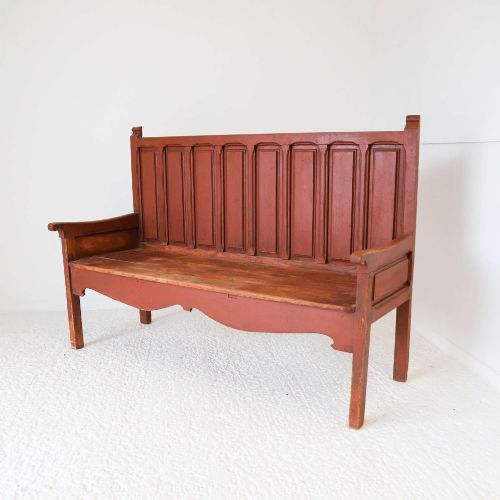


Red Painted Wooden Bench
A red painted wooden bench brings honest, functional folk character and rich colour to an interior.
Red Painted Wooden Bench
When searching for a red painted wooden bench, a buyer encounters rustic seating shaped by regional European traditions. These pieces include settles with high backs and arms, along with simpler forms from country houses, taverns, and railway stations.
The versions most commonly met span the eighteenth and nineteenth centuries, originating from Sweden, Spain, Austria, England, and the Netherlands. They are predominantly constructed from pine and timber, carrying layers of historic paint.
Beyond standard benches, the selection includes related items such as luggage stands and matched furniture suites. Each piece reflects the everyday utilitarian needs of its domestic or public setting.
Materials and construction
Makers utilised available local timber, most frequently pine, building sturdy frames designed for heavy daily use. Joinery techniques relied on traditional pegged or jointed construction suited to utilitarian furniture.
Surfaces were coated in oil or water-based pigments to protect the wood and brighten interiors. Over time, these painted finishes acquired a natural patina through handling and wear.
Certain industrial or transit pieces incorporate iron and cast iron components for enhanced structural support. Occasional decorative details, such as gilded accents or giltwood, appear on more formal continental examples.
Red Painted Wooden Bench Retail Price Guide 2026
Typical asking prices for red painted wooden bench among the pieces listed under this phrase on Sellingantiques today, from the lower quarter to the upper quarter. They describe what is for sale here now, not the wider market.
A railway station bench provides an eccentric resting spot for a modern hallway, complete with the accumulated scuffs of bygone commuters.
Judging quality in country seating
Quality rests in the integrity of the original surface and the honesty of the timber construction. Pieces retaining their early or original red paint without extensive modern overpainting command greater interest.
Proportion and structural balance distinguish everyday workshop output from finer regional examples. The integration of high backs, panelled settles, or vernacular carved details elevates the piece from basic utility to notable folk art.
John Tesch
The Red Painted Wooden Bench Glossary
- Settle
- A wooden bench with a high back, solid arms, and often a storage box beneath the seat. This form protected sitters from draughts in historical interiors.
- Pine
- A soft timber widely used across European country furniture for its accessibility and ease of working. It formed the carcass for the painted finishes seen on these benches.
- Giltwood
- Wood that has been treated with gold leaf or a metallic powder coating. It appears on select decorative highlights rather than structural elements.
- Luggage stand
- A low bench or rack designed for holding travel bags at a convenient height. These share the painted wooden construction of larger seating forms.
- Patina
- The surface texture and sheen developed by wood and paint through age and continuous handling. It serves as a visual indicator of a piece's history.
Red Painted Wooden Bench: Frequently Asked Questions
Where were these benches originally used?
These benches served in diverse environments, from rural farmhouses and provincial inns to railway stations and domestic halls. Their robust construction was tailored for communal gathering and waiting areas.
Continental examples often anchored farmhouse kitchens or stugas, while English tavern benches accommodated patrons in public houses.
How do I care for historic painted wood?
Maintenance requires protecting the fragile historic surfaces from direct sunlight and excessive moisture fluctuations. Dust gently with a dry, soft cloth rather than using modern liquid polishes.
Applying wax is generally unnecessary if the original paint remains stable and intact. Preserving the existing patina requires a stable indoor climate.
Are settles different from standard benches?
Settles incorporate high backs and solid sides designed to block cold air currents in unheated rooms. Standard benches offer open seating without barriers.
Many settles also feature hinged seats opening to reveal storage space underneath. This dual function made them central items in historical domestic interiors.
How can I distinguish regional styles?
Regional styles reveal themselves through construction methods, silhouettes, and the specific tones of the pigments used. Swedish and Austrian pieces often display clean lines and folk motifs.
Spanish and Dutch examples tend toward heavier proportions and deeper panel work. Paint analysis and wood species further clarify geographic origins.