




Country Primitive Bench
These country primitive bench examples span centuries of domestic utility, offering straightforward timber construction and honest vernacular charm for modern interiors.
Country Primitive Bench
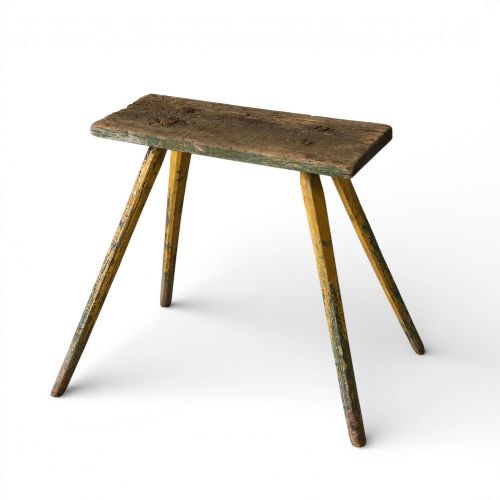
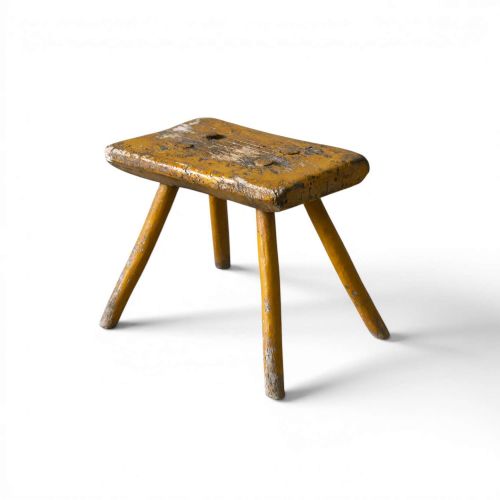
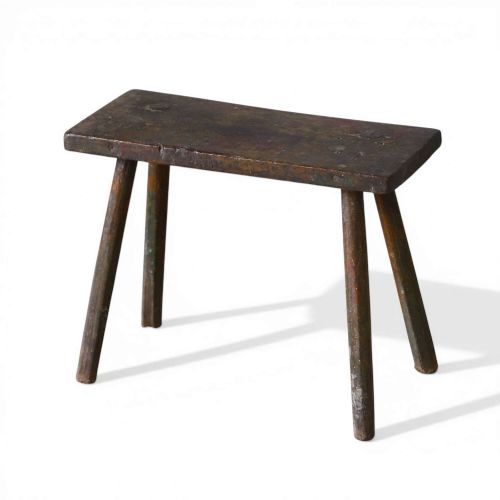
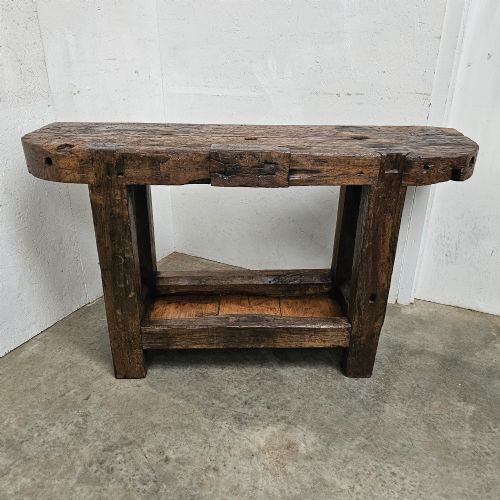
A country primitive bench encompasses utilitarian seating and low tables fashioned by local makers from accessible woods. These pieces originate from domestic, agricultural or workshop settings across British, French, Scandinavian and Eastern European traditions.
Buyers seek these objects for their unpretentious proportions and the honest marks of daily use. They function easily as hallway seating, coffee tables or auxiliary perches in contemporary rooms.
How they were made
Construction relies upon native hardwoods and softwoods including oak, pine, elm, sycamore, ash and timber. Makers selected these woods for local availability and structural strength rather than decorative grain.
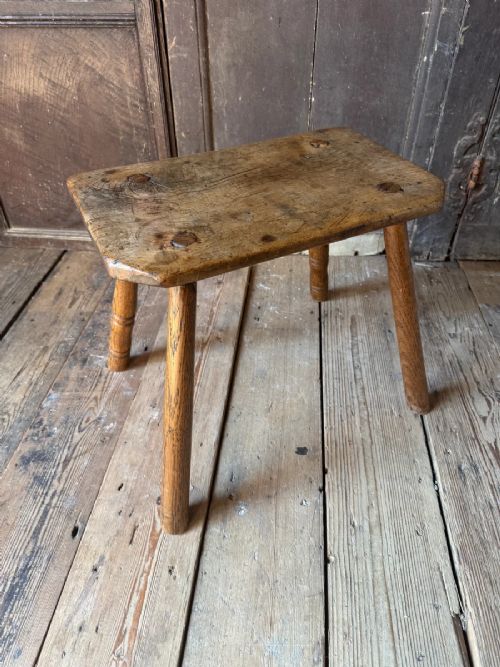
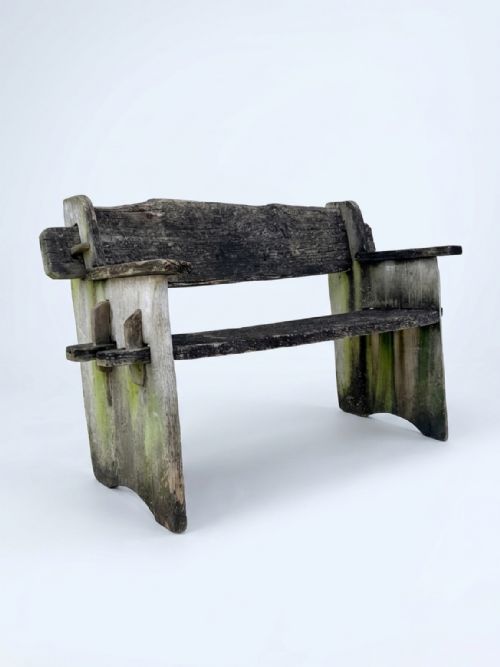
Joinery is straightforward and robust, utilising pegged mortise and tenon joints, stickback construction, and legs wedged directly into thick slab seats. Surfaces frequently retain traces of original paint, ochre, green, or waxed finishes developed through decades of handling.
Listings incorporate regional pieces from France, Scandinavia, and Eastern Europe alongside British examples, spanning the eighteenth to early twentieth centuries in pine, oak, and elm.
What varies in quality
Quality rests in the integrity of the original form and the honesty of the surface patina. Pieces retaining undisturbed original paint or deep, dry wax finishes command greater interest than those stripped to bare wood.
Proportion and scale dictate desirability, with unusual diminutive sizes, natural form elements, or specific vernacular adaptations elevating a piece above standard workshop output.
The Country Primitive Bench Glossary
- Vernacular
- Everyday objects built by local craftspeople using regional traditions rather than high-style academic designs. These pieces prioritize function over ornament.
- Slab-top
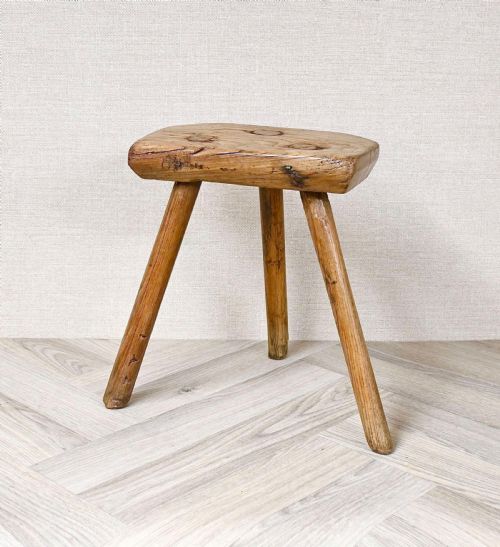
- A seat or table top formed from a single thick plank of timber, often retaining the natural edge of the tree. This construction method defines many early primitive benches and stools.
- Settle
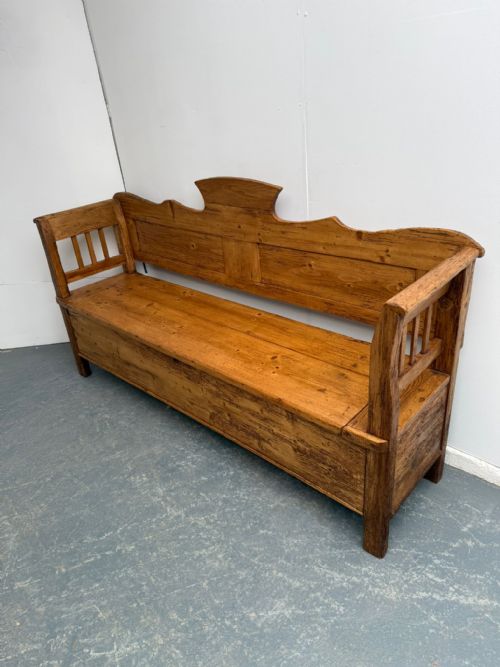
- A high-backed wooden bench with solid sides and a storage box base, designed to block drafts in older homes. Examples appear in both full-size and child proportions.
- Milking stool
- A small, typically three-legged seat designed to be balanced on uneven ground while milking livestock. Their portable, lightweight nature made them useful throughout the home.
- Scumble
- A decorative painting technique used to simulate wood grain or create a mottled texture over a base coat. Georgian and nineteenth-century pieces frequently display this finish.
Country Primitive Bench: Frequently Asked Questions
What is a pig bench?
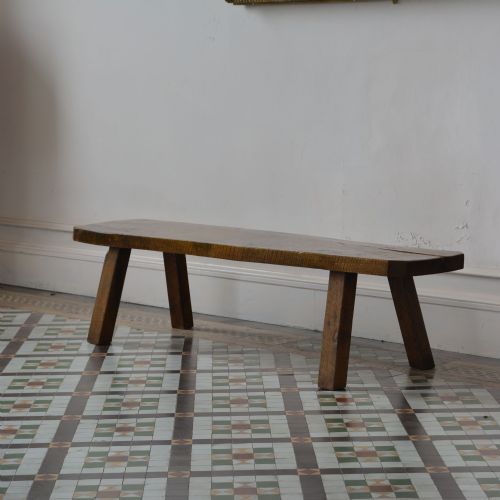
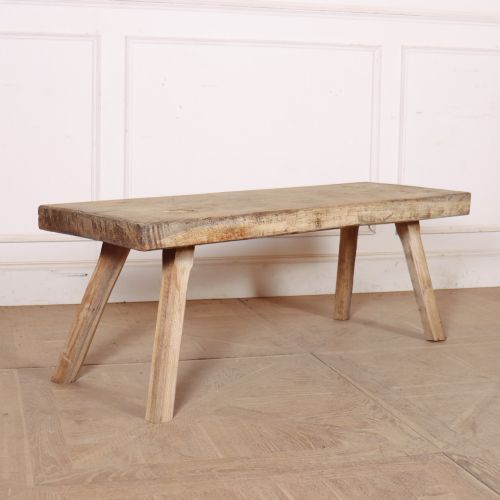
A pig bench is a low, narrow wooden table traditionally used in agricultural settings for butchering or farm tasks. Today, their elongated proportions make them popular for use as coffee tables.
These pieces typically feature sturdy timber legs and thick tops that show the heavy wear of rural utility.
How do I date a primitive bench?
Dating relies on observing construction methods, tool marks, and timber species used by the maker. Hand-sawn boards, pegged joinery, and accumulated surface wear point to earlier centuries.
Later nineteenth and early twentieth-century examples often incorporate more standardised fasteners while maintaining rustic forms.
Are these benches comfortable?
Primitive benches were built for utility and durability rather than lounging. Sculpted seats and low proportions offer sturdy auxiliary seating rather than deep comfort.
Many buyers use them as architectural accents, display surfaces, or short-term perches in entryways.
What does original paint mean?
Original paint refers to the initial decorative or protective surface coating applied to the wood when the piece was made. Traces of ochre, green, or scumbled finishes add historic character.
Surfaces with untouched patinas are valued for recording the authentic ageing process of the object.