

Antique English China
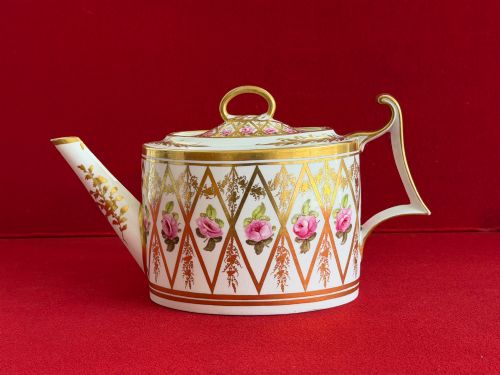
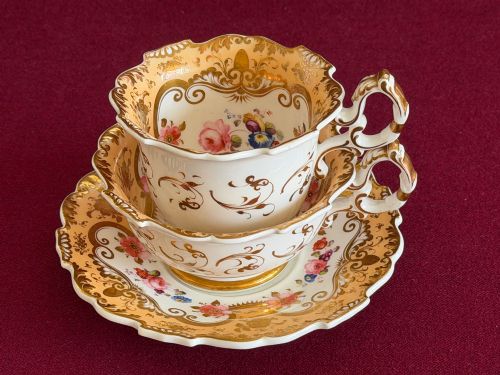
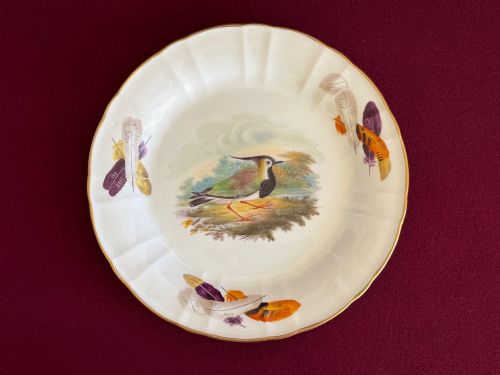
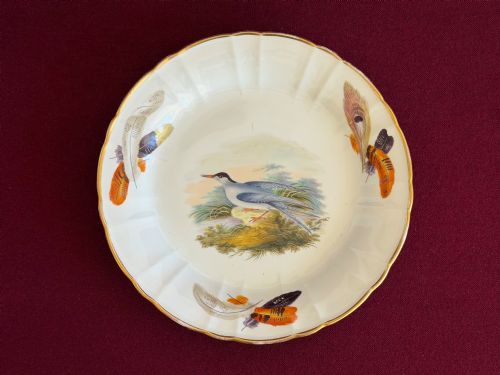
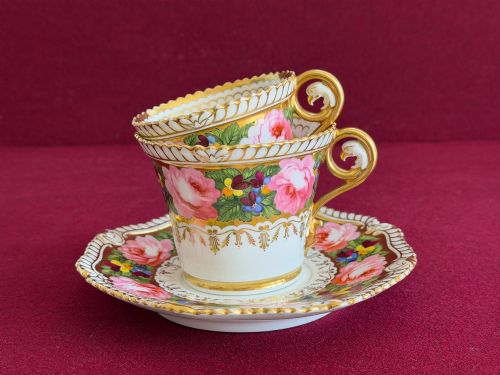
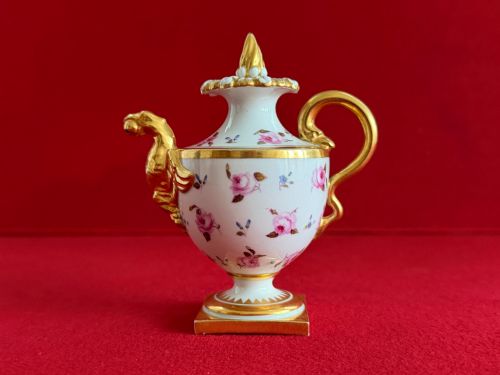
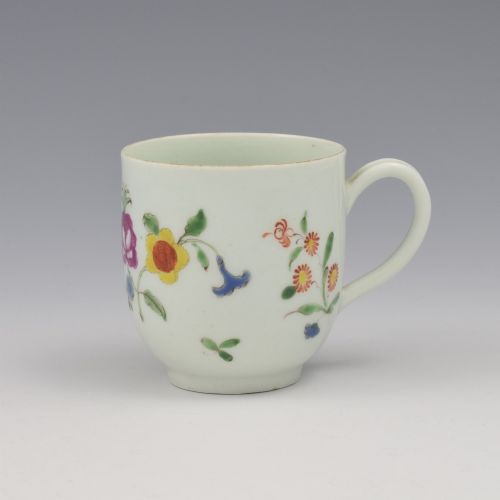
Antique english china encompasses handpainted porcelain plates, tea trios and decorative vessels produced across eighteenth and nineteenth century kilns.
Antique English China
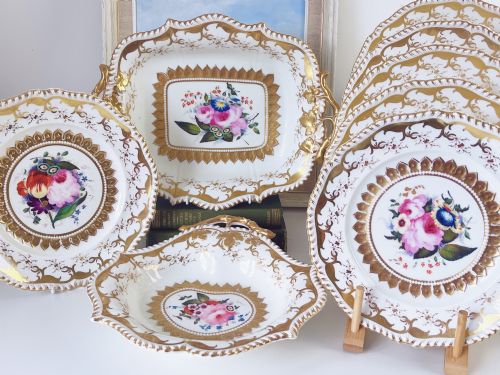
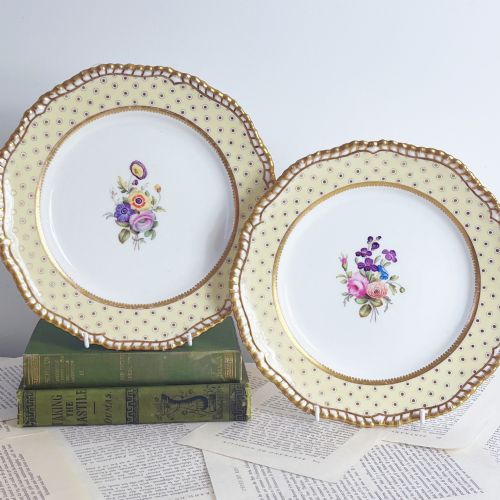
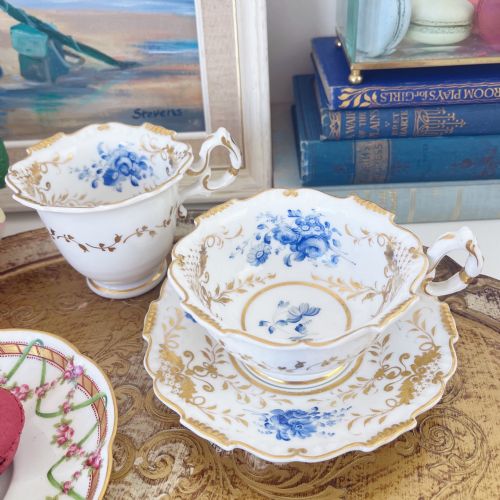
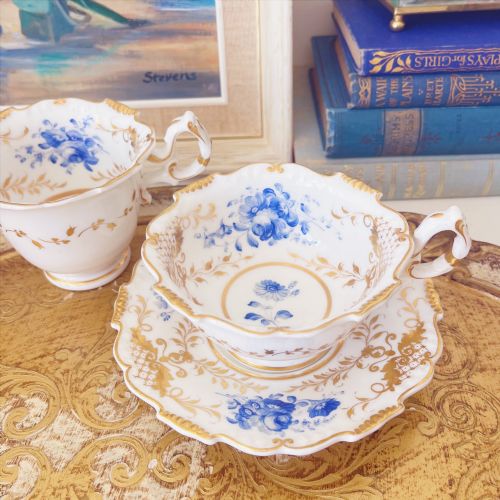
Antique english china comprises utilitarian and decorative ceramic forms made across several centuries, spanning eighteenth century soft-paste bodies to nineteenth century bone china services. The selection met on this page centres on cabinet plates, tea and coffee trios, dessert services, and decorative dishes from historic factories such as Worcester, Derby, and Spode.
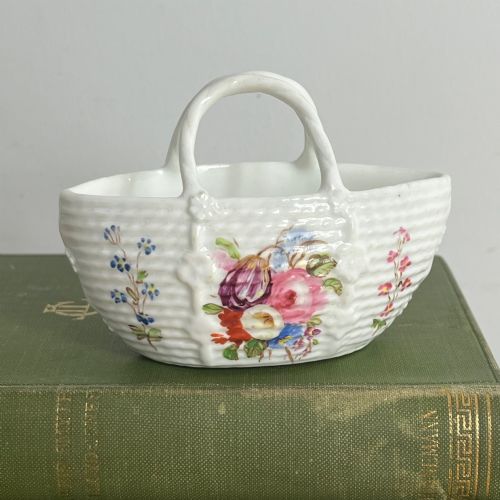
Buyers encounter domestic tableware and ornamental porcelain intended for display, including inkstands, sauce boats, and miniature baskets. Pieces range from eighteenth century cobalt-decorated wares to regency floral patterns and victorian bone china table services.
How they were made
Makers utilised soft-paste porcelain, bone china, and enamel bodies, shaping vessels upon the wheel or pressing them into moulds. Artisans applied cobalt blue underglaze decoration or handpainted polychrome enamels over the glaze, frequently accentuating details with gold leaf and gilding.
Kiln firing methods evolved from eighteenth century wood and coal burning ovens to more controlled nineteenth century designs, allowing precise vitrification of bone china and porcelain formulas.
Antique English China Retail Price Guide 2026
Typical asking prices for english china among the pieces listed under this phrase on Sellingantiques today, from the lower quarter to the upper quarter. They describe what is for sale here now, not the wider market.
Early porcelain decorators sometimes hid tiny painted insects inside tea cups to surprise thirsty drinkers at the bottom.
What varies in quality
Quality rests upon the crispness of the porcelain moulding, the delicacy of the potting, and the skill evident in handpainted brushwork. Superior items display finely rendered botanical or avian motifs executed by named artists, whereas lesser examples rely on standard transfer-printed outlines.
The preservation of original gilding and enamel brilliance dictates the standing of a piece within its period. Intact gold leaf and stable glazes separate museum-grade cabinet specimens from heavily handled utilitarian stock.
Grainger Lee And Co·Royal Crown Derby·Spode·Flight Barr And Barr·H And R Daniel·Royal Doulton·Derby Porcelain·Wedgwood·Chamberlain Worcester·Richard Chaffers·Caughley·Newhall·Coalport·Dr Wall Worcester·Bow·Royal Worcester·Davenport·Chelsea·Bloor Derby·Mayer And Newbold
The Antique English China Glossary
- Soft-paste porcelain
- An early ceramic composition of white clay, glass, and ground minerals fired at lower temperatures than true hard-paste porcelain. This body absorbs glaze distinctively and often shows slight surface warping from kiln heat.
- Bone china
- A durable ceramic paste incorporating animal bone ash alongside china stone and china clay. Developed in England, it permits thinner walled vessels with a characteristic milky translucency.
- Trio
- A matched ceramic set comprising a tea cup, a coffee cup, and a matching saucer. These became popular during the georgian and regency periods for formal domestic hospitality.
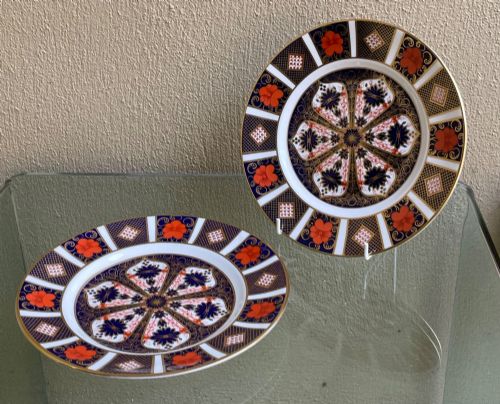
- Imari style
- A decorative scheme inspired by japanese export ceramics utilising deep underglaze cobalt blue combined with iron red and gilding. English factories adapted these vibrant patterns throughout the eighteenth and nineteenth centuries.
- Gilding
- The application of gold leaf or powdered gold suspended in medium to ceramic surfaces, subsequently fixed by kiln firing. It highlights rims, handles, and painted reserves.
Antique English China: Frequently Asked Questions
How do I identify eighteenth century english porcelain?
Examine the base for unglazed foot rims, known as fire cracks or pinch marks, and observe the softness of the glaze under natural light. Early bodies often display characteristic translucency variations and painterly underglaze blue brushstrokes unique to specific kilns.
Look for early factory marks such as anchor symbols, crescent shapes, or painted numerals beneath the glaze. Comparison with documented patterns from periods like the dr wall Worcester years helps confirm origin.
What is the difference between bone china and soft-paste?
Bone china incorporates bone ash into the ceramic formula, producing a sturdy, highly translucent white body that withstands higher firing temperatures. Soft-paste porcelain relies on glass and frit mixtures, yielding a warmer, creamier tone with softer glaze properties.
Under magnification, soft-paste body surfaces display minute shrinkage bubbles and distinctive glaze pooling near foot rims. Bone china exhibits a harder, more uniform vitrified structure.
Can antique tea services be used daily?
Historic teacups and saucers from the georgian and regency eras feature delicate handles and thin porcelain walls unsuited to modern dishwashers or thermal shock. Enamels and gilt highlights applied over centuries are vulnerable to abrasive detergents and scrubbing.
Gentle hand washing in lukewarm water with mild soap preserves the fragile handpainted pigments. Most collectors prefer occasional display or careful ceremonial use rather than heavy daily service.
Why are some plates called cabinet plates?
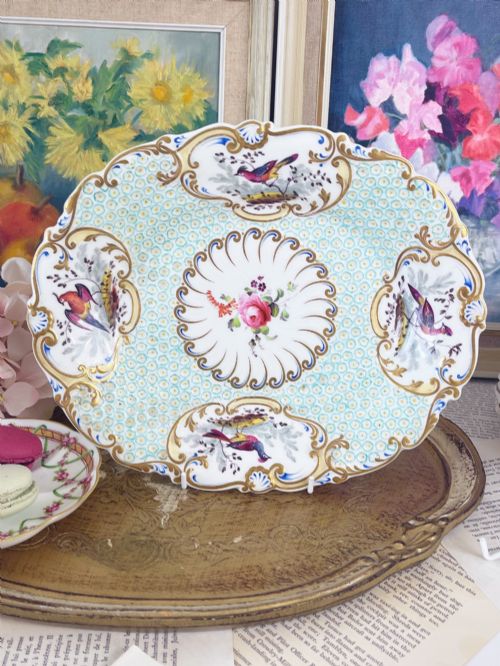
Cabinet plates were manufactured primarily for decorative display inside glass-fronted vitrines or wall hung brackets rather than for dining table service. Their surfaces often feature elaborate handpainted topographical scenes, botanical studies, or exotic birds framed by rich gilding.
These display pieces typically show minimal utensil wear on the well, distinguishing them from utilitarian plates used for dessert or service.