


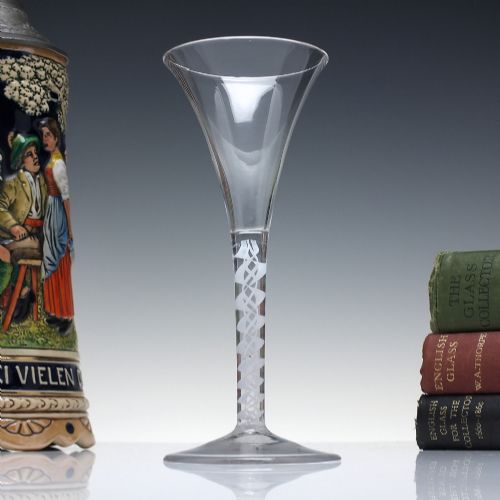


Antique Enamel Glassware
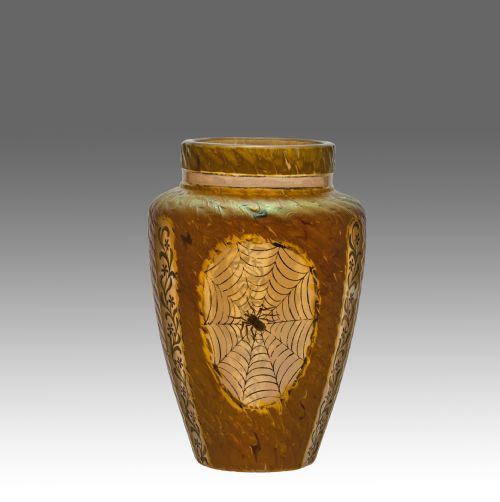
These antique enamel glassware pieces combine tinted vessel forms with fired pigment decoration, offering collectors vibrant historic table service and display items.

Antique Enamel Glassware
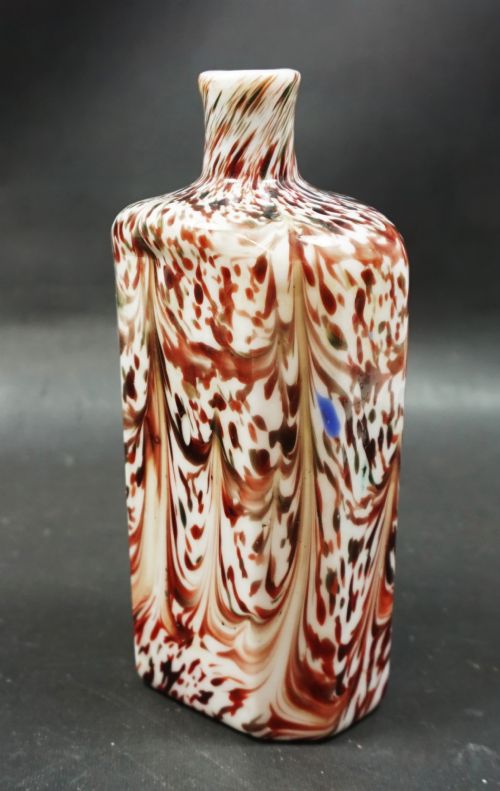
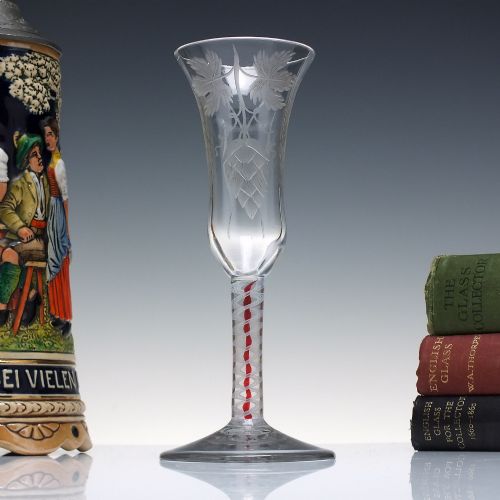
When you search for antique enamel glassware, you encounter items designed for display and service, ranging from wine glasses and decanters to vases and perfume bottles. These vessels emerge primarily from Victorian, Edwardian, and Art Deco periods, alongside earlier Georgian and eighteenth-century examples.
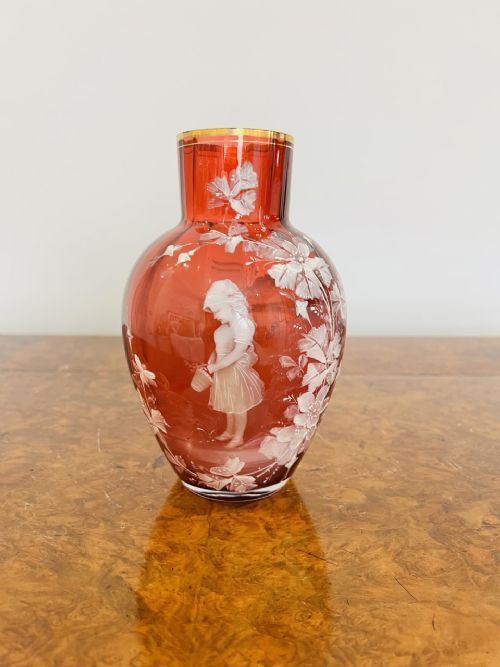
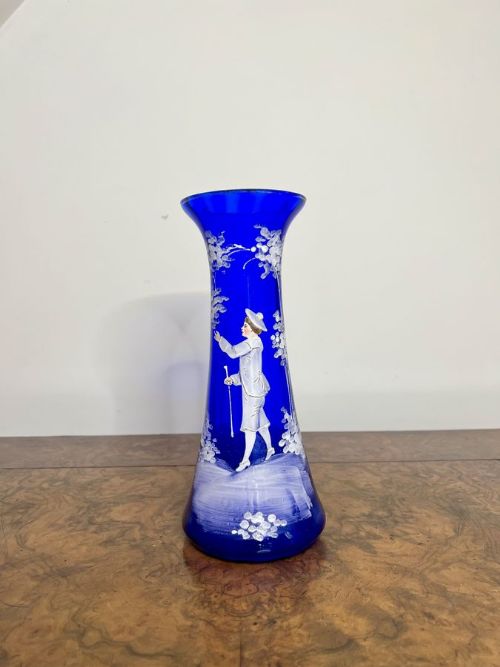
The selections you meet most frequently on this page include Victorian cranberry and green glass vases featuring classic white enamel painting, alongside Bohemian and German production from makers working in the nineteenth and early twentieth centuries. Forms span from simple flasks and jugs to large armorial goblets and matching cordial sets.
Materials and construction methods
The physical objects rely on blown glass, lead glass, milk glass, and clear glass substrates, often tinted in shades of cranberry, green, blue, or opaque white. Artisans applied pigmented enamel compounds directly onto the cooled glass surfaces before firing the pieces in kilns to fuse the decoration permanently.
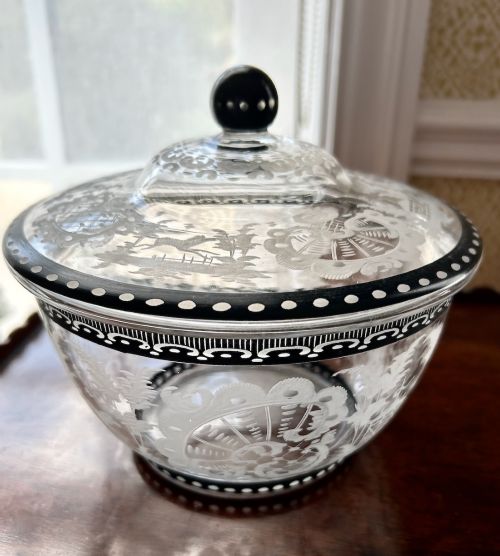
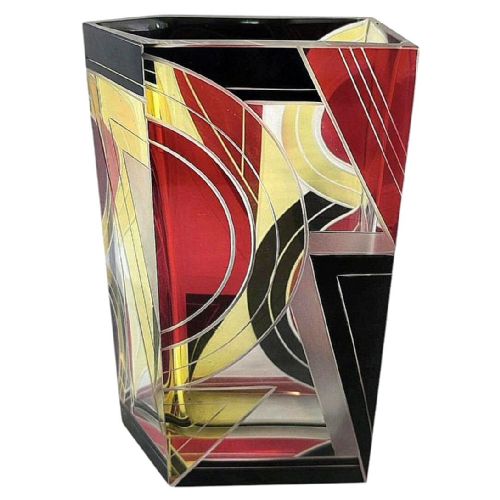
Many works incorporate additional embellishments such as gold leaf, gilding, etching, and engraving alongside the enamel motifs. Techniques range from freehand painted scenes to geometric Art Deco etching and structured armorial heraldry.
Materials documented across the inventory include cranberry glass, lead glass, milk glass, gold leaf, and vitreous enamel.
Distinctions in quality
Quality reveals itself in the precision of the enamel application and the clarity of the underlying glass matrix. Superior examples display crisp, well-defined painted details and controlled gilding that remains intact across the vessel surface.
The distinction between standard decorative items and finer works often rests on the sophistication of the design, such as complex polychromatic heraldic motifs or intricate Jugendstil and Art Nouveau patterns executed by recognised glasshouses.
Kralik Glass·Karl Palda·Fritz Heckert·Moser·Salviati·Lobmeyer·Theresienthal·Legras
The Antique Enamel Glassware Glossary
- Mary Gregory glass
- A style of Victorian glassware typically featuring white enamel silhouettes of children playing amidst foliage, most commonly set against cranberry or green glass grounds.
- Roemer
- A traditional Germanic large drinking glass, usually featuring a wide bowl atop a decorated cylindrical stem studded with prunts.
- Cranberry glass
- A rich red-pink transparent glass created by adding gold chloride to the molten batch during manufacture.
- Hock glass
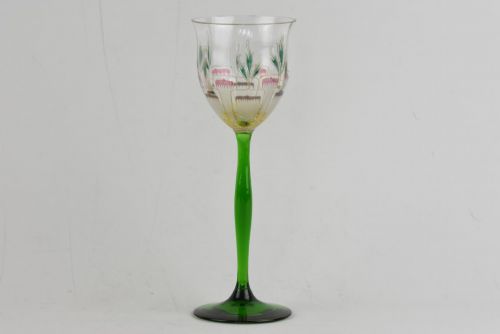
- A tall-stemmed wine glass traditionally used for white wine, often featuring elaborate coloured bowls with enamel and gilt decoration.
- Vitreous enamel
- A material made by fusing powdered glass to a substrate by firing, producing a durable decorative coating.
Antique Enamel Glassware: Frequently Asked Questions
What is Mary Gregory glass?
Mary Gregory glass is a distinct Victorian style defined by white enamel silhouettes depicting children in natural settings. These painted figures appear prominently on cranberry and green glass vases, jugs, and decanters.
Despite the traditional attribution, many pieces bearing this style were produced across Bohemia and England during the nineteenth century rather than by the American artist herself.
How do I date antique enamel glassware?
Dating relies on stylistic markers, glass colours, and manufacturing techniques characteristic of specific eras. Victorian examples often feature opaque white enamel figures or heavy gilding, while Art Deco items display geometric etched patterns from the 1930s.
Examining the pontil mark on the base and the specific hue of the glass helps separate eighteenth-century and Georgian pieces from later nineteenth and twentieth-century production.
Were these pieces used or displayed?
Many items served practical functions in period dining rooms, including wine glasses, decanter sets, cordial glasses, and cream jugs. Other objects like large vases and decorative bowls were strictly intended for interior display.
Matching sets of hock glasses and liquor stands indicate they were employed during formal entertaining and social gatherings.
How should I clean enamelled glass?
Enamelled glass requires careful handling to preserve the delicate surface decoration and gilding. Cleaning should be done by hand using lukewarm water and a mild detergent, avoiding abrasive cloths or harsh chemical cleaners.
Because the fired enamel and gold leaf can wear away over time, soaking these vessels for extended periods is discouraged.