
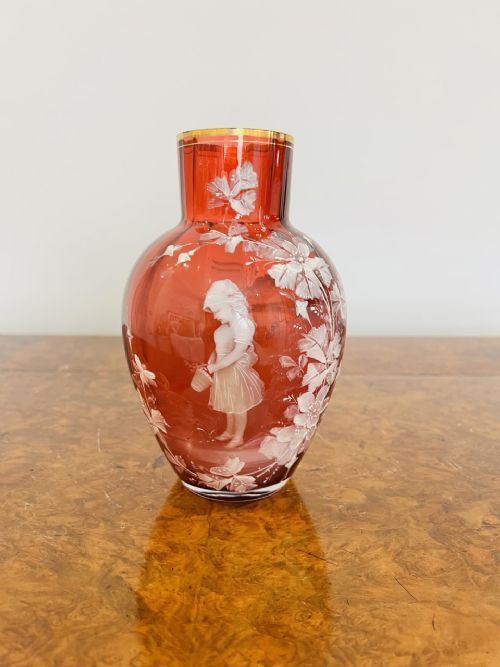
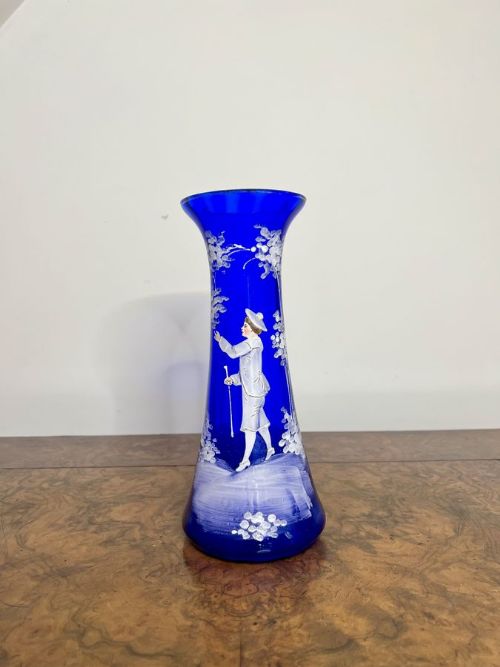


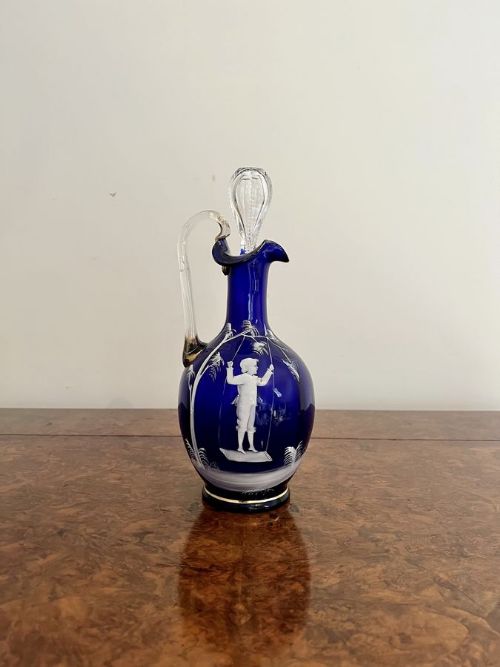


Victorian Mary Gregory
Victorian Mary Gregory pieces are charming coloured glass items painted with white enamel figures, prized for their distinct decorative appeal.

Victorian Mary Gregory
Victorian Mary Gregory glassware encompasses a variety of decorative and functional objects produced during the nineteenth century. Collectors regularly encounter items such as vases, ewers, decanters, trinket boxes, and dressing table sets.
The objects span several decades of production, with pieces dating from the eighteen-eighties, eighteen-nineties, and around nineteen hundred. Cranberry glass, green glass, and blue glass frequently appear among the surviving examples.
Materials and technique
The foundation of each piece is coloured glass, utilising shades including cranberry, blue, green, olive green, amethyst, and cobalt. Artisans shaped these glasses into vessels such as vases, jars, beakers, and scent bottles.
Decoration relies on enamel paint, specifically white enamel, applied by hand to depict figures and foliage. Certain pieces incorporate additional details such as gold leaf or silver mounts.
Victorian children painted on these glasses frequently appear to wander through eternal white enamel forests.
Distinctions in quality
The refinement of the hand-painted white enamel figure work separates simpler items from superior examples. Skilled brushwork defines the contours of the children, foliage, and landscapes painted on the glass.
The depth and clarity of the coloured glass body, alongside the integration of precious metal mounts like silver, contribute to the standing of an individual piece.
The Victorian Mary Gregory Glossary
- Cranberry glass
- A rich red transparent glass coloured with gold chloride during production. This material forms the base for numerous decorative vessels.
- Enamel paint
- Opaque vitreous material applied to the surface of fired glass. It provides the characteristic white pigment used for the iconic painted scenes.
- Ewer
- A large jug with a wide spout and handle, designed historically for pouring water. Surviving Victorian examples frequently serve decorative purposes.
- Scent bottle
- A small container utilised for holding perfume, often fitted with a protective silver mount. These portable items represent a specific category of vanity ware.
Victorian Mary Gregory: Frequently Asked Questions
What is Victorian Mary Gregory glass?
Victorian Mary Gregory glass refers to coloured glassware decorated with distinctive white enamel silhouettes, typically depicting children in natural settings. These decorative items were produced in large quantities during the nineteenth century.
Today, collectors seek out these pieces for their charming aesthetic and bright hues, including cranberry, cobalt, and green.
How do I date these glass pieces?
Dating these objects involves examining the style of the glass vessel, the tint of the colour, and the characteristics of the enamel work. Most documented examples originate from the Victorian era, specifically the later decades of the nineteenth century.
Mounters, silver hallmarks, and specific shades of glass help narrow down the period of manufacture.
How were these items used originally?
Many of these objects served practical functions within the Victorian home, operating as dressing table accessories, drinking vessels, or decorative vases. Trinket boxes and pill boxes held small personal items.
Other pieces, such as ewers and water jugs, functioned as tableware while adding vibrant colour to domestic interiors.
How should I clean my glassware?
Cleaning requires gentle handling, using lukewarm water and mild soap to protect the delicate white enamel painted surface. Harsh scrubbing agents and ultrasonic cleaners must be avoided to prevent damaging the painted decoration.
Allowing the glass to air dry on a soft cloth preserves both the coloured body and the enamel details.