



Victorian Green Vases
These Victorian green vases bring rich nineteenth-century colour and varied ceramic or glass forms to a room.

Victorian Green Vases
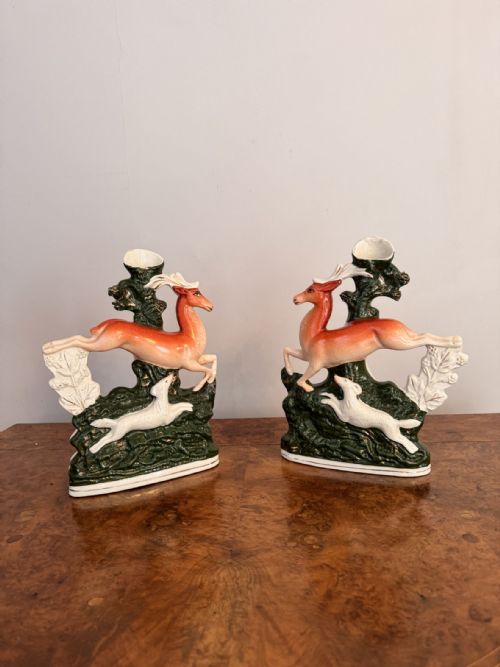
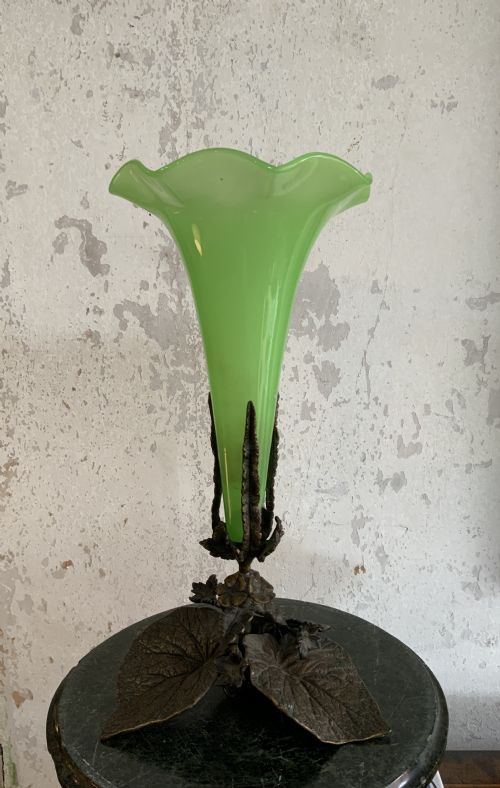
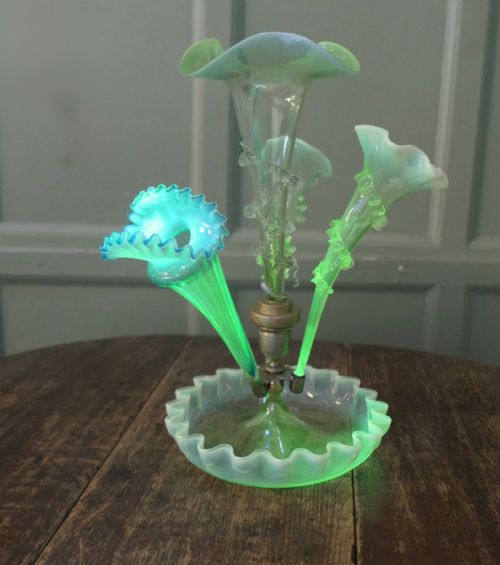
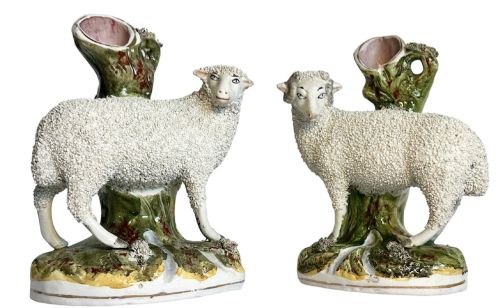
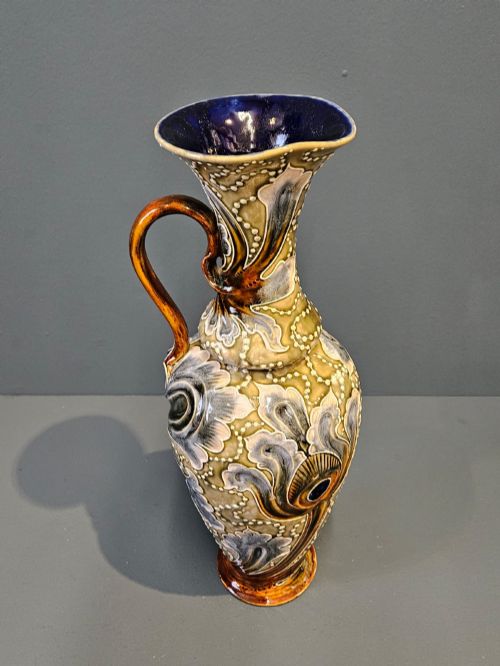
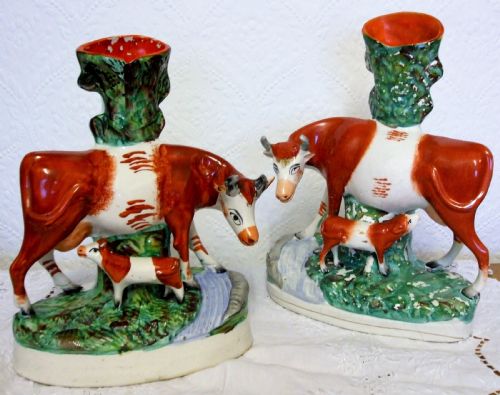
Victorian green vases span robust earthenware spill vases, delicate uranium or vaseline glass, and substantial studio pottery from the nineteenth century. Staffordshire figures with spill holders, Bohemian blown glass, and Doulton Lambeth salt-glazed vessels appear frequently across the selection.
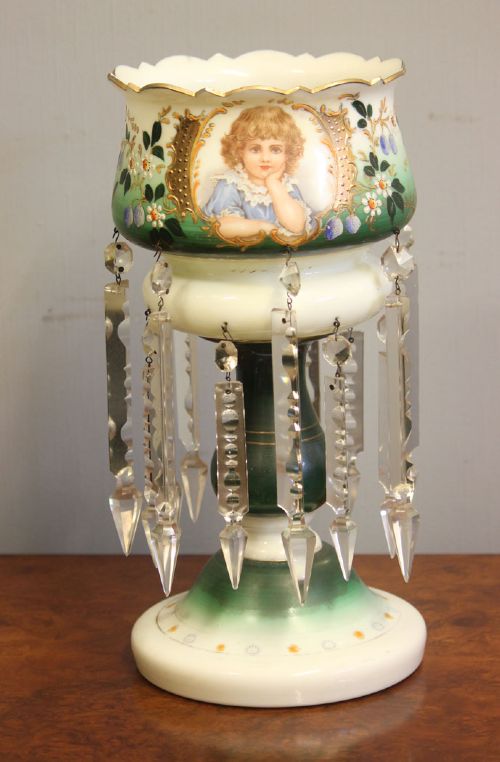
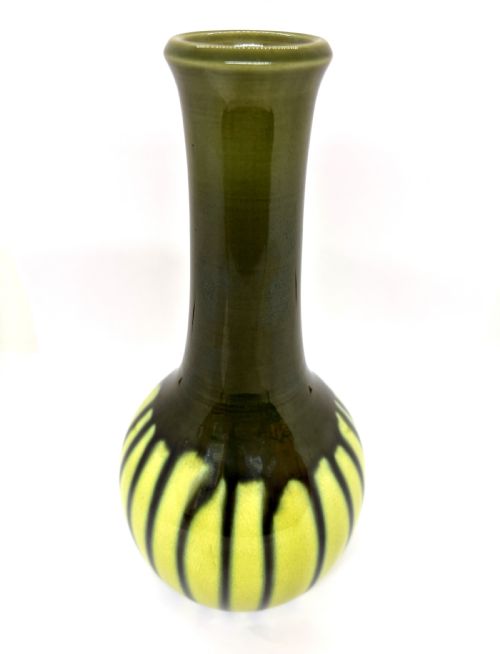
Makers ranged from large English potteries to continental glasshouses, producing items for domestic mantelpieces and display tables. Forms move from simple bottle shapes to elaborate table lustres, epergnes, and painted porcelain jugs.
Materials and construction
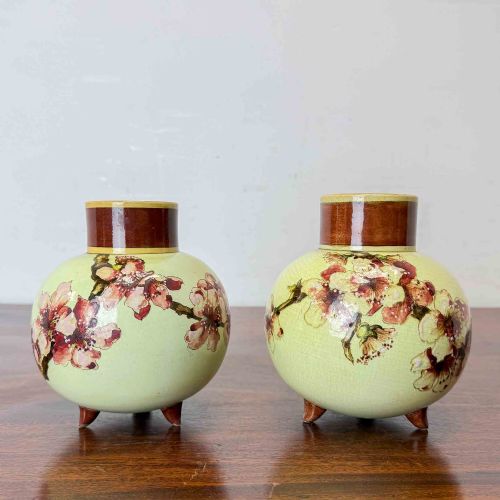
Makers utilised ceramic bodies including earthenware, stoneware, and faience, often finished with reactive glazes or hand-painted enamel decoration. Glass pieces relied on hand-blowing techniques, incorporating uranium or vaseline oxides to achieve distinctive green hues.
Surface ornamentation involved gilding, gold leaf, and engraved details on glass, alongside moulded relief work on pottery. Metal mounts in bronze or ormolu occasionally secured glass components like trumpets and epergnes.
Several Victorian pieces feature cheerful depictions of sheep, cows, and fox-hunting scenes.
Judging the work
Quality rests upon the crispness of the moulding in earthenware and the depth of colour and clarity in blown glass. Hand-painted enamel scenes show varying degrees of fine brushwork and deliberate composition.
Established potteries and named studio artists display superior glaze control and balance in form compared to standard commercial output. The preservation of original gilding and matched pairs elevates certain pieces above single survivors.
Burmantoft's Pottery·Doulton Lambeth·Sir Edmund Harry Elton·Eliza Simmance·Konstantin Stoitzner
The Victorian Green Vases Glossary
- Spill vase
- A small ceramic holder designed to store wooden spills used for lighting fires or pipes. They frequently depict animals or figurative scenes.
- Epergne
- A central tabletop centrepiece featuring multiple branching trumpets or baskets, often formed in coloured glass for holding fruit or flowers.
- Vaseline glass
- A transparent or translucent glass containing uranium dioxide, which gives a characteristic yellowish-green colour and glows under ultraviolet light.
- Table lustre
- A decorative glass or ceramic vase hung with cut crystal prisms designed to catch and reflect candlelight.
- Majolica
- A type of earthenware coated with an opaque tin-glaze and painted with brightly coloured metallic oxides.
Victorian Green Vases: Frequently Asked Questions
How do I clean antique glass vases?
Wash glass pieces gently by hand in lukewarm water using mild soap, avoiding sudden temperature changes to protect the material.
Dry them carefully with a soft lint-free cloth and keep them away from direct strong sunlight.
Were these green ceramic vases used for flowers?
Many ceramic vessels served decorative purposes on mantelpieces or sideboards rather than holding water for fresh arrangements.
Spill holders specifically held wooden fire splints near hearths, while others functioned purely as ornamental display items.
Is uranium glass safe to display?
Uranium glass emits very low levels of radiation that remain well within safe limits for normal household display.
Handling or displaying these pieces poses no risk, though they should not be used for eating or drinking.
How do I identify a Victorian piece?
Look for characteristic nineteenth-century stylistic markers, factory stamps, registration marks, or specific material traits like vaseline glass.
Matching the construction techniques and decorative motifs to the period helps confirm the date of manufacture.