




Antique Mary Gregory
Antique Mary Gregory pieces bring distinctive white enamel silhouette decoration on coloured glass into your home.

Antique Mary Gregory
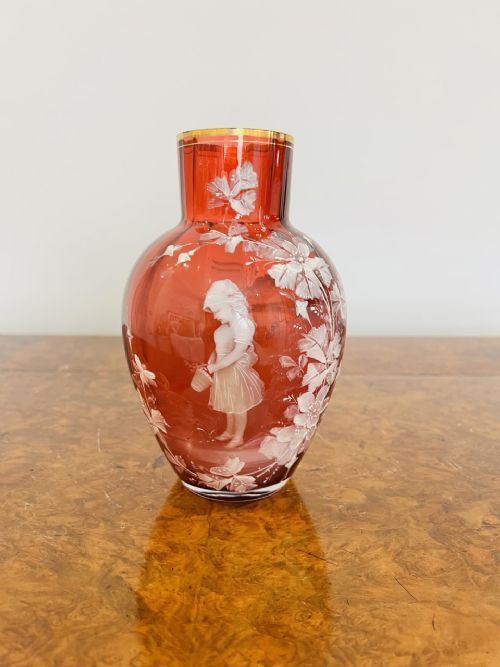
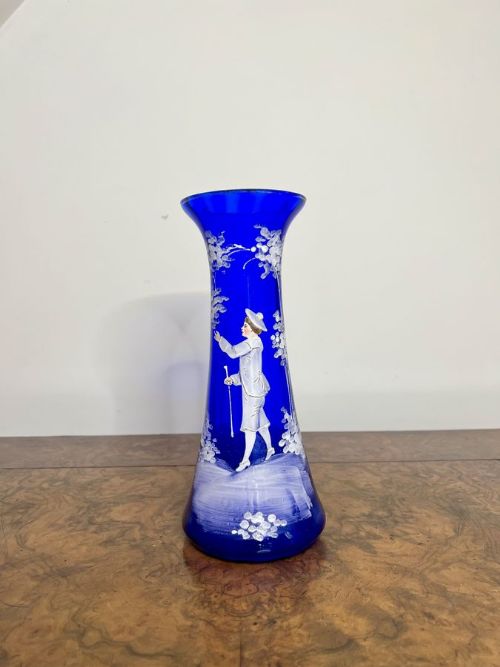
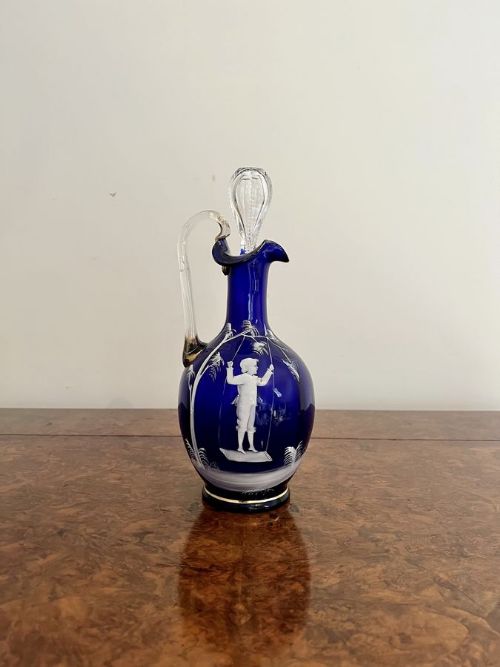
When you search for antique mary gregory, you find decorative glassware decorated with white enamel figures, most commonly children or figures in natural settings. These pieces date from the Victorian period through to the early twentieth century, spanning decades such as the eighteen sixties, eighteen eighties and nineteen hundreds.
The objects available on this page appear in various forms, ranging from vases and ewers to decanters, dressing table sets, water jugs and hip flasks. Cranberry glass is a frequent colour, alongside blue, green, amethyst, black and ruby glass.
Vases and ewers dominate the selection, often presenting single items or pairs alongside larger jugs and small tumblers. Collectors encounter these pieces in both Victorian and Edwardian styles, reflecting the manufacturing output of nineteenth century glasshouses.
How they were made
Makers produced these items using coloured glass as the base material, blown or moulded into specific shapes like decanters, vases and jugs. Some items incorporate additional elements such as sterling silver mounts alongside the glass.
Workers applied white enamel paint by hand to create the characteristic silhouette designs depicting figures. Certain examples also feature gold leaf detailing alongside the white enamel work to highlight portions of the decoration.
Listings span the Victorian and Edwardian periods, recording items made between eighteen sixty and nineteen twenty-two.
What varies in quality
The quality of antique mary gregory items depends on the precision and detail of the enamel painting applied to the glass surface. Finer examples show careful rendering of the figures and foliage, whereas simpler versions display more basic brushwork.
The richness of the base glass colour, such as deep cranberry, vibrant blue or emerald green, influences the visual impact of the piece. Additionally, larger formats and matched pairs represent more substantial examples of the glassmaker's output.
The Antique Mary Gregory Glossary
- Enamel paint
- A glossy paint applied to the surface of the glass to form the raised white figures characteristic of these items.
- Cranberry glass
- A rich pinkish-red glass created by adding gold to the molten batch, frequently used as the ground for enamel decoration.
- Ewer
- A large jug with a wide spout and handle, often produced as a decorative table or dressing item.
- Tot beaker
- A small drinking vessel designed for spirits, appearing in coloured glass with enamel motifs.
- Sterling silver
- A silver alloy containing ninety-two point five percent silver by mass, utilised for mounts and collars on flasks.
Antique Mary Gregory: Frequently Asked Questions
What is Mary Gregory glass?
Mary Gregory glass refers to nineteenth century glassware decorated with hand-painted white enamel silhouettes of children or figures. These items span various colours of glass including cranberry, blue, green and amethyst.
Peculiar to the Victorian and Edwardian eras, the name is a traditional trade term applied by collectors to this specific style of enamelled decorative glassware.
How old is Mary Gregory glass?
The pieces available date from the Victorian period through the Edwardian era, with production seen across the eighteen sixties, eighteen eighties, eighteen nineties and nineteen hundreds.
While traditional attribution often pointed to an American artist, historical evidence shows most of these enamelled wares originated in British and Bohemian glasshouses during the nineteenth and early twentieth centuries.
What colours do these pieces come in?
Cranberry glass is the most common colour found across the listings, alongside vibrant shades of blue, green, amethyst and ruby glass. Black glass also appears among the documented items.
The white enamel stands out sharply against these saturated background colours, creating the high contrast visual effect typical of the style.
How were these items used?
Many items served decorative and domestic functions on dressing tables, mantelpieces and dining sideboards. Vases, ewers, decanters, water jugs and dressing table sets formed part of everyday Victorian interiors.
Smaller objects like tumblers, tot beakers and hip flasks combined coloured glass and enamel decoration with practical utility for serving drinks.