



White Enamel Vase
A white enamel vase brings quiet structure to a room, offering clean surfaces and subtle painted detail that catch the light.
White Enamel Vase
A white enamel vase is a decorative vessel defined by its opaque white ground and surface paintwork, drawing from a rich mix of Victorian, Chinese, and European traditions found on this page.
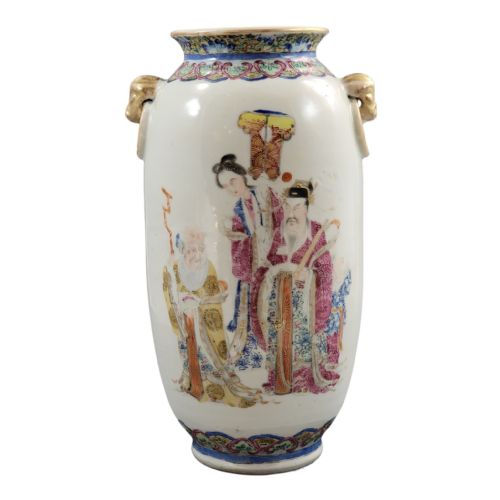
You are most likely to encounter Victorian opaline glass vessels with delicate painted floral motifs, or nineteenth-century Chinese porcelain jars decorated with raised white enamel highlights.
These pieces range from small cabinet vessels to large mantel lustres and lamps, spanning periods from the seventeenth century to the early twentieth century.
How white enamel vases were made
Makers utilised glass, porcelain, and stoneware as bodies, applying opaque white enamel coatings or working directly in white opaline glass to create a smooth, milk-like foundation.
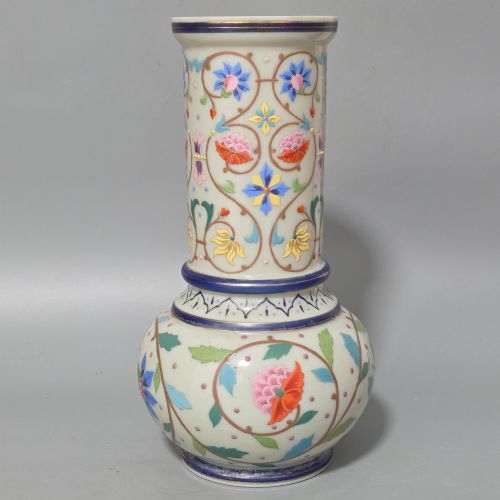
Decoration was achieved through hand-painting, often incorporating polychrome enamels, raised white enamel, and touches of gold leaf or gilt detailing fired onto the surface.
Traditional techniques span diverse workshops from European glass houses like Thomas Webb and Samson to Chinese kilns in Jingdezhen and Japanese centres of production.
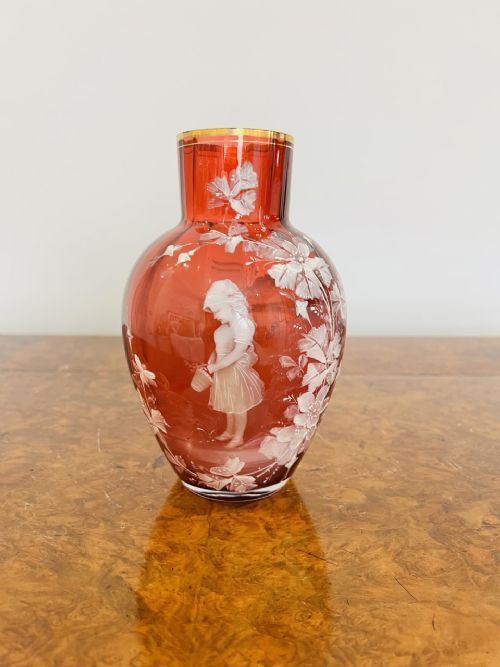
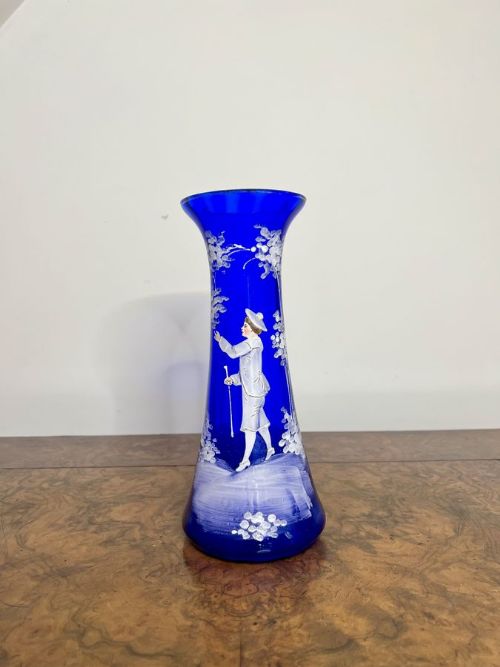
Victorian glassmakers frequently painted Victorian children with disproportionately large white pinafores, ensuring the enamel work caught the lamplight.
What varies in quality
Quality rests upon the crispness of the enamel application and the precision of the hand-painted brushwork, distinguishing finely detailed floral and figurer work from simpler output.
The choice of body material and weight also dictates value, with heavy opaline glass, resonant porcelain, and carefully applied gilt or gold leaf marking out superior examples.
Thomas Webb·Samson, Paris·Ando
The White Enamel Vase Glossary
- Opaline glass
- A pale, translucent or opaque glass developed in France during the nineteenth century, often coloured white to imitate porcelain. It provides a smooth canvas for enamel painting.
- Raised white enamel
- A technique where vitreous enamel is built up in thick, tactile layers above the surface of the glass or porcelain. This creates a distinct three-dimensional effect on floral and decorative motifs.
- Famille rose
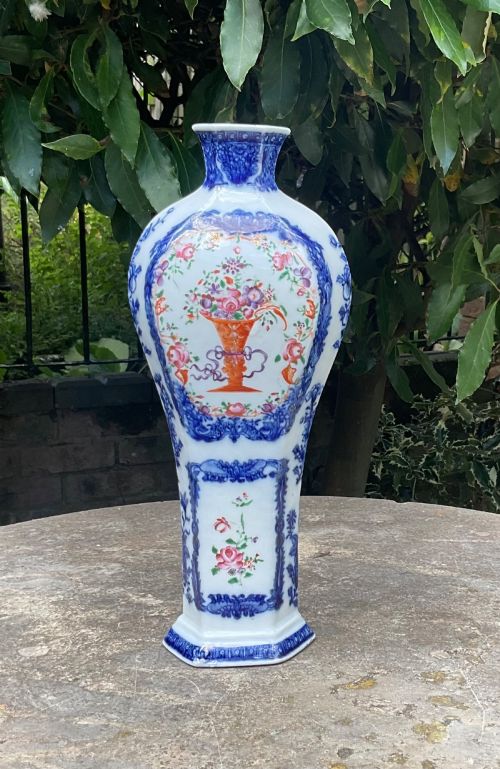
- A major palette of Chinese ceramic glazes introduced in the eighteenth century, distinguished by opaque pink or rose enamels. Pieces often incorporate white enamel highlights alongside the main polychrome design.
- Mary Gregory
- A term commonly applied to Victorian glass decorated with silhouette scenes of children painted in white enamel. These pieces typically feature cranberry, blue, or green glass grounds.
- Mantel lustre
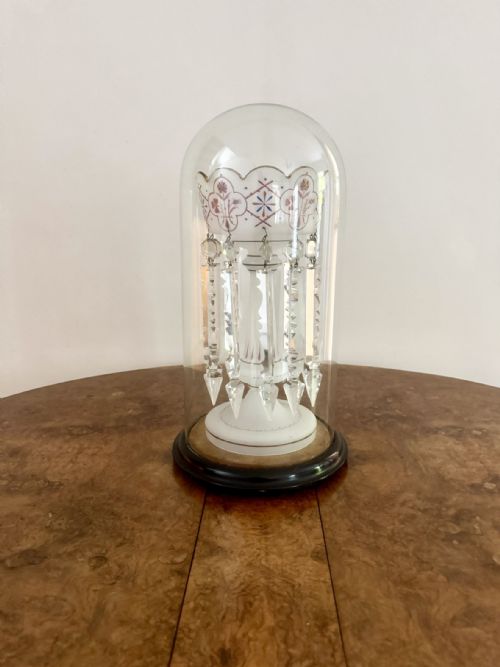
- A decorative glass vase or urn hung with cut-glass prisms, popular during the Victorian period. They frequently incorporate enamel decoration and were designed to sit on a fireplace mantelpiece.
White Enamel Vase: Frequently Asked Questions
How do I clean a white enamel vase?
Wash the vessel gently by hand using lukewarm water and mild soap, avoiding harsh abrasives that might damage the delicate surface paintwork.
Take special care around raised enamel or gilt details, drying the piece immediately with a soft cloth to protect the finish.
Are these vases suitable for holding fresh flowers?
Many of these antique vessels are primarily decorative and prone to moisture damage if filled with water, particularly those made from cased glass or fitted with delicate painted exteriors.
It is safer to use a hidden plastic liner inside the vase if you intend to display fresh stems.
How can I tell Victorian from Chinese pieces?
Victorian examples frequently utilise glass or opaline grounds with characteristic European floral or figural enamel work, whereas Chinese pieces typically employ porcelain bodies decorated with traditional motifs like dragons or famille rose palettes.
Examining the base for kiln marks or stylistic clues helps confirm the exact origin and period of manufacture.
What is the best way to display a white enamel vase?
Position the vessel in a spot with indirect natural light to accentuate the smooth texture of the white enamel without risking thermal shock or fading from harsh direct sun.
Pairing the piece with simple surroundings allows the painted details and form to stand out clearly in the room.