
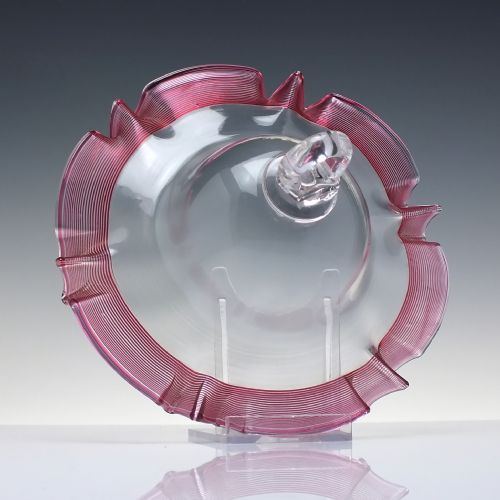

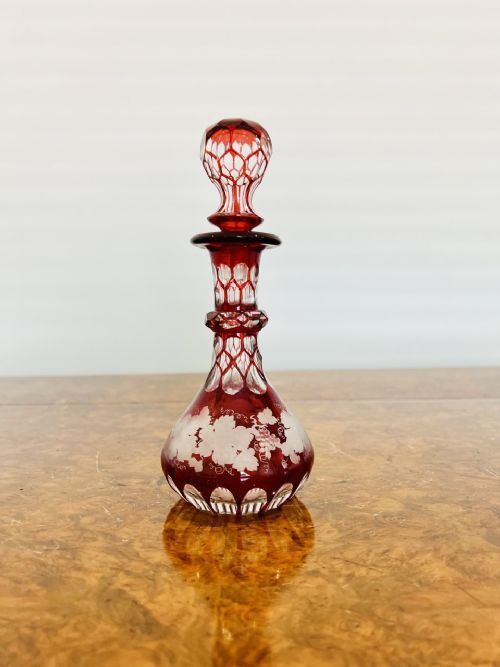


Cranberry Glass Jar
A cranberry glass jar brings deep, translucent colour to a dressing table or dining room, combining rich glassmaking traditions with period metalwork.

Cranberry Glass Jar
A cranberry glass jar spans several functional forms, appearing frequently as biscuit barrels, dresser jars, and preserve dishes from the Victorian and Edwardian eras. These pieces bridge domestic utility and display, designed to hold sweet treats on the sideboard or cosmetics on the dressing table.
The most common examples on this page date from the late nineteenth and early twentieth centuries, particularly the Victorian and Edwardian periods. Biscuit barrels dominate the selections, often fitted with silver-plated or sterling silver mounts and swing handles.
Smaller variants include trinket and vanity jars, which frequently incorporate hallmarked silver lids from silversmithing centres such as Birmingham and Chester. Preserve dishes and jam pots complete the range, occasionally resting on metal stands or paired with cut crystal elements.
How they were made
The distinctive coloration of a cranberry glass jar relies on the addition of gold chloride to the molten glass batch during production. This artisan technique yields a characteristic pinkish-red hue that varies in density across different manufacturing periods.
Metal components were frequently integrated into the finished glassware, utilising silver plate, sterling silver, or gilt metal mounts. Lids and collars were often secured with hinged mechanisms or screw fittings, complemented by decorative enamel work or facet cutting on the glass body.
Several dressing table jars feature painted angels watching over your morning routine from beneath silver lids.
What varies in quality
Quality in these pieces is dictated by the depth and evenness of the glass colour, alongside the crispness of any facet cutting or overlay work. Superior examples display a rich, uniform tone throughout the vessel without muddiness in the red hue.
The standard of the accompanying metalwork heavily influences the overall execution, distinguishing standard production items from finer fitted pieces. Hallmarked silver mounts, intricate enamel detailing, and robust hinged lids separate standard domestic wares from high-end dressing table accessories.
W.C. Griffiths·Synyer & Beddoes·William Aitken·Moser
The Cranberry Glass Jar Glossary
- Biscuit barrel
- A covered container designed for storing dry biscuits or cookies, typically featuring a bail handle and a metal lid. These vessels were popular centrepieces on Victorian and Edwardian dining tables.
- Sterling silver
- An alloy consisting of silver and other metals, standardly containing a high proportion of pure silver. Items made with this material often bear official town assay marks and date letters.
- Silver plate
- A base metal layer coated with a thin layer of silver through electroplating or older manufacturing methods. This technique allowed makers to produce decorative mounts and lids at a lower cost than solid silver.
- Mary Gregory glass
- Glassware decorated with hand-painted white enamel silhouettes, usually depicting children in pastoral settings. This style appears frequently on Victorian decorative jars and jugs.
- Cranberry glass
- A type of transparent glass coloured by the inclusion of gold in the glass batch. The resulting shade ranges from pale pink to deep ruby red.
Cranberry Glass Jar: Frequently Asked Questions
What is a cranberry glass jar used for?
These vessels served various domestic and vanity purposes, ranging from the storage of biscuits and preserves to holding dressing table cosmetics and trinkets.
Larger versions like biscuit barrels sat on dining sideboards, while smaller jars remained in the bedroom for daily use.
How do I date a cranberry glass jar?
Dating relies on stylistic clues, glass manufacturing techniques, and particularly metal hallmarks found on silver lids or mounts.
Assay office stamps and maker marks on silver components provide exact years of manufacture for pieces from the Victorian and Edwardian eras.
Are these jars made of solid silver?
The glass bodies are invariably glass, but the accompanying lids, collars, and handles vary between sterling silver and silver plate.
Checking for hallmarks on the metal components will confirm whether the mount is solid sterling silver or plated base metal.
How do I clean a cranberry glass jar?
Gentle washing in lukewarm water with mild soap preserves both the glass surface and any delicate metal mounts.
Avoid submerging pieces with fitted hinged lids or delicate enamel work for extended periods to protect the internal joins and decoration.