


Glass Dressing Table Pot
A glass dressing table pot brings a touch of period refinement to a dressing table, holding small accessories inside cut or coloured vessels.

Glass Dressing Table Pot
When you search for a glass dressing table pot, you encounter small vanity containers designed to hold cosmetics, trinkets, or pins. These objects appear in forms such as trinket boxes, vanity jars, and powder boxes spanning the Victorian, Edwardian, and Art Deco periods.
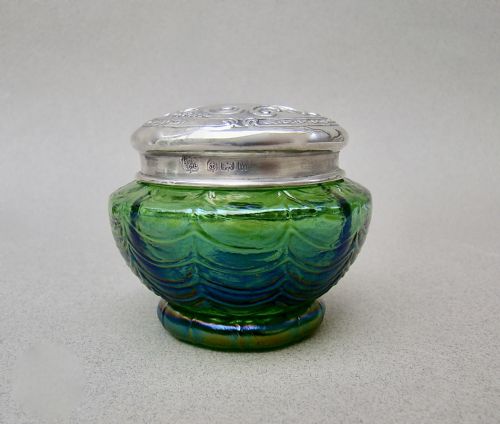
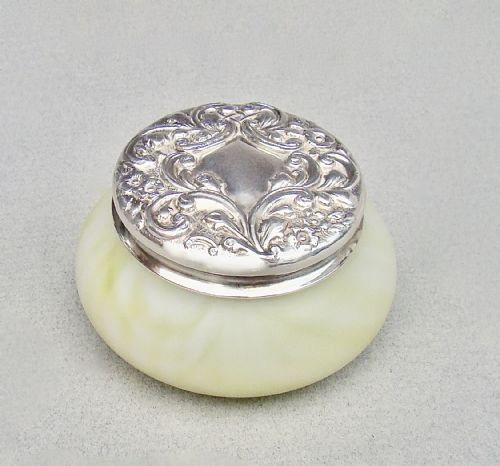
The most common examples on this page combine glass bodies with sterling silver lids, often bearing hallmarks from Birmingham, Chester, or London. Pieces range from small rouge pots to large crystal and silver boxes measuring up to seven inches across.
Origins stretch from English workshops to 19th-century French makers, encompassing styles from Art Nouveau and Georgian designs to Mid-Century Modern accessories.
Materials and Construction
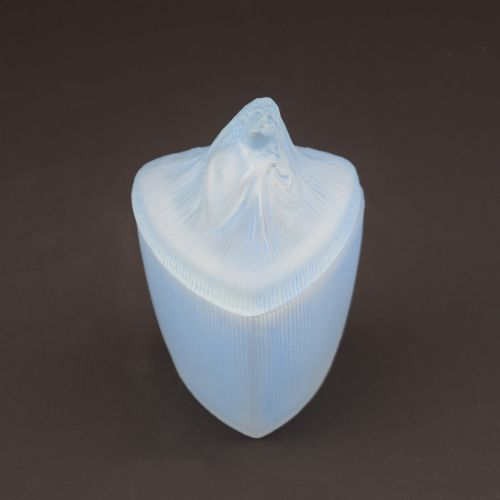
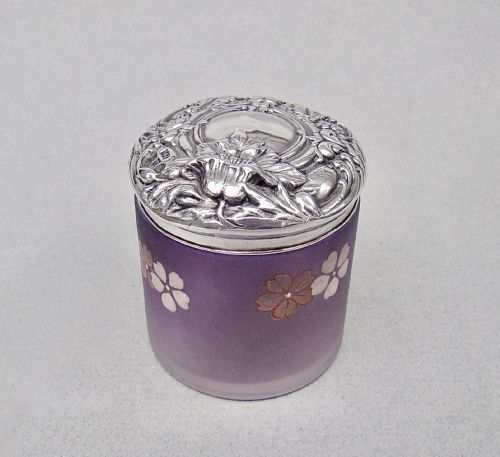
The bodies utilise heavy cut glass, crystal, or coloured glass such as cranberry, Bristol blue, satin, and amethyst overlay. Some vessels incorporate frosted finishes or moulded designs, while others feature hobnail cutting.
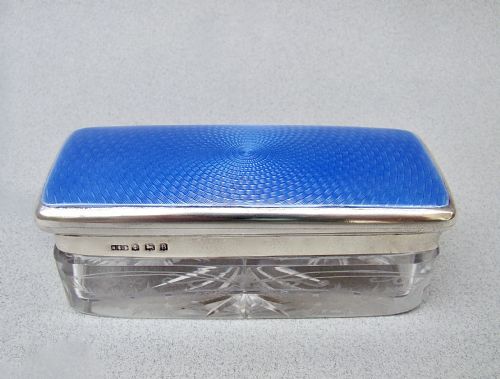
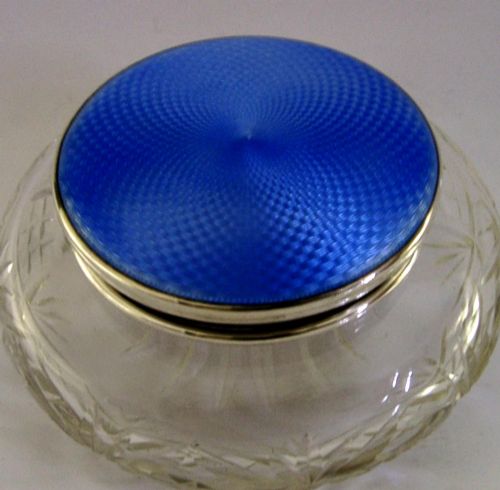
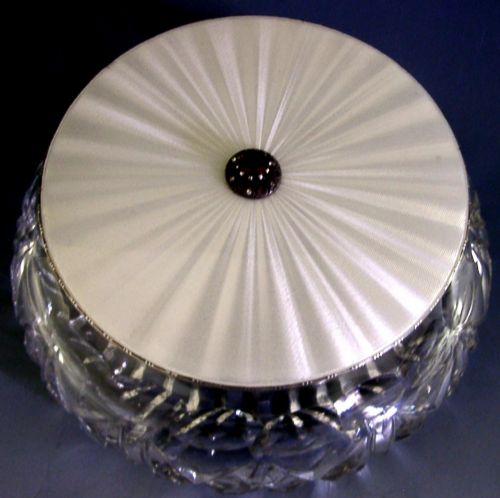
Lids and mounts are formed from sterling silver, frequently paired with guilloche enamel, white or blue enamel, and tortoiseshell inserts. Metalwork components are stamped or cast before receiving maker's marks and town assay stamps.
Some pots are deep enough to hide secrets, while others were built purely to look pretty holding a dusting of rouge.
Distinctions in Quality
Quality rests upon the depth and precision of the glass cutting, the weight of the crystal body, and the complexity of the silver mount. Thick cut crystal with crisp facets sits above simpler moulded vessels.
Enamel work introduces another tier, where engine-turned guilloche patterns under translucent coloured enamels require skilled craftsmanship that elevates the piece beyond standard silver-topped jars.
A. J. Pepper & Co·Henry Clifford Davis·A. Bromet & Co·Rene Lalique·Jonathan Douglas·Asprey
The Glass Dressing Table Pot Glossary
- Guilloche enamel
- A decorative technique involving intricate mechanical engraving beneath a translucent layer of coloured enamel. This method creates geometric patterns that catch the light.
- Cut glass
- Glass shaped by grinding and polishing facets onto the surface to create reflective patterns. It adds weight and brilliance to dressing table accessories.
- Cranberry glass
- A rich red glass coloured by the addition of gold chloride during the melting process. It appears frequently in Edwardian vanity jars.
- Hallmark
- A series of official marks stamped on silver items indicating the metal standard, assay office, and year of manufacture. These stamps help date individual pieces accurately.
- Rouge pot
- A small container specifically sized for holding rouge cosmetics. They often feature fitted silver lids over coloured or overlay glass.
Glass Dressing Table Pot: Frequently Asked Questions
What were glass dressing table pots used for?
These vessels held items like pins, rings, powder, and rouge on dressing tables.
Their lids kept cosmetics clean and protected small trinkets from dust.
How can I tell an Edwardian pot from an Art Deco one?
Edwardian examples often feature flowing floral motifs, Cranberry glass, and ornate silver repousse work.
Art Deco pieces display geometric guilloche enamel, clean lines, and symmetrical colour schemes.
What is guilloche enamel?
It is a decorative technique where metal is engine-turned with precise patterns before translucent enamel is applied.
This creates a shimmering, patterned background beneath coloured glass coatings.
Are all the lids made of silver?
Many lids consist of sterling silver, often marked with Birmingham or Chester hallmarks.
Others incorporate tortoiseshell or coloured enamel mounted within a silver frame.