


Edwardian Silver Vanity Jar
An edwardian silver vanity jar brings dressing table elegance into focus, pairing sterling lids with heavy glass or crystal bodies.
Edwardian Silver Vanity Jar
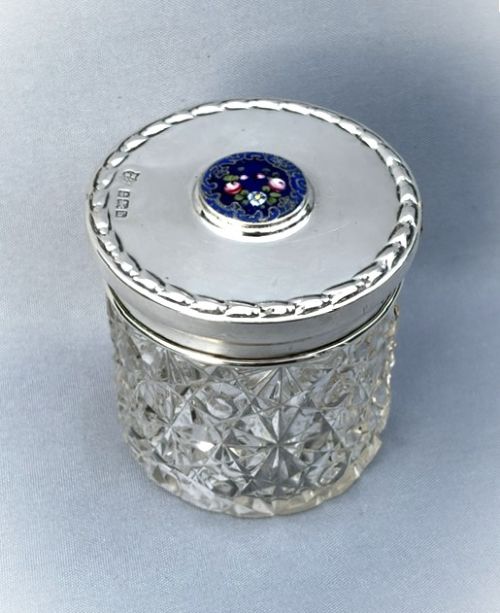
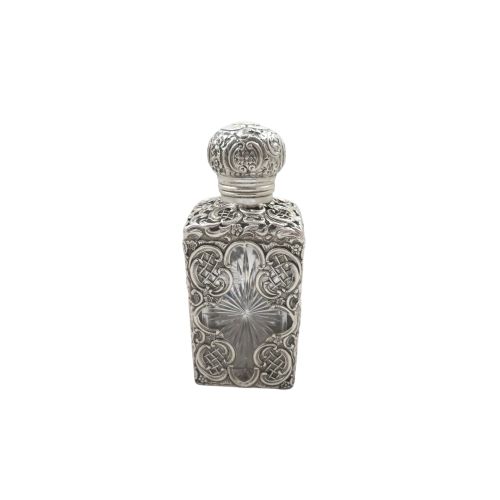
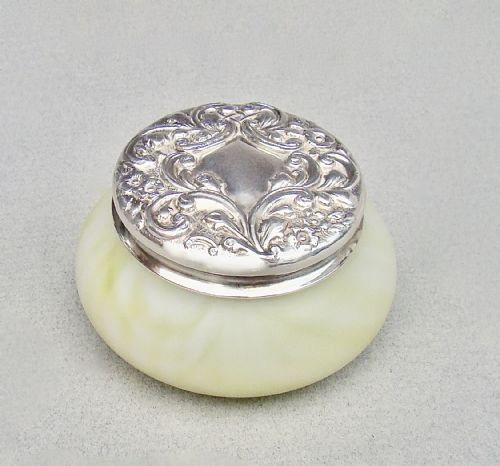
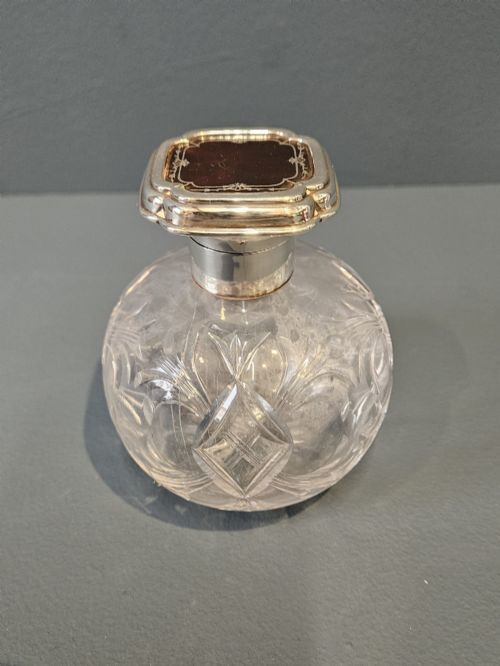
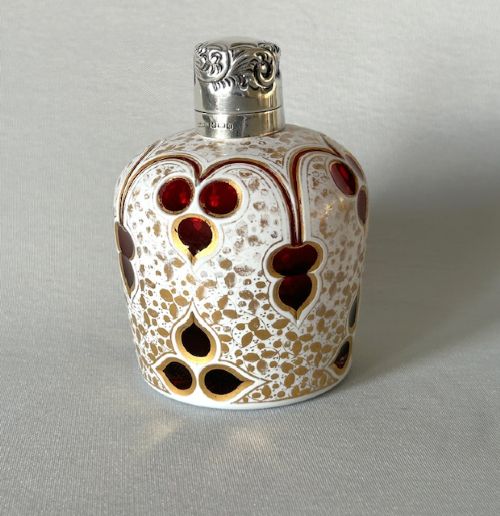
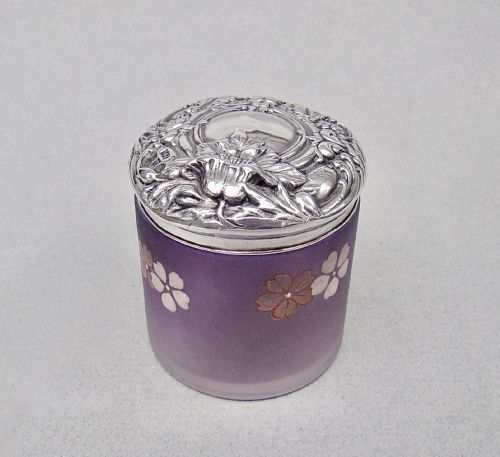
An edwardian silver vanity jar encompasses lidded pots, trinket boxes, and perfume bottles designed for the dressing table. Most examples combine sterling silver mounts with cut glass, crystal, or satin glass bodies.
The pieces emerge predominantly from the Edwardian period and adjacent decades spanning the late Victorian era through the Art Deco years. Forms range from heart-shaped boxes and globular scent bottles to large lidded bowls.
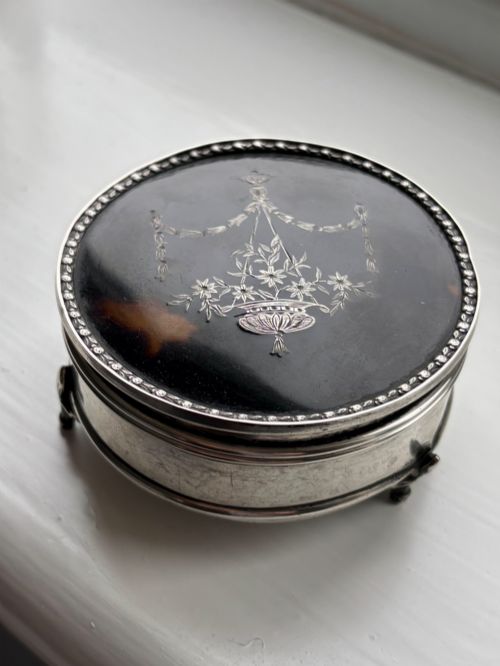
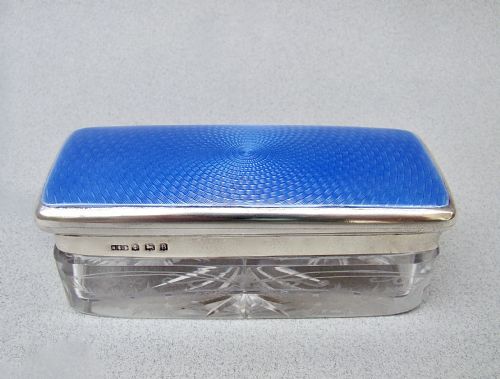
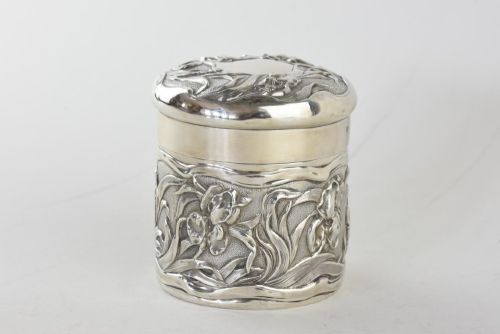
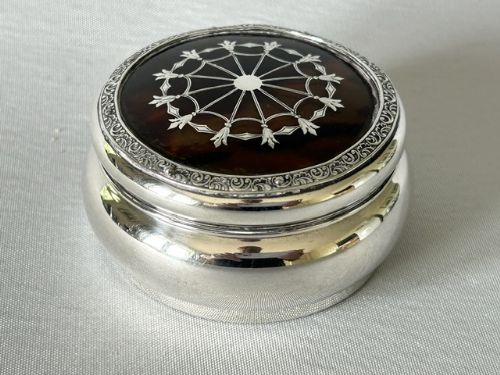
Makers often embellished the sterling silver lids with enamel, tortoiseshell, faux tortoiseshell, or intricate repousse work. Buyers encounter both standalone jars and matched pairs intended for dresser sets.
How they were made
Silversmiths shaped the lids from sterling silver using stamping, repousse, and piquet work, frequently adding coloured enamel or inset tortoiseshell. Assay office hallmarks stamped into the metal record the year and town of manufacture.
Glassmakers produced the vessels through mould-blowing and heavy hand-cutting to create deep facets on cut crystal and glass bodies. The silver mounts were then secured directly to the glass rims or threaded necks.
Some gentleman's cologne bottles included integrated locks, ensuring personal scents remained secure from inquisitive valets.
What varies in quality
The weight and depth of the crystal cutting distinguish simpler glass vessels from superior creations. Thicker glass blanks and crisper facets produce a heavier, more resonant object.
The intricacy of the lid decoration dictates overall refinement, separating plain silver covers from those featuring hand-painted enamel, elaborate repousse scenes, or detailed piquet inlay.
Ollivant & Botsford·Henry Clifford Davis·Goldsmiths and Silversmiths Company·A. Bromet & Co·Asprey & Co·Barnsley & Co·Omar Ramsden·Henry Matthews·R. Comyns
The Edwardian Silver Vanity Jar Glossary
- Repousse
- A metalworking technique where the silversmith hammers the design from the reverse side to create raised relief ornamentation on the silver lid. This method allowed makers to form floral and abstract motifs.
- Pique
- An ornamental technique involving small pins or strips of gold and silver inlaid into a tortoiseshell surface to form geometric or floral patterns. It appears frequently on dressing table box lids.
- Guilloche
- An intricate mechanical engraving technique that etched precise repetitive patterns into metal before applying translucent enamel. The underlying pattern shows clearly through the coloured coating.
- Hallmark
- A set of official marks stamped onto sterling silver items indicating the maker, assay office, and year of production. These stamps verify the metal standard and provenance.
- Satin glass
- A type of art glass treated with an acid bath to produce a velvety, matte finish rather than a high gloss. It provides a soft texture on vanity jars and trinket pots.
Edwardian Silver Vanity Jar: Frequently Asked Questions
What is an edwardian silver vanity jar used for?
These vessels held cosmetics, pins, trinkets, and perfumes on dressing tables during the early twentieth century. Their fitted lids kept contents protected from dust and moisture.
Today, collectors use them on modern dressing tables or bathroom shelves to store small daily accessories and jewellery.
How do I date an edwardian silver vanity jar?
Dating relies primarily on the hallmarks stamped onto the sterling silver lids. These marks include assay office symbols, maker's marks, and date letters corresponding to specific years.
Stylistic elements like Art Nouveau curves or Art Deco geometric lines also help assign pieces to specific decades.
Are the glass bodies always cut crystal?
Glass bodies vary significantly across different pieces and manufacturers. While many feature heavy cut crystal or cut glass, others utilise satin glass, cranberry glass, or smooth coloured glass.
Plain glass and moulded glass variants also appear alongside the more complex crystal designs.
How do I care for tortoiseshell and silver lids?
Tortoiseshell requires gentle cleaning with a soft, dry cloth to avoid scratching the polished surface. Moisture should be kept away from the organic material and silver hinges.
Silver mounts respond well to occasional polishing with a specialised cloth, taking care to avoid contact with surrounding glass or enamel.