


Cut Glass Jewellery Box
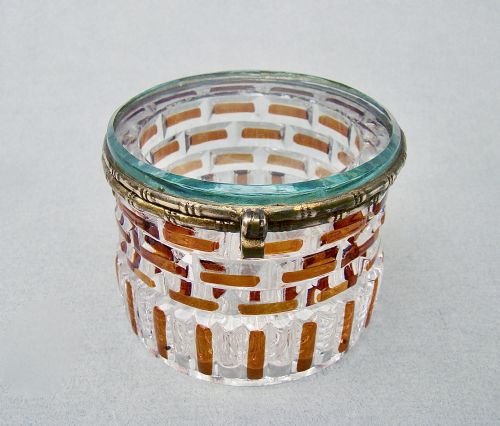
These cut glass jewellery box examples bring heavy crystal and precious metal mounts together to hold small treasures on a dressing table.
Cut Glass Jewellery Box
A cut glass jewellery box combines heavy moulded or wheel-cut crystal vessels with fitted metal lids, mounts, and collars. The search phrase covers functional dressing table containers designed to keep rings, brooches, and trinkets safe.
Most pieces seen here belong to the Victorian and Edwardian eras, alongside French nineteenth-century examples and Art Deco designs. Common forms range from simple rectangular trinket boxes to heart-shaped containers and scent bottle caskets.
Materials and Construction Methods
Makers utilised thick lead crystal and cut glass, applying deep geometric or floral wheel-cuts to refract light through the heavy walls. This glass body was then paired with cast or stamped metal components.
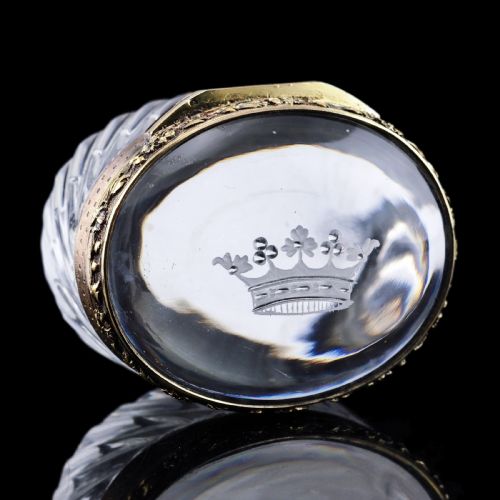
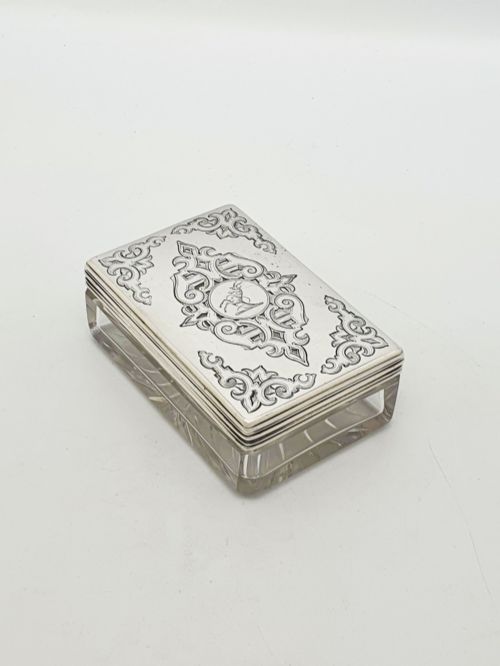
Mounts in sterling silver, silver gilt, brass, and gilt bronze secure the hinged lids and rims, often fastened directly to the glass with internal collars and pins.
Some boxes double as secret tantalus systems, hiding scent bottles away from thirsty guests.
Assessing Quality and Execution
Quality rests upon the crispness of the glass cutting and the weight of the crystal vessel. Deeper, sharper facets and clearer material indicate superior production standards.
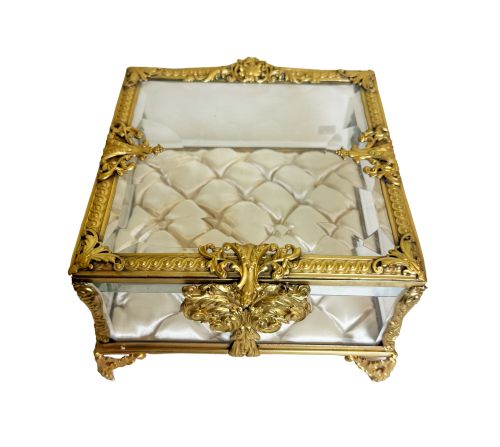
The sophistication of the metal mounts further separates standard items from finer works. Cast or chased bronze frames and heavy silver lids with detailed coronets or hallmarks elevate the piece.
Posen·William Comyns
The Cut Glass Jewellery Box Glossary
- Cut Glass
- Glass decorated by grinding facets or patterns into the surface using rotating wheels. This technique creates sharp edges and brilliant light refraction across the vessel.
- Ormolu
- Gilded bronze or brass mounts applied to furniture and decorative objects. The process involves coating base metals in a gold amalgam to produce a rich yellow finish.
- Tantalus
- A locking wooden or metal frame holding decanters or bottles visible but secure. In combination pieces, it links a storage compartment with glass scent bottles.
- Sterling Silver
- An alloy consisting of pure silver and other metals, typically copper, standardly marked to guarantee its metal content. It forms the hinged lids and rims on many refined boxes.
Cut Glass Jewellery Box: Frequently Asked Questions
How were these boxes originally used?
These containers sat upon dressing tables and sideboards to hold daily rings, pins, and small valuables. Wealthy owners also used fitted caskets for travel or to store delicate scent bottles.
Their heavy construction protected fragile items from dust and knocks while displaying the sparkling crystal contents in domestic interiors.
What metals are typically found on the lids?
Mounts and hinged lids commonly appear in sterling silver, marked with period hallmarks that indicate the assay office and year of production. Other examples feature cast brass, silver gilt, and gilt bronze frames.
French pieces frequently utilise heavy ormolu and bronze mounts, whereas British versions lean toward assayed silver tops.
How do I date an Edwardian cut glass box?
Edwardian pieces generally date from the early twentieth century, showing lighter, refined silver mounts compared to heavier Victorian styles. Hallmarks stamped onto the silver components provide exact verification of the year.
Stylistic cues also help, as Edwardian items often incorporate neoclassical motifs or heart shapes alongside clean geometric cutting.
Are Baccarat boxes marked?
Maker marks on older Baccarat glass often appear as moulded or acid-etched signatures, though many nineteenth-century pieces rely on distinct bronze mount styles and crystal weight for attribution. Unsigned items are frequently identified through their characteristic amber or clear heavy crystal blanks and French cast mounts.
Documentation or archival records from the period help confirm these workshop origins when physical signatures are absent.