


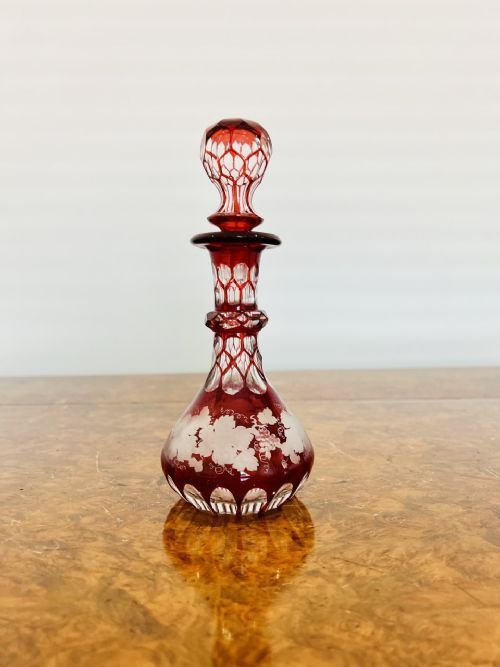


Vintage Red Glass Jar
These vintage red glass jar pieces are decorative containers of rich colour and notable age, sought for their striking presence and period craftsmanship.
Vintage Red Glass Jar
The selections on this page most commonly include nineteenth-century and early twentieth-century examples, often featuring decorative elements such as enamel work or fitted sterling silver lids.
Forms vary from utilitarian apothecary carboys to delicate dressing table jars, reflecting the broad domestic and medical applications of coloured glassware during these periods.
How they were made
These items rely on traditional glassblowing techniques, incorporating metallic oxides into the molten batch to achieve deep red, ruby, or cranberry tones. Artisans shaped the vessels by hand, resulting in subtle variations in thickness and form across individual pieces.
Many examples incorporate secondary materials, combining the coloured glass with sterling silver mounts, enamel decoration, or ebonised wood bases to elevate their utility and appearance.
Vintage Red Glass Jar Retail Price Guide 2026
Typical asking prices for vintage red glass jar among the pieces listed under this phrase on Sellingantiques today, from the lower quarter to the upper quarter. They describe what is for sale here now, not the wider market.
Apothecary carboys once sat in chemist windows glowing with coloured liquid, effectively acting as glowing billboards for Victorian remedies.
What varies in quality
Quality rests upon the depth and saturation of the glass colour, alongside the crispness of any applied enamel or hand-painted details. Heavier, more resonant metal mounts and well-fitted silver lids distinguish finer production from simpler wares.
The integrity of the glass itself, free from excessive bubbles or distortion, marks the division between standard utility items and superior decorative specimens.
The Vintage Red Glass Jar Glossary
- Cranberry glass
- A rich pinkish-red glass created by adding gold chloride to the molten batch. It gained popularity during the Victorian era for tableware and decorative vessels.
- Apothecary carboy
- A large glass vessel used historically in shop windows to hold medicinal liquids. These large jars typically feature heavy glass construction designed for commercial use.
- Sterling silver
- A silver alloy containing 92.16 percent pure silver and 7.84 percent other metals, commonly used for the lids and mounts of finer Victorian boxes.
- Mary Gregory
- A style of white enamel decoration depicting Victorian children amidst foliage, often applied to dark red or cranberry glass surfaces.
Vintage Red Glass Jar: Frequently Asked Questions
How do I date a red glass jar?
Dating relies on examining the manufacturing marks, pontil scars, and associated metal mounts. Victorian and Edwardian examples often feature distinct silver hallmarks or characteristic enamel styles.
Comparing the weight and depth of the glass colour against documented period pieces helps narrow down the decade of production.
Were these jars used for food?
Many examples, particularly biscuit barrels, were designed to hold dry foodstuffs on the dining table. Other smaller jars served as containers for trinkets or perfumes rather than edibles.
Checking the interior for staining or wear often reveals the original contents and practical function of the vessel.
How should I clean my jar?
Gentle washing with warm water and mild soap preserves the delicate enamel and silver components. Avoid harsh abrasives that might scratch the surface of the antique glass.
Dry thoroughly with a soft cloth, taking particular care around any fitted metal rims or hinges.
What is cranberry glass?
Cranberry glass is a transparent, red-toned material coloured with gold. It became a staple of Victorian interior decoration.
The shade can vary from a light pinkish hue to a deep, rich red depending on the concentration of gold used in the melt.