
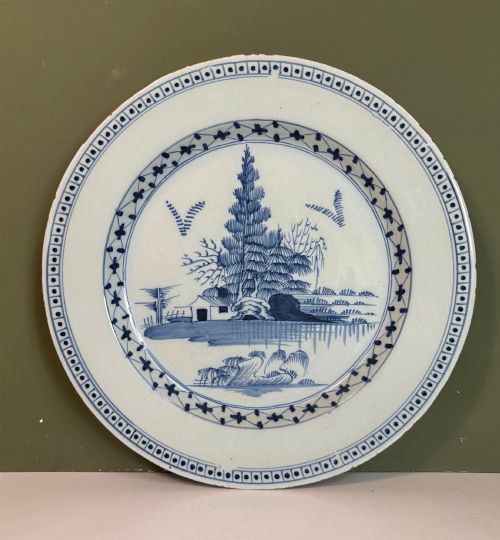

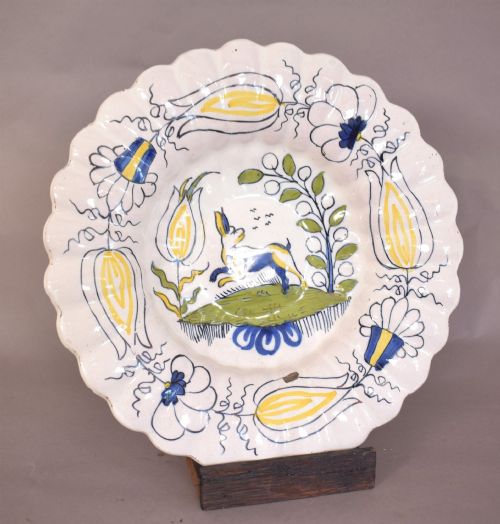
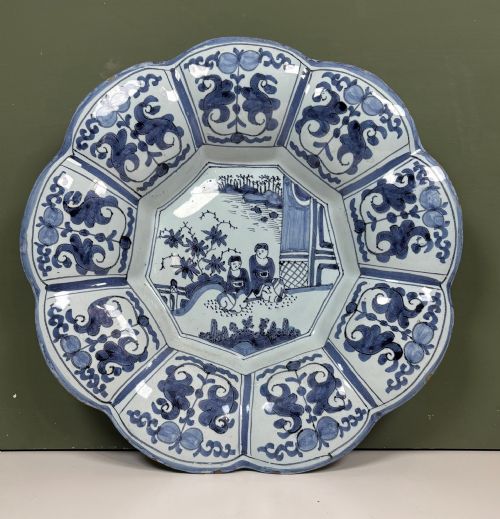
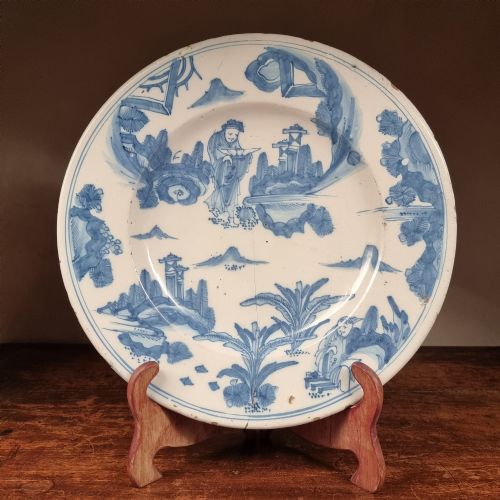
Antique Delft Ceramic Dish
An antique delft ceramic dish brings hand-painted tin-glazed earthenware into domestic interiors through blue and white or polychrome plates, chargers, and bowls.
Antique Delft Ceramic Dish
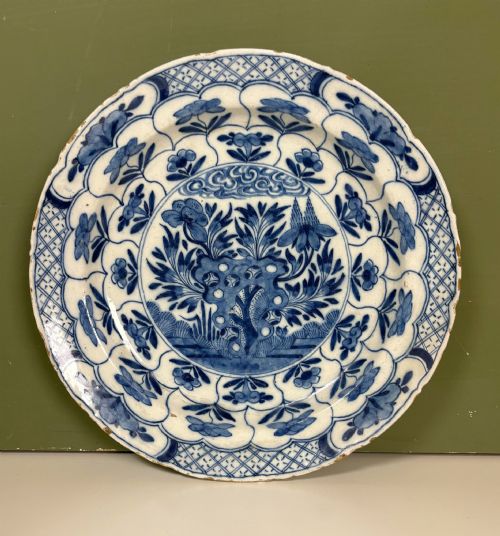
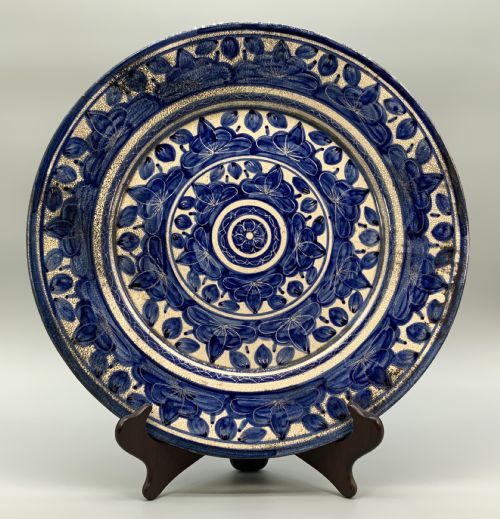
An antique delft ceramic dish encompasses tin-glazed earthenware chargers, plates, and bowls originating primarily from the seventeenth and eighteenth centuries. These items serve decorative and utilitarian functions, spanning Dutch, English, and continental European workshops.
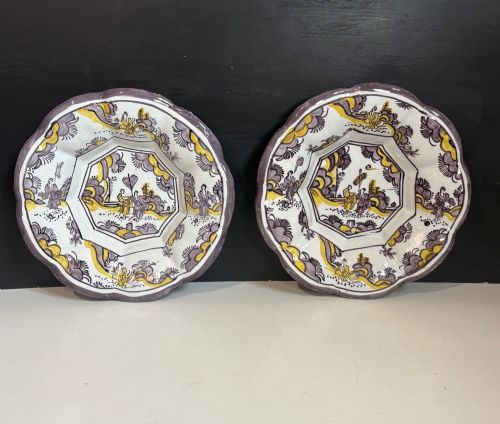
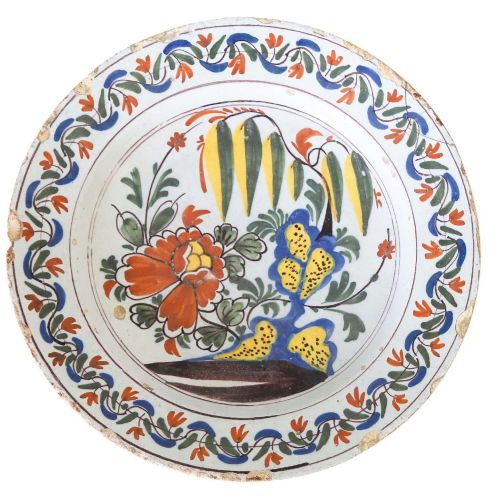
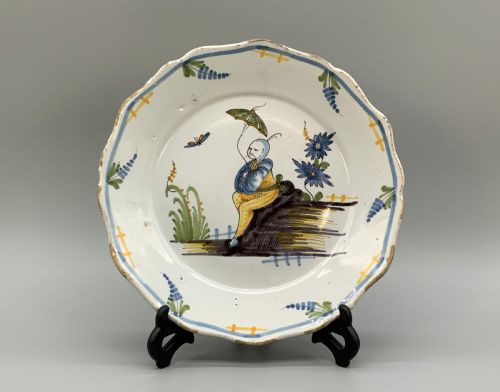
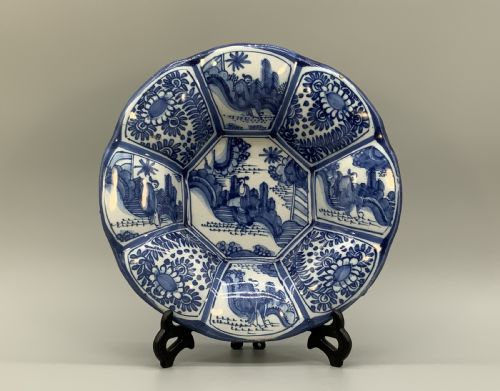
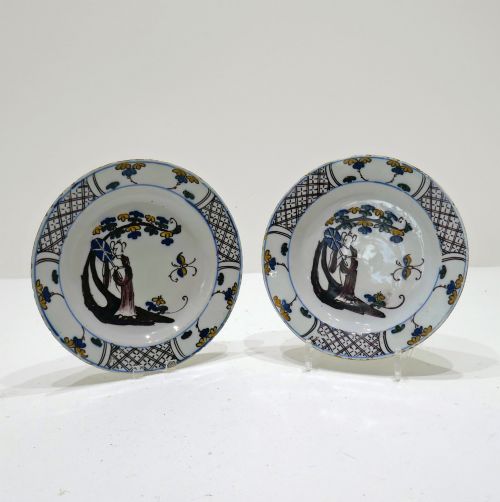
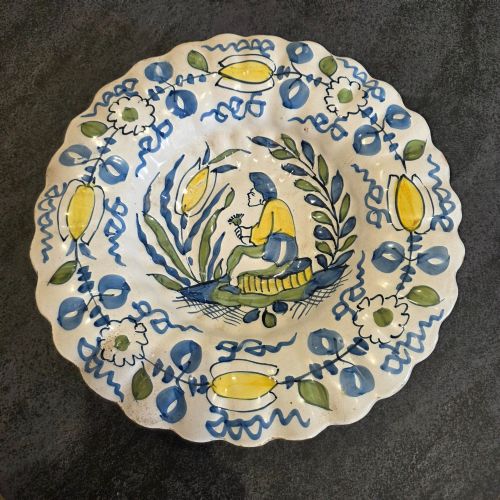
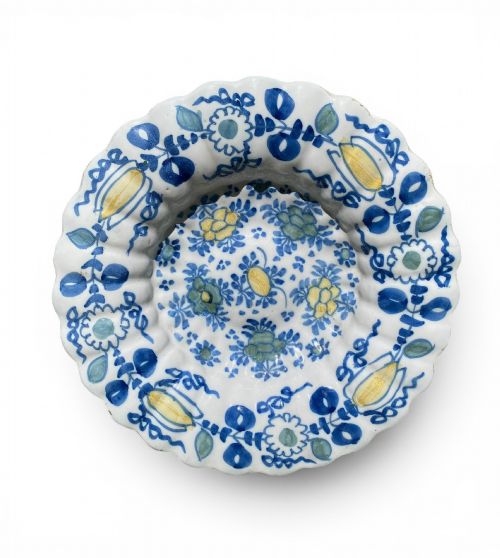
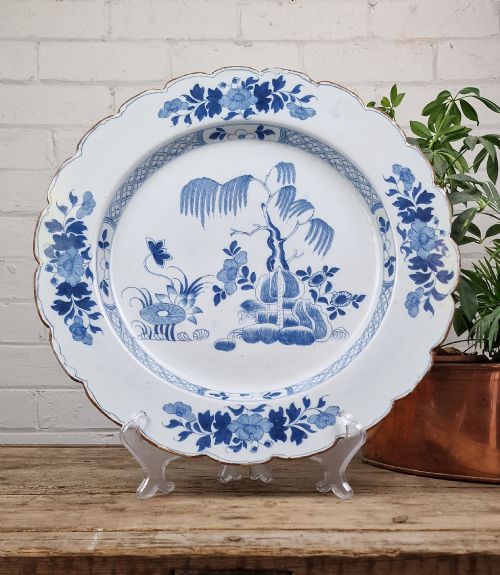
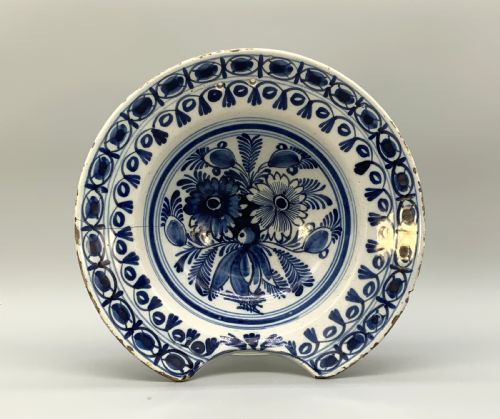
The most common forms on this page are large chargers and shallow plates displaying traditional blue and white painting or vibrant polychrome palettes. Collectors encounter varied profiles, including lobed dishes, barber's bowls, and Kraak style iterations.
How they were made
Potters shaped earthenware bodies which received an opaque white tin glaze to create a smooth surface for painting. Artisans applied cobalt pigment, manganese, and yellow directly onto the unfired or raw glaze.
The pigments sank into the liquid glaze during the single or double firing process, producing soft outlines and distinctive tonal depths across the painted surface.
Listings feature tin-glazed earthenware spanning the seventeenth and eighteenth centuries, executed in blue and white or polychrome.
What varies in quality
Quality rests upon the crispness of the hand-painted decoration, the control of the cobalt or polychrome pigments, and the stability of the tin glaze across the earthenware body. Superior examples display confident brushwork and balanced compositions, whether following Chinoiserie motifs or geometric floral designs.
The depth of the glaze and the complexity of the form, such as lobed edges or deep charger profiles, distinguish standard domestic ware from more ambitious production.
The Antique Delft Ceramic Dish Glossary
- Charger
- A large decorative plate, typically exceeding thirty centimetres in diameter, designed for display on walls or dressers.
- Tin glaze
- An opaque white glaze containing tin oxide applied to earthenware to provide a uniform background for painting.
- Polychrome
- Decoration utilising multiple colours, such as manganese, yellow, and blue, rather than a single pigment.
- Kraak style
- A decorative scheme inspired by Chinese export porcelain featuring segmented panels and central motifs.
- Barber's bowl
- A specialised dish featuring a semicircular cut-out designed to fit against a customer's neck during shaving.
Antique Delft Ceramic Dish: Frequently Asked Questions
How are antique delft dishes dated?
Dating relies upon stylistic markers, palette choices, and changes in tin glaze composition over time. Seventeenth-century pieces often reflect Kraak influences, while eighteenth-century items incorporate specific English and Dutch floral patterns.
Physical characteristics of the earthenware body and glaze shrinkage also help historians narrow down the manufacturing decade.
What is the difference between a plate and a charger?
Plates are smaller tableware items used for dining, whereas chargers are substantially larger dishes meant primarily for display on furniture or walls.
Chargers offer a wider surface area, which allowed painters to execute more complex landscape or floral compositions.
How do I care for tin-glazed earthenware?
Tin-glazed earthenware requires gentle handling because the ceramic body is porous and the glaze can chip along the edges. Keep pieces away from excessive moisture and avoid harsh chemical cleaners.
Dust them softly with a dry cloth and ensure wall mounts or display stands distribute weight evenly.
Where were most delft dishes made?
Production centred heavily in the Netherlands, particularly in Delft, alongside significant manufacturing hubs in England such as London, Bristol, and Lambeth.
Continental European potteries in France and Spain also produced distinct regional variants of tin-glazed earthenware.