


Tin Glaze Pottery Charger
A tin glaze pottery charger is a broad earthenware plate carrying opaque white tin enamel and painted decoration, prized for centuries as bold wall or table display.
Tin Glaze Pottery Charger
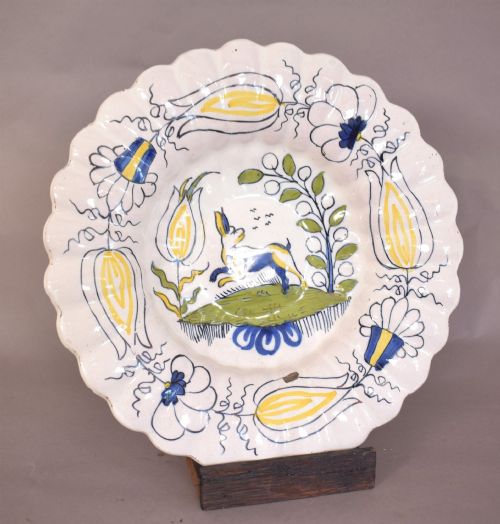
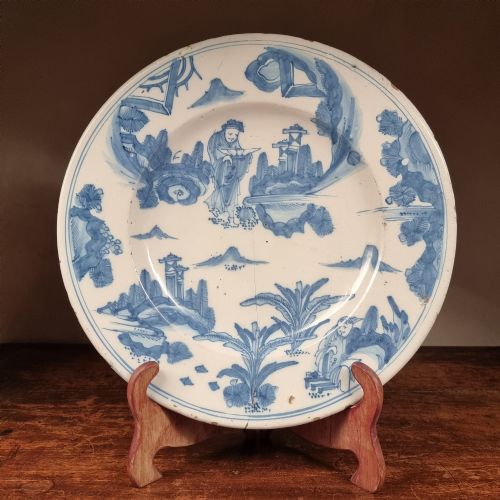
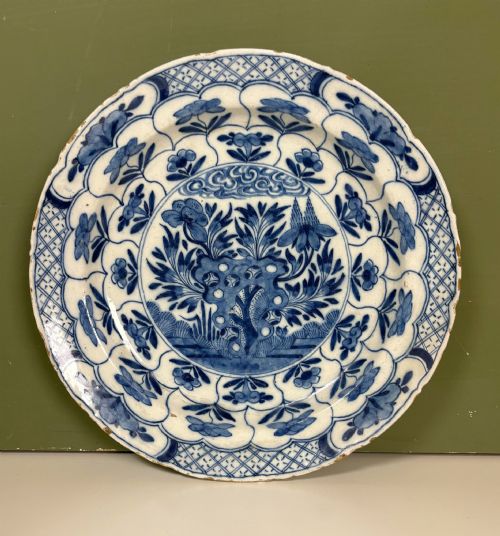
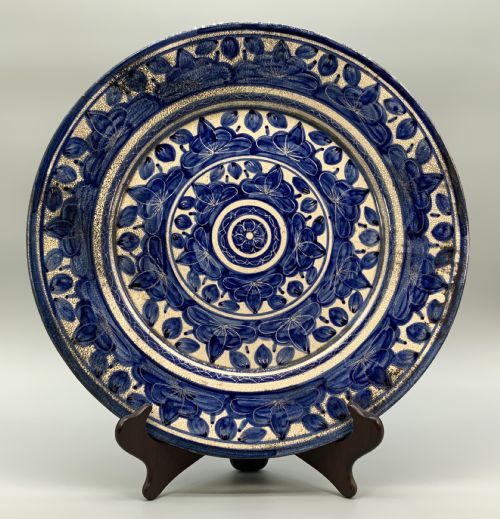
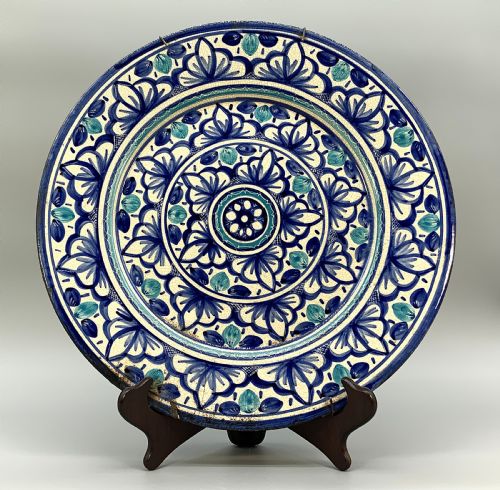
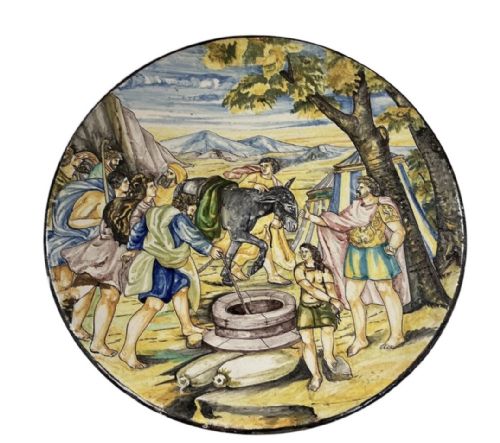
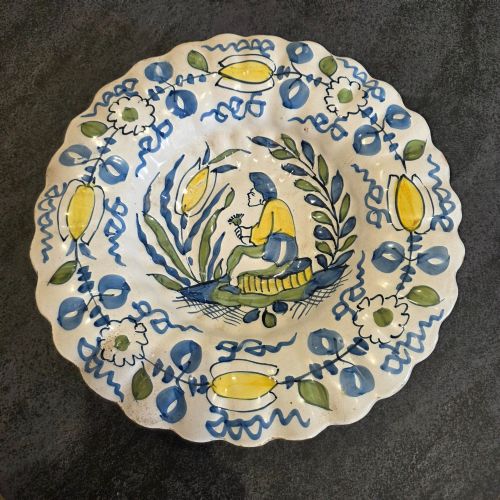
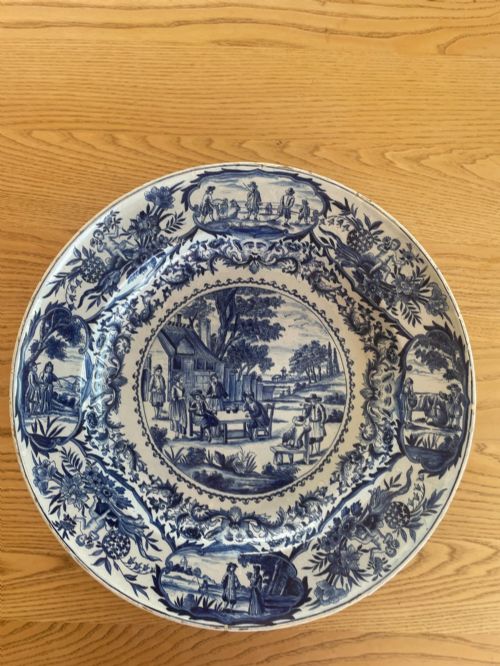
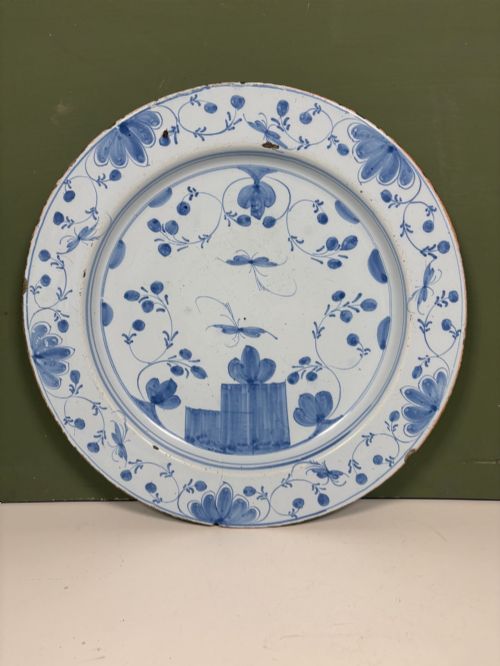
When you search for tin glaze pottery charger, you encounter large decorative plates and shallow bowls produced across Europe from the seventeenth century onward. The most frequent pieces on this page are Dutch and English delftware examples, alongside continental faience and maiolica traditions.
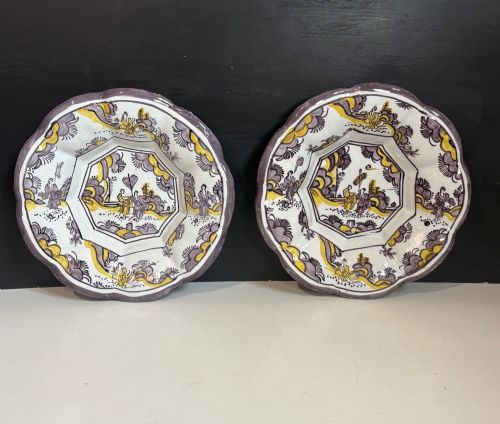
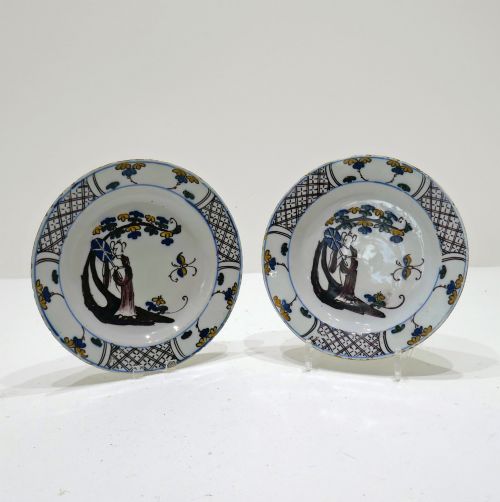
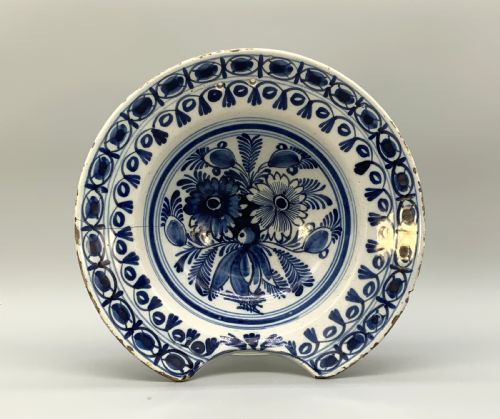
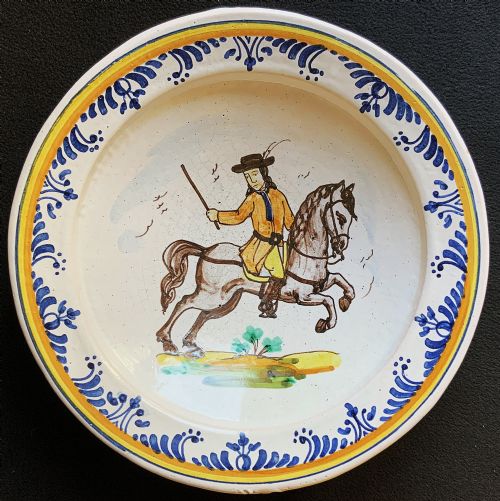
The selection ranges from seventeenth-century chargers and lobbed dishes to eighteenth-century polychrome chargers and later revival styles. Forms span wide wall chargers, barber's bowls, and decorative plates designed primarily for visual impact rather than heavy daily dining.
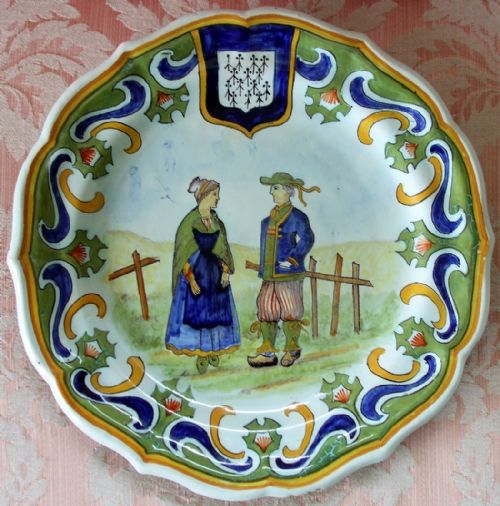
Originating centres include English potteries in Bristol and Lambeth, Dutch kilns, French faience works, and Spanish Catalana workshops. Each region brought distinct palette choices and glaze characteristics to the basic earthenware body.
How these ceramics were made
Potters shaped earthenware bodies from local clays, firing them into porous bisques before coating the surface in a liquid glaze containing tin oxide. This tin content dried to an opaque white finish that hid the dark clay underneath and provided a smooth canvas for the painter's brush.
Painters applied mineral pigments directly onto the unfired tin glaze, where the porous surface absorbed the colour instantly and permitted no correction of mistaken strokes. Cobalt oxide provided the classic deep blue, while manganese and other mineral pigments created polychrome schemes.
A final high-temperature kiln firing fused the painted pigments into the melting tin glaze, fixing the glossy surface and sealing the earthenware body beneath.
Materials recorded across the inventory include earthenware, tin-glazed earthenware, and cobalt pigment.
Judging quality and character
Quality rests in the crispness of the brushwork and the control demonstrated during the rapid painting process. Confident, fluid brushstrokes distinguish superior hand-painted designs from rigid or hesitant decoration.
The stability and coverage of the tin glaze itself mark the standard of the piece. A smooth, even white enamel with minimal bubbling or crawling supports the painted scene without distracting surface distortion.
The depth and brilliance of the pigment, whether deep cobalt blue or complex manganese and polychrome mixes, dictate the visual strength of the charger.
The Tin Glaze Pottery Charger Glossary
- Tin-Glazed Earthenware
- Earthenware pottery covered with an opaque white glaze containing tin oxide. This technique forms the fundamental base for delftware, maiolica, and faience.
- Charger
- A large decorative plate traditionally used for ceremonial dining or hung on walls for display. These wide pieces offer expansive surfaces for painted narratives and floral patterns.
- Delftware
- Tin-glazed earthenware produced in the Netherlands and England, famously known for blue and white designs inspired by imported Chinese porcelain. Production flourished throughout the seventeenth and eighteenth centuries.
- Polychrome
- Decoration employing multiple colours rather than a single pigment. On these plates, painters combined cobalt, manganese, and iron oxides to achieve varied multi-coloured palettes.
- Faience
- Continental European tin-glazed earthenware, particularly associated with French and Spanish workshops. The term encompasses diverse regional styles and decorative plaques.
Tin Glaze Pottery Charger: Frequently Asked Questions
How were tin glaze pottery chargers used?
These large plates served primarily as decorative showpieces on sideboards, dressers, and walls rather than everyday tableware. Their soft earthenware bodies and opaque glazes scratched easily under heavy cutlery.
wealthier households displayed them to catch the light and showcase fashionable imported motifs, including Chinese blue and white designs and European historical scenes.
How do I tell English delft from Dutch delft?
English delftware, often originating from kilns in Lambeth or Bristol, frequently displays softer, warmer earthenware bodies and slightly thicker tin glazes. The painting styles often adopted looser floral arrangements and distinct pastel polychrome palettes.
Dutch delft from centres like Delft tended towards crisp cobalt blue execution on thinner bodies, closely imitating imported Chinese porcelain during peak periods of trade.
What is a barber's bowl?
A barber's bowl is a specialised oval or circular tin-glazed dish featuring a semicircular cutout on the rim. This indentation allowed the basin to fit snugly against a customer's neck during shaving or bleeding procedures.
examples often include integrated soap recesses and small hanging holes, combining practical medical and grooming utility with fine decorative painting.